Tag: Diabetic Ulcer Care

Uncategorized

What is a wound care clinic? Your Guide to Healing (what is a wound care clinic)

Primus Healthcare | December 21st, 2025


A wound care clinic is a specialized medical facility, but that description feels a bit sterile. It's really a dedicated center focused on one thing: healing wounds that have stubbornly refused to close on their own.

These aren't your everyday cuts and scrapes. We're talking about complex wounds like diabetic foot ulcers, persistent pressure sores, and surgical sites that just won't heal. Think of it as a high-level repair shop for the body, bringing in a team of experts who use advanced treatments to figure out what’s holding back your body's natural healing process.

The Role of a Specialized Healing Center

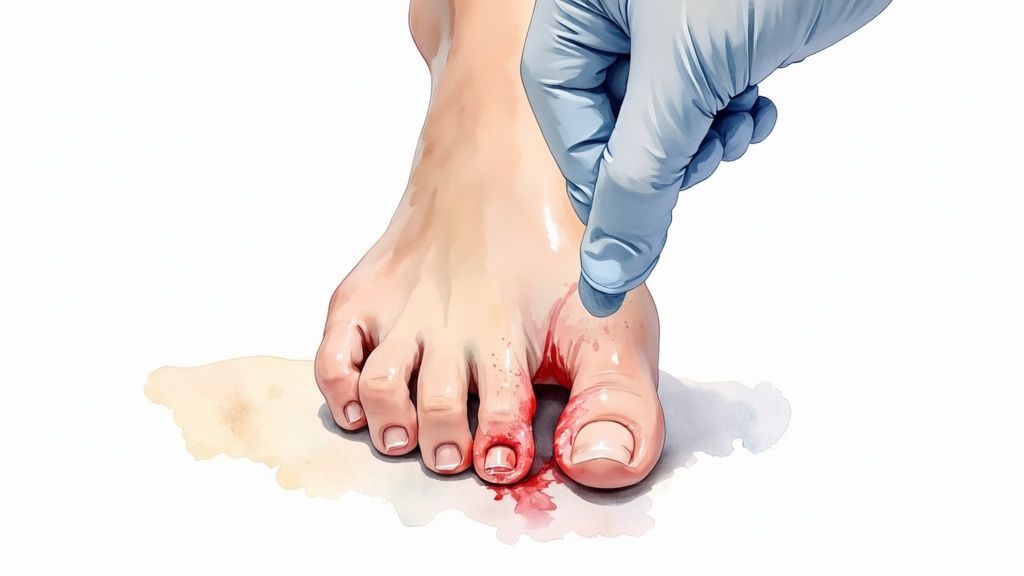
A medical professional providing gentle foot care to a patient.

Here's a good way to think about it: if a wound is like a stalled car, your primary care doctor can give it a jump-start with basic first aid. But if the engine has a deeper, more complex problem, you need a master mechanic. A wound care clinic is that master mechanic for your body.

The entire focus is on answering one critical question: why isn't this healing? The answer is rarely simple. It could be poor circulation, an underlying condition like diabetes, or even a hidden infection that standard tests might miss.

To give you a clearer picture, here’s a quick overview of what a wound care clinic is all about.

Wound Care Clinic at a Glance

Key Aspect Description
Primary Focus Treating chronic, non-healing wounds that resist conventional care.
Core Team A multidisciplinary group including surgeons, podiatrists, and certified wound care nurses.
Common Conditions Diabetic foot ulcers, venous ulcers, pressure injuries, and non-healing surgical wounds.
Key Approach Diagnosing the root cause of healing delays, not just treating the surface symptoms.
Tools & Tech Advanced diagnostics for blood flow and infection, plus therapies like debridement and skin substitutes.

This table highlights how these clinics go far beyond the basics to provide truly specialized care.

More Than Just Bandages

A visit to a wound care clinic is completely different from a typical doctor's appointment where a wound might be one of several issues on the agenda. Here, the wound is the agenda. As key healthcare providers, these specialized centers are essential for patients with very specific needs.

They build a personalized roadmap to recovery that involves much more than just a new dressing. This often includes:

  • A Collaborative Team: You'll find surgeons, podiatrists, infectious disease specialists, and certified wound care nurses all weighing in on your specific case.
  • Advanced Diagnostics: They use tools to measure blood flow, pinpoint bacterial colonies, and assess tissue health in ways that simply aren't possible in a general practice.
  • Targeted Therapies: Your treatment plan might include anything from debridement (the careful removal of unhealthy tissue) to bio-engineered skin substitutes or even hyperbaric oxygen therapy.

A wound care clinic bridges a critical gap in medicine. It provides focused, expert intervention when the body's natural healing process has been interrupted, preventing complications like severe infections and amputations.

By combining deep expertise with the right technology, these clinics create a dedicated path toward healing. They offer real hope and tangible results for wounds once considered incredibly difficult—or even impossible—to resolve, helping people get back on their feet and reclaim their quality of life.

When You Might Need a Wound Care Specialist

How can you tell when a cut is more than just a nuisance? Most scrapes heal just fine with a bandage and a little time. But some wounds are red flags, signaling a deeper problem that needs an expert’s touch. Knowing the difference is the first step in avoiding serious, long-term complications.

Think about a person with diabetes who finds a small sore on their foot. Instead of healing, it gets deeper. Or imagine an elderly patient who develops a pressure injury on their heel after being stuck in bed. Weeks go by, but the wound just won't close.

These situations are all too common. They represent the critical moment when a wound care clinic becomes absolutely essential. We specialize in managing wounds that get "stuck" and can't move through the body's natural healing process on their own.

Recognizing the Red Flags of a Non-Healing Wound

Any wound that doesn't show real improvement within two to four weeks is considered chronic. This is a major warning sign. Instead of getting smaller and less painful, a chronic wound might start showing some troubling symptoms.

Here are the key indicators that you need a specialist's help:

  • No Progress After 30 Days: If a wound hasn't shrunk by at least 50% after four weeks of standard care, something is blocking the healing process.
  • Worsening Pain or Odor: An increase in pain, redness, or swelling, or the development of a foul smell, often points to a bacterial infection that needs immediate attention.
  • Excessive Drainage: While some fluid is normal, constant heavy drainage (exudate) can mean an infection or inflammation is preventing the wound from closing.
  • Changes in Color: If the skin around the wound turns dark, black, or blue, it can signal a loss of blood flow—a condition called ischemia that requires urgent medical care.

If you see any of these signs, it’s time to go beyond basic first aid. Waiting can turn a manageable issue into a severe health crisis, potentially leading to widespread infection, a hospital stay, or even amputation.

Common Conditions Treated at a Wound Care Clinic

Wound care clinics are built to handle complex wounds, which are often tied to other health conditions. These underlying problems are usually the real reason a wound won't heal, as they can interfere with circulation, weaken the immune system, or disrupt the body's ability to repair itself.

For example, diabetic foot ulcers are one of the most common reasons patients come to us. High blood sugar damages nerves and reduces blood flow to the feet, meaning a tiny blister can become a serious, deep wound before the person even feels it.

The need for specialized wound care is a massive global health issue. An estimated 1.5 million Americans develop diabetic foot ulcers each year, and tens of millions worldwide suffer from chronic wounds, driving the demand for advanced treatments. You can explore more about the impact of chronic wounds from Spherical Insights & Consulting.

Other frequent cases we see include:

  • Venous Stasis Ulcers: These typically appear on the lower legs and are caused by poor vein circulation, which leads to fluid buildup and skin breakdown.
  • Pressure Injuries (Bedsores): These form from constant pressure on the skin, usually over bony areas like the hips, tailbone, or heels.
  • Arterial Ulcers: Caused by poor blood flow in the arteries, these wounds are often very painful and can point to significant vascular disease.
  • Non-Healing Surgical Wounds: Sometimes, an incision from surgery just doesn't close properly, leaving it open to infection and further breakdown.

In every case, the wound is just the symptom of a more complex problem. A wound care specialist’s job is to treat both the wound itself and the underlying issues preventing it from healing, creating a complete strategy for recovery.

Exploring Advanced Wound Healing Technologies

Walk into a modern wound care clinic, and you might feel like you’ve stepped onto the set of a sci-fi movie. The tools we use today are worlds away from simple bandages and ointments. Instead of just covering a wound and hoping for the best, clinicians now actively engineer the healing process at a cellular level, using specialized technology to break through the barriers that have stalled healing.
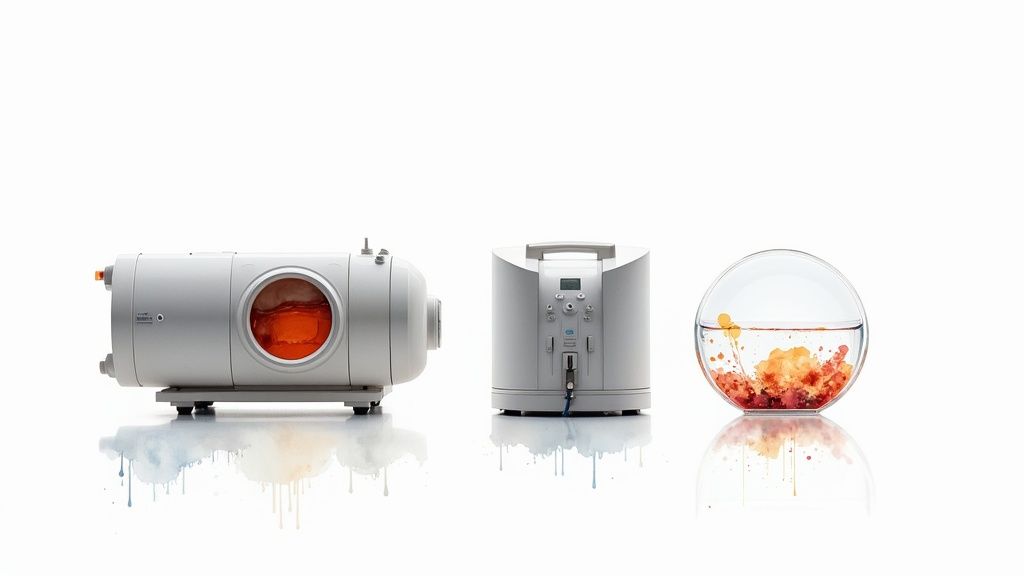
Three advanced medical devices for wound care, including a chamber, control unit, and cell culture.

This isn't technology for its own sake; it delivers real, measurable results for the most stubborn wounds. By understanding these tools, you can see why a specialized clinic is uniquely equipped to succeed where other treatments have failed. Let’s pull back the curtain on some of the most powerful technologies used to restart the healing journey.

Hyperbaric Oxygen Therapy (HBOT)

Think of your body's healing cells as tiny construction workers trying to repair a damaged building. If they don’t have enough oxygen, they work slowly and get very little done. Hyperbaric Oxygen Therapy (HBOT) floods the worksite with the one thing they need most.

During an HBOT session, a patient relaxes inside a pressurized chamber while breathing 100% pure oxygen. This simple change allows the lungs to absorb far more oxygen than they ever could at normal air pressure. The bloodstream then carries this super-oxygenated blood throughout the body, saturating the wound site with the fuel it needs to build new tissue, fight off infection, and reduce swelling.

It’s like supercharging the body’s natural repair crew. HBOT is especially effective for wounds complicated by poor circulation, stubborn infections, or tissue damage from radiation.

Negative Pressure Wound Therapy (NPWT)

Another game-changer is Negative Pressure Wound Therapy (NPWT), which you might hear called a "wound vac." This device acts like a gentle, controlled vacuum, creating a perfectly sealed healing environment right over the wound.

A special foam dressing is placed inside the wound and covered with a clear film. A small tube connects this dressing to a portable pump that applies continuous, gentle suction. This clever process does several key things all at once:

  • It pulls away excess fluid and harmful bacteria from the wound bed.
  • It reduces swelling, which immediately improves blood flow to the area.
  • It gently draws the wound edges together, encouraging them to close.
  • It stimulates the growth of new, healthy granulation tissue.

NPWT is an excellent choice for large, complex, or heavily draining wounds because it creates a clean, moist, and controlled space for healing to happen.

Cellular and Tissue-Based Products

For wounds that cover a large area or have lost a significant amount of tissue, the body sometimes needs more than just a push—it needs a blueprint to rebuild upon. This is where Cellular and Tissue-Based Products (CTPs), often called bio-engineered skin substitutes, come into play.

These advanced products, derived from sources like donated human tissue, provide a structural scaffold that encourages a patient's own cells to move in and start rebuilding. They act like a temporary "skin," protecting the delicate wound bed while delivering the growth factors and proteins essential for new tissue to form.

CTPs are like laying down a fresh layer of fertile soil on barren ground. They provide the necessary structure and nutrients for new growth to take root, transforming a non-healing wound into an active site of tissue repair.

This approach is incredibly effective for diabetic foot ulcers, venous leg ulcers, and other chronic wounds that have hit a wall with conventional treatments.

Advanced Diagnostics: Seeing the Unseen

One of the biggest frustrations in wound care is battling an invisible enemy: bacteria. An infection can simmer just below the surface, completely stopping the healing process without any obvious signs. Modern clinics now use advanced diagnostic tools to "see" what the naked eye can’t.

One of the most impressive tools is fluorescence imaging, like the MolecuLight DX™ device. This handheld tool shines a safe, violet light onto the wound. In response, different types of bacteria glow in distinct colors, instantly revealing their precise location and concentration. This lets a clinician:

  • Immediately detect high bacterial loads that are delaying healing.
  • Guide debridement with incredible precision, removing only affected tissue.
  • Target samples for lab testing far more accurately.

By making bacteria visible, clinicians can treat infections more effectively and build a cleaner foundation for healing. You can learn more about how this technology works with a point-of-care wound imaging device that detects the presence and location of elevated bacteria, which is transforming how specialists manage wounds. Treatment becomes targeted, efficient, and based on what’s actually happening inside the wound.

Meet Your Wound Care Team

Let's be honest: effective wound care is never a one-person job. It’s a team sport. Healing a complex wound is a lot like solving a puzzle with tons of interconnected pieces, and looking at it from just one angle is a recipe for failure. A true wound care clinic pulls together a multidisciplinary group of experts who all collaborate under one roof, with each person contributing a unique skill set to see the complete picture of your health.

This coordinated approach is what makes these clinics so powerful. Instead of you having to bounce between separate appointments with different specialists all over town, the team works together from the start. This structure avoids fragmented care and ensures that every single aspect of your wound—from blood flow to infection risk—is being addressed by a true expert.

The Core Players in Your Healing Journey

The real strength of a wound care clinic lies in this collaborative model. Clinical outcomes data has shown time and again that concentrating specialists like wound care nurses, podiatrists, and vascular surgeons is the key to successfully managing tough cases like diabetic foot ulcers. The entire model is designed to handle wounds with high morbidity and cost by bringing the right expertise together in one place. You can learn more about the market drivers for these specialized centers and see how workforce considerations impact clinic structure.

While the exact lineup can vary, your team will almost certainly include several of these key players:

  • Wound Care Physician or Surgeon: Think of this person as the team's strategic leader. They diagnose the underlying reason the wound isn't healing, create the overall treatment plan, and perform advanced procedures like surgical debridement.
  • Certified Wound Care Nurse: As the hands-on expert, this nurse is your go-to for day-to-day care. They'll be the one cleaning and dressing the wound, monitoring your progress, and giving you crucial education on how to manage your wound at home.
  • Podiatrist: For any wound on the feet and ankles, especially those related to diabetes, a podiatrist is absolutely essential. They are experts in the unique biomechanics of the lower extremities and handle everything from offloading pressure to addressing foot deformities that get in the way of healing.
  • Vascular Specialist: Blood flow is the supply line for healing—it brings all the good stuff (like oxygen and nutrients) to the wound. A vascular specialist assesses circulation to the area and can step in to restore blood flow if blockages in your arteries or veins are stopping the healing process in its tracks.

How the Team Works in Harmony

Let’s walk through a common scenario: a patient with a diabetic foot ulcer. The podiatrist immediately gets to work on the wound itself and any structural foot issues. At the same time, the vascular specialist is running tests to make sure enough oxygen-rich blood is actually reaching the foot to fuel tissue repair.

Meanwhile, the wound care nurse is executing the daily treatment plan, applying advanced dressings, and educating the patient on managing their blood sugar. Overseeing it all is the wound care physician, who adjusts the overall strategy based on the team's collective feedback and how the wound is progressing. This synergy is central to understanding what a wound care clinic really offers.

The power of a multidisciplinary team is that they treat the whole patient, not just the hole in the patient. By combining their expertise, they can address the root causes of why a wound is "stuck," leading to faster, more sustainable healing.

This integrated system is just far more effective than isolated efforts. Each professional provides a critical piece of the puzzle, and together, they build a comprehensive roadmap to get you back on your feet. For a deeper look into the specialists involved, you can get to know the different types of providers who form these expert teams and better understand their unique roles.

Navigating Your Path to Healing

Let's be honest, walking into any new medical facility can be a little intimidating, especially when you're dealing with a wound that just won't heal. But at a specialized wound care clinic, the entire process is designed to replace that anxiety with confidence. It all starts with getting to know you and your wound on a much deeper level.

Your first consultation is far more than just a quick look at the problem. It's a deep dive into your unique health story. The clinical team will review your full medical history, talk about your lifestyle, and learn what treatments you've already tried. This context is absolutely critical for figuring out why your healing process has stalled.

The First Step: Your Initial Assessment

This first visit is where the real detective work begins. The team’s primary goal is to uncover the root cause of the healing delay, which is often hiding beneath the surface. To get the full picture, they’ll use a combination of hands-on examination and advanced diagnostic tools.

This thorough assessment is what really separates a wound care clinic from a general practice. It typically involves:

  • Wound Measurement and Staging: Carefully documenting the wound's precise size, depth, and other key characteristics.
  • Vascular Assessment: Checking the blood flow to make sure the area is getting enough oxygen and nutrients to rebuild tissue.
  • Tissue Analysis: Examining the wound bed itself for any signs of unhealthy tissue or a hidden infection.

This comprehensive evaluation builds the foundation for your entire treatment plan. It ensures that the team isn't just treating the visible wound, but also tackling the underlying issues that are preventing it from closing.

Creating Your Personalized Treatment Plan

Once the assessment is complete, the team works together to map out your personalized path to healing. This is never a one-size-fits-all situation. Your plan is built specifically around your type of wound, your overall health, and the realities of your daily life.

The team will walk you through every recommendation, explaining the "why" behind each proposed therapy. Your input is vital here—the plan is developed with you, not just handed to you. This collaborative approach makes sure the treatment is not only effective but also manageable for you.

The chart below shows how the different members of the wound care team work in concert to support your healing journey.
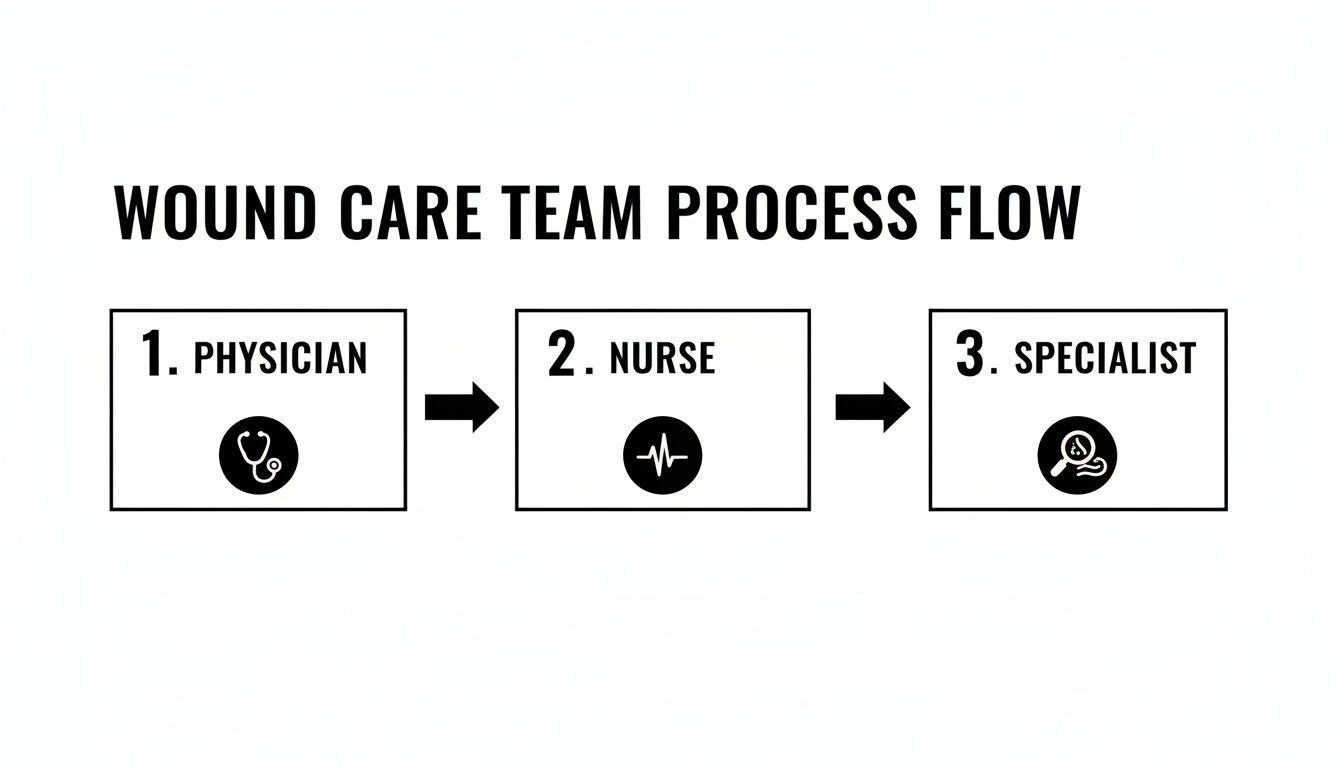
A wound care team process flow chart detailing roles of Physician, Nurse, and Specialist.

As you can see, the physician, nurse, and specialist all have interconnected roles, highlighting the coordinated care that is so central to getting a great outcome.

Regular Visits and At-Home Care

Your journey doesn't stop after the first visit. You’ll have regular follow-up appointments, often weekly. During these check-ins, the team will carefully clean the wound, perform necessary treatments like debridement (the removal of unhealthy tissue), and apply fresh, clean dressings. More importantly, they will meticulously track your progress, measuring the wound and documenting every sign of improvement.

But your role in this process is just as important as theirs. The team will give you clear, easy-to-follow instructions for at-home care, including how to change dressings, protect the wound from further injury, and manage your overall health to support healing.

Your active participation is a key driver of success. By following at-home care instructions and communicating openly with your team, you become a central partner in your own healing process.

As your wound gets better, your treatment plan will be adjusted to match. It's a dynamic approach that ensures you always receive the most appropriate care for where you are in the healing process. The ultimate goal is simple: to guide you, step-by-step, toward complete healing so you can get back to your daily life.

How to Choose the Right Wound Care Clinic

Let's be honest: not all wound care clinics are created equal. Finding the right one is a critical decision, whether you're a patient desperate for relief or a healthcare provider looking for a reliable partner for your patients. A great clinic does more than just throw technology at a problem; it delivers patient-centered, results-driven care that looks at the whole person, not just the wound on their body.

Making an informed choice comes down to knowing what to look for and which questions to ask. A top-tier clinic should be completely open about its approach, the expertise of its team, and its healing outcomes. This is how you find a center that is truly invested in getting the best possible results.

So, what exactly is a wound care clinic? Think of it as a specialized outpatient facility designed to treat complex wounds that just haven't responded to standard treatments. As healthcare has gradually shifted away from long inpatient stays, these focused centers have become essential. In fact, there are now an estimated 2,200 specialty wound care clinics in the United States, with most of them connected to hospitals. You can learn more about this growth from Towards Healthcare.

Key Questions for Patients and Families

When you or someone you love needs specialized care, you have to feel confident in your choice. Before you commit to a clinic, get on the phone or go in person and ask these questions to see if they're the right fit.

  • What are your healing outcomes for wounds like mine? Any reputable clinic should be able to share data on their success rates for specific wounds, like diabetic foot ulcers or venous leg ulcers.
  • How will you coordinate with my other doctors? Effective wound care is always a team effort. The clinic needs to have a clear process for communicating with your primary care physician, podiatrist, or other specialists involved in your health.
  • What advanced technologies do you use? Ask them directly if they offer services like rapid diagnostics for bacteria, cellular tissue products, or even hyperbaric oxygen therapy.
  • Who will be on my care team? You'll want to know about the credentials of the physicians and nurses. Look for special certifications in wound care and a team made up of experts from different disciplines.

These questions help you cut through the marketing fluff and get to the heart of a clinic's commitment to evidence-based, collaborative care.

Differentiators for Healthcare Professionals

If you’re a referring physician, case manager, or part of a home health agency, choosing a wound care partner is about more than just healing rates. You need a clinic that acts as a seamless extension of the care you already provide.

A top-tier wound care partner is defined by a commitment to clear communication, evidence-based practices, and a shared goal of reducing hospital readmissions. This alignment ensures continuity of care and better outcomes for shared patients.

Look for a partner that truly shines in these areas:

  1. Evidence-Informed Protocols: The clinic must follow proven best practices and use treatments backed by solid clinical evidence. This ensures your patients get the most effective care available.
  2. Robust Communication: A great partner gives you timely updates, sends detailed progress notes, and has an open line for direct communication. You should always be in the loop.
  3. Focus on Patient Education: The best clinics empower patients with the knowledge and tools they need to manage their care at home. This is huge for preventing complications and supporting long-term healing.

When you're looking for a clinic, it's also helpful to see how they make themselves available to the community. A proactive clinic will often employ smart local SEO strategies for medical practices to make sure they are visible and accessible online to the very patients who need their help the most.

Your Top Questions About Wound Care Clinics, Answered

Walking into a specialized medical environment like a wound care clinic for the first time can feel a little intimidating. It's natural to have questions. Getting clear answers is the first step toward feeling confident and in control of your healing journey.

Here are some straightforward answers to the questions we hear most often from patients and their families.

How Long Will My Wound Take to Heal?

This is usually the very first thing people want to know, and the honest answer is: it’s different for everyone. The time it takes for a wound to heal really depends on the type of wound, its size, your overall health, and how closely you can follow the care plan at home.

While there’s no magic number, the entire purpose of a specialized clinic is to drastically speed things up. We do this by figuring out why the wound stalled in the first place and targeting that root cause. Your team will give you a realistic timeline based on your specific situation and keep you updated on your progress every step of the way.

Is the Treatment Painful?

Your comfort is our priority. We know you’re already dealing with the daily pain of a chronic wound, and our goal is to not add to it.

Most of our advanced therapies are minimally invasive. For procedures that are absolutely necessary, like debridement (removing unhealthy tissue to let healthy tissue grow), our clinicians are experts in managing discomfort. We use local anesthetics and specific techniques to keep you as comfortable as possible. The most important thing is to speak up—if you’re feeling pain, tell us so we can adjust.

A key difference with a specialized clinic is the focus on a holistic patient experience. This means managing pain is considered just as crucial as the physical treatment of the wound itself, ensuring a more positive and sustainable healing journey.

Do I Need a Referral from My Doctor?

Navigating insurance can feel like a maze, but you’re not on your own. Some insurance plans do require a referral from your primary care doctor to see a specialist, but many others don't.

The administrative team at a wound care clinic lives and breathes this stuff. They’ll look into your specific insurance plan, let you know exactly what’s needed, and help you get any authorizations required. The goal is to get you the care you need without any frustrating delays.

For a deeper dive, you can explore more topics in our list of frequently asked questions about wound care.

How Is This Different from My Home Health Nurse?

Your home health nurse provides absolutely vital care, and we’re here to support their work, not replace it. It’s a partnership.

Think of it like this: your home health nurse is the expert on your day-to-day care and knows you best. The wound care clinic acts as a command center, bringing in advanced diagnostic tools and a team of different specialists who can all weigh in. This setup gives you the best of both worlds—consistent, compassionate care at home, supercharged by the technology and collaborative brainpower of a dedicated wound healing team.


At Specialty Wound Care, we combine advanced technology with expert clinical care to create personalized healing plans. Learn how our dedicated teams can help you or your patients move past a non-healing wound by visiting us at https://specialtywoundcare.com.

Uncategorized

A Guide to Treatment for Non Healing Wounds

Primus Healthcare | December 20th, 2025


A wound that just won't heal is more than a frustration—it’s a warning sign. The body is sending a clear signal that something deeper is wrong. Proper treatment for non healing wounds isn't about finding a better bandage; it’s about digging into the root causes like poor circulation, hidden infections, or chronic health conditions to get the body’s natural repair systems back online.

The Critical Challenge of Non Healing Wounds

Most of us know what to expect from a minor cut or scrape. It heals up and is forgotten within a few weeks. But when that predictable timeline gets thrown off track, a simple injury can spiral into a chronic, non-healing wound. This isn't just a slow heal. It's a complete stall, a complex puzzle where the body’s repair crew has walked off the job, usually because of significant underlying health problems.

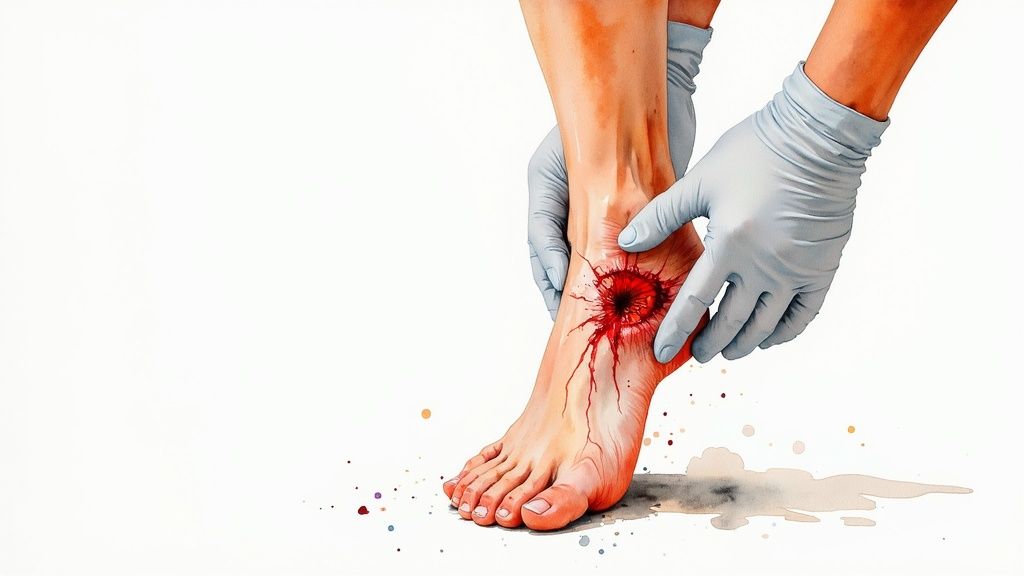
A person's foot with a deep, bloody wound, being examined by gloved hands in a watercolor style.

The scale of this problem is staggering. Chronic wounds are a silent epidemic, impacting millions of people and putting an immense strain on them and the entire healthcare system. In high-income countries, it's estimated that 1–2% of the population is dealing with a chronic wound at any given moment.

That translates to roughly 6.5–10.5 million people in the United States alone. The financial toll is just as shocking, with annual wound care costs soaring as high as $96.8 billion. You can discover more about the public health impact of chronic wounds from recent analyses.

Understanding the Human Cost

Behind these big numbers lies a very real human cost. A non-healing wound can completely derail a person's quality of life. The day-to-day reality often involves:

  • Persistent Pain: A constant, nagging discomfort that disrupts everything from simple activities to a good night's sleep.
  • Reduced Mobility: Difficulty walking or just getting around, especially with ulcers on the lower legs and feet.
  • Social Isolation: Feeling self-conscious about how the wound looks or smells, which can lead to pulling back from friends and family.
  • Serious Health Risks: A constant threat of severe infections that can burrow into deeper tissues or even enter the bloodstream.

For people living with conditions like diabetes, the stakes get even higher. A diabetic foot ulcer can escalate with terrifying speed. In fact, studies show that approximately 12% of individuals with a foot ulcer will end up needing an amputation.

The five-year survival rate after a major lower-extremity amputation is around 50%, a statistic that puts it on par with some of the most aggressive cancers. This reality underscores just how urgent it is to get proper and timely treatment.

This guide is designed to give you a clear roadmap for understanding and tackling these complex injuries. We'll break down exactly why wounds stall, walk through the essential pillars of effective care, and then explore the advanced therapies that can finally solve even the most stubborn healing challenges. Our goal is to arm you with the knowledge you need to confidently navigate the path back to healing.

Understanding Why Wounds Fail to Heal

A gloved hand examines an injured foot with two bleeding toes, showing signs of non-healing wounds.

To find the right treatment for non healing wounds, we first have to play detective. Why has the body's natural repair process stalled out? Normally, healing follows a predictable, four-stage sequence: stop the bleeding, clean up the area (inflammation), rebuild new tissue, and finally, strengthen that tissue.

When a wound gets stuck, it’s almost always because something has sabotaged one of these critical stages.

Think of it like a well-organized construction project. Any number of issues can bring the entire operation to a grinding halt. Identifying these roadblocks is the first, most important step toward getting the project back on track.

The Problem of Poor Circulation

Imagine trying to build a house, but your supply trucks can't reach the site. You have the best crew and blueprints, but without a steady stream of lumber and concrete, nothing gets built. This is exactly what happens to a wound with poor circulation.

Blood is the body’s delivery system. It carries everything the "construction crew" needs—oxygen, nutrients, and infection-fighting white blood cells—directly to the injury. Conditions like peripheral artery disease (PAD) or uncontrolled diabetes effectively shut down this vital supply line.

Without these crucial resources, the cells responsible for rebuilding tissue simply can’t do their job. The area also can’t effectively remove metabolic waste, creating a toxic environment that makes things even worse.

When circulation is compromised, the metabolic demands needed to simply preserve intact skin can be greater than the resources available to heal an injury. This creates a deficit where even a minor abrasion can become a chronic, non-healing wound.

Persistent Infection and Biofilm

Now, picture your construction site being overrun by vandals every single night. They tear down all the hard work your crew just finished. This is the role a persistent infection plays in a non-healing wound.

While all open wounds have some bacteria, a healthy immune system usually keeps them in check. But in a chronic wound, bacteria can band together to form a slimy, protective shield called a biofilm. This biofilm acts like a fortress, making the bacteria inside highly resistant to the body’s immune defenses and even standard antibiotics.

This ongoing battle triggers a state of chronic inflammation, trapping the wound in the "demolition" phase and preventing any real rebuilding from ever getting started.

Unrelieved Pressure and Repetitive Trauma

Applying constant pressure to a wound is like trying to build on an unstable foundation that gets shaken every few minutes.

Every time fragile new tissue starts to form, unrelieved pressure—from lying in one position, sitting in a wheelchair, or wearing poorly fitting shoes—crushes and destroys it. This is a primary driver behind pressure injuries (bedsores) and diabetic foot ulcers.

This vicious cycle of damage and attempted repair completely exhausts the body’s resources. It prevents the wound from ever establishing a solid base for new tissue to grow. The treatment plan must remove this constant trauma to give the healing process a fighting chance.


Here's a quick summary of the most common issues that stop wounds from healing and the conditions often linked to them:

Common Roadblocks in the Wound Healing Process

Healing Roadblock How It Disrupts Healing Common Associated Conditions
Poor Circulation Cuts off the supply of oxygen, nutrients, and immune cells needed for repair. Peripheral Artery Disease (PAD), Diabetes, Venous Insufficiency, Heart Failure
Persistent Infection Creates chronic inflammation and tissue damage, trapping the wound in the initial healing phase. Biofilm Formation, Compromised Immune System, Contaminated Injuries
Unrelieved Pressure Continuously damages fragile new tissue as it forms, preventing progress. Immobility (Bedridden/Wheelchair), Diabetic Neuropathy, Poorly Fitting Prosthetics or Footwear
Poor Nutrition Deprives the body of the essential building blocks (protein, vitamins, minerals) for new tissue. Malnutrition, Malabsorption Disorders, Elderly Patients

Many of these factors are intertwined and can even be related to underlying issues with skin integrity. For more on the basics of maintaining overall skin health, you can find great information here.

By understanding these core roadblocks, we can better appreciate why specific treatments are chosen to target the exact problem that's stalling a patient's recovery.

The Four Pillars of Foundational Wound Care

When a wound just won’t heal, you can't just slap a bandage on it and hope for the best. Success hinges on building a solid foundation for the body to do its natural work. Think of it less like finding a single magic bullet and more like creating the perfect environment for healing to finally kick back into gear.

This foundational approach rests on four essential pillars. Each one targets a critical barrier that keeps a chronic wound stuck in a frustrating, non-healing state. This isn’t just a checklist; it's a strategic, step-by-step process that forms the bedrock of any effective treatment plan. Let's break down exactly what these pillars are and why they are absolutely non-negotiable.

Pillar 1: Debridement

Imagine trying to patch a pothole without cleaning out the gravel, dirt, and loose asphalt first. The patch would never stick. A chronic wound covered in dead, unhealthy tissue faces the exact same problem.

Debridement is the clinical term for clearing away all that gunk—the dead skin (eschar), stringy yellowish stuff (slough), and bacterial colonies (biofilm). This "site clearing" is crucial for a few reasons: it removes the physical junk blocking new, healthy cells from growing, cuts down the bacteria fueling infection, and lets us see the wound's true depth and condition.

There are a few ways to get this done, from the very gentle to the very direct:

  • Autolytic Debridement: Using specialized dressings that harness the body's own enzymes to gently dissolve the dead tissue.
  • Enzymatic Debridement: Applying a prescription ointment with active enzymes that do the heavy lifting of breaking down unhealthy tissue.
  • Mechanical Debridement: Using physical methods like irrigation (a targeted wound wash) or wet-to-dry dressings to lift away debris.
  • Surgical Debridement: The most precise method, where a clinician uses a scalpel or other sterile tool to carefully cut away the non-viable tissue.

Pillar 2: Infection and Inflammation Control

Once the wound bed is cleared, the next job is securing the perimeter. A chronic wound is basically an open door inviting harmful bacteria to move in and set up shop. They can quickly form a fortress called a biofilm—a slimy, protective shield that makes them incredibly resistant to both your immune system and antibiotics.

An out-of-control infection locks the wound into a state of chronic inflammation. This constant "red alert" mode prevents the body from ever moving on to the rebuilding phase. Getting the bacterial bioburden under control is job number one.

We tackle this with a combination of strategies:

  • Regular, thorough cleansing of the wound at every dressing change.
  • Using topical antimicrobial dressings that contain substances like silver or iodine to fight bacteria on the surface.
  • Prescribing systemic antibiotics if we see signs the infection has spread beyond the wound itself.

By getting the bacterial load under control, we can finally dial down that destructive chronic inflammation. This frees up the body to shift its resources from fighting invaders to building new, healthy tissue.

Pillar 3: Moisture Balance

With the site clean and secure, we turn our attention to creating the perfect atmosphere for growth. For years, the old wisdom was to let a wound "air out." We now know that's the worst thing you can do.

Think about a garden. Too dry, and the seeds won't sprout. Too wet, and the roots will rot. A healing wound needs that same Goldilocks principle: a perfectly balanced, moist environment to thrive. Moisture balance is the art and science of getting this just right.

A wound that's too dry causes healthy cells to dehydrate and die, grinding healing to a halt. On the flip side, a wound that’s too wet and soggy can lead to maceration—where the surrounding healthy skin gets pale, waterlogged, and fragile, actually making the wound bigger. The goal is to find that perfect middle ground using modern dressings.

  • For dry wounds: We might use hydrogels or hydrocolloid dressings to donate moisture.
  • For wounds with a lot of drainage: We’ll reach for highly absorbent dressings, like foams or alginates, to wick away the excess fluid.

Managing moisture carefully ensures cells can move, communicate, and multiply the way they're supposed to, speeding up the whole rebuilding process.

Pillar 4: Offloading or Pressure Redistribution

Our final pillar deals with the relentless outside forces that can sabotage everything we've just done. Try to imagine patching a hole on a busy highway without diverting traffic. Every time the patch starts to set, another car runs it over. That's exactly what unrelieved pressure does to a wound.

Offloading is the non-negotiable process of redistributing pressure away from the wound. This is especially vital for diabetic foot ulcers and pressure injuries. Without it, the constant mechanical stress crushes the fragile new blood vessels and kills newly forming cells, trapping the wound in a vicious cycle of injury and re-injury.

Effective offloading is an absolute must and can be done in a few ways:

  • Total Contact Casts (TCC): Often called the gold standard, this is a custom-molded cast on the lower leg and foot that spreads weight out over the entire surface.
  • Removable Cast Walkers or "Healing Boots": These devices take the pressure off while still allowing us to remove them for regular wound checks.
  • Specialized Cushions and Mattresses: For patients with limited mobility, these are critical for reducing pressure on bony areas like the tailbone and heels.

By taking away this constant trauma, we give the body the protected, uninterrupted space it finally needs to get the job done. Together, these four pillars create a powerful foundation for recovery, turning a stalled wound into one that's actively healing.

Advanced Therapies When Standard Care Is Not Enough

So, you've diligently applied the four pillars of foundational care, but the wound just isn't budging. It’s stalled. This is a clear signal that it’s time to call in the specialists. We need to shift from simply creating the right environment for healing to actively intervening with advanced therapies.

These aren't one-size-fits-all solutions. Think of them as highly targeted tools, each designed to break down a specific barrier that's holding back recovery.

Imagine your standard care is like giving a construction crew the basic materials and a clean, secure worksite. But what if the crew is exhausted, or the ground itself is unstable? You'd need to bring in heavy machinery or specialized engineers. Advanced therapies are those specialized resources, each one chosen to solve a problem that standard care alone can't fix.

Negative Pressure Wound Therapy

One of the most powerful tools for kickstarting a stalled wound is Negative Pressure Wound Therapy (NPWT), which you might know by the brand name Wound V.A.C. It’s essentially a highly controlled, medical-grade vacuum system applied right to the wound bed. A special foam dressing goes inside the wound, is sealed with a clear film, and then hooked up to a small, portable pump.

Once turned on, the pump creates a gentle, continuous negative pressure. This immediately starts pulling excess fluid and infectious material away from the wound, which dramatically cuts down on swelling and the bacterial load.

But it does so much more. The negative pressure also stimulates the growth of healthy new granulation tissue and encourages blood vessels to grow into the wound bed, boosting that critical supply of oxygen and nutrients. It’s like using an industrial pump to not only drain a flooded site but also to compact the soil, making it a more stable foundation for rebuilding.

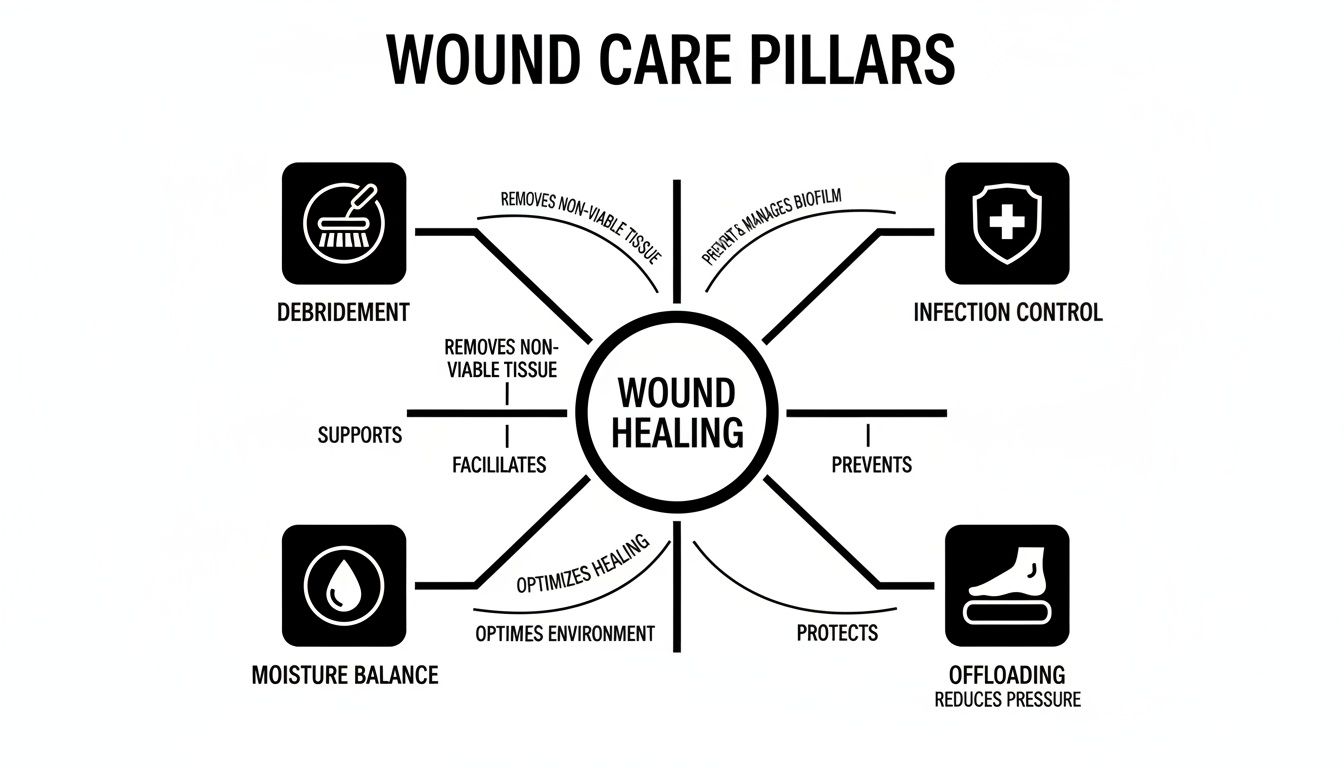
A diagram illustrating the four pillars of wound care: Debridement, Infection Control, Offloading, and Moisture Balance, all supporting wound healing.

This visual is a great reminder that these advanced therapies build upon the success of the fundamentals: debridement, infection control, offloading, and moisture balance. They don't replace them.

Hyperbaric Oxygen Therapy

For wounds that are literally starving for oxygen because of poor circulation, Hyperbaric Oxygen Therapy (HBOT) can be a total game-changer. During an HBOT session, the patient simply rests inside a pressurized chamber while breathing 100% pure oxygen. This setup allows the lungs to gather up to 15 times more oxygen than they could at normal air pressure.

This super-oxygenated blood then circulates through the body, flooding even the most compromised tissues with the fuel they need to heal. It powers the growth of new blood vessels, helps white blood cells kill bacteria more effectively, and supercharges the cellular activities required for repair.

Think of your body's healing cells as tiny engines that have been sputtering along on low-grade fuel. HBOT is like switching them over to premium, high-octane racing fuel, giving them a massive boost in performance and power.

This therapy works wonders for diabetic foot ulcers, injuries from radiation, and certain bone infections where a lack of oxygen is the main culprit stalling the healing process.

Cellular and Tissue-Based Products

Sometimes, a wound is missing the essential biological building blocks or the structural framework it needs to rebuild itself. This is where Cellular and Tissue-Based Products (CTPs)—often called skin substitutes or biologics—come into play. Using a CTP is like bringing in a prefabricated wall or an expert construction crew to get the job done faster and better.

These advanced products come from various sources and serve different roles:

  • Provide a Scaffold: Some act as an extracellular matrix, giving your own cells a biological ladder to crawl across and use as a template for building new tissue.
  • Deliver Growth Factors: Others are packed with growth factors and specialized cells that act like a foreman on a job site, signaling the body to ramp up its repair mechanisms and directing the healing traffic.
  • Reduce Inflammation: Certain products can help calm down an out-of-control inflammatory response, allowing the wound to finally shift into the rebuilding phase.

Amniotic membrane allografts are a particularly effective type of CTP. To learn more about how a dual-layer allograft can accelerate recovery, see how these products offer a powerful mix of a natural scaffold and crucial growth factors. While basic care is still dominant, the market for these advanced products is growing fast. For example, while compression therapy made up nearly 62% of the venous ulcer market in 2018, the global chronic wound care market is booming, driven by the adoption of advanced biologics.

The key is choosing the right product. A skilled wound care specialist will assess exactly what the wound is lacking and select a CTP that provides the missing piece of the puzzle, making it one of the most personalized treatments available today.

Knowing When to See a Wound Care Specialist

While diligent home care is essential, there comes a point where a non-healing wound demands more than just basic attention. It requires specialized expertise. Knowing when to make that call is critical for preventing serious complications like deep tissue infections, bone involvement, or even amputation.

Think of it like this: your primary care provider is an excellent general contractor, skilled at handling most routine repairs. But a wound care specialist is the structural engineer you bring in when the foundation is cracking and the usual fixes just aren't cutting it. They have the advanced tools and in-depth knowledge to solve complex healing puzzles that go far beyond typical care.

Waiting too long can let a manageable problem spiral out of control. It’s vital to seek a specialist’s opinion if you notice any specific warning signs.

Clear Signs You Need a Specialist

It’s easy to fall into a "wait and see" mindset, but with chronic wounds, time is tissue. You have to pay close attention to the definitive indicators that professional intervention is non-negotiable.

  • No Progress After Four Weeks: If a wound has shown little to no sign of getting smaller or improving within a month, it's officially a chronic wound. This is a clear signal to seek specialized treatment.
  • Signs of Spreading Infection: Look for redness, warmth, or swelling that is expanding beyond the immediate wound borders. A foul odor or an increase in discolored drainage (green, yellow, or brown) are also urgent signs that something is wrong.
  • Worsening Pain: While some discomfort is normal, a wound that becomes progressively more painful is a major red flag.
  • Sudden Changes in Size or Depth: Any wound that abruptly gets larger or deeper needs immediate evaluation by an expert.

For individuals living with diabetes, the rules are different and far more urgent. Any wound on the foot, no matter how small, warrants immediate attention from a wound care specialist. Due to the dual threats of neuropathy (loss of sensation) and poor circulation, even a minor cut can quickly become a limb-threatening ulcer.

A dedicated wound care center brings together a multidisciplinary team—podiatrists, vascular surgeons, infectious disease doctors, and certified wound nurses—who all collaborate on your specific case. For these complex treatment plans to succeed, patient engagement is key; modern approaches like exploring diverse health care SMS communication strategies can be highly effective in keeping patients on track.

This team-based approach ensures every underlying issue gets addressed, from circulation problems to infection control. If you recognize any of these warning signs in yourself or a loved one, don't hesitate. Taking the next step to book a consult with a wound care expert is the most powerful move you can make toward a successful recovery.

A Glimpse Into the Future of Wound Treatment

The world of wound care is undergoing a major shift. We're moving away from one-size-fits-all treatments and into an era of truly personalized medicine. The future isn't just about reacting to a wound that has stalled; it's about proactively understanding its unique biology in real-time to stop problems before they even start.

Imagine being able to spot a bacterial infection brewing days before any clinical signs appear. That's not science fiction anymore. New diagnostic tools are giving clinicians a much clearer, faster picture of what’s happening below the surface, leading to far more precise and effective treatment decisions.

Seeing Bacteria in Real Time

One of the most exciting developments is fluorescence imaging. This technology uses a handheld device that shines a safe, violet light over the wound. Under this specific light, colonies of harmful bacteria naturally glow bright red, making them instantly visible even when the naked eye sees nothing wrong.

Think of it like a biological highlighter. Clinicians can immediately map out bacterial hotspots, which tells them exactly where to debride and sample. The guesswork is gone, and so is the agonizing multi-day wait for traditional lab cultures.

This instant feedback changes everything. By identifying the problem on the spot, the right antimicrobial treatment can be started from day one. If you want to dive deeper, you can learn more about how specialists are using advanced pathogen detection to guide treatment for non healing wounds and dramatically improve outcomes. This accelerates infection control and gets the wound on a much healthier healing path.

The Rise of Smart Bandages

It's not just the diagnostic tools getting an upgrade; the dressings themselves are becoming intelligent. Researchers are now developing smart bandages that are embedded with tiny, powerful sensors. These are a world away from your standard gauze pad—they are active, thinking participants in the healing process.

These next-generation dressings can:

  • Monitor key signals like temperature and pH to flag the earliest signs of infection.
  • Keep tabs on moisture levels, ensuring the wound bed stays in that "just right" zone for healing.
  • Automatically release medications like antibiotics or growth factors at the precise moment they are needed.

This technology creates a responsive, self-managing system where the dressing adapts to the wound's needs without requiring constant human intervention. We're heading toward a future where every wound gets an immediate, intelligent, and perfectly tailored response, clearing a direct path to complete healing.

Common Questions About Wound Healing

When you're dealing with a wound that just won't heal, it’s natural to have questions. Getting clear, practical answers is the first step toward taking control of your health. Let’s tackle some of the most common concerns we hear from patients every day.

How Can I Tell if a Wound Is Infected or Just Inflamed?

This is a fantastic question, and it’s easy to get the two mixed up. Think of it this way: inflammation is your body’s emergency crew rushing to the scene. You’ll see some mild redness, warmth, and swelling right at the wound's edge. That's a good thing—it means the healing process has started.

An infection, on the other hand, is bad news. It's a sign that harmful bacteria have taken over. Here’s how you can spot the difference:

  • The redness starts spreading far beyond the original wound.
  • You notice a foul smell or see discolored drainage (like yellow or green pus).
  • The pain gets worse over time, not better.
  • You start feeling sick all over, with a fever or chills.

If you see these warning signs, the situation has moved beyond normal healing and needs immediate medical attention.

Is It Better to Let a Wound 'Air Out'?

This is one of the biggest myths in wound care, and it’s one that actively works against your body. The old thinking was that letting a wound dry out and form a hard scab was a good thing. We now know that's not true at all.

A dry wound is a dormant wound. Healing cells need moisture to move around, communicate, and build new tissue. Forcing them to tunnel under a hard, dry scab is like asking construction workers to dig through concrete. A proper dressing maintains the perfect moisture balance, creating a humid, thriving environment where healing can happen fast.

Does My Diet Really Affect How My Wound Heals?

Absolutely. You can’t build a house without bricks and mortar, and you can’t heal a wound without the right nutritional building blocks. Healing puts a massive demand on your body's resources.

Protein is the star player—it's essential for creating every new cell. But you also need key vitamins and minerals. Vitamin C is crucial for building collagen (the scaffolding of your skin), and Zinc helps cells multiply. If your diet is poor, you're essentially starving the healing process before it even begins. Good nutrition isn't just a suggestion; it's a non-negotiable part of any successful treatment for non healing wounds.

Can a Wound That Hasn't Healed for Months or Years Actually Be Healed?

Yes, it often can. It’s completely understandable to feel discouraged when you’ve been living with a wound for so long. But in almost every case, a chronic wound isn't healing for a very specific reason—like hidden bacteria, poor blood flow, or constant pressure.

Standard wound care often misses these underlying problems. That's where a specialist comes in. By using advanced diagnostics and targeted treatments, we can figure out exactly what’s holding your body back. Once we identify and remove that barrier, it’s amazing how quickly even the most stubborn, long-standing wounds can finally start to heal. There is almost always a path forward.


At Specialty Wound Care, we combine advanced diagnostics with expert clinical care to solve even the most challenging healing puzzles. If you or a loved one is struggling with a non-healing wound, visit us to learn how our targeted therapies can help you get back on your feet. https://specialtywoundcare.com

Supporting Family Involvement: Essential & Effortless Wound Care

Primus Healthcare | September 5th, 2025


📣 Why Self-Care Is the Secret Weapon in Healing

Many caregivers have experienced the power of patient involvement in wound healing firsthand. For instance, Janice, a dedicated caregiver, noticed that her mother’s recovery from a diabetic ulcer significantly improved when her mother became actively involved in her own care. Janice encouraged her mother to monitor her wound daily, manage her diet, and understand the healing process. This not only allowed Janice to share the burden of care but also empowered her mother to take charge of her health.

By participating in their own recovery, patients can heal more effectively.

Explore more self-care wound education

🧼 Clean Wound Care Starts at Home

One of the most critical components of effective wound care is maintaining cleanliness. This begins with the most basic yet often overlooked practice: handwashing. Always wash your hands before handling any wound to prevent infection.

When changing dressings, use sterile technique. This involves gently removing the old dressing without touching the wound directly and applying a new, clean dressing while ensuring it is properly secured.

Be mindful of proper disposal of old dressings. Place them in a sealed plastic bag to avoid contamination. Understanding the signs of infection is equally essential. Watch out for prolonged redness, increased warmth, swelling, or foul odor. If you notice any of these symptoms, seek advice from your healthcare provider.

Learn the signs of wound infection

🔁 Daily Routines That Speed Healing

Establishing daily routines can enhance the healing process significantly. Start with hydration; drinking enough water supports overall health and helps your skin stay elastic, which is crucial for wound recovery.

If you have diabetes, regular glucose checks are vital. New studies show a direct link between blood sugar control and wound healing.

Incorporate light mobility exercises into your day, if possible. Moving the body can increase circulation, aiding in nutrient delivery to the wound site. Don’t forget to elevate the wound when resting; this can help reduce swelling. If you need to inspect your feet daily, especially if you have diabetes, it can catch potential issues early.

See how nutrition impacts self-care and healing

❌ Myths vs. Facts in Wound Care

Wound care is often shrouded in misconceptions. Let’s debunk some common myths:

Myth: Air drying a wound is better.
Fact: Keeping a wound covered with a sterile dressing helps protect it from bacteria and promotes a moist healing environment.

Myth: Scabs mean healing.
Fact: While scabs are a natural process, healing often occurs best in a moist environment, which reduces scab formation.

Myth: Ointments always help.
Fact: Overusing ointments can trap moisture and bacteria, leading to infection. Always follow your healthcare provider’s advice regarding the use of ointments.

Understanding these truths can build confidence in your self-care journey.

💬 When to Ask for Help

It’s crucial for patients and caregivers to recognize when professional help is needed. Common red flags include:

– Unpleasant odor
– Changes in color (especially dark or unusual hues)
– Unexpected pain that intensifies rather than lessens
– New drainage that seems abnormal

If you notice any of these signs, don’t hesitate to reach out to your healthcare provider for guidance.

🧰 What Belongs in a Home Wound Care Kit?

A well-equipped home wound care kit can simplify your daily routine. Key items to include are:

– Sterile saline solution for cleaning the wound
– Disposable gloves for handling the wound safely
– Sterile gauze pads for covering the wound
– Barrier cream to protect skin around the wound
– Scissors for cutting dressing materials

Make sure to restock supplies regularly and check expiration dates on any medical products.

Tips for changing wound dressings safely

🧠 Building Confidence in Caregiving

Caregiving can be overwhelming at times, but remember:

You’re not alone. Many resources are available, including support groups and online forums.
Progress takes patience. Each day brings small victories. Celebrate these milestones!
Use checklists. Having a daily checklist can help you stay organized and minimize errors during care.

Building a support network can also ease fears and uncertainties.

📺 Explaining Wound Care to a Loved One

If you’re caring for a loved one who has dementia or low health literacy, communication is key. Here are some tips for explaining wound care:

– Use simple language and avoid jargon.
– Demonstrate techniques instead of just explaining them.
– Be patient and encouraging; reassurance can help alleviate fear and anxiety.

These strategies can empower your loved one to participate actively in their care.

📌 Self-Care Checklist

To keep your wound healing on track, follow this self-care checklist:

– Wash hands before every dressing change
– Check for swelling, odor, or drainage daily
– Change dressings using clean technique
– Elevate the wound if needed
– Log symptoms and progress

Staying engaged in your health journey can make all the difference in recovery.

📢 Call to Action

Caring for a wound at home takes heart, not perfection. Visit SpecialtyWoundCare.com to find easy-to-follow guides, expert advice, and encouragement you can trust.

Wound Odor Solutions: Must-Have Tips for Effortless Conversations

Primus Healthcare | September 5th, 2025


🅿️ Why Self-Care Is the Secret Weapon in Healing

When Sarah started caring for her father’s diabetic ulcer, she initially felt overwhelmed. He had always been the caretaker in the family, and now she found herself managing his wound care, worried about every step. One evening, she shared her concerns with a nurse at their local wound clinic. The nurse reassured her that healing requires not just medical intervention but also active participation from patients and caregivers. Taking charge of wound care and understanding its processes not only improves healing outcomes but also fosters independence. Today, Sarah feels empowered, knowing that she plays a crucial role in her father’s recovery.

To explore more self-care wound education, visit our website.

🧼 Clean Wound Care Starts at Home

Proper hygiene is your first line of defense in wound care. Always start with clean hands—thoroughly wash them with soap and water for at least 20 seconds. This simple step greatly reduces the risk of infection. Next, when changing a dressing, ensure that you have sterile dressings and tools. Use gloves to protect both you and the patient, and safely dispose of any used materials in a designated waste container. Familiarize yourself with the signs of infection: increased redness, swelling, warmth, or an unusual odor. If you notice any of these symptoms, it’s time to consult a healthcare professional.

To learn the signs of wound infection, check our resources.

🔁 Daily Routines That Speed Healing

Implementing a daily routine can greatly enhance the healing process. Start with hydration—encourage patients to drink plenty of fluids, as proper hydration supports skin health. For individuals with diabetes, monitoring blood glucose levels is essential, as fluctuating levels can impede healing. Incorporating gentle mobility exercises into your routine can promote circulation, which is vital for wound recovery. Elevating the affected area when resting can also reduce swelling. Finally, don’t forget daily foot inspections for those with diabetic wounds; catching issues early is key to preventing complications.

To see how nutrition impacts self-care and healing, learn more with us.

❌ Myths vs. Facts in Wound Care

Understanding the truths about wound care can prevent setbacks in recovery. Here’s a breakdown of common myths:

  • “Air drying is better.” – Moist wound environments promote healing, not air drying.
  • “Scabs mean healing.” – While scabs signify a protective process, too much scabbing can impede recovery.
  • “Ointments always help.” – Some ointments can actually cause irritation; consult your healthcare provider about what’s suitable for your wound.
  • “You don’t need to worry if it looks normal.” – Regular monitoring is essential; normal appearance doesn’t guarantee it’s healing correctly.

Understanding these myths can empower you in your wound care journey.

💬 When to Ask for Help

Knowing when to seek professional assistance is crucial. Watch for red flags: any foul-smelling odor, noticeable color changes (such as darkening of tissue), sudden spikes in pain, or new drainage that concerns you. If you identify any of these signs, don’t hesitate to reach out to a healthcare provider for guidance. It’s okay to be proactive; swift action often leads to better recovery outcomes.

🧰 What Belongs in a Home Wound Care Kit?

A well-stocked home wound care kit can simplify management and enhance healing. Essential items to include are:

  • Saline solution for cleaning wounds
  • Disposable gloves to maintain hygiene
  • Sterile gauze and dressing materials
  • Barrier cream to prevent skin irritation
  • Scissors for cutting dressings

Make sure to check your kit regularly and restock items as necessary to ensure you’re always prepared for dressing changes.

For tips on changing wound dressings safely, explore our resources.

🧠 Building Confidence in Caregiving

As a caregiver, it’s normal to feel uncertain at times. Remember that you are not alone—many embarking on this journey share your feelings. Progress takes time; celebrate small victories, as each step counts toward healing. Create checklists or reminders to keep your routine organized, which reduces the chance of errors and builds confidence in your abilities. Surround yourself with a supportive community; there are resources and people ready to help you navigate this journey.

📺 Explaining Wound Care to a Loved One

When explaining wound care to someone who may have dementia or low health literacy, keep communication simple and straightforward. Use clear language and avoid medical jargon. Show rather than just tell; demonstrating a procedure can often enhance understanding. Be patient and give them time to ask questions or express fears. Reassure them that you are there to support them through the process, and break down tasks into manageable steps to reduce both anxiety and confusion.

📌 Self-Care Checklist

– Wash hands before every dressing change

– Check for swelling, odor, or drainage daily

– Change dressings using clean technique

– Elevate the wound if needed

– Log symptoms and progress regularly

📢 Call to Action

Caring for a wound at home takes heart, not perfection. Visit SpecialtyWoundCare.com to find easy-to-follow guides, expert advice, and encouragement you can trust.

Protect Healing Wounds: Essential Tips for Safe Travel

Primus Healthcare | August 26th, 2025


Empower Your Healing Journey: A Guide to At-Home Wound Care

📣 Why Self-Care Is the Secret Weapon in Healing

Many caregivers have witnessed the transformative power of patient participation. Consider Jane, who helped her mother recover from a diabetic ulcer. By actively participating in the care process, Jane not only accelerated healing but also empowered her mother. Statistics show that when patients are involved in their care, healing times can improve significantly.

Empowering patients and caregivers with the right knowledge can make all the difference. Understanding wound self-care can ease anxiety and promote recovery.

Explore more self-care wound education

🧼 Clean Wound Care Starts at Home

The foundation of effective wound care is hygiene. Start with basic practices like proper handwashing before any contact with the wound. If your hands aren’t clean, you risk introducing harmful bacteria.

Using sterile techniques when changing dressings is also crucial. Open all supplies in a clean area and avoid touching the wound directly. Dispose of used materials safely to prevent contamination.

Be alert for signs of infection, including:

… increased redness
… swelling
… unusual odor
… yellow or green discharge

Educating yourself on these signs can help you take timely action if problems arise.

Learn the signs of wound infection

🔁 Daily Routines That Speed Healing

Establishing daily routines can enhance your healing process.

… Stay hydrated — water is vital for recovery. Aim for at least 8 glasses of water a day.
… Monitor blood glucose levels regularly if you’re diabetic. Keeping your levels stable can significantly impact wound healing.
… Engage in light, regular mobility exercises to maintain circulation.
… Elevate the wound above heart level to reduce swelling and promote blood flow.
… Perform daily foot inspections for any new injuries, especially if you have diabetes.

Incorporating these practices into your daily life can create a positive impact on your recovery.

See how nutrition impacts self-care and healing

❌ Myths vs. Facts in Wound Care

Wound care is often surrounded by misconceptions that can hinder recovery. Here are some common myths dispelled:

Myth: Air drying the wound is better.
Fact: Keeping a wound moist promotes faster healing and reduces scab formation.

Myth: Scabs mean the wound is healing.
Fact: Scabs can actually impede healing by making it harder for new skin to form beneath.

Myth: Ointments are always better than no ointment.
Fact: Certain ointments can trap moisture and bacteria; it’s essential to follow your healthcare provider’s recommendations.

Understanding these misconceptions allows for informed decisions in your wound care journey.

💬 When to Ask for Help

Not every change during recovery is a reason to panic, but knowing when to reach out for help is vital.

Watch for red flags such as:

… unpleasant odor coming from the wound
… dramatic color changes in the wound
… increasing pain that isn’t relieved by medication
… unexpected new drainage or changes in existing drainage

If you notice any of these symptoms, don’t hesitate to contact your healthcare provider for guidance.

🧰 What Belongs in a Home Wound Care Kit?

Having the right supplies will make your home wound care easier and more effective. Essential items to include in your kit are:

… sterile saline for cleaning
… gloves to protect your hands
… gauze and adhesive tape for dressings
… barrier cream to protect the skin around the wound
… scissors for cutting materials

Stay organized by regularly checking your supplies and restocking as needed to ensure you always have what you need on hand.

Tips for changing wound dressings safely

🧠 Building Confidence in Caregiving

Taking care of a wound can be daunting for first-time caregivers. Here are some tips to help ease your fears:

… Remember, you’re not alone; many caregivers face similar challenges.
… Understand that progress takes time and patience. Celebrate even the small victories.
… Use checklists to reduce errors and provide structure to your care routine.

Confidence builds with experience, and soon you will find that caring for a wound becomes a manageable task.

📺 Explaining Wound Care to a Loved One

Communicating effectively with a loved one about their wound care is crucial, especially if they struggle with health literacy or have conditions like dementia. Here are some tips:

… Use simple language and repeat key points to make instructions clear.
… Encourage questions — this can clarify confusion and foster understanding.
… Offer reassurance that it’s normal to be anxious about care and that they are supported.

Creating an open dialogue reduces unease and encourages better compliance with care plans.

📌 Self-Care Checklist

To help you remember the essential steps in your wound care routine, consider this self-care checklist:

… Wash hands before every dressing change
… Check for swelling, odor, or drainage daily
… Change dressings using clean technique
… Elevate the wound if needed
… Log symptoms and progress

This checklist will keep you organized and confident in your care journey.

📢 Call to Action

Caring for a wound at home takes heart, not perfection. Visit SpecialtyWoundCare.com to find easy-to-follow guides, expert advice, and encouragement you can trust.

Facebook
Instagram
LinkedIn
SOCIALICON
Youtube
X (Twitter)
Bluesky