
A gum abscess is more than just a sore spot—it's a painful, pus-filled pocket of infection that can form in your gum tissue or right at the root of a tooth. This isn't something you can ignore or wait out. A gum abscess is a serious dental emergency because the infection has nowhere to go and can't heal on its own. If you don't get it treated, that infection can spread to other parts of your body, which is why getting professional help right away is so critical.
What Is a Gum Abscess and Why Is It an Emergency
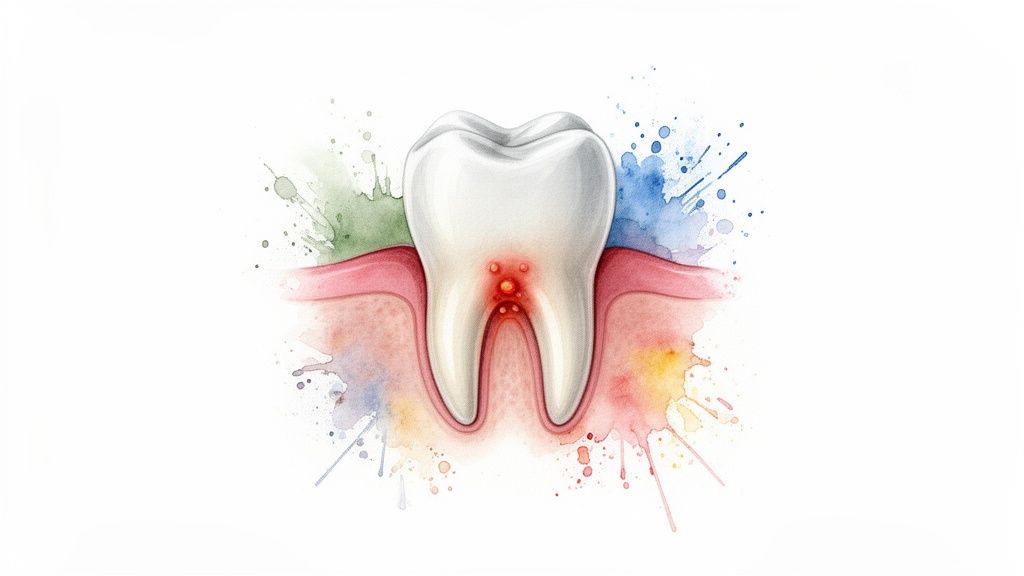
Think of a gum abscess as a tiny, aggressive infection setting up a sealed-off camp inside your mouth. When harmful bacteria get trapped in a pocket, your body's immune system goes on the attack. This battle creates a buildup of pus—a thick fluid made of dead white blood cells, bacteria, and tissue debris. This collection of pus is what forms the painful, swollen bump you can see or feel.
This is much more than a simple pimple on your gums; it's a clear signal that a significant infection is brewing. The intense pain and potential health risks mean that finding prompt emergency dental care isn't just a good idea, it's essential.
Two Main Pathways to Infection
A gum abscess usually takes one of two routes, depending on where the trouble started:
- Periapical Abscess: This kind of abscess begins deep inside the tooth itself. It’s often the endgame of an untreated cavity or an injury that allowed bacteria to get into the tooth's core, known as the pulp. From there, the infection travels down the root canal to the very tip of the root, where the abscess forms.
- Periodontal Abscess: This infection gets its start in the gums. It's typically a nasty complication of gum disease (periodontitis). As the disease progresses, deep pockets can form between the teeth and gums, creating the perfect trap for bacteria to get stuck, multiply, and cause an abscess.
An abscess is your body's attempt to wall off a bacterial infection. But here's the problem: unlike a scrape on your knee, your body can't win this fight alone. The confined pocket of pus creates intense pressure, which is what causes the severe pain. This sealed environment also prevents your immune system from getting in to clear out the bacteria effectively.
Gum abscesses, which are often a direct result of untreated gum disease, are a massive global health problem. In fact, severe gum disease affects over 743 million people around the world. Here in the U.S., the numbers are just as staggering—more than 47% of adults over the age of 30 have some form of gum disease. You can dig deeper into these global gum disease findings to see the full scope of the issue.
Recognizing the Warning Signs of a Gum Abscess

A gum abscess rarely shows up unannounced. It makes its presence known with a host of uncomfortable symptoms that serve as your body's alarm system, signaling a serious infection that needs attention. The most obvious and immediate sign is pain, but this isn't just any ache.
We're talking about a severe, persistent, throbbing pain that feels deeply rooted. It often feels like a pulsing heartbeat in your jaw. This intense discomfort can radiate outward, causing referred pain in your neck or even your ear on the affected side. It's the kind of pain that disrupts your day—making it hard to eat, sleep, or even think straight.
More Than Just Pain
While the throbbing ache is usually what gets your attention, a gum abscess brings along other clear warning signs you can see and feel. The underlying infection triggers significant inflammation, leading to noticeable changes inside and around your mouth.
Keep an eye out for these classic indicators:
- A Visible Bump: You might spot a small, pimple-like lesion or a more pronounced, tender swelling on your gum. This is the abscess itself—a walled-off pocket of pus.
- Redness and Swelling: The gum tissue around the problem tooth will often look angry—bright red, shiny, and swollen. Sometimes, this inflammation can even spread to your cheek or face.
- Extreme Sensitivity: The nearby tooth can become incredibly sensitive to temperature changes. A sip of hot coffee or cold water might send a sharp jolt of pain right to the nerve.
- Bad Taste or Odor: If the abscess drains on its own, you might suddenly get a foul, salty taste in your mouth, followed by a bad smell. While this can bring some temporary relief from the pressure, the infection is still active and needs to be treated.
As the infection progresses, it can start to impact your whole body. Pay close attention to systemic symptoms like a fever, chills, or swollen lymph nodes under your jaw. These are signs your body is fighting a spreading infection and are your cue to seek immediate dental care.
Periodontal vs Periapical Symptoms
Where the abscess starts—either in the gum pocket (periodontal) or at the tip of the tooth root (periapical)—can lead to slight differences in how it feels. Both are serious, but understanding the potential origin can help you give your dentist a more precise description of your symptoms.
Here’s a quick breakdown to help you tell the difference.
Periodontal vs Periapical Abscess Symptoms at a Glance
| Symptom | Periodontal Abscess (Originating in Gums) | Periapical Abscess (Originating at Tooth Root) |
|---|---|---|
| Primary Pain | Often a dull, continuous ache localized to the gum area. | Typically a sharp, severe, throbbing pain originating from deep within the tooth. |
| Tooth Feeling | The tooth may feel loose or slightly raised in its socket. | The tooth is often extremely painful to any biting pressure or tapping. |
| Swelling Location | Swelling is most prominent on the gum tissue right next to the tooth. | Swelling may appear higher up on the gum, near the root tip. |
| Cause | Primarily linked to advanced gum disease and deep gum pockets. | Usually caused by severe tooth decay, a crack, or dental trauma. |
While this table can offer some clues, a proper diagnosis always requires a professional examination. Pinpointing the source is the first critical step your dentist will take to get you on the road to recovery.
Understanding What Causes a Gum Abscess
A gum abscess doesn't just show up unannounced. It’s the final, painful result of a bacterial invasion that’s been brewing for a while. Think of it like this: your gums are the protective seal around your teeth. When that seal is broken, trouble gets in. The most common culprit is a breakdown in daily oral hygiene, which lets plaque—that sticky, bacteria-filled film—build up along the gumline.
Left unchecked, this plaque buildup ignites gum disease, also known as periodontitis. As periodontitis gets worse, it carves out deep pockets between your teeth and gums. These pockets become perfect breeding grounds for bacteria to thrive, eventually leading to a trapped, pus-filled infection we call a periodontal abscess.
Common Triggers for a Gum Abscess
While chronic gum disease is the main highway to an abscess, a few other specific events can give bacteria a shortcut. Each one creates an opening for an infection to take hold where your mouth is most vulnerable.
- Deep Tooth Decay: A cavity that’s ignored can rot its way into the tooth's soft inner pulp. From there, bacteria can travel down the root and form a periapical abscess, which often shows up as a painful pimple on the gum.
- A Cracked or Broken Tooth: Any kind of trauma that chips or fractures a tooth is like rolling out the red carpet for bacteria. It gives them a direct path past the hard enamel and into the sensitive tissues inside.
- Foreign Object Impaction: It sounds strange, but sometimes a tiny piece of a popcorn kernel or a bristle from a toothbrush can get jammed deep into the gum tissue. This can introduce bacteria and kick off a localized infection.
Risk Factors That Increase Your Vulnerability
Some health conditions and habits don't cause an abscess directly, but they can seriously weaken your body's defenses, making you far more likely to develop one. They essentially set the stage for infection, making it easier for bacteria to thrive.
For example, people with diabetes often struggle to fight off infections in general, and high blood sugar levels can feed the very bacteria that cause gum problems. Smoking is another huge one; it cripples the blood flow to your gums, which slows down healing and can even hide the early warning signs of gum disease until it's much more advanced.
A weakened immune system, whether from a medical condition or specific medications, dramatically lowers your ability to fight off the bacteria responsible for an abscess. This makes diligent oral care and regular dental check-ups absolutely non-negotiable.
How Dentists Diagnose and Treat a Gum Abscess
Walking into a dental appointment for a painful abscess on the gum can be nerve-wracking. I get it. But knowing what your dentist is looking for and how they plan to help can take a lot of that anxiety away. The whole process is very systematic, with two clear goals: find out exactly where the infection is coming from, and then get rid of it for good.
The Initial Exam: What Your Dentist Sees
The moment you settle into the dental chair, the diagnostic process has already begun. Your dentist will start with a careful visual check, looking for the classic signs of redness and swelling to pinpoint the abscess.
They’ll then do a few simple hands-on tests. You might feel them gently tapping on the suspicious tooth and its neighbors—a surprisingly effective way to zero in on the source of the pain. They'll also likely measure the depth of the "pockets" where your gums meet your teeth, which is a key indicator of gum disease.
This decision tree gives a great visual of how different problems can all lead to an abscess.
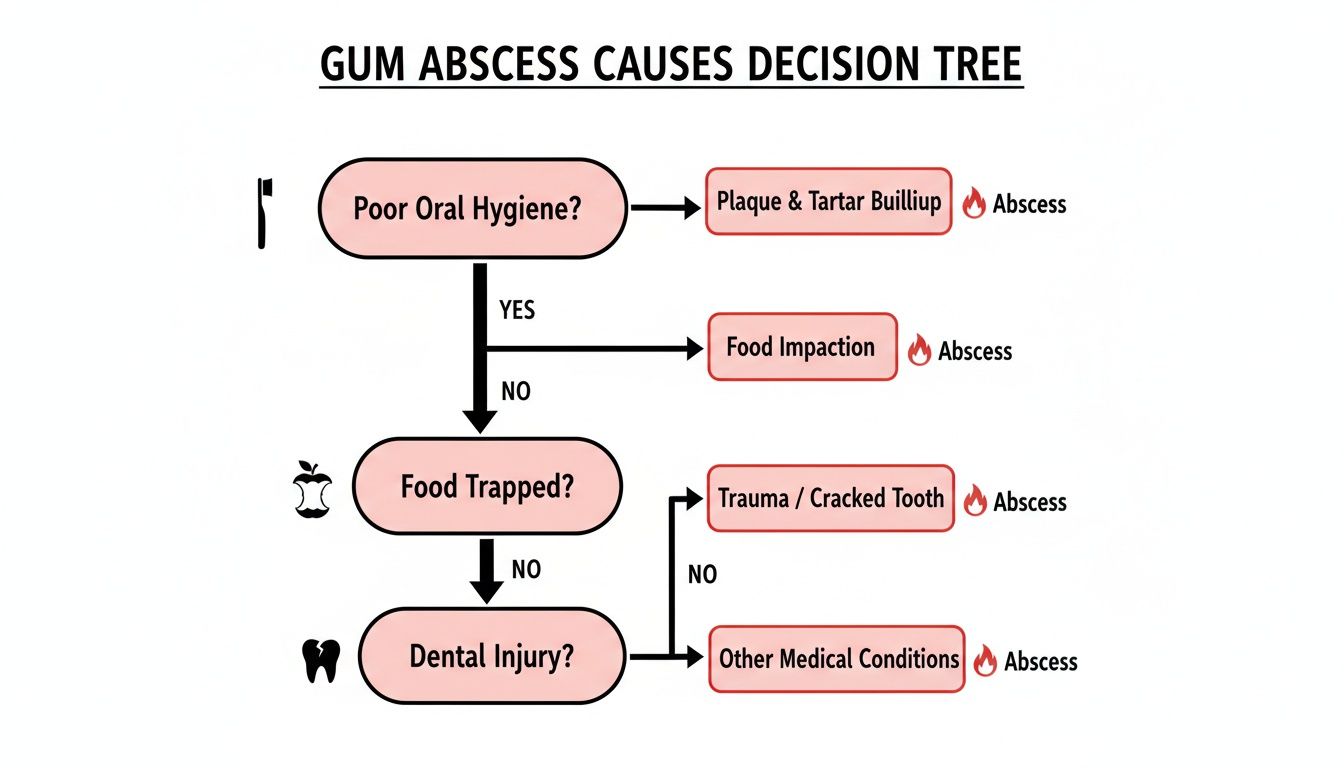
As you can see, while poor hygiene is a major culprit, something as simple as a piece of food getting stuck or a minor injury can also open the door for bacteria to move in.
Getting the Full Picture with Imaging
To see what’s going on below the gumline, a dental X-ray is absolutely essential. This is the only way your dentist can get a clear view of the tooth's root and the bone supporting it. An X-ray quickly confirms whether the abscess is periapical (starting at the root tip) or periodontal (starting in the gums) and shows just how much damage the infection has caused.
For really tricky cases, like a stubborn infection that isn’t responding to treatment, your dentist might need more information. This is where modern tools like advanced pathogen detection come into play, giving us a rapid and precise identification of the exact bacteria causing all the trouble.
The Two-Step Treatment Plan
Once your dentist has a firm diagnosis, treatment is usually broken down into two critical phases: draining the abscess to give you immediate relief and then treating the underlying problem to make sure it never comes back.
- Draining the Abscess: The top priority is relieving that intense, throbbing pressure. Your dentist will numb the area completely before making a tiny incision to let the built-up pus drain out. The relief is almost instantaneous.
- Eliminating the Source: Just draining the pus is like bailing water out of a boat with a hole in it—it's a temporary fix. To solve the problem permanently, the original cause has to be addressed. The right procedure depends entirely on the diagnosis.
A big misconception is that antibiotics can cure a gum abscess on their own. While they're often prescribed to keep the infection from spreading, they can't get to the source of the problem. Think of them as backup, not the main solution.
For a periapical abscess where the tooth's nerve is infected, a root canal treatment is usually the best way to save the tooth. If it’s a periodontal abscess, a deep cleaning called scaling and root planing is needed to clear out the plaque and tartar hiding in those deep gum pockets. In the most severe situations, where the tooth is beyond saving, an extraction is the only way to fully clear out the infection.
It's also interesting to see where these abscesses tend to show up. One study found a whopping 71.77% of dental abscesses occurred in the mandible, or lower jaw. That’s a 2.54 to 1 ratio when comparing the lower jaw to the upper. It's a reminder of just how complex and specific these dental issues can be.
Advanced Care for Complex or Non-Healing Oral Infections
While most gum abscesses get knocked out by standard dental treatments like a simple drainage or a root canal, some infections just refuse to quit. They dig in their heels and become far more stubborn.
This is especially true for patients with underlying health issues, like diabetes or a compromised immune system. For them, an ordinary abscess can spiral into a persistent, non-healing wound. That’s a clear signal that it’s time to call in a more specialized approach.
When a gum infection won’t heal, it tells us one of two things: either the bacteria are resistant to standard treatments, or the body’s own healing mechanisms are struggling. This is precisely where advanced wound care technologies come into play, offering powerful tools that you won’t find in a typical dental office.
Pinpointing the Exact Cause with Rapid Diagnostics
One of the biggest hurdles with a persistent abscess on gum is figuring out exactly which bacteria are causing all the trouble. Traditional lab cultures can feel like a waiting game, sometimes taking days to give you answers while the infection gets worse.
Advanced care flips the script by using rapid pathogen testing. This technology can identify the specific bacterial strains and—more importantly—their antibiotic sensitivities in a matter of hours, not days. This precision allows clinicians to prescribe the right antibiotic from the get-go, ditching the trial-and-error method for a targeted attack. For a deeper look into infections that pop up after dental procedures, understanding an abscess after root canal treatment can offer more specific insights.
Visualizing and Removing Hidden Bacteria
Even after an abscess is drained, microscopic colonies of bacteria can hide out in the tissue, just waiting for a chance to cause a reinfection. To hunt down these hidden invaders, specialists can use advanced imaging to see what the naked eye misses.
MolecuLight DX fluorescence imaging is a game-changer here. It uses a special light that literally makes bacteria glow. This allows a clinician to see the full extent of an infection and ensures every last bit of contaminated tissue is removed during cleaning.
This screenshot shows exactly what that looks like in practice. The glowing areas reveal bacterial presence that is otherwise completely invisible.
By mapping out the bacterial load so precisely, the imaging guides the clinician to target and remove all the infected tissue, leading to a much more thorough and effective cleaning.
Rebuilding Damaged Tissue with Regenerative Materials
A severe, long-lasting abscess doesn't just cause pain; it can physically destroy gum and bone tissue. This can leave behind a significant defect that the body simply can't repair on its own.
In these complex situations, regenerative medicine steps in to provide the raw materials for recovery. Some of the materials used include:
- Amniotic Membrane Allografts: These are thin, natural tissues that act as a biological scaffold for new growth.
- Cellular and Tissue-Based Products (CTPs): These products are packed with growth factors that send a powerful signal to the body, telling it to start building new, healthy tissue.
By placing these materials at the infection site, they encourage the body to rebuild what was lost, paving the way for faster and more complete healing. When you're up against a non-healing oral wound, exploring these advanced wound care treatment options can open up a path to recovery that standard care might not be able to offer.
Preventing Future Gum Abscesses for Good
Once your abscess is treated, the last thing you want is a repeat performance. The real key to prevention isn't just about brushing twice a day—it's about getting smart and disrupting the bacterial colonies that cause these painful infections in the first place.
Think of plaque as a stubborn, sticky film that bacteria build to protect themselves. Your job is to systematically tear down that film every single day. This means going beyond the tooth surfaces and focusing on the most critical area: where your teeth meet your gums.
Upgrading Your Daily Oral Care Routine
To keep another abscess from forming, you have to be intentional with your daily hygiene. It's not about brushing harder; it’s about brushing smarter and cleaning out the hiding spots where bacteria thrive.
Here are the non-negotiable habits for a healthier, abscess-free mouth:
- Angle Your Toothbrush: Always tilt your toothbrush to a 45-degree angle aimed right at your gumline. This simple trick allows the bristles to sweep away plaque from just underneath the gum's edge, which is ground zero for gum disease and abscesses.
- Floss Below the Gumline: Don't just snap floss between your teeth and call it a day. Gently guide it down, curve it into a C-shape against the side of each tooth, and slide it just beneath the gumline. This is where the most dangerous plaque and debris get trapped.
- Use an Antiseptic Mouthwash: A good rinse helps knock down the overall bacterial load in your mouth, getting into nooks and crannies that your brush and floss might have missed.
Prevention is a team sport between you and your dental professionals. Your daily habits are the foundation, but only professional cleanings can remove hardened plaque (tartar) that’s impossible to get rid of at home.
A Holistic Approach to Oral Wellness
Your oral health doesn't exist in a vacuum; it’s directly tied to your overall health. Certain medical conditions can make you much more vulnerable to infections, including a nasty gum abscess. Managing your systemic health is a huge piece of the prevention puzzle.
For example, if you have diabetes, keeping your blood sugar levels stable is non-negotiable, as high glucose is like rocket fuel for bacterial growth.
This big-picture strategy is a lot like the philosophy behind advanced home wound care, where treating the whole person is essential for healing. You can learn more about the goals of advanced home wound collaborative care and see how a comprehensive approach can make all the difference. Sticking to regular dental check-ups and a diligent home care routine is your absolute best defense against future infections.
Common Questions About Gum Abscesses
When you’re dealing with a dental emergency like a gum abscess, a lot of questions pop up. Getting clear, straightforward answers is the first step toward feeling in control, getting the right treatment, and making sure it doesn’t happen again.
Can a Gum Abscess Go Away on Its Own?
Absolutely not. A gum abscess will never heal by itself. The pain might temporarily fade if the abscess bursts and releases pressure, but don't be fooled—the infection is still lurking deep inside the tissue.
Without a dentist draining the pus and getting rid of the bacteria, the infection will always come back. Worse, it can spread into your jawbone, sinuses, or even your bloodstream, leading to serious, body-wide health problems. This isn’t a wait-and-see situation; getting professional dental care right away is critical.
What Can I Do for Pain Before My Appointment?
That throbbing pain can be intense while you’re waiting to see the dentist. A couple of things can help you manage the discomfort, but remember, these are just for temporary relief and won’t touch the underlying infection.
- Warm Salt Water Rinse: Gently swish with a warm salt water solution (about half a teaspoon of salt in a cup of warm water) a few times a day. This can help calm down some of the inflammation and feel soothing.
- Over-the-Counter Pain Relievers: An anti-inflammatory medication like ibuprofen can help take the edge off the pain and reduce some of the swelling until your appointment.
It's crucial to understand these are just comfort measures. They are not a substitute for professional dental treatment. You have to see a dentist to get the infection handled properly.
How Long Does Recovery Take After Treatment?
Your recovery time really depends on how severe the abscess was and what kind of treatment was needed to fix it.
If it was a simple "incision and drainage" procedure, you'll probably feel a world of difference within a day or two. The gum tissue itself should be mostly healed in about a week. But if the problem required a root canal or even a tooth extraction, you can expect a longer healing process. Your dentist will give you a specific set of aftercare instructions to make sure everything heals up smoothly.
At Specialty Wound Care, we partner with clinicians to manage complex oral wounds that resist traditional treatments. Learn how our advanced diagnostics and regenerative therapies can accelerate healing for your patients. Visit us at https://specialtywoundcare.com.


