How to Speed Up Wound Healing A Practical Guide to Faster Recovery
To really speed up wound healing, you need a proactive plan that kicks into gear from the moment a wound appears. It all starts with a swift and accurate assessment to figure out exactly what you're dealing with, followed by diligent infection control and proper cleansing to prepare the wound bed. This foundational framework is critical for setting the stage for rapid recovery.
The Foundational Steps for Accelerated Healing
When a wound stalls, the first few actions taken by both the patient and the clinician are the best predictors of success. The chronic wound crisis is a massive challenge, impacting approximately 6.5 million Americans who suffer from deficient healing. That number is climbing, thanks to an aging population and rising risk factors like diabetes and vascular disease.
The consequences are severe—from persistent pain and life-threatening infections to amputations. A structured, decisive approach isn't just a good idea; it's non-negotiable. This is why we have to move beyond a "wait-and-see" mindset. A fast, well-thought-out plan can be the difference between a wound that closes in weeks versus one that lingers for months or even years.
To lay the groundwork for effective treatment, we can break down the initial process into a few core pillars. Each one builds on the last, creating a comprehensive strategy for healing.
Here's a quick look at these foundational pillars:
Foundational Pillars of Accelerated Wound Healing
| Pillar | Primary Goal | Key Actions |
|---|---|---|
| Accurate Assessment | To identify the root cause and specific characteristics of the wound. | Measure size and depth, identify tissue types (granulation, slough, eschar), and evaluate the surrounding skin. |
| Infection Control | To eliminate bacterial barriers and prevent complications. | Cleanse the wound properly, use diagnostic tools like fluorescence imaging, and perform targeted debridement. |
| Wound Bed Preparation | To create an optimal environment for new tissue growth. | Remove non-viable tissue (debridement), manage exudate, and ensure the wound bed is ready for advanced dressings or therapies. |
This table simplifies the core principles, but let's dive into what these actions look like in practice.
Accurate Wound Assessment Is Non-Negotiable
You can't effectively treat what you haven't accurately identified. The entire course of treatment hinges on that first, thorough wound assessment. A diabetic foot ulcer, for instance, demands a completely different strategy than a post-surgical incision or a pressure injury.
This initial evaluation goes far beyond just a quick look. A clinician will dig into:
- Wound Type and Cause: Is it neuropathic, ischemic, or a combination? Getting to the root cause is everything.
- Size and Depth: Precise measurements aren't just for the record; they track progress and inform treatment choices.
- Wound Bed Condition: Are we looking at healthy, beefy red granulation tissue, or is the wound covered in non-viable slough or eschar?
- Surrounding Skin: The health of the skin around the wound gives us critical clues about circulation and potential infection.
Proactive Infection Control and Cleansing
Once we know what we're up against, the focus immediately shifts to creating an optimal healing environment. This starts with aggressive infection control and proper cleansing. The goal isn’t just to "clean" the wound—it’s to meticulously prepare the wound bed for regeneration.
Modern tools have completely changed how we do this. For example, fluorescence imaging lets clinicians see high concentrations of bacteria in real-time, often long before the classic signs of infection ever appear. This technology guides debridement—the removal of dead or infected tissue—with incredible precision, ensuring we only remove non-viable tissue while preserving healthy cells. It's a game-changer for preventing complications.
Key Takeaway: Think of debridement not as cleaning, but as cultivating a garden. You must remove the weeds (dead tissue and bacteria) to allow the flowers (new, healthy tissue) to grow.
The simple illustration below captures this core process flow for foundational wound healing.
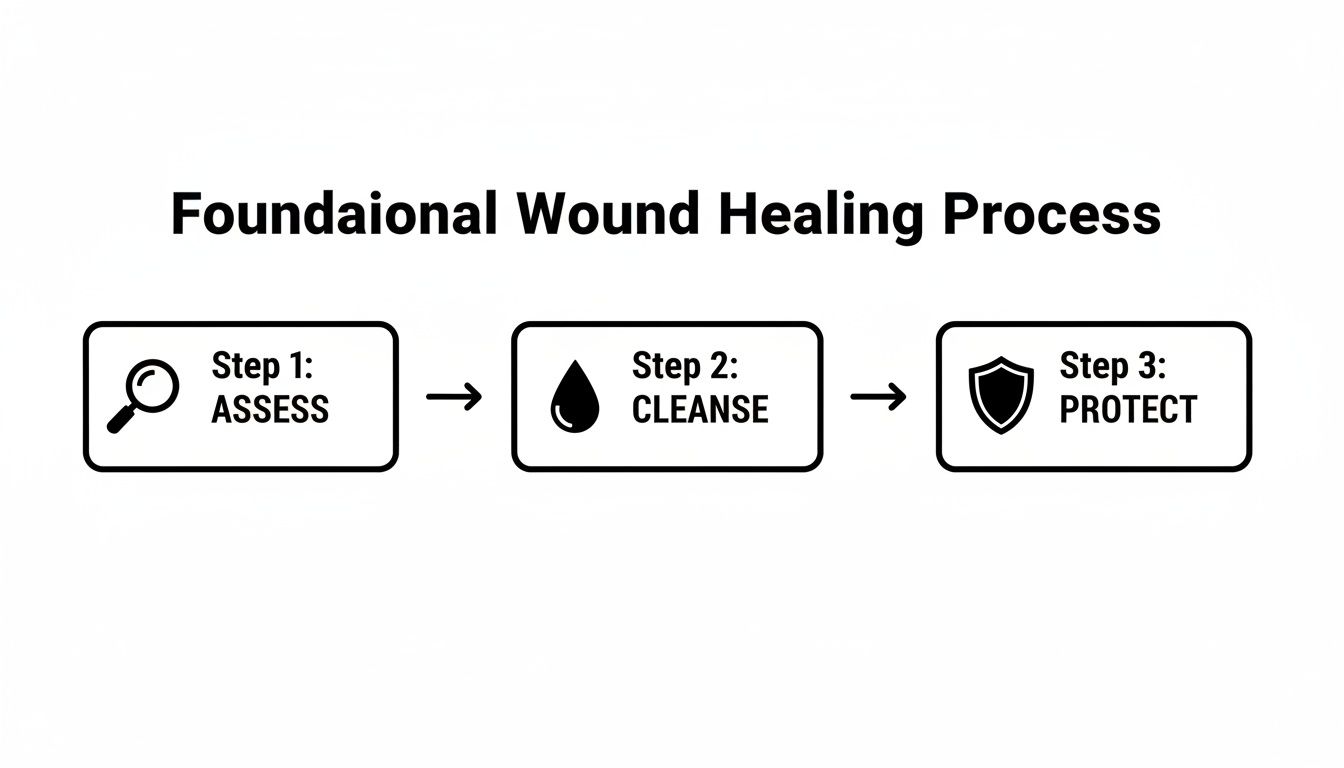
This simple three-part framework—Assess, Cleanse, Protect—forms the backbone of every effective wound care plan. It guides every subsequent action. The collaborative nature of this process is also key; understanding the goals of advanced home wound collaborative care can empower patients to take a more active role in their own recovery alongside their clinical team.
Why Early Intervention Is a Game Changer
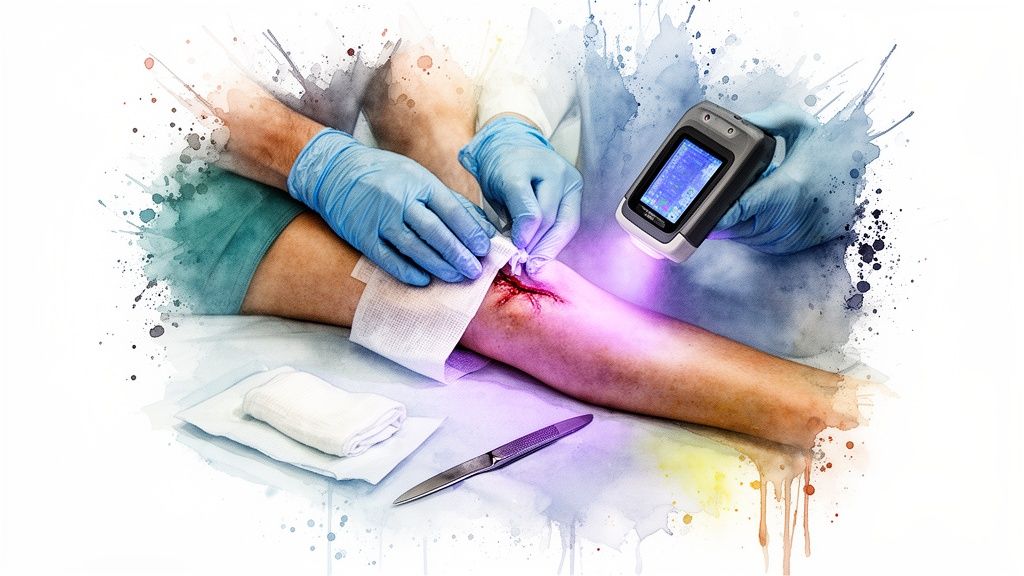
When you're dealing with a non-healing wound, time is the one thing you can't get back. The impulse to "wait and see" is understandable, but it's also one of the biggest roadblocks to recovery. Every single day a wound stays open, the door is also open for complications like infection, biofilm, and further tissue damage.
This isn't just about being patient; it's about biology. A wound that's been around for a few weeks is a completely different beast than one that has lingered for months. Chronic wounds get stuck in a persistent state of inflammation, and their very physiology changes, making them incredibly resistant to healing. Acting fast disrupts this cycle before it becomes deeply entrenched.
The Critical Window for Healing
Think of a new wound as having a certain "healing momentum." In the early days, the body's repair systems are firing on all cylinders, ready to get the job done. Stepping in during this critical window with the right treatments leverages that natural momentum and guides the wound toward closure.
But if you miss that window, the wound loses its forward progress. The surrounding tissue gets weaker, circulation might drop off, and the wound bed can become a perfect breeding ground for stubborn bacteria. This is exactly why a six-month-old wound often demands a much more aggressive and complex treatment plan than a six-week-old one.
The data backs this up without question. Wound duration is a huge predictor of healing. Studies consistently show that wounds present for a shorter time respond far better to treatment. One major study found that chronic wounds present for less than 12 months were significantly more likely to heal than older wounds, with an odds ratio of 3.378. This pattern held true for all kinds of wounds—traumatic injuries, venous leg ulcers, and pressure injuries alike. You can explore the full study on wound duration and healing outcomes for a deeper dive.
A Tale of Two Patients
To see how this plays out in the real world, let's look at a common scenario with two patients who both have a diabetic foot ulcer.
- Patient A: Notices a small sore on the bottom of their foot. It doesn't hurt because of neuropathy, but they remember their doctor's advice and immediately make an appointment with a wound specialist. Within a week, the specialist has started a plan, using advanced diagnostics to check the bacterial load and implementing proper offloading and dressings.
- Patient B: Finds a similar sore but decides to "give it a week or two" to see what happens. That week turns into a month. By the time they finally seek care, the ulcer has burrowed deeper, a quiet infection has set in, and the whole area is inflamed. Their path to healing is now much longer and far more complicated.
Patient A’s ulcer heals within a few weeks because of proactive, targeted care. Patient B, on the other hand, is now facing a long-term battle that could take months of intensive treatment, possibly involving advanced therapies and a much higher risk of serious complications like a bone infection or even amputation. The contrast couldn't be clearer: the best way to speed up wound healing is to get aggressive right from the start.
The Takeaway: Early intervention isn’t about impatience. It’s a strategic decision rooted in the biological reality of how wounds heal. Hesitation allows a manageable problem to spiral into a complex, treatment-resistant condition.
Recognizing the warning signs of a non-healing wound—stalled progress, more pain, a strange odor—and getting a specialist involved is the most powerful move you can make. You have to fight that "wait and see" instinct to avoid the serious fallout that comes with a chronic, unmanaged wound.
Leveraging Advanced Therapies for Stubborn Wounds
When standard care—even excellent standard care—just isn't getting the job done, it's time to bring in more powerful tools. For a stubborn wound that won't close, advanced therapies stop being a future consideration and become a present necessity. Their entire purpose is to break the cycle of a non-healing wound stuck in a chronic state of inflammation.
One of the most effective approaches we have today is the use of amniotic membrane allografts. Don't think of these as just sophisticated wound covers. A better analogy is a biological "scaffold" for the body. The allograft is packed with essential growth factors, collagens, and other proteins that actively signal the body to start rebuilding healthy tissue from the ground up.
This goes far beyond simply protecting a wound. It actively recruits the body's own healing machinery, giving it the structure and chemical signals needed to do its job. It fundamentally changes the wound environment from stagnant to regenerative.
The Science Behind Amniotic Allografts
Amniotic membrane allografts come from the amniotic sac, which is carefully screened and donated after a healthy C-section birth. This tissue is uniquely suited for healing because it's immunologically privileged, meaning it rarely causes an immune reaction in the recipient.
Its main functions in wound care are threefold:
- Reducing Inflammation: It helps calm the chronic inflammation that stalls a wound's progress.
- Providing a Scaffold: The allograft creates a matrix for new cells to migrate across and build upon.
- Delivering Growth Factors: It releases a host of powerful proteins that stimulate cell growth and blood vessel formation.
This combination of benefits jump-starts the healing cascade, effectively pushing a chronic wound back into an active healing phase. The patient experience is often quite straightforward; the allograft is applied directly to the prepared wound bed in a clinical setting. It's common to see tangible signs of progress, like the appearance of healthy pink granulation tissue, relatively quickly.
A key advantage of these therapies is their ability to transform the wound bed. Instead of just waiting for the body to heal, we are giving it the precise biological instructions and materials to accelerate tissue repair and regeneration.
Clinical Evidence for Faster Healing
The impact of these advanced therapies isn’t just theoretical—it's backed by solid clinical evidence. For particularly challenging wounds, or when looking to significantly boost recovery, exploring these options is just smart medicine. You can learn more about similar regenerative approaches in a masterclass on peptides, stem cells, and hormone replacement for injury healing.
Take dehydrated amnion/chorion membrane (DHACM) allografts, for example. Clinical research shows their remarkable ability to speed up closure. A landmark multicenter trial on chronic venous leg ulcers found that patients treated weekly with DHACM achieved a 75% healing rate at 12 weeks. That was a dramatic improvement over the 30% healing rate in patients who only received compression therapy.
Another case series showed that approximately 86% of patients with various chronic wounds achieved complete closure, with an average healing time of just 7.9 weeks. These aren't just numbers; they represent real patients getting better, faster.
These statistics highlight a crucial point. For the right patient, these therapies aren't a last resort but an evidence-based choice to avoid severe complications and get them back on their feet.
Knowing When to Escalate Care
So, how do you know when it’s time to consider these options? The decision is always made in partnership with a wound care specialist, but a few key indicators often point toward the need for advanced intervention.
A wound may be a candidate if it:
- Shows little to no progress for two to four consecutive weeks, even with good standard care.
- Is stuck in an inflammatory state with persistent swelling, redness, or drainage.
- Has underlying complexities like poor circulation, deep infection, or significant tissue loss.
By understanding the advanced treatment options available through specialty wound care, both patients and clinicians can make more informed decisions. The goal is always to match the right therapy to the right wound at the right time, creating a clear and efficient path toward complete healing.
Fueling Your Body for Optimal Tissue Repair
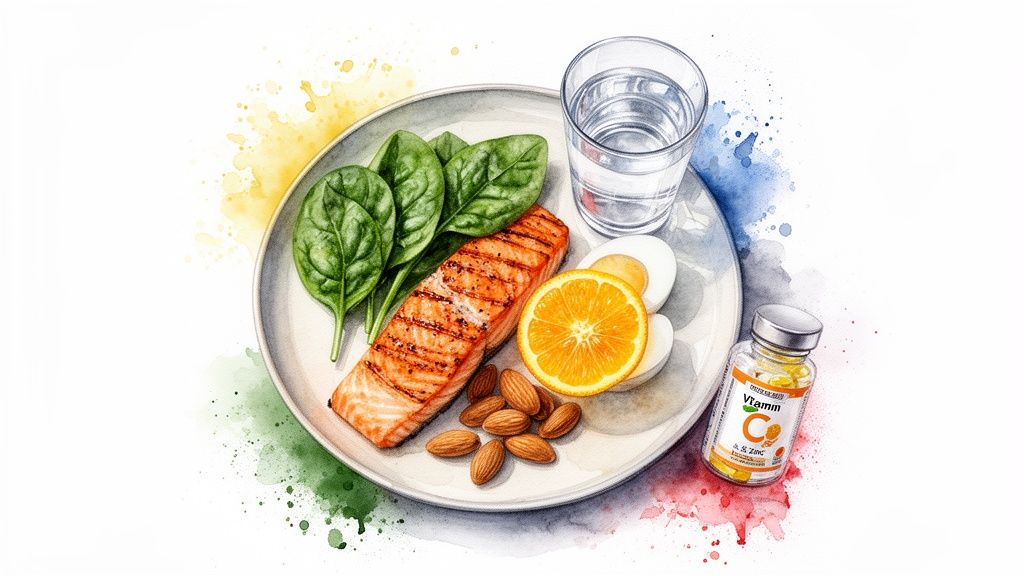
Advanced treatments are incredible, but they're only half the battle. Real, sustainable healing happens from the inside out, powered by the food you eat every single day. The connection between what's on your plate and how fast you recover is crystal clear—your body needs specific building blocks to reconstruct skin, grow new blood vessels, and keep infections at bay.
This isn't about some miserable, restrictive diet. It’s about being smart and strategic with your food choices to give your body the raw materials it needs. Think of your body as a construction site. You can have the most skilled crew in the world, but if they don't have bricks, mortar, and steel, the project grinds to a halt.
The Macronutrient Powerhouse: Protein
When it comes to healing, protein is the star player. It's the primary building block for every single new cell your body is trying to make—skin, muscle, blood vessels, you name it. When you're recovering from a wound, your protein needs can shoot up, sometimes requiring 1.2 to 1.5 grams of protein per kilogram of body weight.
Skimping on protein will directly slow down collagen production, leaving new tissue weak and fragile. The good news is that getting enough is straightforward if you incorporate high-quality sources into every meal.
- Lean Meats: Chicken breast, turkey, and lean cuts of beef are fantastic.
- Fish: Salmon and tuna are great choices, and they also deliver a dose of anti-inflammatory omega-3 fatty acids.
- Eggs and Dairy: Greek yogurt, cottage cheese, and eggs are protein-packed and easy to prepare.
- Plant-Based Options: For those on a vegetarian or vegan diet, lentils, chickpeas, beans, and tofu are excellent sources.
It can be as simple as adding a scoop of Greek yogurt to your breakfast, tossing some grilled chicken on your salad at lunch, and having a side of lentils with dinner. Small changes add up quickly.
Essential Vitamins and Minerals for Repair
Beyond the big stuff like protein, certain micronutrients have very specific, critical jobs in the healing process. They're like the foremen on the construction site, making sure every task happens correctly and on time.
Key Insight: Many nutrients are "co-factors" in healing. This means that without them, vital steps like forming collagen simply can't happen efficiently. A deficiency in just one area can create a major bottleneck in your recovery.
Two of the most important players here are Vitamin C and Zinc.
Vitamin C is absolutely essential for creating collagen, the fibrous protein that gives new skin its strength and structure. Without enough of it, the tissue your body builds will be weak and prone to breaking down.
Zinc is a workhorse, helping with cell growth and supporting your immune system. It helps your body both build new tissue and defend the wound from bacteria.
To make it easier, here's a quick cheat sheet of key nutrients and where to find them.
Key Nutrients for Wound Healing and Their Food Sources
This table is a simple reference guide to the essential nutrients your body needs for tissue repair and the best places to find them.
| Nutrient | Role in Healing | Excellent Food Sources |
|---|---|---|
| Vitamin C | Critical for collagen production and immune support. | Citrus fruits (oranges, grapefruit), bell peppers, strawberries, broccoli. |
| Zinc | Aids in cell growth, protein synthesis, and immune defense. | Shellfish, lean meats, nuts, seeds, chickpeas, yogurt. |
Keep this handy when you're making your grocery list to ensure you're stocking up on healing foods.
Hydration and Blood Sugar: The Hidden Accelerators
Finally, let's talk about two factors that are often overlooked but can make or break your healing progress: hydration and blood sugar.
Staying hydrated is non-negotiable. Water is what transports all those vital nutrients and oxygen to the wound, and it’s also what flushes away waste products. When you're dehydrated, your blood thickens, circulation slows down, and the whole healing process can grind to a crawl. The goal is to sip water consistently all day long, even before you feel thirsty.
For anyone with diabetes, controlling blood sugar is arguably the single most powerful thing you can do to promote wound healing. Persistently high glucose levels paralyze white blood cells, damage circulation, and create a five-star hotel for bacteria. Diligent blood sugar management isn't just about managing a chronic condition; it's a direct and potent wound healing therapy.
For a deeper dive, check out these essential nutrition tips that can give your body an extra edge. By fueling yourself correctly, you stop being a bystander and become an active, powerful partner in your own recovery.
Protecting the Wound from Daily Pressures
What happens to a wound between clinical appointments is just as crucial as the treatment itself. We can apply the most advanced therapies, but they can be completely undone by the simple, repetitive forces of daily life. This is where two critical concepts come into play: advanced dressings and pressure offloading.
Thinking of a dressing as just a passive bandage is an outdated idea. Modern dressings are active tools engineered to create the perfect microenvironment for healing. They do far more than just cover a wound; they meticulously manage moisture, shield fragile new tissue, and can even help control bacteria.
Dressings as Active Healing Tools
The goal of a modern dressing is to maintain a state of moist wound healing. I’ve seen countless wounds stall simply because they were too dry. On the flip side, a wound that’s too wet can lead to maceration, causing the healthy skin around the edges to break down. The right dressing strikes that perfect balance.
Different wounds demand different types of dressings to manage this moisture effectively. For instance:
- Foam Dressings: These are my go-to for wounds with moderate to heavy drainage. They are highly absorbent, pulling excess fluid away from the wound bed while keeping it just moist enough to heal.
- Hydrocolloid Dressings: These create a gel-like environment over the wound, which is excellent for promoting new tissue growth in wounds with light to moderate drainage.
- Alginate Dressings: Derived from seaweed, these are incredibly absorbent. I often use them for wounds with significant drainage or even some minor bleeding.
The choice of dressing is a clinical decision based on the wound's specific needs, which can absolutely change from one week to the next. The key is that the dressing is an active part of the treatment plan, not just an afterthought. For a deeper understanding, a point-of-care wound imaging device can help clinicians assess bacterial load with incredible precision, guiding a more informed dressing selection.
The Critical Role of Offloading
For wounds on the lower extremities, especially diabetic foot ulcers, pressure is the silent enemy of healing. Imagine trying to repair a crack in a sidewalk while people continue to walk on it all day. Every step a patient takes can crush delicate new cells and restrict vital blood flow, effectively erasing any progress made in the clinic.
This is why offloading—the process of removing pressure from the wound area—is absolutely non-negotiable. Without it, many lower extremity wounds simply will not heal. It's a hard truth, but one we have to face.
Real-World Impact: Constant pressure on a foot ulcer doesn't just slow healing; it can actively reverse it. Offloading is a 24/7 commitment that protects the investment made in advanced therapies and gives new tissue the uninterrupted time it needs to mature.
Effective offloading requires specialized equipment and, just as importantly, a commitment from the patient to use it consistently.
Common offloading methods include:
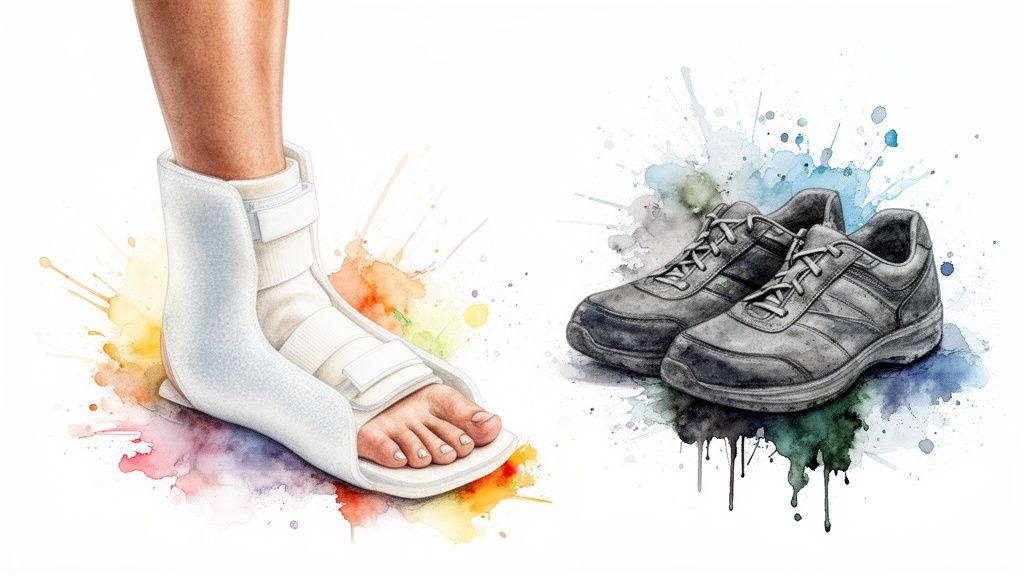
- Total Contact Casts (TCC): Often considered the gold standard, a TCC is a specially designed cast that expertly redistributes weight and pressure away from the ulcer.
- Removable Cast Walkers: Also known as "CAM boots," these provide significant pressure relief but hinge entirely on the patient wearing them correctly and consistently.
- Therapeutic Footwear: For less severe ulcers or as a step-down therapy, diabetic shoes with custom inserts can help redistribute pressure during daily activities.
Protecting the wound is a full-time job. It’s a true partnership between the clinician's choice of an active dressing and the patient's dedication to offloading pressure. This dual approach ensures the wound has the protected, optimized environment it needs to finally close.
Your Healing Journey and Signs of Progress
Think of healing as a journey you're actively navigating, not just a destination you're waiting to arrive at. You’re in the driver’s seat. Everything we've covered—from the initial assessment and advanced treatments to nutrition and daily wound protection—are the tools that empower you to take control of your recovery.
A huge part of this is knowing what to look for. When you can confidently tell the difference between a wound that’s on the right track and one that’s heading for trouble, you become an invaluable partner to your clinical team. This partnership is what truly accelerates healing.
Green Flags: Positive Signs of Healing
It's always encouraging to see clear evidence that your hard work is paying off. Keep an eye out for these positive signs that your wound is healing properly:
- It’s Getting Smaller: The most obvious sign. You’ll notice the wound gradually shrinking in width, length, or even how deep it is.
- Healthy New Tissue Appears: Look for the growth of granulation tissue. This is new connective tissue that has a bumpy, almost berry-like texture and a healthy pink or red color. It’s the foundation for new skin.
- Drainage is Decreasing: The amount of fluid, or exudate, coming from the wound should lessen over time.
Red Flags: When to Call Your Specialist
On the flip side, some signs demand immediate attention from your wound care specialist to get ahead of any potential complications. Don't wait to make the call if you notice any of the following:
- Pain or Swelling Gets Worse: Any increase in discomfort, tenderness, or puffiness around the wound area is a major red flag.
- A Foul Odor: A bad or unusual smell coming from the wound or the dressing is often a primary indicator of infection.
- Thick, Colored Drainage: Any discharge that looks like pus—especially if it’s yellow or green—is a serious concern.
- You Have a Fever: A body temperature over 101°F (38.3°C) can mean the infection is no longer localized and has become systemic.
Your active involvement is the final, essential piece of the puzzle. By recognizing these signs, communicating with your team, and seeking expert care when needed, you’re paving a clear and hopeful path toward full recovery.
Your Top Questions About Wound Healing, Answered
When you're focused on recovery, a lot of practical questions can pop up. Let's cut through the noise and get straight to the answers for some of the most common concerns we hear from patients about speeding up the healing process.
How Do I Know if My Wound Is Healing or Infected?
A healing wound gives you clear, positive feedback. You should see it gradually getting smaller. Look for the development of healthy granulation tissue—that’s the pink or reddish, slightly bumpy tissue that fills the wound bed. Another good sign is that the drainage lessens over time.
Infection, on the other hand, sends out alarm bells. Be on the lookout for redness spreading out from the wound, skin that feels warm to the touch, or noticeable swelling. Pus-like drainage (often yellow or green), a bad smell, or pain that’s getting worse instead of better are all red flags. If you spike a fever, that’s a sign the infection could be spreading.
This is where modern tools really shine. Things like fluorescence imaging can spot high bacterial loads long before the classic signs of infection show up, which is why regular checks with a specialist are so important.
Can I Use Hydrogen Peroxide to Clean My Chronic Wound?
That's a hard no. While many of us grew up with hydrogen peroxide or rubbing alcohol as the go-to for cuts and scrapes, we now know better, especially for chronic wounds.
These harsh solutions are cytotoxic, a technical term that means they kill living cells. That includes the delicate, brand-new cells your body is working so hard to build. Using them can actually set your healing back significantly.
So, what's the right move? Stick to a gentle, pH-balanced wound cleanser or sterile saline solution, just as your provider recommends. The goal is to clean away debris and bacteria without harming the fragile new tissue that’s trying to grow.
Expert Insight: Proper wound cleansing is a balancing act. It must be aggressive enough to remove barriers to healing but gentle enough to protect the new tissue that signals recovery. Harsh antiseptics disrupt this delicate balance.
What Is an Amniotic Membrane Allograft?
It sounds complex, but the concept is pretty straightforward. An amniotic membrane allograft is a medical product made from the amniotic sac, which is donated with full consent after a healthy, scheduled C-section.
The tissue is processed under strict, sterile guidelines to preserve all its natural healing power. This includes a rich supply of growth factors that act as a scaffold, encouraging your own cells to build new tissue.
These allografts are considered very safe and are regulated by the FDA. Because the tissue is immunologically privileged, it rarely triggers an immune reaction from the recipient. It's become a powerful, evidence-based tool we use to jump-start healing in wounds that have stalled with standard care.
How Much Protein Do I Need to Heal Faster?
Your body's demand for protein skyrockets during the healing process. Think of it as the essential building material for all the new tissue you need to create.
While a typical healthy adult needs about 0.8 grams of protein per kilogram of body weight, someone with a major wound might need 1.2 to 1.5 grams per kilogram.
Let’s make that real. For a 150-pound (68 kg) person, that’s a jump to about 82-102 grams of protein every single day. You can hit this target by focusing on high-quality sources like lean meats, fish, eggs, dairy, beans, and lentils. A wound care specialist or a nutritionist can help you dial in the exact amount you need to give your body the fuel it needs for recovery.
At Specialty Wound Care, we’re focused on one thing: accelerating healing for patients with complex wounds. Our team brings together advanced science and deep clinical experience to create treatment plans that get results. See how our approach can help you or your patients by visiting https://specialtywoundcare.com.