What Causes Wounds Not to Heal and How to Treat Them
When a wound just won’t heal, it’s a sign that something is getting in the way of your body's natural repair crew. Figuring out what causes a wound to stall often comes down to four major culprits: poor circulation that starves the area of oxygen, uncontrolled diabetes that wreaks havoc on nerves and blood vessels, a stubborn infection that turns the wound into a battlefield, and constant pressure that won't let new tissue grow.
The Hidden Reasons Your Wound Is Not Healing
Think of healing as building a house. The four big problems are like a blocked supply road (no circulation), a bad batch of concrete (diabetes), vandals tearing down the work each night (infection), or the foundation constantly shifting (pressure). Any one of these can bring the whole project to a grinding halt.
When a wound sticks around for weeks or months, it's no longer just a simple cut; it has become a chronic wound. The construction site has been abandoned.
This isn’t just a small problem. Chronic wounds impact the quality of life for nearly 2.5% of the entire U.S. population, causing pain, limiting mobility, and creating constant anxiety. The financial burden is staggering, too—our nation spends over $25 billion a year tackling wound-related complications.
Key Barriers to Healing
To get a wound back on track, we have to identify what’s holding it back. These barriers can work alone or team up, creating a complex puzzle that needs the right approach to solve.
The most common roadblocks include:
- Circulation Issues: If blood can’t get to the wound, neither can oxygen, nutrients, or the immune cells needed to rebuild. It's like trying to grow a garden without water.
- Underlying Health Conditions: Systemic diseases, especially diabetes, are notorious for sabotaging the healing process. They damage blood vessels, weaken the immune system, and impair nerve signals.
- Infection and Biofilm: Bad bacteria can completely take over, fueling inflammation and destroying any new tissue that tries to form. Even worse, they can create biofilms—a slimy, protective shield that makes infections incredibly tough to beat.
- Sustained Pressure or Trauma: Constant pressure, whether from being bedridden or wearing shoes that don't fit, physically squeezes the life out of the tissue. It cuts off blood flow and makes it impossible for the wound edges to close.
A wound that isn’t showing clear signs of healing within four to six weeks has fallen off the normal repair schedule. It's stuck in a state of chronic inflammation, where the healing process is spinning its wheels.
Figuring out which of these issues is at play is the first real step toward a solution. The table below gives a quick overview of these primary barriers and how they stall healing.
Primary Barriers to Wound Healing at a Glance
This table breaks down the most common factors that stall the body's natural healing process and their direct impact on the wound.
| Barrier to Healing | How It Disrupts the Process | Typical Wounds Affected |
|---|---|---|
| Poor Circulation | Starves the wound of oxygen and essential nutrients needed for cell growth and repair. | Arterial Ulcers, Diabetic Foot Ulcers |
| Infection | Creates a state of constant inflammation, destroying new tissue as it forms. | All wound types, especially deep or contaminated wounds. |
| Uncontrolled Diabetes | Damages small blood vessels, impairs nerve function, and weakens immune defenses. | Diabetic Foot Ulcers |
| Constant Pressure | Compresses blood vessels, cutting off circulation and preventing tissue from closing. | Pressure Injuries (Bedsores) |
By recognizing these fundamental challenges, you can start to understand why a particular wound might be struggling and what kind of targeted help it needs to finally heal.
Understanding Your Body's Healing Blueprint
To figure out why a wound isn't healing, we first need to appreciate how the body pulls off this amazing feat when everything goes right. Normal wound healing isn’t a single event; it's more like a beautifully choreographed four-act play. Each stage has to wrap up successfully before the next one can even begin, ensuring a solid, lasting repair.
Let's think of it like a highly efficient road crew fixing a dangerous pothole. Every step is precise and absolutely essential.
Act 1: Hemostasis — The First Responders
The second an injury happens, the body’s first priority is to stop the bleeding. This is the hemostasis phase. Platelets in your blood swarm the site, clumping together to form a quick plug. It's just like a road crew throwing down traffic cones to secure the area and stop more cars from piling up.
This initial clot does more than just plug the hole. It also shoots out chemical signals, a call to action that summons the next wave of cellular "workers" to get to the site. It’s the foundation for everything that comes next.
Act 2: Inflammation — The Cleanup Crew
Once the bleeding is under control, the inflammation phase kicks in. A lot of people see inflammation—redness, swelling, heat—as a bad thing, but it’s a critical part of the process. Specialized white blood cells show up to fight off any invading bacteria and clear out damaged cells and other debris.
This is the cleanup crew, meticulously sweeping away broken asphalt and rubble from the pothole. That redness and swelling you see? It's just a sign that a healthy, active repair process is underway, getting the site prepped for rebuilding.
The body's blueprint for healing is sequential and interdependent. A delay or failure in one phase creates a cascade effect, stalling the entire process and leading to a chronic, non-healing wound.
The infographic below shows some of the biggest roadblocks that can derail this finely tuned process, turning a routine repair job into a long-term problem.
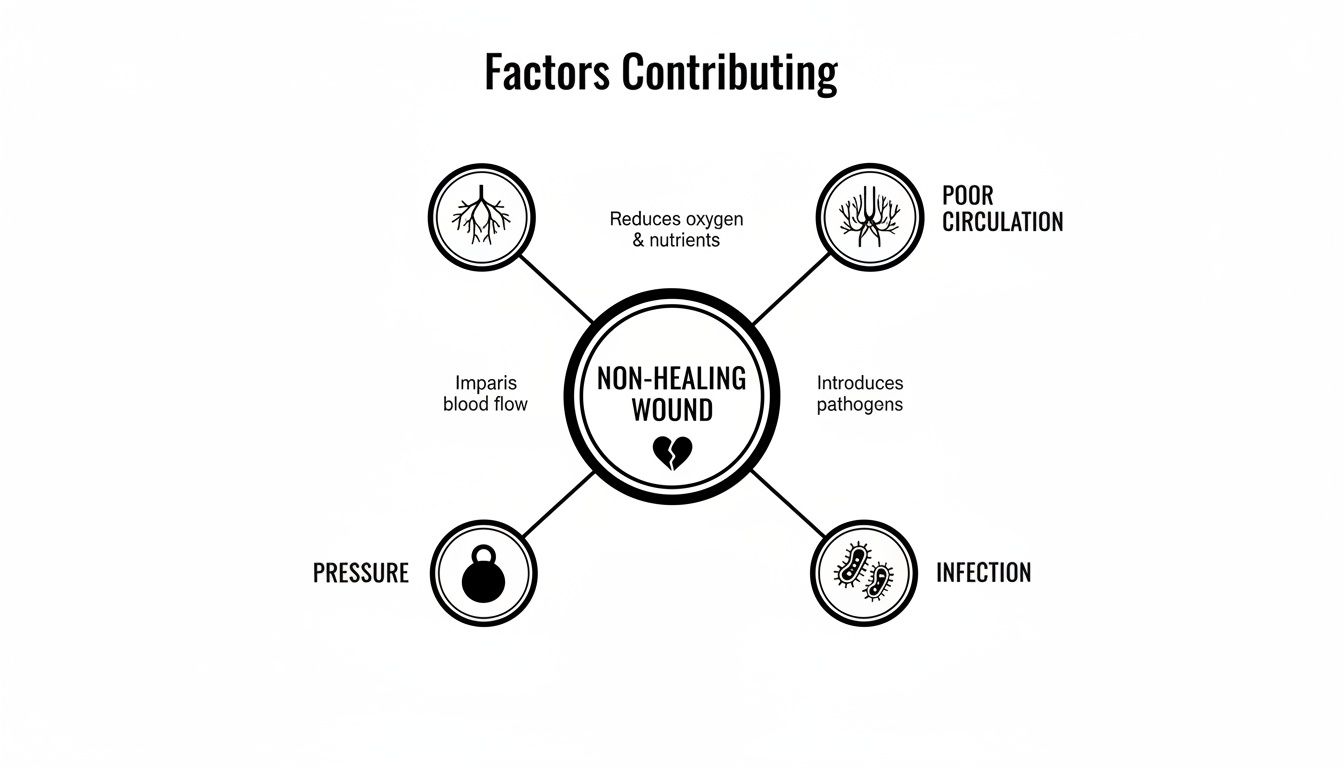
As you can see, things like poor circulation, infection, and constant pressure are major disruptors that can grind the healing machine to a halt at any point.
Act 3: Proliferation — The Rebuilding Phase
With the area cleared and secured, the proliferation, or rebuilding, phase goes into overdrive. This is where the real magic happens. A fresh, healthy layer of new tissue, called granulation tissue, starts to fill the wound from the bottom up. It's bright red and bumpy because it's packed with new blood vessels.
Our road crew is now pouring fresh asphalt into the excavated hole. At the same time, new skin cells are migrating across the wound's surface, working to close the gap from the edges inward. This stage demands a huge supply of oxygen and nutrients, all delivered by the bloodstream.
Act 4: Maturation — The Final Touches
The final stage is maturation, sometimes called remodeling. Don't be fooled—this part can last for a year or even longer. The new tissue that filled the wound gets reorganized and strengthened as the body replaces weaker, temporary collagen with a stronger, more permanent type.
This is like the new asphalt curing and hardening over time, with the road crew returning later to repaint the lines. What you're left with is a durable scar. While it's never as strong as your original skin, it successfully restores that critical protective barrier. For a deeper look at how we can supercharge the body's natural repair systems, especially in tough cases, it's worth exploring the health benefits of hyperbaric oxygen therapy.
When Your Overall Health Sabotages Healing
While local problems like pressure or an infection can definitely stall healing, sometimes the real roadblock is deeper, woven right into your body's overall health. These systemic conditions act like a constant headwind, slowing down or even completely stopping the entire repair process.
Think of your body's healing capacity as a major construction project. A systemic health issue is like a city-wide power outage. It doesn't matter how skilled your workers are or how great your blueprints are; without electricity, everything just grinds to a halt. These conditions create an internal environment where the essential resources for healing—oxygen, nutrients, and immune cells—simply can't get to the job site.
The Overwhelming Impact of Diabetes
When we talk about systemic conditions, diabetes is one of the most notorious culprits behind stubborn, non-healing wounds. High blood sugar (hyperglycemia) isn't just a number on a lab report; it's a destructive force that systematically dismantles your body's natural repair mechanisms. It launches a multi-pronged attack on the healing process, creating a perfect storm for chronic wounds.
First, it damages the tiny blood vessels (microvasculature) that are supposed to deliver oxygen and nutrients to the wound. Imagine these vessels as small access roads to our construction site. When they become narrow and brittle from high sugar levels, the delivery trucks can't get through. This starves the site of vital supplies.
Second, diabetes often leads to nerve damage (neuropathy), especially in the feet. This means a person might not even feel a small cut, a blister, or a pressure spot from a shoe. The injury goes completely unnoticed, allowing it to get much worse before it's ever discovered. It’s like having a silent alarm system that's been disabled, letting intruders cause major damage without anyone knowing.
Finally, high blood sugar cripples the immune system. The white blood cells that act as the "cleanup crew" become sluggish and far less effective at fighting off bacteria. This leaves the wound wide open to infections that can quickly spiral out of control.
A diabetic foot ulcer is a devastating real-world example of this triple threat. A small, unfelt injury on the foot—starved of blood flow and defended by a weakened immune system—can rapidly escalate into a severe, non-healing wound that threatens the entire limb.
Malnutrition: The Silent Saboteur
Your body can't build new tissue out of thin air. It needs a steady supply of specific building blocks, and those come directly from your diet. When nutrition is poor, the healing process is one of the first things the body puts on hold to conserve resources for more critical, life-sustaining functions.
Several key nutrients are absolutely essential for any kind of repair:
- Protein: This is the literal foundation for new tissue. Without enough protein, your body cannot produce collagen, the primary structural component of skin.
- Vitamin C: This vitamin is a critical partner in making collagen. A lack of it is like trying to make concrete without water—the mixture simply won't set.
- Zinc: This mineral is a key player in cell proliferation, helping new cells multiply to fill in the wound gap.
A deficiency in any of these can dramatically delay or completely stop healing. It's a stark reminder that what you eat directly impacts your ability to recover from an injury.
Other Systemic Stressors on Healing
Beyond diabetes and poor nutrition, other factors can drain your body's healing reserves. Advanced age, for example, naturally slows down cellular processes, reduces collagen production, and often comes with circulatory challenges.
Chronic stress is another huge factor. When you're constantly stressed, your body pumps out high levels of cortisol, a hormone that actively suppresses the inflammatory response. While "inflammation" sounds bad, a controlled amount is necessary to kickstart the healing cascade. By blunting this initial phase, chronic stress can delay the entire repair timeline.
Conditions like undiagnosed or poorly managed diabetes, often stemming from insulin resistance, significantly hinder the body's ability to repair itself. You can learn how to identify and manage insulin resistance to better support your body's healing functions.
The link between diabetes and non-healing wounds is a global health crisis. Diabetic wounds can heal up to 50% slower than non-diabetic ones, and high blood sugar impairs the body’s ability to create the growth factors needed for tissue repair. This is a major reason why the worldwide expenditure on wound care reached $148.65 billion in 2022, with a huge portion driven by diabetes-related chronic wounds.
Local Roadblocks Directly at the Wound Site

While your overall health sets the stage for healing, sometimes the real problem is right at the wound itself. These local roadblocks can halt the repair process dead in its tracks, even in someone who is otherwise perfectly healthy.
Think of it this way: you can have the best construction crew with all the right materials, but if the road to the building site is washed out, nothing gets built. These local factors directly interfere with blood flow, invite destructive bacteria, or create physical barriers that make tissue repair impossible.
Poor Circulation Starving the Wound
One of the biggest culprits is ischemia—a severe restriction of blood supply to a specific area. Without a steady flow of blood, the wound is starved of oxygen, nutrients, and the immune cells it desperately needs to fight infection and build new tissue. It’s a construction site with no power, no water, and no building supplies.
This is a central issue for many chronic wounds, especially in the legs and feet. Conditions like Peripheral Artery Disease (PAD) cause arteries to narrow, choking off the fresh, oxygenated blood. On the flip side, venous insufficiency stops old blood from returning to the heart, causing it to pool in the legs. This creates a toxic, high-pressure environment that literally breaks the skin down from the inside out.
The impact here is massive. Chronic wounds driven by vascular disease and pressure injuries from immobility dominate the field, holding a 64.3% revenue share in the wound skin care market. The connection couldn't be clearer: when blood can't get where it needs to go, healing grinds to a halt.
Infection and the Rise of Biofilms
Even if a wound has great circulation, it can still become a battleground. When harmful bacteria invade, they can quickly overwhelm the body’s defenses and trigger a local infection. This kicks off a state of constant, out-of-control inflammation that destroys any new tissue the body manages to create.
But it gets much more complicated than that. Many bacteria are survival experts, forming a biofilm—a slimy, fortress-like colony that anchors itself firmly to the wound surface. This biofilm acts like a shield, making the bacteria inside incredibly resistant to both your immune system and antibiotics.
A biofilm isn't just a random clump of bacteria; it's an organized, self-sustaining community. It physically blocks healing cells from reaching the wound bed and fuels a persistent inflammatory state, putting the entire healing process on indefinite hold.
Getting rid of biofilms is one of the biggest challenges in modern wound care and a key reason some wounds stay open for months or even years. The first step is proper identification, and understanding the role of advanced pathogen detection shows how clinicians can pinpoint and target these stubborn bacterial fortresses.
Pressure, Trauma, and Edges That Refuse to Meet
The physical environment of the wound itself is incredibly important. Constant, unrelieved pressure is a perfect example. For someone who is bedridden or uses a wheelchair, sustained pressure over bony spots like the hips or heels can completely crush blood vessels, cutting off circulation and causing the tissue to die. This is exactly how pressure injuries (bedsores) form.
Repeated trauma is another physical barrier. A wound on a joint like an ankle is constantly being pulled and stressed with every step, tearing apart the delicate new tissue that’s trying to form. Even friction from poorly fitting shoes can continually damage the wound edges, preventing them from ever meeting in the middle.
In some chronic wounds, a frustrating condition called epibole develops. This is where the wound edges, instead of growing across the wound to close it, curl inward and roll under themselves.
- What happens: The skin cells at the edge start migrating down the sides of the wound instead of across the top.
- The result: The body gets tricked. It thinks the wound is closed because the downward-growing skin cells have met other skin cells on the rolled edge.
- The outcome: The healing process stops completely, leaving the wound permanently open.
Fixing epibole often requires a clinician to carefully re-injure the wound edges with a sterile instrument to "reset" them and restart the proper migration process. It’s a powerful reminder of just how sensitive the healing cascade is to the physical cues right at the wound site.
Recognizing the Warning Signs of a Problem Wound

Knowing when a wound has strayed from the normal healing path is the first, most critical step toward preventing serious complications. While every injury is unique, your body sends out clear signals when the repair process is in trouble. Ignoring these red flags can turn a minor issue into a chronic problem that demands specialized medical intervention.
A key indicator is simply the passage of time. Most acute wounds show obvious signs of improvement within the first two weeks—they start getting smaller, less red, and less painful. If your wound looks the same, or even worse, after a month, it's a strong signal that an underlying issue is jamming up the healing cascade.
Key Red Flags to Watch For
Beyond just the timeline, specific signs in and around the wound itself serve as urgent warnings. Think of them as distress signals from your body, telling you the local healing environment has been compromised and needs immediate attention.
Keep an eye out for these critical indicators:
- Increasing Pain: Some discomfort is normal at first, but pain that gets worse over time, becomes severe, or just feels out of proportion to the injury is a major red flag.
- Spreading Redness or Warmth: Redness that expands beyond the wound's original borders, or skin that feels hot to the touch, often points to a spreading infection.
- Unusual Drainage or Odor: Any pus-like drainage—yellow, green, or thick—or the development of a foul smell is a classic sign of a significant bacterial infection.
- No Signs of Closing: If the wound edges aren't pulling together and the wound simply isn't getting any smaller, the healing process has stalled out.
Any wound that fails to show significant progress within two to four weeks should be evaluated by a healthcare professional. This timeframe is a crucial checkpoint to distinguish between normal healing and a developing chronic wound.
The Role of Specialized Wound Care
When these warning signs appear, it’s often time to move beyond standard first aid and seek help from the experts. A specialized wound care center is a medical clinic staffed by a multidisciplinary team focused exclusively on diagnosing and treating complex, non-healing wounds.
These teams often include a mix of professionals with deep expertise, all working together to solve the healing puzzle:
- Wound Care Nurses: Provide hands-on care, dressing changes, and critical patient education.
- Podiatrists: Specialize in foot and ankle wounds, especially diabetic foot ulcers.
- Vascular Surgeons: Address the circulation problems that starve wounds of oxygen.
- Infectious Disease Specialists: Manage severe or antibiotic-resistant infections.
These centers also have advanced tools you won't find in a typical doctor’s office. For instance, new technologies can help clinicians visualize and target the bacterial burden directly on the wound's surface. Understanding how a point-of-care wound imaging device detects the presence of elevated bacteria really highlights the level of precision available in modern wound management. This allows for far more accurate debridement and sampling, directly addressing one of the biggest roadblocks to healing.
Seeking this level of specialized care isn’t an overreaction; it’s a proactive step. Catching a problem wound early and getting it into the hands of a dedicated team is the single most effective way to prevent long-term complications, including severe infection, limb loss, and a diminished quality of life. Don't wait for the problem to become overwhelming.
Got Questions About Wounds That Won't Heal?
After digging into the fascinating, complex world of healing and all the things that can throw a wrench in the works, it's totally normal to have a few more questions. Wound care can feel complicated, but getting straight, clear answers is the first step toward feeling in control of your health.
Here, we'll tackle some of the most common questions people have when faced with a stubborn wound that just refuses to close. Let's clear up the confusion.
Can a Healthy Person Get a Non-Healing Wound?
Yes, absolutely. While big-picture health problems like diabetes or poor circulation are major risk factors, even a perfectly healthy person can end up with a chronic wound. It often boils down to local issues that keep hitting the reset button on the healing process.
Think about a healthy person who gets a deep cut on their ankle. If they don't properly protect it and keep moving around as usual, that constant motion can tear the fragile new tissue that’s trying to form. This cycle of re-injury keeps the wound stuck in the inflammatory phase.
Other common scenarios include:
- Constant Pressure: A healthy individual who is bedridden after surgery can get a pressure injury (or bedsore) if they aren't moved around often enough.
- Stubborn Infection: A simple cut that isn’t cleaned well can get infected. If the bacteria create a protective shield called a biofilm, even a strong immune system can't break through, stalling the healing process for good.
- The Wrong Approach: Using a dressing that dries out the wound or, conversely, keeps it too soggy can bring healing to a dead stop.
At the end of the day, healing is a delicate dance. Anything that constantly interrupts the steps—whether it's an internal health issue or an external force—can turn an ordinary wound into a chronic problem.
What is the Difference Between Acute and Chronic Wounds?
The biggest difference between an acute and a chronic wound is time. An acute wound is one that follows the rulebook, moving predictably through the four stages of healing. Think of a paper cut or a clean surgical incision—they usually heal up within a few weeks without any drama.
A chronic wound, on the other hand, is a wound that has gone off-script. It has failed to move through the healing stages in an orderly way and remains open for an extended period, typically longer than four to six weeks.
A chronic wound is essentially "stuck," often trapped in the inflammatory phase. The body is still sending out repair signals, but something is blocking the construction crew from actually rebuilding.
Here’s a simple way to look at it:
| Characteristic | Acute Wound | Chronic Wound |
|---|---|---|
| Healing Time | Predictable, usually 2-4 weeks | Stalled, lasts > 4-6 weeks |
| Healing Process | Orderly and sequential | Disorganized and stuck |
| Underlying Cause | Usually a single traumatic event | Often linked to an underlying issue (e.g., poor circulation, infection) |
| Examples | Minor cuts, scrapes, surgical incisions | Venous ulcers, diabetic foot ulcers, pressure injuries |
Recognizing when a wound has crossed over from acute to chronic is your cue to seek specialized medical help. To see what that next level of care looks like, exploring these advanced treatment options provided by wound care specialists can shed light on the powerful tools available today.
What Are the Most Important Nutrients for Wound Repair?
Good nutrition provides the raw materials for your body's cellular construction crew. If the building supplies don't show up, the project can't move forward. While a balanced diet is always a good idea, a few nutrients become absolute superstars when you're trying to heal.
Imagine you're building a brick wall. You need the bricks themselves (protein), the mortar to hold everything together (Vitamin C), and a skilled bricklayer to manage the process (Zinc).
Here are the key players for healing:
- Protein: This is the non-negotiable foundation for all new tissue—skin, blood vessels, and collagen. Not getting enough protein is one of the most frequent nutritional roadblocks to healing.
- Vitamin C: This vitamin is critical for creating collagen, the protein that gives new skin its strength and structure. Without it, any new tissue is flimsy and weak.
- Zinc: This mineral is a key player in cell division, helping new skin cells multiply and travel across the wound to close the gap.
- Hydration: Don't forget water! It's essential for good circulation, which is the delivery system for all these nutrients and life-giving oxygen.
If you're dealing with a non-healing wound, your doctor might recommend boosting your intake of these specific nutrients to give your body the tools it needs to finish the job.
How Does Smoking Impact the Healing Process?
Smoking is one of the absolute worst things you can do for a healing wound. It launches a two-pronged attack that systematically strangles your body's ability to repair itself. The main villains here are nicotine and carbon monoxide.
Nicotine is a vasoconstrictor, which is a fancy way of saying it clamps down on your blood vessels, making them narrow. This chokes off the supply of oxygen-rich blood that can get to the wound. Less oxygen means the cells trying to rebuild tissue are starved for fuel.
Meanwhile, Carbon Monoxide from the smoke hitches a ride on your red blood cells, taking up the seats that oxygen molecules are supposed to be in. This means that the little blood that does manage to reach the wound is carrying far less oxygen than your cells desperately need.
The result is a state of severe tissue hypoxia, or oxygen starvation. This alone can bring the entire healing cascade to a screeching halt, making smokers much more likely to develop chronic wounds and suffer from complications after surgery.
At Specialty Wound Care, we know that a non-healing wound is more than just a medical problem—it's something that stops you from living your life. Our expert teams use advanced diagnostics and proven treatments to find the real reason your wound is stuck and build a personalized plan to get you healing again. If you or someone you care about is struggling with a wound that won't heal, visit us at https://specialtywoundcare.com to see how our focused approach can help you get back to what matters.