What is negative pressure wound therapy and how it speeds healing
When a wound just won't heal, standard bandages often feel like a temporary fix for a much deeper problem. That's where Negative Pressure Wound Therapy (NPWT) comes in. It's an active treatment, often called a "wound vac," that uses a special vacuum device to accelerate healing in complex acute or chronic wounds.
By applying controlled suction through a sealed dressing, NPWT draws out excess fluid, reduces swelling, and actively encourages new, healthy tissue to grow.
Demystifying Negative Pressure Wound Therapy
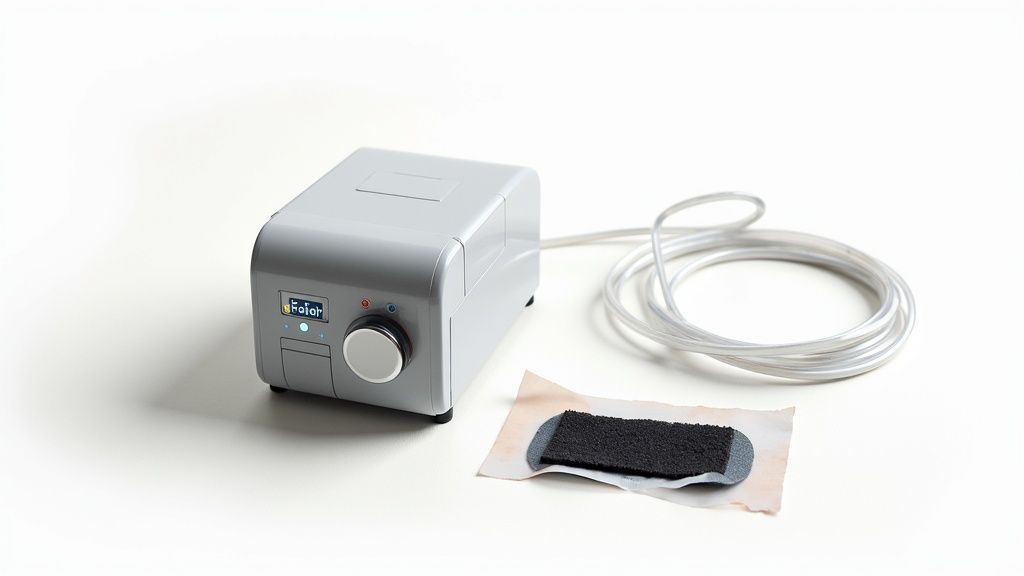
Think of a stubborn wound as a small, swampy patch of ground where nothing can grow. A traditional bandage is like throwing a tarp over it—it covers the problem but does little to fix the soggy environment underneath.
NPWT, on the other hand, works like a sophisticated drainage system. It doesn't just cover the wound; it actively manages the environment to create ideal conditions for the body’s natural healing processes to finally take hold.
A computerized pump delivers gentle, continuous negative pressure (suction) across the entire wound bed. This transforms wound care from a passive act to an active, healing engine, making it a game-changer for wounds that have stalled.
The Core Components of an NPWT System
An NPWT system might sound complex, but it’s built on three core parts working together. Breaking them down shows just how elegantly this therapy works.
- Specialized Wound Dressing: This isn't your typical gauze. It’s a porous foam or gauze dressing carefully cut to match the exact size and shape of the wound. This piece acts as the direct contact layer, making sure the negative pressure is spread evenly across the entire surface.
- Adhesive Film Drape: A thin, clear film is laid over the dressing, extending onto the healthy skin around the wound. This creates an airtight seal, which is critical for maintaining the vacuum and shielding the wound from bacteria and other contaminants.
- Therapy Unit and Tubing: A flexible tube connects the sealed dressing to a portable pump. This compact machine is the brains of the operation, generating the controlled suction needed to pull fluid and infectious material away from the wound and into a sealed collection canister.
By actively removing fluid, reducing bacterial load, and stimulating blood flow, NPWT creates a clean, moist, and protected environment that is ideal for the body's natural healing processes.
This technology has quickly become a cornerstone of modern wound management. The global NPWT market was valued at around USD 2.59 billion and is expected to climb to an estimated USD 3.84 billion by 2030. This growth underscores its critical role in treating chronic wounds, which affect up to 2% of the world's population. You can dive deeper into the data on the global wound therapy market and what’s driving its expansion.
NPWT At a Glance: Key Components and Functions
To make it even clearer, here’s a quick summary of the main parts of an NPWT system and the specific job each one does.
| Component | Function | Primary Goal |
|---|---|---|
| Specialized Dressing | A foam or gauze that fills the wound cavity and distributes pressure evenly. | Ensure consistent therapeutic suction across the entire wound bed. |
| Adhesive Film Drape | Creates an airtight seal over the dressing and surrounding healthy skin. | Maintain negative pressure and prevent external contamination. |
| Therapy Unit (Pump) | A computerized vacuum that applies controlled, continuous, or intermittent suction. | Actively remove exudate, reduce swelling, and stimulate healing. |
| Connecting Tubing | Connects the sealed dressing to the therapy unit and collection canister. | Transport fluid and infectious material away from the wound site. |
| Collection Canister | A disposable container that safely collects all the fluid drawn from the wound. | Contain biohazardous waste and allow for fluid output measurement. |
Each piece plays a vital role, working in concert to create an optimal healing environment that passive dressings simply can't replicate.
How NPWT Actively Accelerates Healing
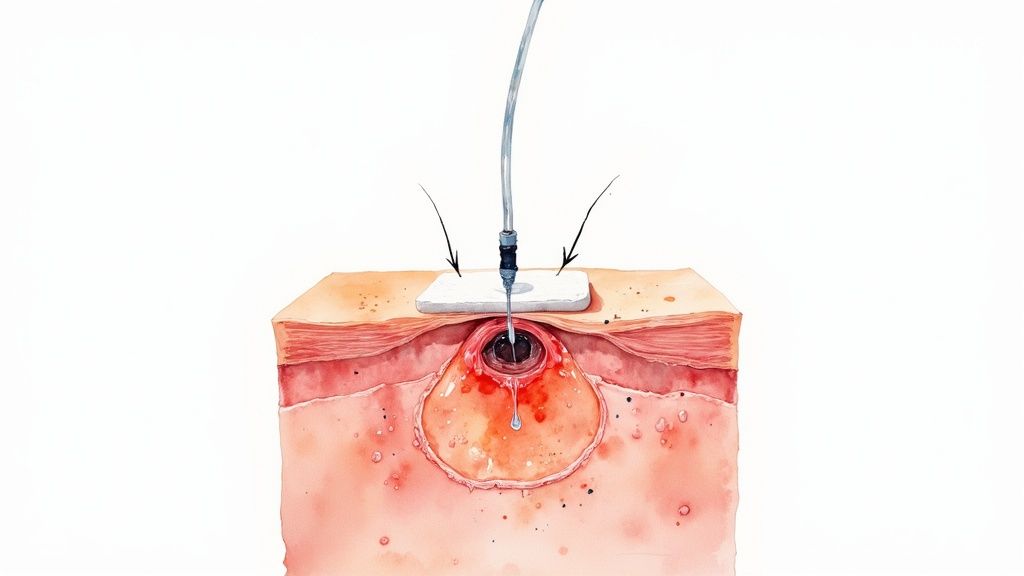
Negative Pressure Wound Therapy is so much more than a high-tech bandage. It’s an active healing system, one that triggers real, profound physiological changes right at the wound bed. The gentle, controlled suction kicks off a cascade of four key mechanisms that work in concert to tear down the barriers preventing a wound from closing.
When you understand how these mechanisms work, it becomes crystal clear why NPWT is a game-changer compared to traditional, passive dressings. It doesn't just sit on top of a wound; it fundamentally alters the wound’s environment to supercharge the body's natural repair process. This active intervention is what makes it a cornerstone of modern wound care.
The Four Pillars of NPWT Healing
At its core, NPWT speeds up healing through four distinct but interconnected actions. Each one plays a vital role in preparing the wound for closure and helping healthy tissue grow back. Let's break down exactly what's happening on a biological level.
- Macrodeformation (Drawing Wound Edges Together): The negative pressure creates a gentle, uniform contraction in the foam dressing. In turn, this pulls the edges of the wound closer together. Think of it like a tailor carefully gathering fabric before stitching a seam—this action physically shrinks the wound, giving the body less ground to cover.
- Microdeformation (Stimulating Cell Growth): On a microscopic level, the foam’s porous structure applies a tiny amount of mechanical stress to the individual cells in the wound bed. This controlled strain is a powerful signal that encourages the formation of granulation tissue—that bright red, bumpy tissue that tells you a wound is healing properly. This process is absolutely essential for filling in the wound's defect.
- Fluid Removal (Controlling Exudate and Edema): Many chronic wounds produce way too much fluid (exudate), which is often loaded with enzymes that can damage new, healthy tissue. The continuous suction acts like a sophisticated drainage system, constantly pulling this harmful fluid away. This also reduces swelling (edema) in the surrounding area, which immediately improves blood flow and creates a cleaner, healthier environment for new cells to thrive.
- Environmental Control (Protecting the Wound): The sealed dressing creates a closed, moist, and warm environment—the perfect incubator for cell migration and growth. It also acts as a physical shield, protecting the fragile new tissue from outside bacteria and contamination. This drastically lowers the risk of infection.
How Suction Promotes New Tissue Growth
The stimulation of new granulation tissue is arguably the most critical function of NPWT. That microdeformation we mentioned, caused by the foam under suction, is the primary driver behind it.
When the suction is active, the cells inside the wound are gently stretched. This mechanical stimulation is a wake-up call, signaling them to multiply and start producing the building blocks for a new tissue scaffold.
This cellular activity also triggers angiogenesis—the formation of new blood vessels. These tiny new vessels are the supply lines, delivering the oxygen and nutrients needed to sustain the healing process and build strong, healthy tissue. If you want a deeper dive, explore our guide on how negative pressure wound therapy accelerates granulation tissue formation.
The magic of NPWT lies in its ability to simultaneously clean, contract, and stimulate the wound. It addresses multiple healing barriers at once, creating an optimal environment that passive dressings simply cannot replicate.
This multi-pronged attack transforms a stagnant, non-healing wound into a dynamic site of tissue regeneration. By managing fluid, keeping bacteria out, boosting blood flow, and directly stimulating new growth, NPWT gives the body everything it needs to finally close the wound. It's a powerful intervention that turns the tide firmly in favor of healing.
Who Is an Ideal Candidate for NPWT
Negative Pressure Wound Therapy is a powerful tool, but it’s not for every wound. Like any specialized treatment, it delivers the best results when used in the right situation. Figuring out who makes a good candidate involves a close look at the wound, its history, and the patient's overall health.
This therapy is often the perfect intervention for wounds that have stalled out and just aren't healing on their own. The decision to use NPWT is where clinical know-how meets practical, real-world application. It’s a targeted solution for complex wounds where standard dressings aren’t enough to manage fluid, control bacteria, and kickstart new tissue growth.
Common Wounds Treated with NPWT
Certain wounds consistently respond well to NPWT because of the specific challenges they present, like poor blood flow, heavy drainage, or a high risk of infection. For these wounds, NPWT provides the active support needed to break through healing barriers.
- Diabetic Foot Ulcers: These wounds are notoriously stubborn due to nerve damage and poor circulation. NPWT helps manage the heavy drainage, reduces the bacterial burden, and encourages healthy new tissue to form in a clean, controlled space.
- Pressure Injuries (Bedsores): For more severe Stage 3 and Stage 4 pressure injuries, NPWT is incredibly effective. It helps clear away dead tissue and excess fluid while gently pulling the wound edges closer, getting the wound bed ready for closure or a skin graft.
- Venous Stasis Ulcers: Often found on the lower legs and caused by poor circulation, these ulcers can produce a lot of fluid. NPWT is excellent at managing this heavy exudate, which helps bring down swelling and creates a much better environment for healing.
- Complex Surgical or Traumatic Wounds: After an accident or major surgery, some wounds can split open (dehisce) or have very irregular shapes. NPWT helps stabilize these wounds, lowers the infection risk, and fills in deep tissue gaps before final closure.
The need for advanced treatments like NPWT is growing. Chronic wounds are a massive global health challenge, with the worldwide wound care market expected to hit USD 27.2 billion by 2027. This growth is driven by technologies like NPWT, which are critical for managing the 1.5 million diabetic foot ulcers that occur each year in the U.S. alone. You can discover more insights about the wound care market outlook on amarexcro.com.
When NPWT Should Not Be Used
Knowing when not to use NPWT is just as important as knowing when to use it. Applying this therapy in the wrong situation can be ineffective at best and harmful at worst. These are called contraindications, and a clinician must rule them out before even considering the treatment.
A crucial part of responsible wound care is recognizing the limits of any therapy. NPWT is not a one-size-fits-all solution, and patient safety always comes first.
For instance, applying suction over certain areas, like exposed blood vessels or organs, can cause serious harm. It’s also vital to understand that NPWT doesn't treat an active, unmanaged infection—the infection has to be under control first. You can also learn more about whether negative pressure is safe for all ages in our detailed guide. A thorough assessment is key to making sure the powerful benefits of NPWT are applied safely and effectively.
NPWT Indications vs Contraindications
Deciding on NPWT is all about weighing the pros and cons for a specific wound. Here’s a quick look at when it’s a great option versus when it should be avoided.
| Ideal for NPWT (Indications) | Avoid NPWT (Contraindications) |
|---|---|
| Chronic, non-healing wounds | Malignancy in the wound (cancerous tissue) |
| Acute and traumatic wounds | Untreated osteomyelitis (bone infection) |
| Diabetic, pressure, and venous ulcers | Non-enteric and unexplored fistulas |
| Surgical wounds and skin grafts | Necrotic tissue with eschar present (dead tissue must be removed first) |
| Wounds with moderate to heavy exudate | Exposed blood vessels, nerves, or organs |
In the end, the final call always rests with a qualified wound care specialist. They have the expertise to weigh the potential benefits against any risks, ensuring NPWT is the right choice to get a patient firmly on the path to healing.
What to Expect During an NPWT Dressing Change
Knowing what happens during a Negative Pressure Wound Therapy dressing change can make the whole process feel much less intimidating. It's a routine procedure, typically done by a healthcare professional every 48 to 72 hours, that follows a clear, systematic path to keep your healing on track. Understanding these steps helps you feel more in control and involved in your own recovery.
The process kicks off with some careful prep work. Your clinician will turn off the NPWT pump, clamp the tubing, and then gently loosen the adhesive film around the edges. After the old dressing is off, the wound gets a thorough but gentle cleaning with a sterile solution. This clears out any debris and gets the area ready for a fresh start.
Placing and Sealing the New Dressing
With the wound bed clean and dry, it's time for the new dressing. Your clinician will cut a piece of sterile foam or gauze to fit the wound's exact shape. This isn't a one-size-fits-all situation—a precise fit is key to making sure the negative pressure is distributed evenly across the entire wound surface, without touching the healthy skin around it.
Once the foam is positioned just right, a transparent adhesive film is laid over the top. This sheet is much larger than the wound itself, extending several inches onto the surrounding skin to create a completely airtight seal. This part is critical; if the seal isn't perfect, the vacuum won't hold, and the therapy can't do its job. Your clinician will smooth out every last wrinkle to ensure it's sealed tight.
The visual below shows you just how straightforward this four-step process is, from cleaning the wound to getting the therapy running again.
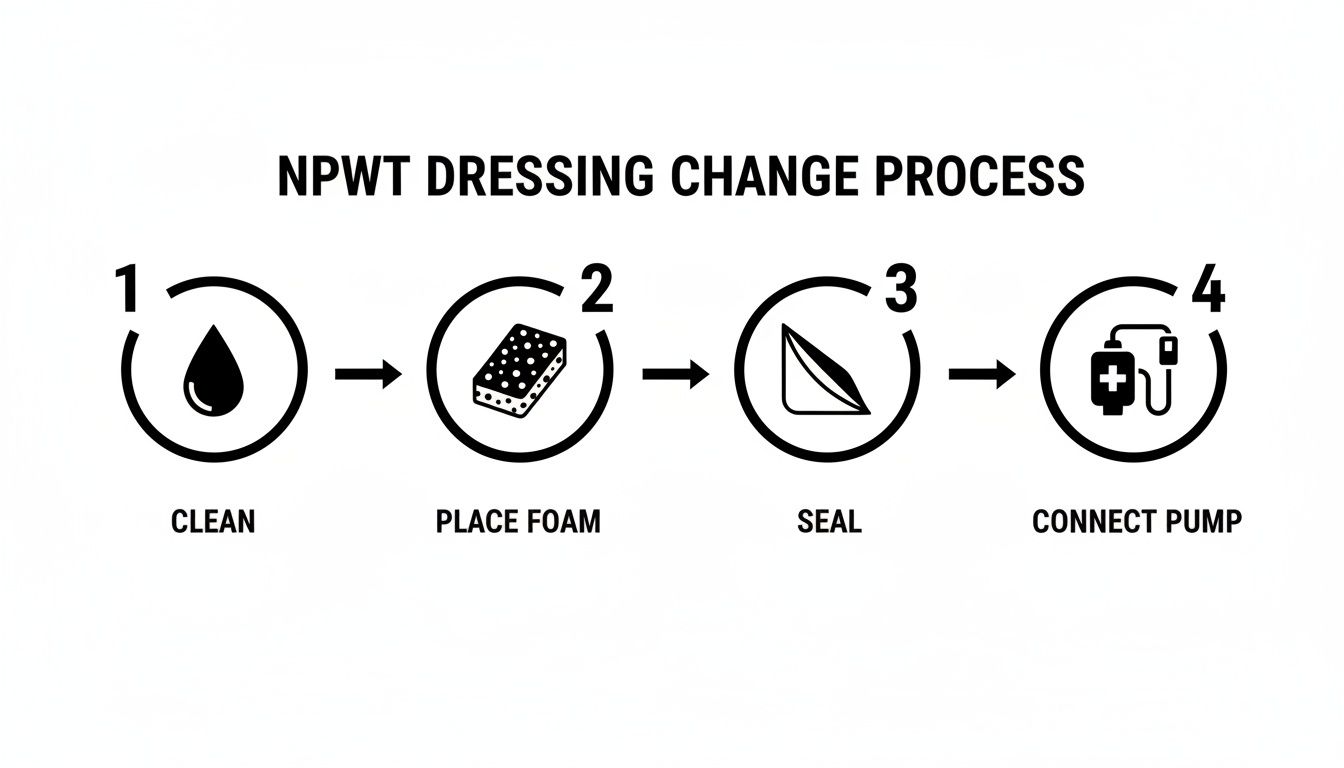
Each step logically builds on the one before it, all working together to create the ideal healing environment.
Connecting and Activating the System
With the new dressing sealed, the final move is connecting it to the pump. A small opening is created in the adhesive film where a tubing port is attached. This port is the bridge that links the sealed dressing to the therapy unit through a flexible tube. For a closer look at this stage, our guide on how to clean wounds with negative pressure therapy has more detail.
When the pump switches on, you’ll likely feel a gentle pulling or tightening sensation. That's the air being drawn out as the dressing cinches down over the wound—it's the first sign that the system is working perfectly.
Your clinician will do a final check to confirm the seal is solid and the machine is set to the exact pressure your doctor prescribed. You'll hear the quiet, steady hum of the pump, which will run based on its programming. Just like that, a simple dressing change reactivates a powerful healing system, setting you up for more progress until the next appointment.
Weighing the Benefits Against the Potential Risks
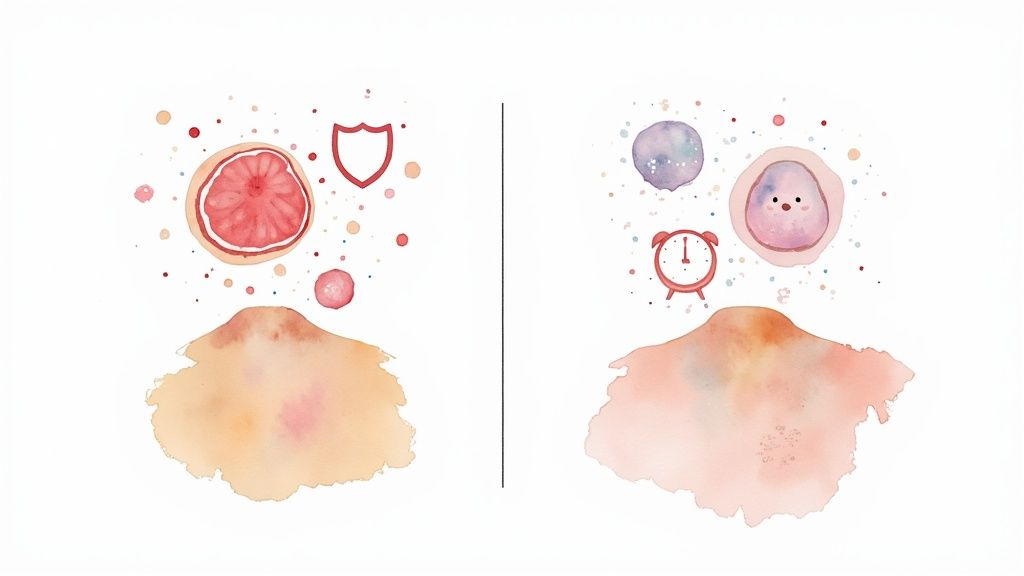
To really understand what negative pressure wound therapy is all about, we need a balanced look at its powerful advantages and manageable risks. By weighing both sides, patients and their families can feel confident making informed decisions with their healthcare team. The benefits are often dramatic, completely changing the healing path for difficult wounds.
But like any medical treatment, NPWT isn't entirely without potential complications. A clear-eyed view of these possibilities ensures that any issues can be spotted and handled quickly. This keeps the healing process on track and puts patient safety first, which is always the top priority.
The Powerful Upsides of NPWT
The biggest benefit of NPWT is its incredible ability to accelerate healing time. By actively managing the wound environment, it helps many patients get to wound closure much faster than with traditional dressings alone. For you, that means fewer dressing changes, a quicker return to your daily life, and a real improvement in your overall well-being.
Another major win is infection control. The sealed dressing acts like a shield, blocking outside germs from getting in. At the same time, the continuous suction pulls away fluid, which reduces the amount of bacteria inside the wound. This is a huge deal after surgery, where NPWT is increasingly used to prevent serious complications.
Globally, an estimated 313 million surgical procedures are performed each year. Studies show that prophylactic NPWT can lead to a 57.8% relative reduction in wound dehiscence and a 9.1% reduction in hospital length of stay, highlighting its protective value. You can read the full research about these findings from Smith+Nephew.
Understanding and Managing Potential Risks
While NPWT is generally very safe, it’s smart to be aware of the potential issues. Keeping an open line of communication with your clinical team is the absolute best way to stay ahead of them.
Here are a few common concerns:
- Discomfort During Changes: Some people feel mild pain or a pulling sensation when dressings are changed. Your clinician can give you pain medication beforehand to make things much more comfortable.
- Skin Irritation: The sticky film can sometimes bother the skin around the wound. Special barrier creams or different types of adhesive can help protect your skin.
- Device Alarms: The therapy machine has built-in alarms that go off if there’s an air leak or the canister gets full. These are just safety features doing their job, and your nurse will show you what each sound means and what to do.
A critical piece of patient safety, especially in wound care, is making sure all equipment is completely sterile to prevent infections. Proper medical device sterilization validation is a fundamental process that confirms every piece of equipment is safe before it ever gets near a patient.
Serious issues like bleeding are rare, but they do require immediate medical help. Your care team will give you very clear instructions on what to do in an emergency, so you're prepared for any scenario. By staying vigilant and working closely with your provider, you can navigate the treatment process safely and successfully.
Integrating NPWT into a Complete Care Plan
Negative Pressure Wound Therapy is a powerhouse, but it’s rarely a standalone cure. Its real strength is unleashed when it’s a key player in a broader, expert-led wound care strategy. Think of NPWT as a high-performance engine; it’s incredibly powerful, but you still need a chassis, fuel, and a skilled driver to actually win the race.
The best outcomes happen when NPWT is combined with other crucial treatments. A wound care specialist orchestrates this approach, making sure all aspects of healing are addressed at the same time. This is where the art and science of wound management really come together.
The Holistic Approach to Healing
A specialist's first move is always a thorough assessment to figure out if NPWT is even the right path for a patient's unique situation. This evaluation looks at the wound type, the patient's overall health, and any underlying conditions that might get in the way of healing. If NPWT gets the green light, it becomes just one part of a multi-faceted plan.
This integrated strategy often includes:
- Systematic Debridement: Cleaning out dead or infected tissue from the wound bed is non-negotiable. NPWT works best on a clean foundation, and debridement is what creates that optimal starting point.
- Targeted Infection Management: If an infection is present, it has to be dealt with using the right antibiotics or antimicrobial dressings. While NPWT helps manage the wound environment, it doesn't replace the need to treat the core infection.
- Proper Nutritional Support: The body needs specific building blocks—like protein, vitamins, and minerals—to create new tissue. A complete care plan includes nutritional guidance to fuel the healing process from the inside out.
A successful wound care plan is a dynamic blueprint, not a static prescription. Specialists constantly monitor progress, adjusting NPWT settings and other therapies to respond to the wound's changing needs. This ensures the most effective and efficient path to closure.
Customizing Therapy for Maximum Effect
There’s no "one-size-fits-all" setting for NPWT. Wound care specialists tailor the therapy parameters, including the level of negative pressure and whether the suction is continuous or intermittent. This precise calibration is based on the wound's size, depth, and how much fluid it’s producing.
To make sure NPWT is used effectively, it's crucial to follow established clinical practice guidelines, which provide an evidence-based framework for making treatment decisions. By integrating this powerful technology into a holistic and individualized strategy, a dedicated team of specialists can achieve optimal healing, helping patients get back on their feet faster and more completely.
Answering Your Questions About NPWT
Even after learning the basics, it’s natural to have practical questions about negative pressure wound therapy. Let's tackle some of the most common ones we hear from patients and their families to help you feel more comfortable and confident with the treatment.
Is Negative Pressure Wound Therapy Painful?
Most people don't find the therapy itself painful. When the pump is first activated, you might notice a gentle pulling or stretching feeling as the dressing settles over the wound. This sensation usually goes away as you get used to it.
Dressing changes can sometimes cause discomfort. To manage this, your clinical team can give you pain medication about 30-60 minutes before they start, making the process much more comfortable. Always let your provider know what you're feeling—open communication is the best way to manage any discomfort.
How Long Will My NPWT Treatment Last?
There’s no one-size-fits-all answer here; the duration of NPWT is different for everyone. How long you’ll need it depends on the wound's size and type, your overall health, and how your body responds to the therapy.
Some acute wounds might only require a few weeks of treatment. On the other hand, more complex or chronic wounds could need several months of therapy to heal properly. Your wound care specialist will track your progress closely and give you a clearer timeline as you go.
The goal of NPWT is not just to cover a wound, but to actively prepare it for the final stages of healing. Treatment continues until the wound bed is healthy enough for closure, which might involve sutures, a skin graft, or allowing it to close on its own.
Your provider will set specific healing goals. As soon as you hit those milestones, the therapy can be stopped, marking a huge step forward in your recovery.
Can I Shower with the NPWT Device?
This is an excellent and very common question. Yes, in most cases, you can shower. The key is that you cannot get the dressing itself wet, because that would break the airtight seal and interrupt the therapy.
Your clinician will teach you how to safely and temporarily disconnect the pump from the dressing's tubing. The dressing is water-resistant and needs to stay sealed and in place. Once you're done showering, you just reconnect the tubing and turn the pump back on. It’s really important to follow the specific instructions for your device to keep the therapy working effectively.
What Does It Mean When the Machine Alarm Goes Off?
Don't panic when an alarm sounds! The alarms on an NPWT machine are important safety features, not a sign that something is terribly wrong. They’re designed to alert you to common issues that are usually easy to fix.
Here are the most frequent reasons for an alarm:
- Air Leak: This is the #1 cause. It happens when the seal is broken, often because the adhesive film has wrinkled or peeled up at an edge. Your provider will show you exactly how to find and fix these minor leaks.
- Canister is Full: The pump is just letting you know that the collection canister needs to be changed. This is a normal, routine part of the process.
- Low Battery: If you have a portable device, the alarm is your reminder to plug it in and charge the battery.
- Blockage in Tubing: An alarm might go off if the tubing gets kinked or clogged, which stops the pump from delivering the right amount of pressure.
Your care team will walk you through troubleshooting steps for every alarm, so you'll feel empowered to manage the device with confidence at home.
At Specialty Wound Care, we believe expert guidance and advanced therapies like NPWT are essential for overcoming the challenges of hard-to-heal wounds. Our specialists integrate these powerful tools into personalized care plans designed to get you back on your feet faster. Learn how our comprehensive approach can help you or a loved one by visiting us at https://specialtywoundcare.com.
Article created using Outrank