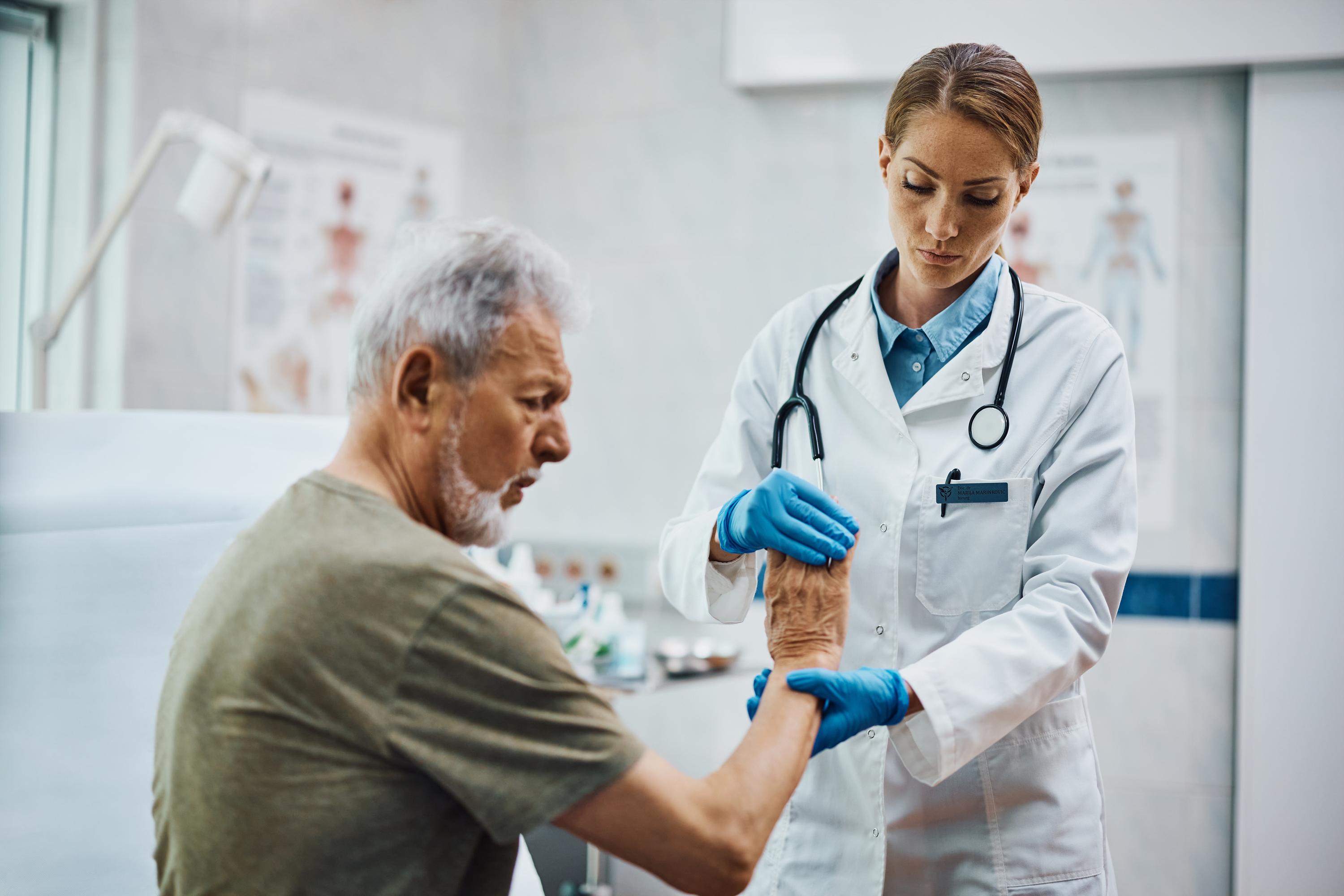
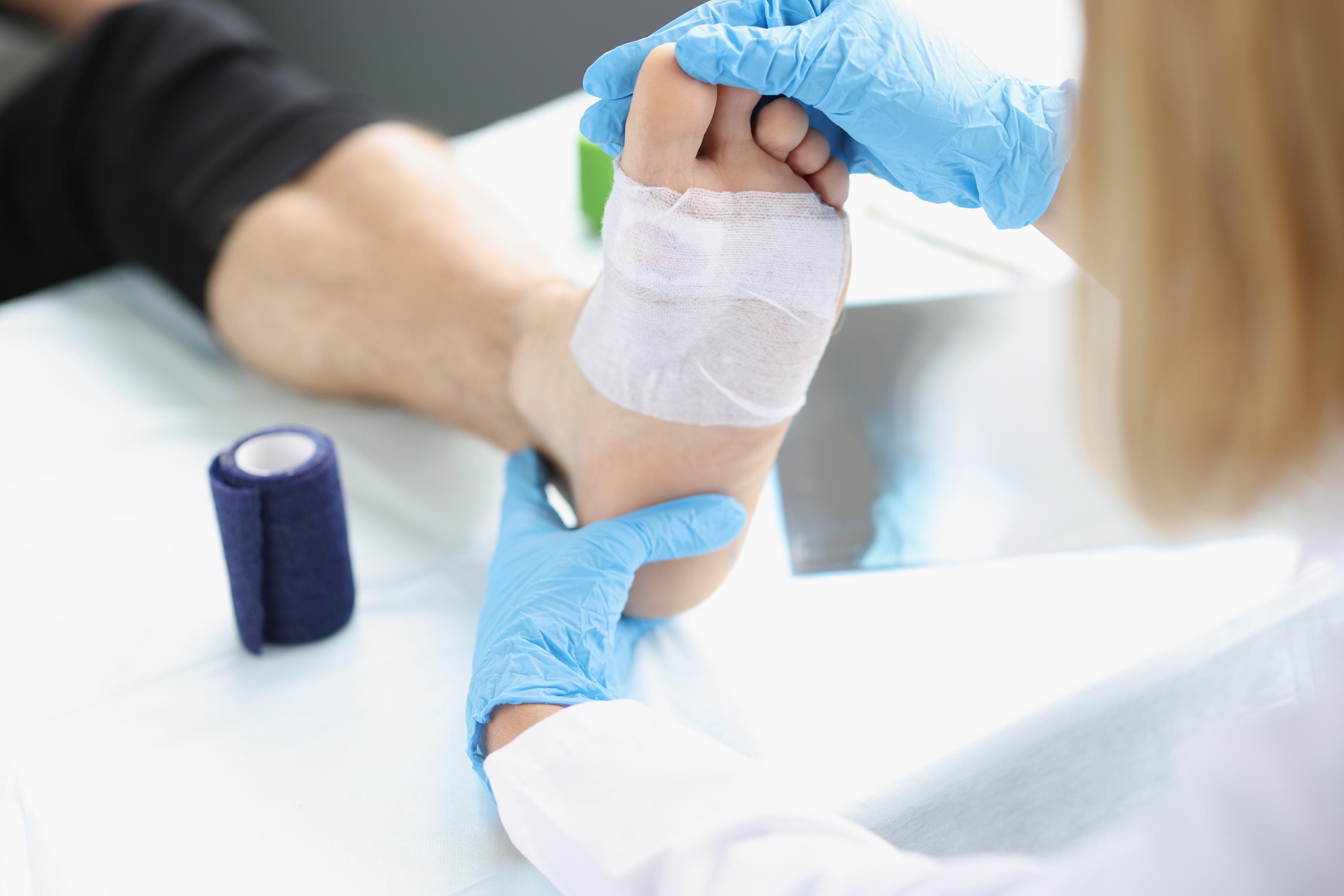
When a stalled wound refuses to heal despite your best routine care, it signals hidden barriers you need to uncover. Identifying these obstacles early can prevent complications and guide timely escalation to advanced wound care. This article breaks down what to check next, using evidence-based steps like the TIME framework and biofilm management, so you know exactly when to act or seek specialty support. https://woulgan.com/wound-healing-stalled-wounds-brief-overview/
Identifying Barriers in Stalled Wound Healing
Understanding why some wounds refuse to heal is crucial. When you encounter a stalled wound, assessing common causes is the first step.
Common Causes of Nonhealing Wounds
Several factors can contribute to a wound that won’t heal. Poor blood flow, infection, or pressure can slow down recovery. For instance, a diabetic foot ulcer may not heal if blood supply is reduced. Identifying these factors helps in planning treatment.
You also need to think about local wound conditions. A dry or moist environment can affect healing. If you see signs like redness or swelling, these might be clues to underlying problems. This careful observation helps you choose the right approach for each patient.
Importance of Wound Bed Preparation
The foundation of healing starts with preparing the wound bed. This involves cleaning the wound and removing dead tissue. A well-prepared wound bed supports new tissue growth, facilitating recovery.
You might use methods like wound debridement to achieve this. Removing dead tissue reduces infection risk and promotes healing. By addressing these factors early, you can improve outcomes for your patients.
Recognizing Wound Infection Signs
Infections are common barriers to healing. Signs include redness, warmth, or unusual odor. If a wound is warm to the touch or the patient feels increased pain, these could be infection indicators.
Early detection is key. By recognizing these signs, you can act quickly. This might involve using antibiotics or other treatments to control the infection. Addressing infections promptly can make a significant difference in healing outcomes.
Advanced Solutions for Chronic Wounds
For wounds that persist despite initial efforts, advanced solutions are often necessary. These innovations offer hope where traditional methods fall short.
Role of Fluorescence Imaging with MolecuLight DX
The MolecuLight DX is an innovative tool for wound assessment. It uses fluorescence imaging to detect bacteria presence. This immediate feedback allows you to tailor treatment effectively.
Using this tool, you can guide cleaning and debridement more accurately. By focusing on areas with high bacterial load, you reduce infection risks. This precision can accelerate healing in stubborn wounds.
Benefits of Rapid Pathogen Testing
Detecting wound pathogens quickly is vital. Rapid pathogen testing identifies microbes faster than traditional methods. This speed means you can start the right treatment sooner.
This method allows for targeted antibiotic use, reducing unnecessary drug exposure. Patients benefit from faster recovery times, improving overall care quality.
Utilizing Triple-layer Allografts in Treatment
Triple-layer allografts are another advanced option. These allografts provide a scaffold for new tissue growth. Compliant with FDA regulations, they offer a regulated and safe option for healing.
These allografts are particularly useful in complex cases like pressure injuries. By supporting natural healing processes, they enhance recovery rates and improve patient outcomes.
When to Escalate Wound Care
Sometimes, wound healing requires more specialized intervention. Knowing when to escalate care is crucial for patient safety and recovery.
Indicators for Specialty Intervention
Certain signs suggest the need for specialized care. If a wound remains unresponsive after weeks of treatment, it may need advanced intervention. You should also consider escalation if there are signs of severe infection or underlying conditions like arterial disease.
Timely escalation can prevent complications. By partnering with specialists, you ensure the patient receives comprehensive care tailored to their needs.
Importance of Comprehensive Osteomyelitis Workup
In cases where bone infection is suspected, a thorough osteomyelitis workup is essential. This involves imaging and lab tests to confirm diagnosis. Early detection allows for prompt treatment, preventing further complications.
A comprehensive approach helps in managing complex cases. By addressing bone infection early, you can improve patient outcomes and reduce lengthy recovery times.
Enhancing Patient Outcomes with Wound Debridement
Wound debridement is a critical part of advanced care. By removing dead tissue, you create an optimal environment for healing. This procedure reduces infection risks and supports new tissue growth.
Incorporating regular debridement into treatment plans can significantly enhance recovery. Patients experience quicker healing and reduced discomfort, leading to improved satisfaction and outcomes.
In conclusion, understanding when and how to escalate care is key in managing stalled wounds. By leveraging advanced technologies and methods, you can ensure effective healing and patient satisfaction.
Innovative Approaches to Complex Wound Challenges: Technology, Technique, and Teamwork
Complex wounds like diabetic foot ulcers and pressure ulcers resist standard treatments far too often. You know that relying on outdated methods delays healing and risks infection. Here’s how advanced wound care combines precise technologies like MolecuLight DX fluorescence imaging with targeted therapies and teamwork to change those outcomes. Read on to learn how Specialty Wound Care’s approach can support your patients’ recovery and your practice’s success. Learn more about innovative approaches to wound treatment.
Advanced Wound Care Techniques
Advanced wound care is reshaping how you manage complex wounds. Let’s explore how these innovative techniques can make a real difference for your patients.
Targeted Antimicrobial Therapy
Effective management of infection is crucial in wound care. Targeted antimicrobial therapy uses specific agents to combat harmful bacteria without affecting the surrounding tissue. For example, by focusing on eliminating bacteria like Staphylococcus aureus, therapy helps prevent further complications. You’ll find that this precise approach not only clears infections faster but also reduces the risk of resistance. Imagine the relief of seeing a stubborn infection finally subside, allowing your patient’s wound to heal more effectively.
Antimicrobial therapy is about being smart and strategic. It involves selecting the right antimicrobial agent tailored to the specific pathogen. This method is supported by research, showing improved healing rates and reduced recurrence. Explore new wound healing technology revolutionizing care.
Rapid Pathogen Testing
Identifying the cause of wound infection quickly is a game changer. Rapid pathogen testing provides results in hours instead of days, enabling you to begin appropriate treatment sooner. This speed is crucial when dealing with fast-progressing infections in complex wounds like diabetic foot ulcers.
By implementing this testing, you can instantly tailor treatment plans to each patient, reducing unnecessary antibiotic use. Think of it as a fast track to accurate care, ensuring your interventions are as effective as possible.
Hyperbaric Oxygen Therapy
Imagine a treatment that uses pure oxygen to accelerate healing. Hyperbaric oxygen therapy (HBOT) does just that by increasing oxygen supply directly to the tissues. This can be especially beneficial in treating chronic wounds where blood flow is compromised.
HBOT helps by reducing swelling, fighting infection, and promoting tissue growth. For patients with conditions like venous leg ulcers, this therapy can be the difference between prolonged healing and a speedy recovery. Patients notice quicker results and improved outcomes, making this a valuable option in your wound care arsenal.
Cutting-Edge Wound Assessment Tools
Assessing a wound accurately is essential for effective treatment. New tools help you gather precise data and enhance your care strategies.
Fluorescence Imaging with MolecuLight DX
Visualizing bacteria in wounds can significantly impact treatment decisions. The MolecuLight DX allows you to see bacterial presence that isn’t visible to the naked eye. This tool uses fluorescence imaging to highlight areas of bacterial concentration, guiding you to focus on the most critical areas during debridement.
The benefit is clear: targeted cleaning of the wound, reducing bacteria, and helping the wound heal faster. This technology ensures you’re not guessing but acting on accurate data. Discover more about this innovative tool.
Wound Documentation and Telewound Monitoring
Accurate documentation and remote monitoring of wounds are becoming essential. Telewound monitoring offers real-time data sharing and consultation, making it easier to track healing progress without frequent in-person visits. You can provide continuous care, adjusting treatment plans based on documented changes.
This approach not only streamlines the follow-up process but also engages patients in their recovery journey. By leveraging technology, you ensure every wound care decision is backed by the latest data, enhancing outcomes and patient satisfaction.
Collaborative Wound Care Partnerships
Building strong partnerships is key to transforming wound care. Collaborative efforts ensure comprehensive support for both you and your patients.
Practice Management Software for Providers
Managing a wound care practice efficiently requires the right tools. Practice management software can simplify billing, scheduling, and patient records, allowing you to focus more on patient care. This software is specifically designed to handle the complexities of wound management, offering features that cater to your needs.
By streamlining administrative tasks, you spend less time on paperwork and more on what truly matters—providing excellent care. The software becomes an invaluable ally, improving workflow and patient experiences.
Streamlined Provider Onboarding and Education
Educating and onboarding providers quickly is vital for maintaining high standards of care. Streamlined education programs ensure new team members are up to speed with the latest wound care techniques and technologies. This proactive approach fosters a culture of learning and excellence within your practice.
Investing in education results in better patient outcomes and a more knowledgeable team. When everyone is equipped with the right skills, you’re able to tackle complex cases with confidence and efficiency.
By embracing these advanced wound care techniques and tools, you’re setting the stage for more effective treatment outcomes. Each step forward is a step towards faster healing, better patient experiences, and a stronger practice.
Picking the best wound care product isn’t about simple coverage anymore. It’s about strategically choosing a tool that can actively steer the wound environment toward healing. The most effective options—like advanced dressings, biologics that kickstart tissue repair, and medical devices like Negative Pressure Wound Therapy (NPWT)—are all selected based on a deep understanding of the wound and the patient.
Decoding the Modern Wound Care Formulary
Choosing a wound care product today is a world away from just grabbing a bandage off the shelf. It's a critical clinical decision that hinges on knowing how different products can guide the healing process. The old one-size-fits-all mentality simply doesn't work for the complex, non-healing wounds we see so often now.
This reality is largely driven by major demographic shifts. With an aging population and a steady rise in chronic conditions like diabetes and vascular disease, clinicians are facing an epidemic of stalled wounds. This has, in turn, fueled a massive expansion in our treatment toolkit. The global wound care market, valued around USD 20.95 billion in 2024, is expected to jump to USD 35.86 billion by 2032, a clear sign of the urgent demand for better solutions. You can find more details on this market growth and what's driving it at fortunebusinessinsights.com.
Understanding the Core Product Pillars
To make sense of all the options, it helps to stop thinking of products as a random list and start seeing them as a formulary built on three core pillars. Each pillar offers a different level of intervention designed to tackle specific problems within the wound bed.
Advanced Dressings: These are the daily workhorses. Foams, alginates, hydrocolloids, and hydrogels do far more than just cover a wound—they actively manage moisture levels, help control bacteria, and create a safe space for new tissue to grow.
Biologics and Active Therapies: When a wound is stuck and just won't progress, these are the products we bring in to jump-start the body’s natural healing cascade. This category includes cellular and tissue-based products (CTPs) and collagen matrices, which provide a biological scaffold or release growth factors to get the rebuilding process moving again.
Medical Devices: This pillar includes powerful technologies that physically change the wound environment. The most well-known example is Negative Pressure Wound Therapy (NPWT), which uses a specialized vacuum to pull away excess fluid, shrink swelling, and encourage the growth of healthy new tissue.
The goal is to move beyond brand names and start thinking like a wound-environment engineer. Every product choice should be a deliberate intervention designed to correct a specific deficit—whether it's managing heavy exudate, donating moisture, or delivering cellular signals for repair.
Ultimately, mastering product selection means building a mental framework that connects the right product to the right wound at precisely the right time. By understanding these core pillars, clinicians can design truly individualized care plans that don’t just manage wounds, but actively accelerate healing. You can explore a variety of these advanced treatment options by Primus Specialty Wound Care to see how they are integrated into patient-centered protocols.
Mastering the Core Arsenal of Advanced Dressings
Forget simple bandages. The advanced dressings we use today are the foundational tools of modern wound management, acting less like passive covers and more like active participants in the healing process. Think of each one as a tiny, specialized engine designed to create the perfect environment for cells to do their work.
At the heart of every dressing choice is a single, critical concept: moisture management. A wound bed that’s too dry stalls healing because cells can't move and multiply. On the flip side, a wound that's too wet can macerate—or break down—the healthy skin around it. The right dressing is a master regulator, either adding or absorbing moisture to hit that perfect "not too wet, not too dry" sweet spot.
Matching the Dressing to the Wound Need
Choosing the right dressing isn't a guessing game; it's about reading the wound's needs and responding with the right tool. This quick-reference table breaks down the most common dressing categories by what they do best, helping you match the product to the problem.
Dressing Type
Primary Function
Ideal For (Wound Characteristics)
Clinical Pro-Tip
Foams
High Absorption
Moderate to heavy exudate, pressure injuries, leg ulcers
Provides excellent cushioning over bony areas. Some come with silicone borders for gentle adhesion.
Alginates
Maximum Absorption
Heavy exudate, deep or tunneling wounds, infected wounds
Turns into a gel as it absorbs, making it easy to remove from deep cavities without leaving fibers behind.
Hydrocolloids
Moisture Retention
Light to moderate exudate, partial-thickness wounds, autolytic debridement
Creates a "bubble" as it absorbs fluid, which is a visual cue that it's working. Don't mistake it for infection!
Hydrogels
Moisture Donation
Dry wounds, wounds with slough or eschar, painful wounds
Excellent for hydrating a dry wound bed to soften dead tissue and promote natural debridement.
Transparent Films
Protective Barrier
Superficial wounds with no drainage, securing other dressings
Allows for constant visual inspection of the wound or IV site without removing the dressing.
Collagen
Scaffolding
Stalled or chronic wounds that need a "kick-start"
Provides a structural template to encourage new tissue growth where the body's own efforts have slowed.
Understanding these core functions is the first step toward building effective, individualized treatment plans that get real results.
High Capacity Sponges for Wet Wounds
When a wound is weeping or producing a lot of fluid—what we call exudate—the number one job is to manage that moisture. This is where the heavy lifters of the dressing world come in: foams and alginates. They are the high-capacity sponges in your toolkit.
Foam Dressings: These are champions of absorption. They pull excess fluid away from the wound and lock it inside their structure, protecting the wound bed and preventing the surrounding skin from getting soggy. They're my go-to for wounds with moderate to heavy drainage.
Alginate Dressings: Made from seaweed, alginates are incredibly absorbent. Their real magic happens when they come into contact with wound fluid—they transform into a soft gel. This feature makes them perfect for packing deep or tunneling wounds, as the gel conforms to the wound's shape and is simple to remove.
Smart Second Skins for Drier Wounds
On the other end of the spectrum are dry wounds or those with very little drainage. Here, the goal is to add moisture or trap what little the wound produces. That's a job for hydrocolloids and hydrogels.
You can think of a hydrocolloid dressing as a "smart second skin." Its gel-forming agents create an insulated, moist healing environment perfect for shallow wounds with light drainage, like early-stage pressure injuries. As it works, it forms that characteristic gel bubble over the wound, letting you know it's doing its job.
A hydrogel dressing, in contrast, is a "moisture donor." It's mostly water in a gel base and actively hydrates dry, sloughy wounds. This softens up dead tissue and encourages autolytic debridement, which is just the body's natural process for cleaning out a wound.
Your dressing choice is a direct response to what the wound bed is telling you. A heavily draining venous leg ulcer screams for an absorbent foam or alginate, while a dry eschar-covered wound needs the hydrating power of a hydrogel to facilitate debridement.
Specialized Tools for Specific Jobs
Beyond just managing moisture, some dressings are designed for very specific tasks. These are the niche players that can solve unique challenges.
Transparent Films are like putting a clear, protective window over a wound. They’re waterproof but breathable, allowing for constant visual checks without disturbing the site. I often use them to cover IV catheters or protect areas prone to friction.
Collagen Dressings serve as a biological scaffold. Sourced from bovine or porcine tissue, they give the body a structural framework, encouraging its own cells to migrate and rebuild. These are invaluable for chronic wounds that have stalled, essentially providing a blueprint to get the repair process back on track.
Activating Healing with Biologics and Active Therapies
When a wound just won't heal, even with excellent standard care, it’s a clear sign the body's own repair crew has clocked out. This is exactly where we bring in the specialists: advanced biologics and active therapies. These aren't just passive dressings; they are the best wound care products for actively signaling the body to get back on the job.
Think of a chronic wound as a construction site that’s been abandoned. The workers have gone home, and the blueprints are nowhere to be found. Biologics step in like a new foreman with a fresh set of plans, providing the missing signals and structures the body needs to start building healthy tissue again.
This strategic shift is making waves across the industry. The advanced wound care market, valued at USD 15.6 billion in 2024, is expected to soar to USD 27.5 billion by 2034. This explosive growth isn't just about numbers; it reflects a clinical reality where active treatments are solving the toughest healing challenges. For a deeper dive into this market expansion, check out the analysis at gminsights.com.
Providing a Scaffold for New Growth
One of the main jobs of a biologic is to lay down a structural foundation—a scaffold—for new cells to build upon. In a wound that's been open for a long time, the body's natural matrix has often broken down and become useless.
Collagen Matrices: Often made from bovine or porcine sources, these dressings place a purified collagen framework right into the wound bed. This structure acts like a welcome mat, inviting the body’s own fibroblasts to move in and start weaving new, healthy tissue.
Cellular and Tissue-Based Products (CTPs): This is the next level. CTPs often contain living cells and growth factors embedded within a biological scaffold. Amniotic allografts are a fantastic example, providing a nutrient-rich matrix that kickstarts cellular attachment and tissue regeneration.
These products are game-changers for stalled diabetic foot ulcers or venous leg ulcers, where the body’s own construction capabilities are seriously compromised.
The Importance of a Clean Foundation
Here’s the thing about these powerful therapies: they need a clean worksite. Applying a high-cost biologic to a wound covered in dead tissue (slough or eschar) is like trying to build a house on a pile of rubble. It just won’t work. Meticulous wound bed preparation is non-negotiable.
Biologics are the "finish carpenters" of wound care. They require a clean, viable, and well-prepared worksite to be effective. This means the wound must be thoroughly debrided and free of significant bioburden before these therapies are applied.
Skipping this crucial first step wastes the investment in the product and, more importantly, robs the patient of a critical opportunity to heal.
When to Escalate to Active Therapies
Pulling the trigger on a biologic is a strategic clinical decision, not a first-line defense. It's time to consider escalating to these active therapies when a wound hits these specific benchmarks:
Failure to Progress: The wound hasn’t shrunk by 40-50% after four weeks of good, standard wound care.
Clean Wound Bed: The wound is clear of necrotic tissue and has been optimized for moisture and bioburden.
Addressed Underlying Issues: Key problems like poor circulation, uncontrolled blood sugar, or inadequate pressure offloading have been managed.
For example, a diabetic foot ulcer that remains stagnant despite proper offloading and advanced dressings is a perfect candidate for a product like a dual layer allograft that can force a "reboot" of the healing process. These therapies jump-start repair where the body’s own efforts have failed, offering a clear path forward for even the most difficult wounds.
Getting Active with Technology: NPWT and Other Devices
Beyond dressings that passively manage the wound environment, technology gives us a much more hands-on way to encourage healing. Advanced devices are some of the best tools in our wound care arsenal because they physically manipulate the wound bed, pushing the repair process forward in ways a simple dressing just can't.
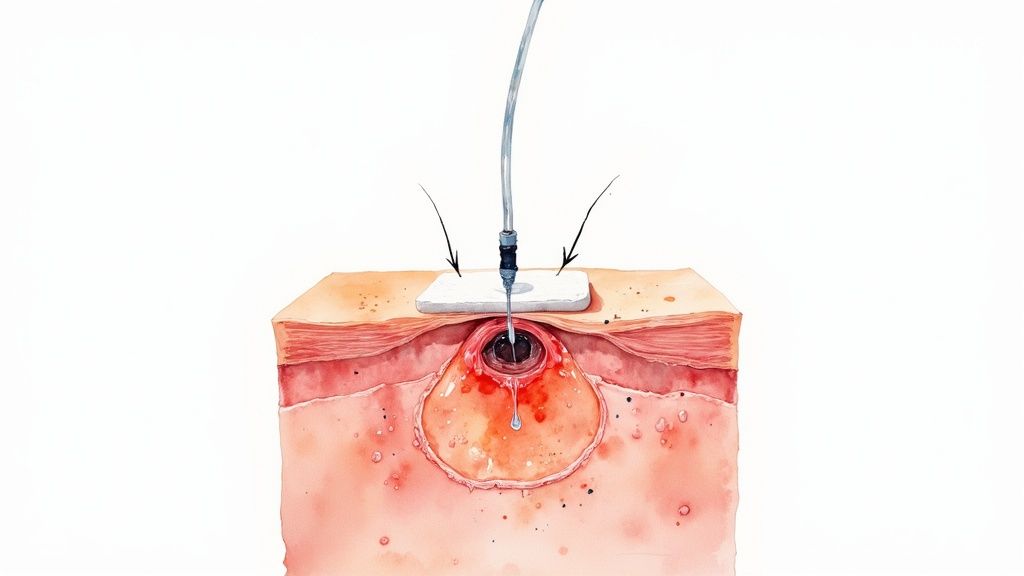
At the top of this list is Negative Pressure Wound Therapy (NPWT). Picture a wound as a tiny, disorganized construction site. Debris and excess fluid are everywhere, slowing the whole project down. NPWT acts like a highly specialized, gentle vacuum, creating a sealed, controlled environment right over the wound.
This "healing vacuum" is a master multitasker. It constantly pulls away excess fluid (exudate) and infectious material, which immediately lowers the bacterial burden. At the same time, the negative pressure physically draws the wound edges closer, shrinks swelling (edema), and powerfully stimulates the growth of new, healthy granulation tissue.
When to Bring in the NPWT System
NPWT is a heavy hitter, so we reserve it for specific situations where its unique power can make the biggest difference. It’s the go-to choice for large, complex, and deep wounds that are producing a lot of fluid.
You'll often see clinicians turn to NPWT for:
Deep surgical wounds or incisions that have split open (dehisced).
Acute and traumatic wounds that demand intensive management from the start.
Stage 3 and 4 pressure injuries where there's been significant tissue loss.
Diabetic foot ulcers and other chronic wounds that have stalled and aren't healing.
This kind of technology is a huge deal in our field. The wound care market is projected to swell from a 2024 baseline of around USD 22.85 billion to nearly USD 40.85 billion by 2035, and that growth is being pushed by the proven clinical success of high-value systems like NPWT. You can get a closer look at the companies and trends shaping this market over at sphericalinsights.com.
Critical Times Not to Use NPWT
Knowing when to use NPWT is only half the battle; knowing when not to is just as crucial. Applying negative pressure in the wrong scenario is downright dangerous and can cause serious harm.
Negative Pressure Wound Therapy is an active intervention, not a passive dressing. You absolutely cannot use it if there's malignancy in the wound, untreated osteomyelitis (bone infection), non-enteric or unexplored fistulas, or over exposed blood vessels or organs.
Another huge mistake is applying NPWT over dead, leathery tissue (necrotic tissue with eschar). The wound bed must be cleaned out and properly debrided before starting the therapy. This ensures the negative pressure can actually stimulate the healthy tissue underneath.
Beyond the Vacuum: More Game-Changing Devices
While NPWT might be the most well-known device, it’s not the only piece of tech transforming how we manage wounds. A whole suite of other tools now gives clinicians invaluable data and treatment options, finally moving wound care from a subjective art to an objective science.
Ultrasonic Debridement Tools: These devices use low-frequency ultrasound waves to meticulously lift away dead tissue, slough, and bacteria. This method is often less painful than sharp debridement and is incredibly effective for cleaning up wounds with complex surfaces.
Tissue Perfusion Scanners: How do you know for sure if a wound is getting enough oxygenated blood to heal? These scanners use technologies like spectroscopy to give us real-time, non-invasive measurements of blood flow and oxygenation in the tissue around the wound.
Advanced Imaging Devices: Modern tech lets us see what the naked eye misses completely. For example, fluorescence imaging devices can pinpoint the exact location of high bacterial loads in a wound, which guides us to debride and sample with much greater precision. Our guide on a point-of-care wound imaging device explains exactly how this helps clinicians make smarter decisions right at the bedside.
These technologies give us a constant stream of objective data we simply never had before. By measuring blood flow, visualizing bacteria, and precisely removing non-viable tissue, these devices empower clinicians to make smarter, evidence-based decisions. They help us understand why a wound isn't healing and point us directly to the best products and therapies to get things back on track.
Building Your Wound Product Selection Framework
Knowing the individual tools is one thing; building the machine is another. This is where theory meets practice, where we create a repeatable framework for choosing the best wound care products for the right patient, every single time. It's a systematic process that moves beyond just looking at the wound to consider the whole person.
The process kicks off with a thorough evaluation of the wound itself. You have to become a detective, piecing together clues from its appearance, location, and behavior. This initial assessment guides your entire strategy, ensuring your product choice directly addresses the immediate problem stalling the healing process.
From there, the framework expands to include patient-specific factors. Let's be honest—a clinically perfect product is useless if it doesn't fit into the patient's lifestyle, abilities, or overall health status. This holistic view is the secret to creating treatment plans that are not just effective, but actually sustainable in the real world.
Starting with the Wound Itself
Every wound tells a story. Your first job is to listen carefully and translate that story into a clear set of needs. This involves a multi-point assessment that forms the very foundation of your product selection.
Wound Type and Depth: Is it a shallow pressure injury or a deep surgical wound? The depth dictates the need for packing materials like alginates or the potential use of technologies like NPWT.
Exudate Level: Is the wound bed dry, moist, or heavily draining? This is probably the most critical question for dressing selection. A dry wound needs a hydrogel to donate moisture, while a weeping wound needs an absorbent foam to manage it.
Bioburden and Infection: Are there signs of a high bacterial load or clinical infection? This might point you toward an antimicrobial dressing or a cleanser like hypochlorous acid to prep the wound bed properly.
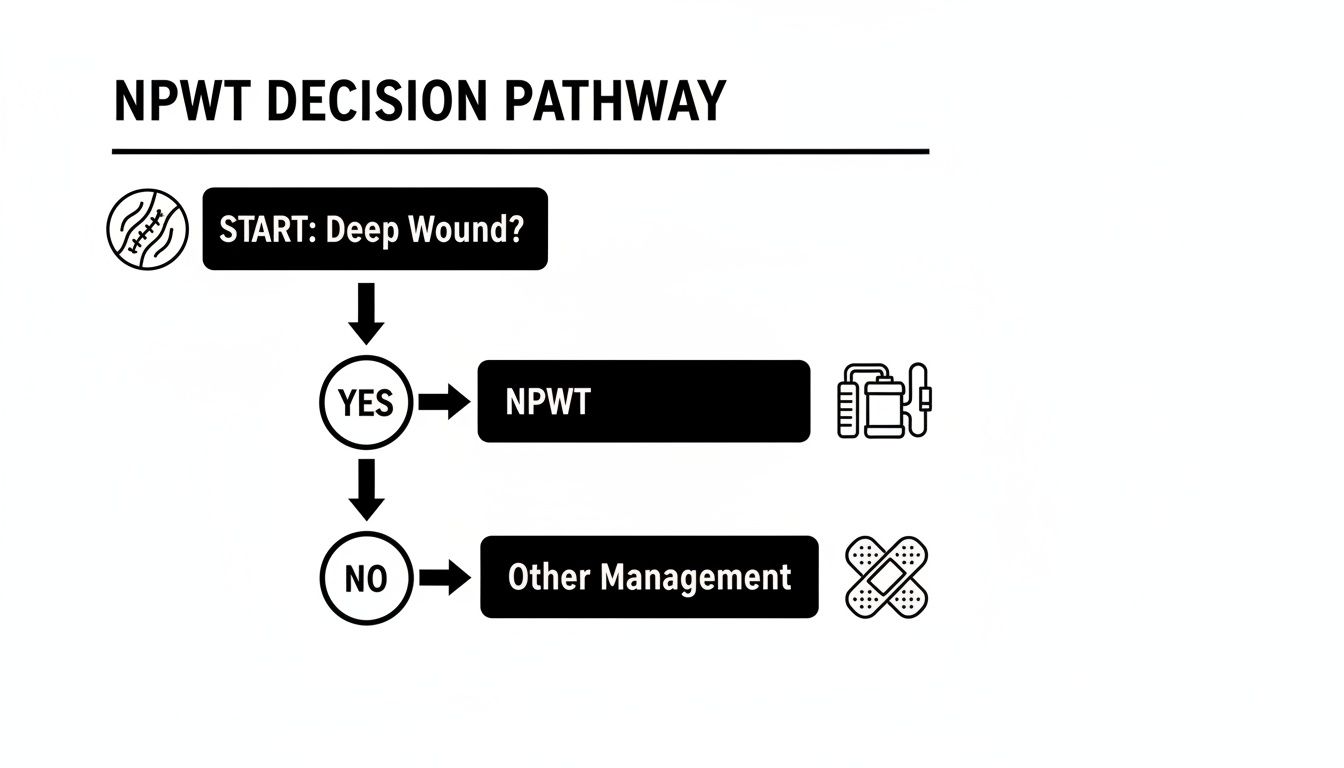
This simple decision tree shows a common clinical thought process for deep, complex wounds.
As you can see, a single characteristic—in this case, wound depth—can immediately steer treatment toward or away from advanced devices like NPWT.
Connecting the Product to the Healing Goal
Your product choice must be directly tied to the current phase of healing. The goal for a wound covered in dead tissue is completely different from the goal for one filled with healthy, new granulation tissue.
Choosing a product is an active intervention, not just a passive cover. You are selecting a tool to achieve a specific, immediate objective: debride, granulate, or epithelialize.
For example, if the primary goal is debridement (clearing out non-viable tissue), your best options are products that help with that, like hydrogels or hydrocolloids that support autolytic debridement. If the goal is to promote granulation (filling the wound with new tissue), you might reach for a collagen dressing or even consider NPWT.
Expanding the View to the Patient
The wound doesn't exist in a vacuum. The patient’s overall condition plays a massive role in both their healing potential and your product selection. Overlooking these factors is a common reason why technically "correct" treatment plans end up failing.
Think through these key patient-centered questions:
What are their comorbidities? Conditions like diabetes or peripheral artery disease severely impact healing and absolutely must be managed at the same time.
How is their nutrition? A patient who isn't getting enough protein simply can't build new tissue. Nutritional support, like protein shakes or specialized drink mixes, can be just as important as the dressing you choose.
What is their mobility and support system? Can the patient or a caregiver realistically manage complex dressing changes? Ease of use and wear time become critical factors for success at home.
Addressing the Practical Realities of Care
Finally, a truly effective framework has to acknowledge the practical hurdles of healthcare. Cost-effectiveness and reimbursement aren't secondary concerns; they are central to whether a patient can access and continue their treatment.
When building a comprehensive plan, it's also smart to integrate secure patient communication strategies. For instance, using a HIPAA compliant chatbot can help manage data and coordinate care securely. After all, a product choice that isn't covered by insurance or is prohibitively expensive is not a viable solution.
By systematically working through these layers—from the wound bed to the patient's life to the healthcare system—you move from simply picking products to designing intelligent, empathetic, and effective wound care strategies that deliver real results.
Common Questions About Wound Care Product Selection
Even the most experienced clinicians can feel swamped by the sheer volume of wound care products on the market. With new options popping up all the time, it's natural to have questions when you're standing at the bedside trying to make the right call.
Let's cut through the noise. Here are some direct, experience-driven answers to the questions we hear most often in the field. Think of this as a practical guide to help you turn your clinical knowledge into confident, real-world decisions for your patients.
How Do I Choose Between So Many Different Wound Dressings?
It's easy to get lost in the weeds here, but you can simplify things dramatically by asking one core question: What does this wound need right now? More specifically, think of yourself as a moisture regulator for the wound bed. Is it too wet, or is it too dry?
Your answer will immediately rule out dozens of options and point you in the right direction.
Is the wound draining heavily? You need something that absorbs. Think of high-capacity options like a foam dressing or an ultra-absorbent alginate to pull that excess fluid away from the wound and protect the surrounding skin from getting waterlogged.
Is the wound bed dry and struggling? It needs moisture. A hydrogel dressing is your go-to here. It actively donates hydration to soften up dead tissue and create the perfect environment for healthy new cells to get to work.
Are you trying to protect fragile new tissue? Be gentle. A dressing with a silicone adhesive border offers a secure barrier that won't tear away all your hard-earned progress when you change it.
It all comes down to matching the dressing’s primary job to the wound's most immediate need.
When Should I Consider Advanced Therapies Like Biologics or NPWT?
Think of these as your heavy hitters. You don't bring them in for every situation, but they are absolutely essential for wounds that are "stuck" and just aren't moving forward despite solid, consistent standard care.
Negative Pressure Wound Therapy (NPWT) is a fantastic choice for those big, deep, and heavily draining wounds—think of a dehisced surgical incision or a significant pressure injury. It's a workhorse that actively manages the wound environment while stimulating new tissue growth, making it perfect for complex cases.
Biologics, like amniotic allografts, are a different tool for a different job. They shine in chronic wounds, such as stubborn diabetic foot ulcers. You bring them in when the wound bed is clean and well-prepped but just seems to have forgotten how to heal. Biologics essentially reboot the healing process at a cellular level, providing the signals needed to finally close the gap.
What Is the Most Common Mistake in Product Selection?
The single biggest mistake we see is a "set it and forget it" mentality. Wound healing is a dynamic process; what a wound needs this week can be completely different from what it needed last week.
The perfect dressing for absorbing heavy drainage last Monday might be the very thing drying out the wound bed and stopping healing this Friday. That’s why you have to reassess the wound at every single dressing change.
If you aren't adjusting your plan based on what the wound is telling you, you risk stalling out or even going backward. The best product is always the one that meets the wound's needs today.
How Do Cost and Reimbursement Factor into My Choice?
In the real world, cost isn't just a factor; it's a massive one. The most clinically advanced product is useless if the patient or facility can't get it paid for.
You have to be a pragmatist. Always know your facility's approved formulary and what the patient's insurance will actually cover. Sometimes, a more affordable, traditional dressing that can be changed as often as needed is a far more effective real-world solution than a pricey advanced product that isn't covered or gets used too sparingly to cut costs.
A truly successful treatment plan works both clinically and financially. Balancing those two realities is one of the most critical skills any wound care provider can have.
At Specialty Wound Care, we know that choosing the right product is just one piece of the puzzle. Our teams bring together advanced diagnostics, biologics, and evidence-based protocols to build individualized treatment plans that address every angle of the healing process. Find out how our comprehensive approach can help your patients achieve better, faster outcomes by visiting https://specialtywoundcare.com.
When a wound just won't heal, standard bandages often feel like a temporary fix for a much deeper problem. That's where Negative Pressure Wound Therapy (NPWT) comes in. It's an active treatment, often called a "wound vac," that uses a special vacuum device to accelerate healing in complex acute or chronic wounds.
By applying controlled suction through a sealed dressing, NPWT draws out excess fluid, reduces swelling, and actively encourages new, healthy tissue to grow.
Demystifying Negative Pressure Wound Therapy
Think of a stubborn wound as a small, swampy patch of ground where nothing can grow. A traditional bandage is like throwing a tarp over it—it covers the problem but does little to fix the soggy environment underneath.
NPWT, on the other hand, works like a sophisticated drainage system. It doesn't just cover the wound; it actively manages the environment to create ideal conditions for the body’s natural healing processes to finally take hold.
A computerized pump delivers gentle, continuous negative pressure (suction) across the entire wound bed. This transforms wound care from a passive act to an active, healing engine, making it a game-changer for wounds that have stalled.
The Core Components of an NPWT System
An NPWT system might sound complex, but it’s built on three core parts working together. Breaking them down shows just how elegantly this therapy works.
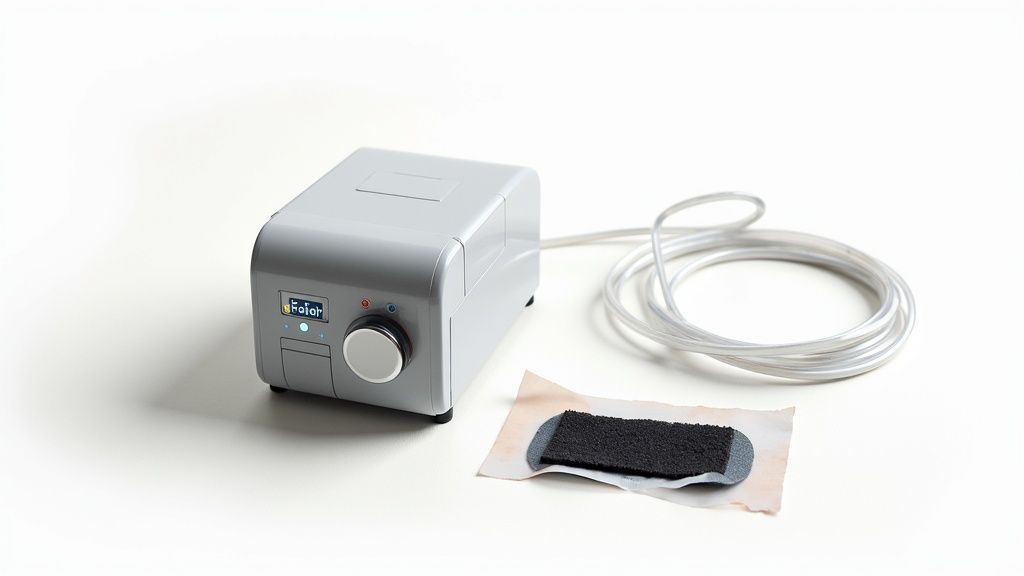
Specialized Wound Dressing: This isn't your typical gauze. It’s a porous foam or gauze dressing carefully cut to match the exact size and shape of the wound. This piece acts as the direct contact layer, making sure the negative pressure is spread evenly across the entire surface.
Adhesive Film Drape: A thin, clear film is laid over the dressing, extending onto the healthy skin around the wound. This creates an airtight seal, which is critical for maintaining the vacuum and shielding the wound from bacteria and other contaminants.
Therapy Unit and Tubing: A flexible tube connects the sealed dressing to a portable pump. This compact machine is the brains of the operation, generating the controlled suction needed to pull fluid and infectious material away from the wound and into a sealed collection canister.
By actively removing fluid, reducing bacterial load, and stimulating blood flow, NPWT creates a clean, moist, and protected environment that is ideal for the body's natural healing processes.
This technology has quickly become a cornerstone of modern wound management. The global NPWT market was valued at around USD 2.59 billion and is expected to climb to an estimated USD 3.84 billion by 2030. This growth underscores its critical role in treating chronic wounds, which affect up to 2% of the world's population. You can dive deeper into the data on the global wound therapy market and what’s driving its expansion.
NPWT At a Glance: Key Components and Functions
To make it even clearer, here’s a quick summary of the main parts of an NPWT system and the specific job each one does.
Component
Function
Primary Goal
Specialized Dressing
A foam or gauze that fills the wound cavity and distributes pressure evenly.
Ensure consistent therapeutic suction across the entire wound bed.
Adhesive Film Drape
Creates an airtight seal over the dressing and surrounding healthy skin.
Maintain negative pressure and prevent external contamination.
Therapy Unit (Pump)
A computerized vacuum that applies controlled, continuous, or intermittent suction.
Actively remove exudate, reduce swelling, and stimulate healing.
Connecting Tubing
Connects the sealed dressing to the therapy unit and collection canister.
Transport fluid and infectious material away from the wound site.
Collection Canister
A disposable container that safely collects all the fluid drawn from the wound.
Contain biohazardous waste and allow for fluid output measurement.
Each piece plays a vital role, working in concert to create an optimal healing environment that passive dressings simply can't replicate.
How NPWT Actively Accelerates Healing
Negative Pressure Wound Therapy is so much more than a high-tech bandage. It’s an active healing system, one that triggers real, profound physiological changes right at the wound bed. The gentle, controlled suction kicks off a cascade of four key mechanisms that work in concert to tear down the barriers preventing a wound from closing.
When you understand how these mechanisms work, it becomes crystal clear why NPWT is a game-changer compared to traditional, passive dressings. It doesn't just sit on top of a wound; it fundamentally alters the wound’s environment to supercharge the body's natural repair process. This active intervention is what makes it a cornerstone of modern wound care.
The Four Pillars of NPWT Healing
At its core, NPWT speeds up healing through four distinct but interconnected actions. Each one plays a vital role in preparing the wound for closure and helping healthy tissue grow back. Let's break down exactly what's happening on a biological level.
Macrodeformation (Drawing Wound Edges Together): The negative pressure creates a gentle, uniform contraction in the foam dressing. In turn, this pulls the edges of the wound closer together. Think of it like a tailor carefully gathering fabric before stitching a seam—this action physically shrinks the wound, giving the body less ground to cover.
Microdeformation (Stimulating Cell Growth): On a microscopic level, the foam’s porous structure applies a tiny amount of mechanical stress to the individual cells in the wound bed. This controlled strain is a powerful signal that encourages the formation of granulation tissue—that bright red, bumpy tissue that tells you a wound is healing properly. This process is absolutely essential for filling in the wound's defect.
Fluid Removal (Controlling Exudate and Edema): Many chronic wounds produce way too much fluid (exudate), which is often loaded with enzymes that can damage new, healthy tissue. The continuous suction acts like a sophisticated drainage system, constantly pulling this harmful fluid away. This also reduces swelling (edema) in the surrounding area, which immediately improves blood flow and creates a cleaner, healthier environment for new cells to thrive.
Environmental Control (Protecting the Wound): The sealed dressing creates a closed, moist, and warm environment—the perfect incubator for cell migration and growth. It also acts as a physical shield, protecting the fragile new tissue from outside bacteria and contamination. This drastically lowers the risk of infection.
How Suction Promotes New Tissue Growth
The stimulation of new granulation tissue is arguably the most critical function of NPWT. That microdeformation we mentioned, caused by the foam under suction, is the primary driver behind it.
When the suction is active, the cells inside the wound are gently stretched. This mechanical stimulation is a wake-up call, signaling them to multiply and start producing the building blocks for a new tissue scaffold.
This cellular activity also triggers angiogenesis—the formation of new blood vessels. These tiny new vessels are the supply lines, delivering the oxygen and nutrients needed to sustain the healing process and build strong, healthy tissue. If you want a deeper dive, explore our guide on how negative pressure wound therapy accelerates granulation tissue formation.
The magic of NPWT lies in its ability to simultaneously clean, contract, and stimulate the wound. It addresses multiple healing barriers at once, creating an optimal environment that passive dressings simply cannot replicate.
This multi-pronged attack transforms a stagnant, non-healing wound into a dynamic site of tissue regeneration. By managing fluid, keeping bacteria out, boosting blood flow, and directly stimulating new growth, NPWT gives the body everything it needs to finally close the wound. It's a powerful intervention that turns the tide firmly in favor of healing.
Who Is an Ideal Candidate for NPWT
Negative Pressure Wound Therapy is a powerful tool, but it’s not for every wound. Like any specialized treatment, it delivers the best results when used in the right situation. Figuring out who makes a good candidate involves a close look at the wound, its history, and the patient's overall health.
This therapy is often the perfect intervention for wounds that have stalled out and just aren't healing on their own. The decision to use NPWT is where clinical know-how meets practical, real-world application. It’s a targeted solution for complex wounds where standard dressings aren’t enough to manage fluid, control bacteria, and kickstart new tissue growth.
Common Wounds Treated with NPWT
Certain wounds consistently respond well to NPWT because of the specific challenges they present, like poor blood flow, heavy drainage, or a high risk of infection. For these wounds, NPWT provides the active support needed to break through healing barriers.
Diabetic Foot Ulcers: These wounds are notoriously stubborn due to nerve damage and poor circulation. NPWT helps manage the heavy drainage, reduces the bacterial burden, and encourages healthy new tissue to form in a clean, controlled space.
Pressure Injuries (Bedsores): For more severe Stage 3 and Stage 4 pressure injuries, NPWT is incredibly effective. It helps clear away dead tissue and excess fluid while gently pulling the wound edges closer, getting the wound bed ready for closure or a skin graft.
Venous Stasis Ulcers: Often found on the lower legs and caused by poor circulation, these ulcers can produce a lot of fluid. NPWT is excellent at managing this heavy exudate, which helps bring down swelling and creates a much better environment for healing.
Complex Surgical or Traumatic Wounds: After an accident or major surgery, some wounds can split open (dehisce) or have very irregular shapes. NPWT helps stabilize these wounds, lowers the infection risk, and fills in deep tissue gaps before final closure.
The need for advanced treatments like NPWT is growing. Chronic wounds are a massive global health challenge, with the worldwide wound care market expected to hit USD 27.2 billion by 2027. This growth is driven by technologies like NPWT, which are critical for managing the 1.5 million diabetic foot ulcers that occur each year in the U.S. alone. You can discover more insights about the wound care market outlook on amarexcro.com.
When NPWT Should Not Be Used
Knowing when not to use NPWT is just as important as knowing when to use it. Applying this therapy in the wrong situation can be ineffective at best and harmful at worst. These are called contraindications, and a clinician must rule them out before even considering the treatment.
A crucial part of responsible wound care is recognizing the limits of any therapy. NPWT is not a one-size-fits-all solution, and patient safety always comes first.
For instance, applying suction over certain areas, like exposed blood vessels or organs, can cause serious harm. It’s also vital to understand that NPWT doesn't treat an active, unmanaged infection—the infection has to be under control first. You can also learn more about whether negative pressure is safe for all ages in our detailed guide. A thorough assessment is key to making sure the powerful benefits of NPWT are applied safely and effectively.
NPWT Indications vs Contraindications
Deciding on NPWT is all about weighing the pros and cons for a specific wound. Here’s a quick look at when it’s a great option versus when it should be avoided.
Ideal for NPWT (Indications)
Avoid NPWT (Contraindications)
Chronic, non-healing wounds
Malignancy in the wound (cancerous tissue)
Acute and traumatic wounds
Untreated osteomyelitis (bone infection)
Diabetic, pressure, and venous ulcers
Non-enteric and unexplored fistulas
Surgical wounds and skin grafts
Necrotic tissue with eschar present (dead tissue must be removed first)
Wounds with moderate to heavy exudate
Exposed blood vessels, nerves, or organs
In the end, the final call always rests with a qualified wound care specialist. They have the expertise to weigh the potential benefits against any risks, ensuring NPWT is the right choice to get a patient firmly on the path to healing.
What to Expect During an NPWT Dressing Change
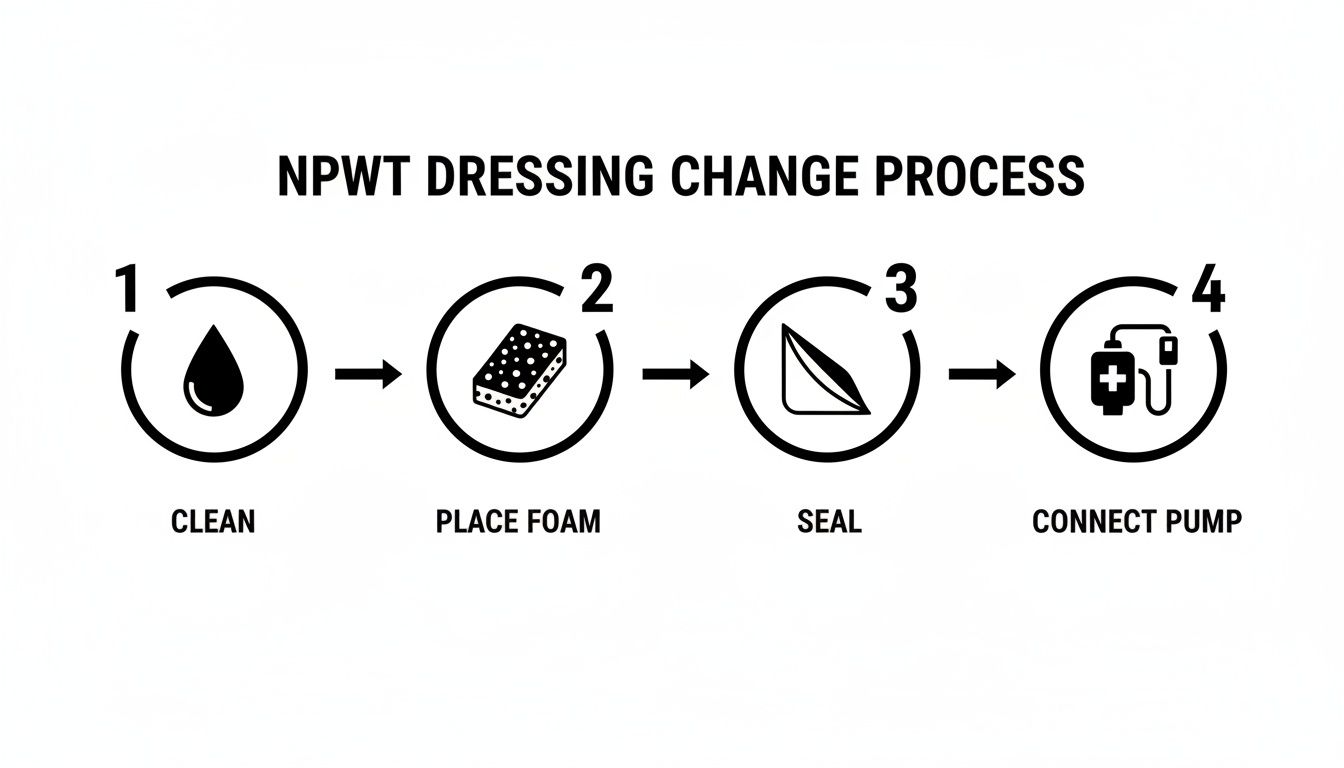
Knowing what happens during a Negative Pressure Wound Therapy dressing change can make the whole process feel much less intimidating. It's a routine procedure, typically done by a healthcare professional every 48 to 72 hours, that follows a clear, systematic path to keep your healing on track. Understanding these steps helps you feel more in control and involved in your own recovery.
The process kicks off with some careful prep work. Your clinician will turn off the NPWT pump, clamp the tubing, and then gently loosen the adhesive film around the edges. After the old dressing is off, the wound gets a thorough but gentle cleaning with a sterile solution. This clears out any debris and gets the area ready for a fresh start.
Placing and Sealing the New Dressing
With the wound bed clean and dry, it's time for the new dressing. Your clinician will cut a piece of sterile foam or gauze to fit the wound's exact shape. This isn't a one-size-fits-all situation—a precise fit is key to making sure the negative pressure is distributed evenly across the entire wound surface, without touching the healthy skin around it.
Once the foam is positioned just right, a transparent adhesive film is laid over the top. This sheet is much larger than the wound itself, extending several inches onto the surrounding skin to create a completely airtight seal. This part is critical; if the seal isn't perfect, the vacuum won't hold, and the therapy can't do its job. Your clinician will smooth out every last wrinkle to ensure it's sealed tight.
The visual below shows you just how straightforward this four-step process is, from cleaning the wound to getting the therapy running again.
Each step logically builds on the one before it, all working together to create the ideal healing environment.
Connecting and Activating the System
With the new dressing sealed, the final move is connecting it to the pump. A small opening is created in the adhesive film where a tubing port is attached. This port is the bridge that links the sealed dressing to the therapy unit through a flexible tube. For a closer look at this stage, our guide on how to clean wounds with negative pressure therapy has more detail.
When the pump switches on, you’ll likely feel a gentle pulling or tightening sensation. That's the air being drawn out as the dressing cinches down over the wound—it's the first sign that the system is working perfectly.
Your clinician will do a final check to confirm the seal is solid and the machine is set to the exact pressure your doctor prescribed. You'll hear the quiet, steady hum of the pump, which will run based on its programming. Just like that, a simple dressing change reactivates a powerful healing system, setting you up for more progress until the next appointment.
Weighing the Benefits Against the Potential Risks
To really understand what negative pressure wound therapy is all about, we need a balanced look at its powerful advantages and manageable risks. By weighing both sides, patients and their families can feel confident making informed decisions with their healthcare team. The benefits are often dramatic, completely changing the healing path for difficult wounds.
But like any medical treatment, NPWT isn't entirely without potential complications. A clear-eyed view of these possibilities ensures that any issues can be spotted and handled quickly. This keeps the healing process on track and puts patient safety first, which is always the top priority.
The Powerful Upsides of NPWT
The biggest benefit of NPWT is its incredible ability to accelerate healing time. By actively managing the wound environment, it helps many patients get to wound closure much faster than with traditional dressings alone. For you, that means fewer dressing changes, a quicker return to your daily life, and a real improvement in your overall well-being.
Another major win is infection control. The sealed dressing acts like a shield, blocking outside germs from getting in. At the same time, the continuous suction pulls away fluid, which reduces the amount of bacteria inside the wound. This is a huge deal after surgery, where NPWT is increasingly used to prevent serious complications.
Globally, an estimated 313 million surgical procedures are performed each year. Studies show that prophylactic NPWT can lead to a 57.8% relative reduction in wound dehiscence and a 9.1% reduction in hospital length of stay, highlighting its protective value. You can read the full research about these findings from Smith+Nephew.
Understanding and Managing Potential Risks
While NPWT is generally very safe, it’s smart to be aware of the potential issues. Keeping an open line of communication with your clinical team is the absolute best way to stay ahead of them.
Here are a few common concerns:
Discomfort During Changes: Some people feel mild pain or a pulling sensation when dressings are changed. Your clinician can give you pain medication beforehand to make things much more comfortable.
Skin Irritation: The sticky film can sometimes bother the skin around the wound. Special barrier creams or different types of adhesive can help protect your skin.
Device Alarms: The therapy machine has built-in alarms that go off if there’s an air leak or the canister gets full. These are just safety features doing their job, and your nurse will show you what each sound means and what to do.
A critical piece of patient safety, especially in wound care, is making sure all equipment is completely sterile to prevent infections. Proper medical device sterilization validation is a fundamental process that confirms every piece of equipment is safe before it ever gets near a patient.
Serious issues like bleeding are rare, but they do require immediate medical help. Your care team will give you very clear instructions on what to do in an emergency, so you're prepared for any scenario. By staying vigilant and working closely with your provider, you can navigate the treatment process safely and successfully.
Integrating NPWT into a Complete Care Plan
Negative Pressure Wound Therapy is a powerhouse, but it’s rarely a standalone cure. Its real strength is unleashed when it’s a key player in a broader, expert-led wound care strategy. Think of NPWT as a high-performance engine; it’s incredibly powerful, but you still need a chassis, fuel, and a skilled driver to actually win the race.
The best outcomes happen when NPWT is combined with other crucial treatments. A wound care specialist orchestrates this approach, making sure all aspects of healing are addressed at the same time. This is where the art and science of wound management really come together.
The Holistic Approach to Healing
A specialist's first move is always a thorough assessment to figure out if NPWT is even the right path for a patient's unique situation. This evaluation looks at the wound type, the patient's overall health, and any underlying conditions that might get in the way of healing. If NPWT gets the green light, it becomes just one part of a multi-faceted plan.
This integrated strategy often includes:
Systematic Debridement: Cleaning out dead or infected tissue from the wound bed is non-negotiable. NPWT works best on a clean foundation, and debridement is what creates that optimal starting point.
Targeted Infection Management: If an infection is present, it has to be dealt with using the right antibiotics or antimicrobial dressings. While NPWT helps manage the wound environment, it doesn't replace the need to treat the core infection.
Proper Nutritional Support: The body needs specific building blocks—like protein, vitamins, and minerals—to create new tissue. A complete care plan includes nutritional guidance to fuel the healing process from the inside out.
A successful wound care plan is a dynamic blueprint, not a static prescription. Specialists constantly monitor progress, adjusting NPWT settings and other therapies to respond to the wound's changing needs. This ensures the most effective and efficient path to closure.
Customizing Therapy for Maximum Effect
There’s no "one-size-fits-all" setting for NPWT. Wound care specialists tailor the therapy parameters, including the level of negative pressure and whether the suction is continuous or intermittent. This precise calibration is based on the wound's size, depth, and how much fluid it’s producing.
To make sure NPWT is used effectively, it's crucial to follow established clinical practice guidelines, which provide an evidence-based framework for making treatment decisions. By integrating this powerful technology into a holistic and individualized strategy, a dedicated team of specialists can achieve optimal healing, helping patients get back on their feet faster and more completely.
Answering Your Questions About NPWT
Even after learning the basics, it’s natural to have practical questions about negative pressure wound therapy. Let's tackle some of the most common ones we hear from patients and their families to help you feel more comfortable and confident with the treatment.
Is Negative Pressure Wound Therapy Painful?
Most people don't find the therapy itself painful. When the pump is first activated, you might notice a gentle pulling or stretching feeling as the dressing settles over the wound. This sensation usually goes away as you get used to it.
Dressing changes can sometimes cause discomfort. To manage this, your clinical team can give you pain medication about 30-60 minutes before they start, making the process much more comfortable. Always let your provider know what you're feeling—open communication is the best way to manage any discomfort.
How Long Will My NPWT Treatment Last?
There’s no one-size-fits-all answer here; the duration of NPWT is different for everyone. How long you’ll need it depends on the wound's size and type, your overall health, and how your body responds to the therapy.
Some acute wounds might only require a few weeks of treatment. On the other hand, more complex or chronic wounds could need several months of therapy to heal properly. Your wound care specialist will track your progress closely and give you a clearer timeline as you go.
The goal of NPWT is not just to cover a wound, but to actively prepare it for the final stages of healing. Treatment continues until the wound bed is healthy enough for closure, which might involve sutures, a skin graft, or allowing it to close on its own.
Your provider will set specific healing goals. As soon as you hit those milestones, the therapy can be stopped, marking a huge step forward in your recovery.
Can I Shower with the NPWT Device?
This is an excellent and very common question. Yes, in most cases, you can shower. The key is that you cannot get the dressing itself wet, because that would break the airtight seal and interrupt the therapy.
Your clinician will teach you how to safely and temporarily disconnect the pump from the dressing's tubing. The dressing is water-resistant and needs to stay sealed and in place. Once you're done showering, you just reconnect the tubing and turn the pump back on. It’s really important to follow the specific instructions for your device to keep the therapy working effectively.
What Does It Mean When the Machine Alarm Goes Off?
Don't panic when an alarm sounds! The alarms on an NPWT machine are important safety features, not a sign that something is terribly wrong. They’re designed to alert you to common issues that are usually easy to fix.
Here are the most frequent reasons for an alarm:
Air Leak: This is the #1 cause. It happens when the seal is broken, often because the adhesive film has wrinkled or peeled up at an edge. Your provider will show you exactly how to find and fix these minor leaks.
Canister is Full: The pump is just letting you know that the collection canister needs to be changed. This is a normal, routine part of the process.
Low Battery: If you have a portable device, the alarm is your reminder to plug it in and charge the battery.
Blockage in Tubing: An alarm might go off if the tubing gets kinked or clogged, which stops the pump from delivering the right amount of pressure.
Your care team will walk you through troubleshooting steps for every alarm, so you'll feel empowered to manage the device with confidence at home.
At Specialty Wound Care, we believe expert guidance and advanced therapies like NPWT are essential for overcoming the challenges of hard-to-heal wounds. Our specialists integrate these powerful tools into personalized care plans designed to get you back on your feet faster. Learn how our comprehensive approach can help you or a loved one by visiting us at https://specialtywoundcare.com.