Tag: ulcer prevention

Uncategorized

A Modern Guide to Venous Leg Ulcer Treatment and Healing

Primus Healthcare | December 13th, 2025


To really get a handle on venous leg ulcer treatment, you have to start with the root cause: veins that aren't working right. Think of it as a plumbing problem in your legs. When blood flow stalls, pressure builds up and starts damaging the skin from the inside out. To heal the wound, we have to tackle that pressure head-on and create the perfect environment for the skin to mend itself.

What Causes Venous Leg Ulcers to Form

Before you can fix a venous leg ulcer, you have to understand why it showed up in the first place. Imagine the veins in your legs are a one-way street, designed to push blood back up to your heart against gravity. This street is lined with tiny gates—or valves—that snap shut to stop blood from flowing backward.

But what happens when those gates get weak or fail? Blood starts to pool in your lower legs, creating a constant traffic jam. This condition is called chronic venous insufficiency, and it causes a slow, relentless rise in pressure inside the veins, a state we call venous hypertension.

From Hidden Pressure to Open Wound

This constant pressure is like a slow-motion flood inside your leg. Fluid, proteins, and even blood cells begin to leak out of the overwhelmed veins and into the surrounding tissue. This process essentially starves the skin of the oxygen and nutrients it needs to stay healthy. It becomes fragile, discolored, and swollen.

After a while, the skin gets so compromised that even a tiny bump, a simple scratch, or an insect bite can be enough to break it open, forming an ulcer. And because the underlying circulation problem is still there, the wound can't get the resources it needs to heal. That's what makes these ulcers so notoriously stubborn.

Venous ulcers are the most common type of chronic wound on the lower legs, affecting millions of adults. They aren't just a skin issue; they are a direct signal of an underlying vein disease that requires specialized medical attention to fix for good.

The Growing Need for Effective Treatment

This is a massive public health challenge. The global market for treating venous leg ulcers was valued at USD 2.96 billion back in 2018, and it's projected to climb to USD 7.21 billion by 2032. This isn't just a number; it reflects the real-world increase in chronic venous insufficiency, especially as our population ages.

The toll these wounds take, both financially and personally, highlights just how critical it is to get prompt, expert care. You can't just slap a bandage on the problem and hope for the best. Addressing the vein issues underneath is non-negotiable if you want lasting recovery and to stop the ulcer from coming back.

Visiting dedicated vein health clinics is a crucial first step. It's the only way to break the frustrating cycle of a wound that just won't heal. By tackling the root cause, we can finally move past just "managing" the wound and start achieving complete, durable healing.

Why Compression Therapy Is the Gold Standard Treatment

To actually heal a venous leg ulcer, you have to treat the root cause—not just put a bandage on the wound. This is where compression therapy comes in, and it's the undisputed gold standard for a reason. It works by applying steady, external pressure to the leg, directly fighting back against the damaging effects of venous hypertension.

Think of it this way: the veins in the leg have become weak, like a stretched-out rubber band. They can't effectively snap back to push blood up toward the heart. Compression bandages or wraps act as an external support system, giving the leg a gentle squeeze that helps those veins get their job done.

This simple mechanical support is powerful. It pushes pooled blood and excess fluid out of the lower leg and back into circulation. As a result, swelling goes down, more oxygen reaches the skin, and the wound finally has the right environment to start healing. Trying to heal a VLU without compression is like trying to bail out a boat with a hole in it—you're just fighting a losing battle against the underlying problem.

The diagram below shows exactly how venous insufficiency kicks off the chain reaction that compression is designed to stop.
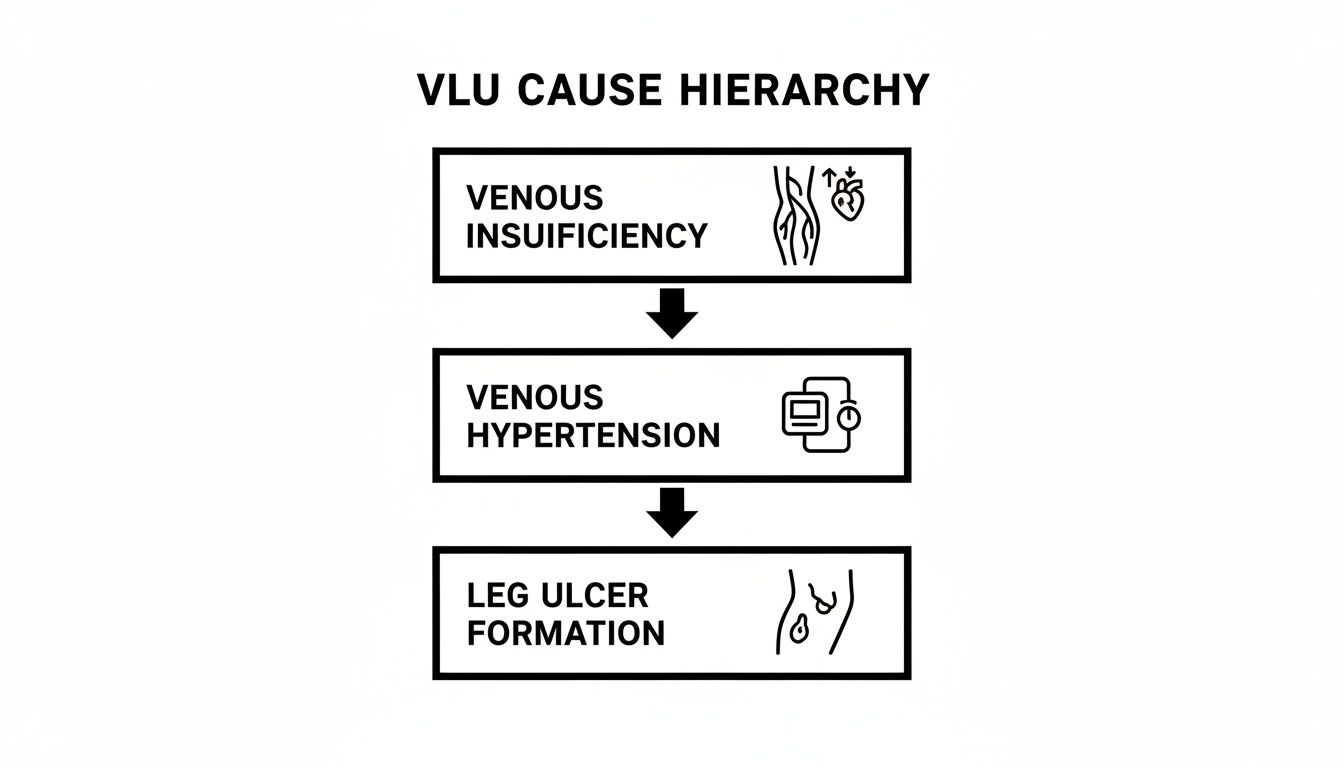
Flowchart illustrating the VLU cause hierarchy: venous insufficiency leads to venous hypertension, resulting in leg ulcer formation.

As you can see, the ulcer is just the final, visible symptom of a deep-seated circulatory failure. That’s why applying external pressure is a non-negotiable part of the solution.

Choosing the Right Compression System

Not all compression is created equal. The right system depends entirely on the patient's situation, the condition of the wound, and who will be applying it. There are several go-to options, and each has its own strengths.

Common compression systems include:

  • Multi-Layer Compression Bandages: These are often the first choice when starting treatment. Made up of several layers, they provide high, sustained pressure and have to be applied by a trained clinician. They typically stay on for several days at a time.
  • Adjustable Compression Wraps: These systems use Velcro straps, which makes them much easier for patients or their caregivers to put on and adjust. They strike a great balance between effective compression and ease of use, which can make all the difference for long-term compliance.
  • Compression Stockings: While they are absolutely essential for preventing another ulcer after the current one has healed, stockings are notoriously difficult to pull on over an open wound. They come in different pressure levels and are key to stopping the cycle of recurrence.

Deciding which system to use is a clinical judgment call that should only be made after a complete assessment of the patient's leg, the ulcer, and their overall health.

Before diving deeper, this table breaks down the key differences between the most common compression therapy options, helping clarify which might be best for different clinical scenarios.

Comparing Compression Therapy Systems

System Type Key Features Ideal For Application Frequency
Multi-Layer Bandages Provides sustained, high, non-removable pressure. Requires professional application. Initial treatment of active VLUs, especially with significant edema. Patients who may not be compliant with removable systems. Every 3-7 days
Adjustable Wraps Velcro-based systems that are user-friendly. Allows for self-application and adjustment. Patients needing a balance of high compression and ease of use. Good for transitioning from multi-layer systems. Daily (applied by patient/caregiver)
Compression Stockings Prescribed pressure garments worn daily. Can be difficult to apply over an open wound. Long-term prevention after the ulcer has healed. Maintaining circulatory health. Daily
Two-Layer Systems A simpler alternative to 4-layer systems, often combining a padded layer and a cohesive compression layer. Patients who find 4-layer systems too bulky or for managing less severe edema. Every 3-7 days

Understanding these distinctions is the first step in tailoring a compression plan that a patient can actually stick with, which is the key to success.

The Critical Role of Consistent Application

The best compression system in the world is useless if it isn't used correctly and consistently. Sporadic use just won't cut it. The pressure has to be applied the right way—every single day—to keep venous hypertension in check and give the wound a fighting chance.

The success of compression therapy is not just in the product itself, but in the faithful, day-in-day-out application. It is the single most important factor in promoting healing and preventing the ulcer from returning.

This commitment can be a huge challenge for patients, but it’s the foundation that all other treatments are built on. The numbers back this up: compression therapy dominates the VLU market, accounting for 40% of spending, because it's the only way to counteract the underlying cause.

Studies have shown that consistent compression can slash healing time by 30-50%. It’s also the best defense against recurrence, which can happen in up to 40% of patients within a year if they stop therapy. You can find more data on the venous leg ulcer market on Precedence Research.

Ultimately, proper application ensures the pressure is graduated—tightest at the ankle and gradually decreasing up the leg—to give blood flow the upward push it needs. This consistent, correctly applied pressure is what makes compression therapy the true cornerstone of VLU healing.

How to Prepare the Wound Bed for Healing
Gloved hands performing a medical procedure on a lower leg with a blister, surgical tools nearby.

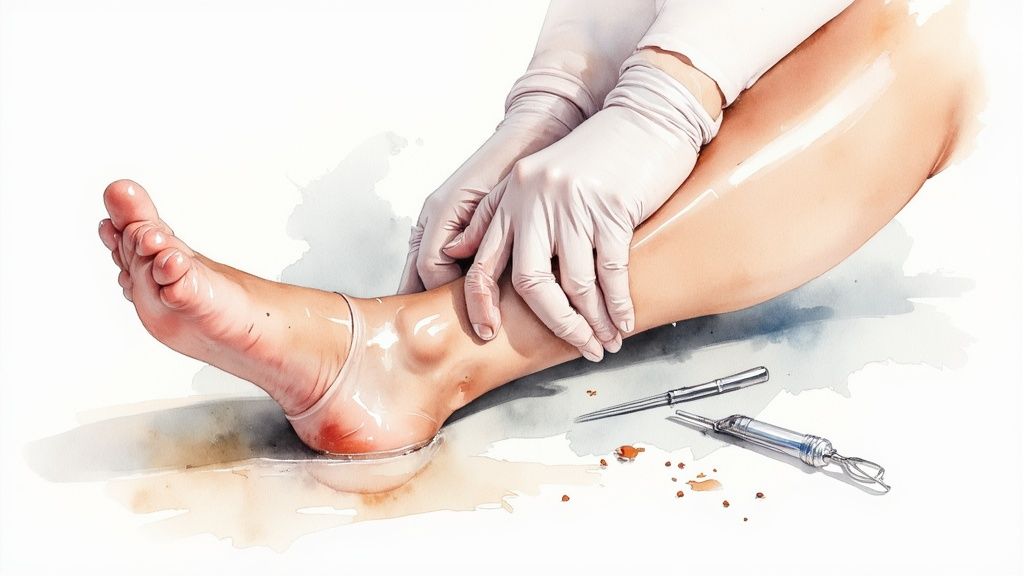
While compression gets to the root of the circulatory problem, we can't just ignore the wound itself. Think of preparing a wound bed like tending a garden. Before you can expect new seeds to sprout, you have to clear out all the weeds, rocks, and dead leaves.

In wound care, this essential "weeding" is called debridement. A venous leg ulcer is often covered in non-viable tissue—like yellowish slough or black eschar—that physically blocks new cells from growing. Even worse, this dead tissue is a five-star hotel for bacteria, inviting infection and bringing the healing process to a dead stop.

The Importance of Debridement

Debridement is the absolute cornerstone of local wound care. It’s the process of carefully removing all that unhealthy tissue to expose the healthy, bleeding wound bed underneath. This is the "fertile soil" where new granulation tissue can finally start to grow. Skipping debridement is like trying to build a house on a crumbling foundation; it’s just not going to work.

There are several ways to get the job done, and the right method depends on the situation:

  • Sharp Debridement: A clinician uses a scalpel or special scissors to precisely cut away the dead tissue. This is often the fastest way to remove a large amount of unhealthy material.
  • Enzymatic Debridement: A prescription ointment with special enzymes is applied directly to the wound. Over time, these enzymes work to chemically dissolve the dead tissue.
  • Autolytic Debridement: This is the most natural approach, using the body's own enzymes to break down non-viable tissue. We encourage this process by keeping the wound moist with specific dressings.

The best choice depends on how much dead tissue there is, the patient’s overall condition, and the clinician's expertise. A skilled provider knows exactly which tool to use to get the wound bed ready for healing.

Cleansing and Maintaining Moisture Balance

Once the weeds are gone, the garden needs just the right amount of water—not a flood, and not a drought. The same exact principle applies to a wound bed. You need proper cleansing and the perfect moisture balance for a VLU to heal.

Cleansing usually involves gently flushing the wound with a non-toxic solution, like sterile saline, to wash away loose debris and lower the bacterial count. Aggressive scrubbing is a big no-no, as it can easily damage the fragile new cells we’re trying to encourage.

Maintaining a moist wound environment is a fundamental concept in modern wound care. A wound that’s too dry will kill off new cells, but a wound that’s too wet can damage the healthy skin around it. The goal is that perfect equilibrium.

We use specialized dressings to manage the wound's moisture level. If a wound has heavy drainage, we'll choose an absorbent dressing to pull the excess fluid away. For a drier wound, we’ll use a dressing that donates moisture back to it. This careful management creates the ideal environment for cells to migrate across the wound bed and finally close the gap.

For those especially stubborn wounds, advanced treatments like a dual-layer allograft can provide a scaffold to support cell migration and kickstart healing. By combining debridement, cleansing, and moisture balance, we give the body its best possible shot at rebuilding and recovering.

Advanced Therapies for Non-Healing Ulcers

Sometimes, even with perfect compression and diligent wound care, a venous leg ulcer just refuses to heal. These stubborn, non-healing wounds can be incredibly frustrating for both patients and clinicians. When a wound stalls, it’s a clear sign it needs more than basic support; it requires a more advanced intervention to get the healing process back on track.

This is where the next level of venous leg ulcer treatment comes into play. These therapies are designed to give the body a powerful boost, tackling the biological roadblocks that keep a wound stuck in a chronic, inflammatory state. They move beyond just managing the environment and actively stimulate the body’s own regenerative capabilities.
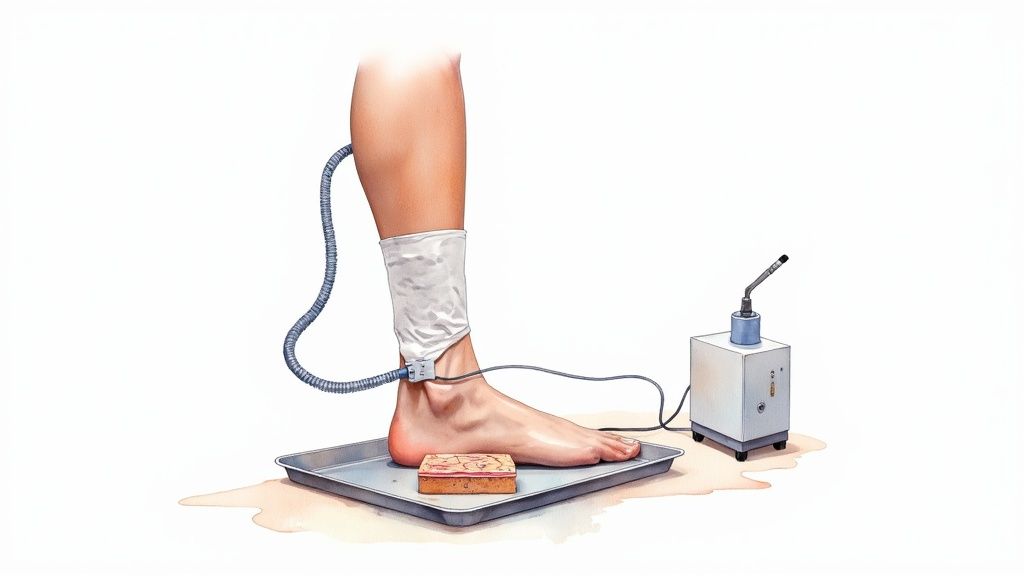
Illustration of a human leg undergoing a medical procedure, possibly for a venous leg ulcer, with a therapeutic device and a tray.

Bioengineered Skin Substitutes

Imagine trying to build a new wall where the old one crumbled, but you have no framework to guide you. That’s the challenge the body’s cells face when trying to close a chronic wound. Bioengineered skin substitutes, also known as cellular and tissue-based products (CTPs), provide that missing framework.

These products act as a biological scaffold. Applied directly to the prepared wound bed, they deliver essential components like collagen, growth factors, and sometimes even living cells. This scaffold gives the body's own skin cells a structure to crawl across, encouraging them to migrate, multiply, and rebuild lost tissue much faster than they could on their own.

There are many types of skin substitutes available, each with its own unique properties:

  • Allografts: Sourced from human donor tissue (like amniotic membrane), these provide a rich matrix of growth factors that signal the body to calm inflammation and start rebuilding.
  • Xenografts: Derived from animal sources, these primarily offer a collagen scaffold that supports new tissue formation.
  • Synthetic Options: Lab-created materials designed to mimic the skin's natural structure, providing a clean and consistent framework for cellular growth.

The choice of product depends on the specific needs of the wound, but the goal is always the same: to jumpstart a healing process that has come to a grinding halt.

Negative Pressure Wound Therapy

Another powerful tool for these non-healing ulcers is Negative Pressure Wound Therapy (NPWT). This involves placing a specialized foam dressing over the wound, sealing it with a clear film, and connecting it to a small vacuum pump. The pump then creates a gentle, continuous negative pressure—or suction—over the entire wound bed.

Think of NPWT as a system that does two critical jobs at once. First, it actively pulls excess fluid and infectious material away from the wound, keeping it clean and dramatically reducing swelling. Second, this gentle suction stimulates blood flow to the area, drawing in the oxygen and nutrient-rich blood that’s vital for fueling new cell growth.

NPWT transforms a passive wound environment into an active one. By physically contracting the wound edges and promoting the formation of healthy granulation tissue, it can significantly accelerate healing in complex cases that have failed to respond to other treatments.

This technology has become a go-to solution for deep, heavily draining, or otherwise complicated wounds that need intensive management to get them ready for closure.

Uncovering Hidden Bacteria with Fluorescence Imaging

One of the biggest enemies of wound healing is bacteria, especially when it forms a hidden, slimy layer called biofilm. Traditional swabs can easily miss these entrenched bacterial colonies, leaving clinicians guessing why a wound isn't progressing. Fluorescence imaging is a game-changing diagnostic tool that finally makes the invisible visible.

This handheld device shines a safe, violet light onto the wound. In response, different tissues and bacteria glow in specific colors. Healthy tissue might glow green, while harmful bacteria like Pseudomonas aeruginosa light up in a distinct red or cyan.

This real-time bacterial map allows clinicians to:

  • Pinpoint Contamination: See exactly where high bacterial loads are hiding, even if they aren't visible to the naked eye.
  • Guide Debridement: More accurately remove contaminated tissue while preserving healthy areas.
  • Improve Sampling: Take cultures from the most problematic spots to get accurate diagnostic results.

By revealing the true bacterial burden of a wound, fluorescence imaging enables a much more targeted and effective venous leg ulcer treatment plan. This approach is part of a growing trend toward using advanced tools to solve complex healing challenges. The market for these technologies reached USD 2.1 billion in 2023 and is projected to hit USD 3.3 billion by 2034, driven by the proven success of NPWT and bioengineered dressings. You can discover more insights about the venous leg ulcer market on Biospace.

When standard protocols are not enough, these advanced options provide new hope. You can learn more about how these therapies are integrated into a complete care plan by exploring our guide on advanced treatment options by Primus Specialty Wound Care.

Building a Long-Term Plan to Prevent Recurrence

Getting a venous leg ulcer to finally heal is a huge accomplishment, but it's really only half the battle. The root cause of the ulcer—that pesky condition called chronic venous insufficiency—doesn't magically go away once the skin closes. This means without a solid long-term plan, the odds of that ulcer coming back are incredibly high.

Think of it like patching a leak in your roof. You can fix the spot that’s dripping, but if you don’t address the damaged shingles, the next big storm will have water pouring right back in. Preventing another ulcer requires a mental shift from treating a wound to managing a lifelong condition.

The best long-term strategy puts you in the driver's seat. It's all about building a consistent daily routine that supports your vein health and protects your skin. It’s the only way to break the painful cycle for good.

The Lifelong Commitment to Compression

Let's be clear: the single most important part of any prevention plan is lifelong compression therapy. The very same tool that helped heal your ulcer is the one that will stop a new one from ever starting. Wearing your prescribed compression stockings or wraps every single day is completely non-negotiable.

Compression garments do the heavy lifting that your veins can't. They give your legs the external support needed to keep blood from pooling and venous pressure from rising. Skipping even a day or two can be enough to let fluid build up, putting your fragile, newly-healed skin at risk all over again.

Without ongoing care like consistent compression and regular skin checks, venous leg ulcers have a high rate of recurrence. Lifelong management is the key to preventing this frustrating and painful cycle from repeating.

Your doctor will help you find the right type of garment and the correct pressure level for long-term wear. It might feel like a chore at first, but making compression part of your daily routine—just like brushing your teeth—is the strongest defense you have.

Empowering Yourself with Daily Habits

Beyond compression, a few simple but powerful lifestyle habits can make a massive difference in preventing another VLU. When done together, these habits work to ease the strain on your veins and keep your skin tough and resilient.

A strong prevention plan should include:

  1. Leg Elevation: Any time you're sitting down for a while, prop your legs up so your feet are higher than your heart. This simple trick uses gravity to your advantage, helping drain pooled blood from your lower legs and giving your veins a much-needed break. Try to do this for 30 minutes, three or four times a day.

  2. Appropriate Exercise: Movement is medicine for your veins. Your calf muscle acts like a powerful pump, squeezing the veins and pushing blood back toward your heart every time you take a step. Low-impact activities like walking are perfect for getting this "calf muscle pump" working.

  3. Daily Skin Care and Inspection: The skin on your lower legs will always be a bit more fragile after an ulcer. Keep it strong by moisturizing every day with a pH-balanced, fragrance-free lotion to prevent dryness and cracking. Just as important, give your legs and feet a quick look-over every single day. Watch for any signs of trouble like redness, new discoloration, or tiny breaks in the skin. Catching a problem when it's small is everything.

Building Your Long-Term Care Team

You don't have to manage this alone. Think of it as a team effort, and you're the star player. But every star player needs a good coach, and that means having specialists in your corner. Regular follow-up appointments with a vein specialist or wound care clinic are vital, even when you feel perfectly fine.

These check-ups are where your provider can:

  • Check your circulation, often with a quick ultrasound.
  • Make sure your compression garments still fit right and are providing enough pressure.
  • Spot any early skin changes before they have a chance to turn into a new wound.

Staying in touch with your care team keeps your prevention plan sharp and effective. By combining daily compression, healthy habits, and ongoing professional guidance, you can slash the risk of recurrence and take back control of your long-term leg health.

Common Questions About Venous Leg Ulcer Treatment

When you're dealing with a venous leg ulcer, a lot of questions pop up. Getting clear, honest answers is the first step toward feeling in control of your health. Let’s tackle some of the most common concerns to clear things up and give you the confidence you need for a successful recovery.

Knowing what to expect—and what to watch out for—can make all the difference in your healing journey.

How Long Does a Venous Leg Ulcer Typically Take to Heal?

This is usually the first question on everyone's mind, and the most truthful answer is: it really depends. There’s no magic number. The healing timeline is shaped by a few key things: the ulcer's size and depth, how long it's been there, your overall health, and—most critically—how closely you stick to your treatment plan.

With consistent, top-notch care that includes proper compression therapy and wound management, smaller ulcers can heal up in about 3 to 4 months. For larger, deeper, or more stubborn ulcers that have been around for a while, the process can easily take 6 to 12 months, sometimes even longer.

The single most important factor in speeding up healing is sticking to the plan your specialist creates. It’s the daily consistency with compression, wound care, and lifestyle adjustments that separates a wound that heals from one that just won't go away.

Patience and persistence are your best friends here. You have to remember, we're not just healing skin; we're fixing the underlying circulation problem that caused the ulcer in the first place.

Can I Treat a Venous Leg Ulcer Myself at Home?

While what you do at home is absolutely essential, a venous leg ulcer is not something you should ever try to manage on your own. This condition demands professional medical supervision from beginning to end. A wound care specialist needs to accurately diagnose the issue and make sure other serious problems, like arterial disease, aren't being missed.

Think of it like a partnership. Your healthcare provider is the coach, and you're the star player.

The provider's job is to:

  • Get the Diagnosis Right: Using tools like ultrasound to confirm it's actually venous insufficiency.
  • Prescribe the Right Compression: Figuring out the exact level of pressure your leg needs.
  • Perform Debridement: Safely cleaning the wound by removing dead tissue so healthy cells can take over.
  • Watch for Infection: Catching and treating bacterial issues before they become a major problem.

Your role at home is to follow the playbook they design for you. That means wearing your compression gear faithfully, elevating your leg, moving around, and never skipping an appointment. Trying to go it alone can lead to serious trouble, including out-of-control infections, a wound that gets worse, and a much, much longer healing time.

What Are the Signs My Ulcer Is Infected or Getting Worse?

Knowing the red flags for infection is one of your most important jobs in managing your wound at home. An infection that goes untreated can completely derail the healing process and lead to bigger health issues. You need to call your healthcare provider right away if you notice any of these changes.

Key Warning Signs of Infection:

  • More Pain: A sudden spike in pain or a new type of pain around the wound that feels different from the usual discomfort.
  • Spreading Redness: The skin around the wound becomes red and warm, and that redness starts creeping outward.
  • A Bad Smell: A distinct, foul odor coming from the wound, even right after it's been cleaned.
  • Changes in Drainage: The amount of fluid coming from the wound suddenly increases, or it changes color to a cloudy, yellow, or green.
  • Feeling Sick: You start running a fever, get the chills, or just feel generally unwell. This could mean the infection is spreading through your body.

Catching an infection early is everything. Don't ever hesitate to call your doctor or wound clinic if you even think something is wrong. It's always better to be safe and get a professional opinion than to wait and let a small issue turn into a huge setback for your venous leg ulcer treatment. Early action usually means a quick course of antibiotics and getting your healing journey right back on track.


At Specialty Wound Care, we combine advanced diagnostics with expert clinical care to create personalized treatment plans that accelerate healing. If you or a loved one is struggling with a non-healing wound, our team is here to help. Discover how our evidence-based approach can make a difference by visiting us at https://specialtywoundcare.com.

Uncategorized

A Definitive Guide to the Best Treatment for Pressure Ulcers

Primus Healthcare | December 10th, 2025


Finding the best treatment for pressure ulcers isn’t about a single magic bullet. It’s a coordinated strategy, kicking off with one non-negotiable step: getting the pressure off. From there, it’s all about an accurate assessment of the wound’s stage, combining consistent offloading, proper cleansing, and stage-specific care to give the body a fighting chance to heal.

The Foundation of Healing: Pressure Ulcer Assessment

Think of a pressure ulcer like a distressed patch of land. Before you can hope to restore it, you have to survey the damage. Is it just the topsoil that’s eroded, or has the problem reached all the way down to the bedrock? This initial investigation is the single most critical step. It sets the entire course for treatment.

Pressure ulcers (often called bedsores) form when constant pressure cuts off blood flow to the skin, causing the tissue to die. This is often made worse by friction and shear—think of skin rubbing against sheets or sliding down in a bed. If you don’t address the number one cause of pressure ulcers, no treatment in the world will work.

Decoding the Damage: The Staging System

Clinicians use a staging system to classify just how severe a pressure ulcer is. This isn’t just medical jargon; it’s a universal language that tells the entire care team what they’re up against and guides the whole treatment plan. Each stage signals a deeper level of tissue damage.

  • Stage 1: This is the earliest warning sign. The skin is still intact but shows a persistent area of red, non-blanchable skin (meaning it doesn’t turn white when you press on it).
  • Stage 2: Now we have partial-thickness skin loss. It might look like a shallow, open crater, a blister filled with clear fluid, or a simple abrasion.
  • Stage 3: The damage has gone deeper, extending through the skin into the fatty tissue below. It looks like a deep crater, but you can’t see muscle, tendon, or bone yet.
  • Stage 4: The most severe stage. Here, there’s full-thickness tissue loss, and muscle, tendon, or even bone is exposed. These wounds are complex and carry a serious risk of infection.

We also have two other important classifications: Unstageable ulcers, where the wound base is hidden by dead tissue (slough or eschar), making it impossible to see the true depth, and Deep Tissue Injury (DTI), which appears as a purple or maroon patch of intact skin, signaling serious damage to the soft tissue underneath.

To help you visualize this process, here’s a quick look at the Pressure Ulcer Staging system.

Pressure Ulcer Staging at a Glance

This table breaks down the stages into what you’ll see and what your first move should be.

Stage Appearance Key Action
Stage 1 Intact skin with non-blanchable redness. Relieve all pressure immediately; protect the area.
Stage 2 Partial-thickness skin loss (shallow crater or blister). Offload pressure, gently cleanse, and apply a protective dressing.
Stage 3 Full-thickness skin loss into the fat layer (deep crater). Offload, cleanse, debride if needed, and apply an absorptive dressing.
Stage 4 Full-thickness loss with exposed bone, tendon, or muscle. Immediate offloading and expert consultation; surgical intervention likely.
Unstageable Base is covered by slough or eschar. Offload and debride to reveal the true wound depth.
DTI Purple or maroon area of intact skin. Offload completely and monitor closely for rapid deterioration.

This systematic approach, from visual check to initial action, is the bedrock of effective pressure ulcer management.

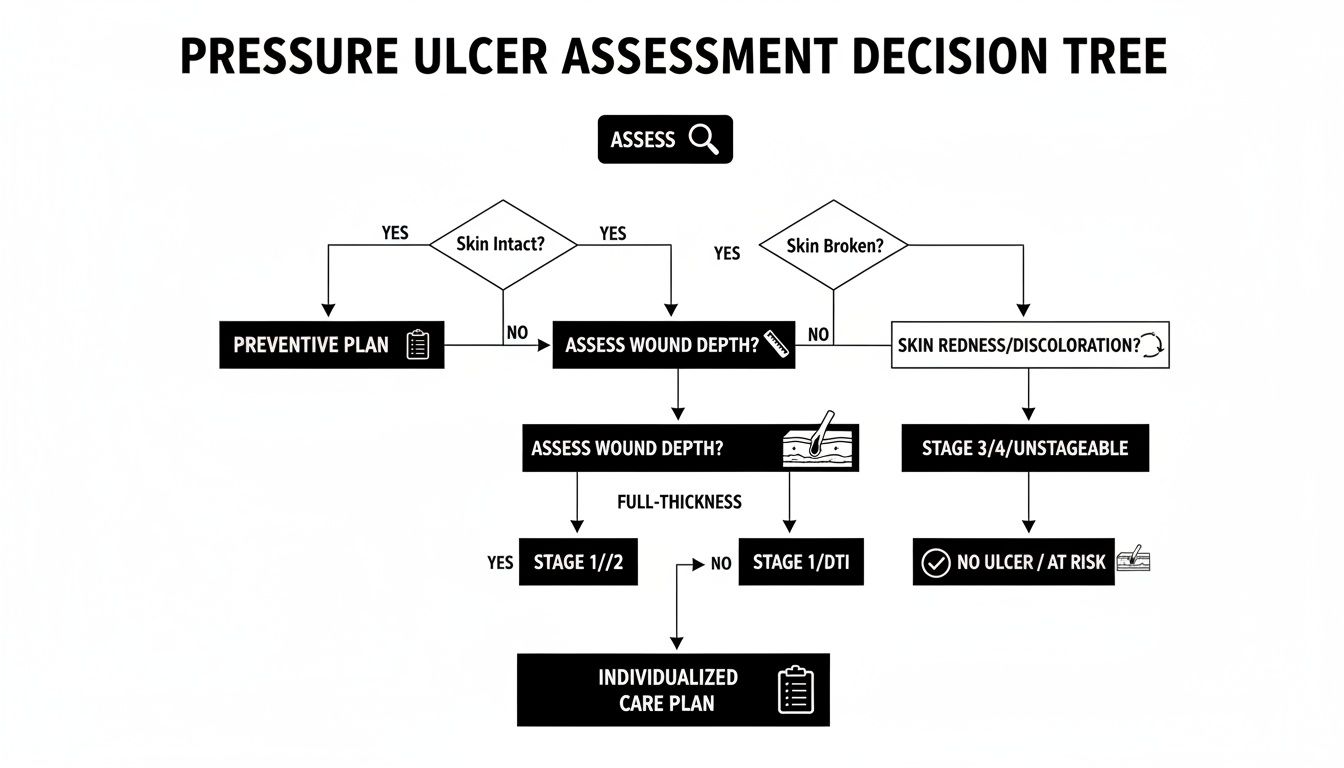
This decision tree shows how those crucial first steps flow together, moving from initial assessment to staging and, finally, to creating a smart, individualized plan.

Flowchart illustrating a pressure ulcer assessment decision tree for diagnosis and individualized care planning.

As you can see, a successful outcome isn’t about guesswork. It’s a logical, step-by-step process that hinges on getting that first evaluation right.

Your Initial Action Plan

Once you’ve identified and staged a pressure ulcer, you have to act fast to stop further damage. This immediate response is just as vital as any advanced dressing or therapy that comes later.

The core principle of pressure ulcer management is simple yet non-negotiable: you must remove the pressure. Without this fundamental step, no amount of wound care will be effective.

First, reposition the individual to completely offload the affected area. Use pillows, foam wedges, or specialized cushions to redistribute their weight and protect vulnerable bony spots like the sacrum, heels, and elbows.

Next, get a good look at the skin. Keep the area clean and dry, especially from moisture caused by incontinence. For a Stage 1 ulcer, this might be all you need to do. For open wounds, the next step is a gentle cleanse with saline before putting on a dressing that’s right for the stage. This immediate, proactive response lays the groundwork for everything that follows, giving the body the best possible shot at healing itself.

Core Principles of Pressure Ulcer Wound Care

Once you’ve staged a pressure ulcer, your focus has to shift to managing the wound itself. This isn’t just about slapping on a bandage; it’s about creating the perfect environment for the body to do what it does best—heal. The best treatment at this stage really comes down to three things: cleaning the wound gently, keeping it moist, and picking the right dressing for the specific job.

It all starts with cleaning. You need to clear out any debris or bacteria that could get in the way of healing, but you have to be gentle. Harsh antiseptics like hydrogen peroxide or iodine are a big no-no. They’re toxic to the delicate new cells trying to form and can actually “burn” the very tissue you’re trying to save.

The gold standard here is simple: sterile normal saline. It’s isotonic, which means it matches the salt concentration of our body’s fluids, so it cleans without damaging cells. The goal is to irrigate, not scrub—just enough gentle pressure to flush the wound bed without causing more trauma.

The Greenhouse Effect for Healing

After a good cleaning, the next priority is to create a moist wound environment. For years, the common wisdom was to “let it air out,” but we now know that’s one of the worst things you can do. A dry wound forms a thick scab, and new skin cells have to waste precious energy burrowing underneath it. It slows the whole process way down.

Think of a healing wound bed like a small greenhouse.

A moist, balanced environment allows new cells to glide freely across the wound surface, build new tissue, and close the gap much, much faster. Just like plants thrive in a humid greenhouse, skin cells thrive in a moist wound bed.

This environment also helps the body’s natural enzymes break down dead tissue in a process called autolytic debridement. The key word, though, is balance. The wound should be moist, not sopping wet. Too much fluid can macerate (or waterlog) the healthy skin around the wound, making it weak and prone to breaking down itself.

For anyone managing these wounds at home, getting this part right is absolutely vital. Resources like your guide to home wound care offer practical, step-by-step instructions that can make a huge difference in healing outcomes.

Choosing the Right Wound Dressing

The primary tool for maintaining that perfect greenhouse environment is the dressing. There’s no single “best” dressing for every situation. The right choice depends completely on the ulcer’s stage, depth, location, and how much fluid (exudate) it’s producing. What works for a dry Stage 2 ulcer is totally wrong for a heavily draining Stage 4 wound.

Here’s a quick look at the main categories and where they fit in:

  • Foam Dressings: These are your workhorses. They’re super absorbent and provide a nice cushion, making them perfect for ulcers with moderate to heavy exudate.
  • Hydrocolloids: These react with wound fluid to form a soft gel, locking in moisture. They’re best for shallow wounds with minimal to moderate drainage, like a Stage 2 or a shallow Stage 3.
  • Alginates: Made from seaweed, these are incredibly absorbent. They are the go-to choice for wounds that are draining heavily or bleeding, as they form a gel that traps fluid and bacteria.
  • Hydrogels: These are water or glycerin-based dressings designed to donate moisture to a dry wound bed. They’re ideal for dry ulcers that need rehydration to kickstart the healing process.

Picking a dressing isn’t a one-and-done decision. A wound’s needs change as it heals. It might start out needing an alginate for heavy drainage, but as it improves, a foam or hydrocolloid might become the better choice. You have to constantly reassess to make sure the dressing is always supporting, not hindering, the path to recovery.

When a pressure ulcer just won’t heal with the basics, it’s a clear signal to bring in the heavy hitters. Think of it like a garden that isn’t responding to regular watering and sunlight. Sometimes you need specialized fertilizers or soil treatments to kickstart growth. In the same way, advanced wound care modalities give that extra push to jumpstart healing in complex or stalled wounds.

A medical professional in white gloves applies a circular patch to a patient's arm, with care products on a tray.

These treatments are especially crucial for patients whose underlying conditions get in the way of healing. The geriatric population—those 60 and older—accounts for roughly 50% of the global pressure ulcer treatment market. As factors like reduced mobility and thinning skin increase risk with age, the need for effective, advanced care skyrockets. The market reflects this, with U.S. revenues hitting approximately USD 2.7 billion in a recent year, showing just how many resources are dedicated to tackling these challenging wounds.

Clearing the Way with Debridement

Before new, healthy tissue can form, you have to get rid of the old, dead stuff. This process is called debridement, and it’s a lot like weeding a garden before you plant new seeds. Dead tissue—either slough (the yellow, stringy stuff) or eschar (thick, black, leathery tissue)—is a breeding ground for bacteria and creates a physical barrier that stops healthy cells from moving in.

There are a few ways to get this done, each with its own place in the toolkit:

  • Autolytic Debridement: This is the body’s own natural process. By keeping the wound moist with the right dressing, we let the body’s enzymes do the work of breaking down dead tissue. It’s gentle, but slow.
  • Enzymatic Debridement: Here, we apply a topical ointment containing enzymes that specifically dissolve non-viable tissue, leaving the healthy tissue alone.
  • Sharp Debridement: A trained clinician uses sterile tools like scalpels or forceps to precisely cut away the dead tissue. It’s fast, effective, and often done right at the bedside.
  • Mechanical Debridement: This is an older method that uses physical force, like wet-to-dry dressings or high-pressure irrigation, to remove debris. It’s less favored now because it can be non-selective and damage healthy granulation tissue.

No matter the method, the goal is always the same: create a clean, healthy wound bed so the body can get back to the business of healing.

Negative Pressure Wound Therapy (NPWT)

One of the most powerful advanced treatments in our arsenal is Negative Pressure Wound Therapy (NPWT), often just called a wound vac. Picture a tiny, gentle vacuum working on the wound 24/7. A special foam dressing is placed inside the wound bed, sealed with a clear film, and hooked up to a small, portable pump.

NPWT works by creating a controlled, sub-atmospheric pressure environment. This gentle suction pulls excess fluid and infectious material from the wound, reduces swelling, and promotes the formation of new, healthy granulation tissue.

This therapy essentially pulls the edges of the wound together on a microscopic level, which stimulates circulation and encourages much faster closure. It’s a fantastic option for deep Stage 3 and Stage 4 ulcers, especially those with heavy drainage that need a major boost to get healing on track.

Fueling Healing with Oxygen and Biologics

For the most stubborn wounds that resist other treatments, we sometimes need to intervene at the cellular level. These advanced options provide the essential building blocks that a compromised body may be struggling to supply on its own.

To make an informed choice, it helps to see how these therapies stack up against each other. Each has a specific role and set of considerations for the patient.

Comparing Advanced Treatment Options

Treatment Best For Mechanism Consideration
Hyperbaric Oxygen Wounds with poor blood flow, persistent infections, or stalled healing. Increases oxygen saturation in the blood, which fuels cell repair, fights anaerobic bacteria, and reduces swelling. Requires multiple sessions in a specialized chamber; patient must be able to tolerate pressure changes.
Biologics/Allografts Large, deep wounds (Stage 3/4) or non-healing ulcers that need a structural foundation for new tissue. Provides a scaffold for the patient’s cells to migrate into and rebuild tissue. Can also deliver growth factors. Can be costly; requires a clean, well-prepared wound bed for successful application.
NPWT Deep wounds with heavy exudate, post-surgical wounds, or traumatic injuries. Removes fluid, reduces edema, increases blood flow, and promotes granulation tissue formation through suction. Requires consistent power source and dressing changes every 48-72 hours; not for use on necrotic tissue.

Ultimately, the right advanced therapy depends entirely on the specific wound, the patient’s overall health, and the clinical goals.

For wounds that just won’t close, advanced options like wound oxygen therapy can make a world of difference. In hyperbaric oxygen therapy (HBOT), the patient breathes pure oxygen inside a pressurized chamber. This floods the bloodstream with oxygen, supercharging the body’s natural healing powers and helping to knock out tough infections.

Another powerful tool is the use of biologics or skin substitutes. These are advanced dressings and grafts derived from sources like amniotic membranes or engineered tissues. They act as a scaffold, giving the patient’s own cells a framework to grow on and rebuild the damaged area. This is often the best path forward for pressure ulcers that are extremely large, deep, and have failed to respond to every other type of care. These therapies represent the pinnacle of modern wound care, offering real hope for even the most difficult cases.

The Crucial Role of Support Surfaces and Offloading

No matter how sophisticated your dressings or therapies are, they’re all destined to fail if you don’t address the root cause of a pressure ulcer: unrelenting pressure.

Think of it like trying to patch a hole in a tire while the car is still moving—it’s an exercise in futility. That’s why offloading, the deliberate act of removing pressure from the wound, isn’t just part of the plan; it is the plan.

When pressure over a bony spot becomes greater than the pressure inside the capillaries, blood flow grinds to a halt. Cut off from oxygen and nutrients, the tissue begins to die, and an ulcer forms. Offloading is what gets the blood flowing again, finally giving the body a fighting chance to heal.

Given the high cost and debilitating nature of these wounds, it’s no surprise that the global pressure ulcer treatment market was valued at around USD 6.7 billion and continues to grow. You can learn more about the growing pressure ulcer treatment market and the demand for effective solutions.

Choosing the Right Support Surface

For anyone at risk, the bed or chair they use transforms from a piece of furniture into a critical medical device. These are known as support surfaces, and their entire purpose is to redistribute pressure away from those vulnerable, bony areas. They generally fall into two main categories.

  • Static Surfaces: These are your non-powered options, like high-density foam or gel mattresses and cushions. They work by allowing the body to sink in just enough to spread the weight over a much larger surface area. They’re a solid choice for individuals who can still shift their own weight and are at a moderate risk.
  • Dynamic Surfaces: These are powered systems, with the most common being alternating pressure air mattresses (APAM). These mattresses contain air cells that inflate and deflate on a timer, constantly shifting the points of pressure so no single spot bears the load for too long. They are absolutely essential for people with very limited mobility or those who already have deep tissue injuries.

A high-tech surface is a powerful tool, but it’s not a substitute for repositioning. It helps minimize tissue damage between turns, but a consistent turning schedule remains the cornerstone of pressure management.

The right choice always comes down to a thorough risk assessment. You can dive deeper into when to consider offloading techniques in our detailed guide on the topic.

Beyond the Bed: Repositioning and Shear Prevention

True offloading goes far beyond the mattress. For anyone who spends significant time in a wheelchair, a specialized pressure-redistributing cushion is non-negotiable. But the most important tool is one that requires no technology at all: a consistent, documented repositioning schedule.

A standard, evidence-based guideline is the two-hour turning rule for anyone confined to a bed. For those in a chair, it’s even more frequent—pressure relief should happen every 15 to 30 minutes.

It’s also vital to protect the skin from friction and shear during every move. Shear is that damaging force that occurs when the skin is pulled in one direction while the bones beneath it move in another, stretching and tearing tiny blood vessels.

Here’s how to prevent it:

  • Use lifting devices or draw sheets to move individuals. Never drag them across the bed.
  • Keep the head of the bed elevated no more than 30 degrees unless medically necessary. A higher angle causes the body to slide down, creating significant shear forces on the sacrum.
  • Use pillows or foam wedges to support the body in a side-lying position. This simple step keeps bony prominences like the ankles and knees from pressing against each other.

Managing Nutrition and Complications

You can have the most advanced dressing and a perfect care plan, but a pressure ulcer simply won’t heal if the patient’s body doesn’t have the fuel to rebuild. Effective treatment is as much about what you put into the body as what you put on the wound.

Think of it like trying to build a house. You can have the best crew and blueprints, but if the supply trucks don’t deliver bricks, lumber, and mortar, the project is dead in the water. Healing is a construction project on a cellular level, and nutrients are the raw materials. Without them, everything grinds to a halt.

Comparison of a woman sitting on a firm foam mattress versus a conforming dynamic mattress.

Fueling the Healing Process

A nutritional assessment isn’t optional; it’s a cornerstone of any serious wound care strategy. We need to make sure the body has a surplus of specific building blocks to mend itself from the inside out.

Here are the non-negotiables:

  • Protein: This is the absolute foundation of tissue repair. Protein provides the amino acids needed to construct new skin, collagen, and blood vessels. Skimp on protein, and you’re setting the wound up for failure.
  • Calories: Healing is hard work and burns a ton of energy. Adequate caloric intake is crucial so the body can use precious protein for rebuilding tissue instead of just burning it to keep the lights on.
  • Vitamin C: Think of this as the mortar that holds the cellular bricks together. It’s essential for synthesizing collagen, which gives new tissue its strength and integrity.
  • Vitamin A: This nutrient is a key player in managing the inflammatory response and kickstarting the growth of new skin cells (a process called epithelialization).
  • Zinc: A critical mineral that acts as a catalyst, helping the enzymes responsible for cell growth and tissue repair do their jobs effectively.

Understanding how malnutrition contributes to pressure injury risk is fundamental. It directly connects what a patient eats to their body’s ability to defend itself and heal.

Recognizing and Managing Wound Infection

Even with a perfect diet, complications can throw a wrench in the works. An infected pressure ulcer is a serious red flag that demands immediate action before it escalates into a systemic problem.

An infection happens when harmful bacteria take over the wound, overwhelming the body’s natural defenses. Learning to spot the early warning signs is one of the most important skills in wound management.

Keep a sharp eye out for these classic signs of a localized infection:

  • Increased pain or new tenderness at the wound site
  • Redness that spreads out from the wound, often with warmth
  • A foul odor that wasn’t there before
  • Purulent drainage (thick, cloudy, or discolored pus)
  • New or worsening swelling around the ulcer

If you see these signs—especially if the patient also has a fever or chills—it’s time for an urgent medical evaluation. Treatment typically involves wound cultures to identify the culprit bacteria and systemic antibiotics to attack the infection from within. This kind of proactive management is a major reason why pressure ulcer mortality rates, while still a concern, have seen a modest but steady decline over the last 30 years. These global trends in wound care show how much progress has been made through improved clinical practices.

Prevention: The Ultimate Pressure Ulcer Treatment

After diving deep into the complexities of treating pressure ulcers, we land on the most fundamental truth in wound care: the best treatment is preventing them in the first place. While all the advanced therapies we’ve discussed are invaluable, they’re reactive. A proactive, consistent prevention strategy is always the more effective—and compassionate—approach.

Think of it like maintaining the roof on your house. It’s far smarter to do regular inspections and fix a few loose shingles than to wait for a massive leak to ruin your home’s structure. In the same way, a dedicated prevention protocol protects the skin’s integrity before the first hint of breakdown appears.

Identifying At-Risk Individuals

The first step in any solid prevention plan is figuring out who is most vulnerable. This isn’t a guessing game; we use validated, systematic tools to assess risk. One of the most common and trusted is the Braden Scale, which scores six key risk factors.

  • Sensory Perception: Can the person feel and respond to pain or pressure-related discomfort?
  • Moisture: How often is the skin exposed to moisture from things like sweat or incontinence?
  • Activity: How much is the individual moving around physically?
  • Mobility: Can they change and control their body position on their own?
  • Nutrition: What does their typical daily food intake look like?
  • Friction and Shear: Is there a risk of skin being pulled or rubbed against surfaces?

A lower score on the Braden Scale means a higher risk, which should immediately trigger a more intensive prevention plan. This simple assessment gives us a clear roadmap to build an individualized care strategy right from the start.

Building a Proactive Defense

Once you’ve identified the risk, it’s time to build a multi-faceted defense. This isn’t about a single action but a series of consistent habits woven into the daily care routine. The goal is to tackle every potential cause of skin breakdown before it even has a chance to become a problem.

Prevention isn’t a task to check off a list; it’s a mindset to adopt. Every single interaction, from repositioning a patient to helping with a meal, is an opportunity to protect vulnerable skin and bolster the body’s natural defenses.

Key prevention strategies include:

  1. Systematic Skin Inspections: Get in the habit of performing daily, head-to-toe skin checks. Pay extra attention to bony hotspots like the sacrum, heels, hips, and elbows. Look for any redness or discoloration that doesn’t disappear when you press on it.
  2. Moisture Management: Skin needs to be kept clean and dry. Use barrier creams to shield the skin from incontinence, and make sure bedding is changed immediately if it gets damp.
  3. Optimized Nutrition and Hydration: From day one, focus on a diet rich in protein, calories, vitamins, and minerals. Proper hydration is just as crucial, as it keeps the skin supple and more resilient to damage.
  4. Promoting Mobility: Encourage as much movement as possible, even if it’s just small shifts in position. For individuals who can’t move on their own, a strict and documented repositioning schedule is non-negotiable.

Answering Your Questions About Pressure Ulcer Care

When you or a loved one is dealing with a pressure ulcer, a lot of questions come up. It’s completely normal. Let’s walk through some of the most common concerns to give you clear, practical answers and help you feel more confident in the healing journey.

How Long Does It Take for a Pressure Ulcer to Heal?

This is probably the number one question we hear, and the honest answer is: it depends. The healing timeline is incredibly varied, hinging on the ulcer’s stage, the person’s overall health, and how closely the treatment plan is followed. A Stage 1 ulcer, for instance, might clear up in just a few days once pressure is removed.

On the other hand, a deep Stage 4 ulcer is a much longer road. We’re often talking months, sometimes even years, and surgical help might be necessary. The single most important factor for speeding things up is sticking to the care plan, day in and day out.

Can a Pressure Ulcer Heal Without a Special Dressing?

It’s a tempting thought, but for most wounds, it’s not a safe bet. While a very minor Stage 1 sore might resolve on its own by simply getting pressure off the area, anything from Stage 2 onward absolutely needs a dressing to heal properly.

Dressings do several critical jobs:

  • Protect the Wound: They act as a shield, keeping bacteria and other contaminants out.
  • Balance Moisture: A properly moist environment is a non-negotiable for new, healthy cells to grow.
  • Manage Drainage: They pull excess fluid away from the wound, which prevents it from damaging the healthy skin nearby.

The right dressing is always chosen based on what the wound needs at that moment—how much it’s draining, whether there’s dead tissue, and other factors.

When Should I See a Doctor for a Pressure Ulcer?

The simple answer? Immediately. You should get in touch with a healthcare professional the moment you suspect a pressure ulcer, even if it just looks like a Stage 1 red spot. Early intervention is the absolute key to stopping a small problem from becoming a big one—it’s the foundation of the best treatment for pressure ulcers.

You must seek immediate medical help if you see any signs of infection, like a fever, pus, a foul smell, or redness that’s spreading. Worsening pain or a wound that’s getting bigger are also red flags.

For any ulcer that reaches Stage 3 or Stage 4, a specialized wound care team isn’t just a good idea; it’s essential for managing the wound’s complexity and getting a good outcome.


At Specialty Wound Care, we pair advanced diagnostic tools with proven therapies to build personalized healing plans for even the most difficult wounds. Find out how our expert team can support your recovery by visiting us at Specialtywoundcare.com.

Article created using Outrank

Amputation Risk: Vital Tips for Effortless Conversations

Primus Healthcare | August 20th, 2025


“💡 Why Diabetic Foot Health Matters“

Imagine waking up one morning to an ulcer on your foot, unaware it had been forming for weeks. For many living with diabetes, this scenario is all too real. According to the Centers for Disease Control and Prevention, approximately 15% of people with diabetes will experience a diabetic foot ulcer (DFU) in their lifetime. These ulcers can lead to serious complications if not properly managed, highlighting the urgent need for awareness and proactive care.

“🦶 What Are Diabetic Foot Ulcers?“

Diabetic foot ulcers are open sores or wounds that typically occur on the bottom of the foot. They develop due to neuropathy — where nerve damage reduces sensation — combined with poor circulation and sustained pressure on certain areas. Without the ability to feel pain, minor injuries can go unnoticed and escalate into chronic wounds. Understanding the mechanics behind DFUs is crucial for effective prevention and management.

“⚠️ Early Signs to Watch“

Recognizing the early signs of a diabetic foot ulcer can prevent severe complications. Key indicators include swelling, redness, and changes in skin temperature. Look for any drainage on your socks or any unusual smells. Even subtle signs like calluses or blisters should be taken seriously. Vigilance today can prevent problems tomorrow.

“🩸 Risk Factors You Shouldn’t Ignore“

While diabetes itself is a significant risk factor, others can exacerbate the likelihood of developing foot ulcers. Age, kidney disease, and poor vision can all contribute to the risk. Additionally, wearing inadequately fitted shoes or neglecting regular foot care increases vulnerability. A comprehensive awareness of these factors supports informed and effective prevention.

“🔬 Diagnostic & Imaging Tools“

Clinicians utilize a range of tools to diagnose and assess foot ulcers. A monofilament test checks for sensory loss, while vascular testing evaluates blood flow — both essential in understanding the scope of neuropathy. Thermal imaging can reveal temperature differences that indicate inflammation or potential ulcers, facilitating targeted treatment plans.

“🧼 Step-by-Step: How to Manage at Home“

Effective at-home care for diabetic foot ulcers involves several important steps:

– Practice daily foot hygiene: wash and thoroughly dry feet
– Regularly inspect feet for changes or signs of ulceration
– Use moisturizing lotion to maintain skin integrity, but avoid areas between toes
– Offload pressure by using cushioned shoes or pads
– Monitor glucose levels closely
– Wear appropriate footwear to protect from injuries

These practices form the backbone of proactive foot care for people with diabetes.

“🧠 What the Evidence Says“

Recent studies offer hope and direction in managing diabetic foot ulcers. Research published in 2022 indicates that incorporating advanced wound dressings and consistent offloading can significantly reduce healing time. Another study emphasizes early intervention as a critical factor in successful outcomes. Keeping abreast of such findings empowers patients and healthcare providers alike.

“👣 Offloading Options: From Casts to Smart Insoles“

Offloading involves redistributing pressure away from the ulcerated area to promote healing. Options range from total contact casts, which conform closely and immobilize the foot, to removable boots that offer both support and flexibility. Emerging technology offers pressure-sensing footwear that adapts dynamically, reducing risk and enhancing comfort. Learn more about offloading boots that cater to individual patient needs.

“🏥 When to See a Wound Care Specialist“

Certain symptoms should prompt an immediate consultation with a wound care specialist. If an ulcer doesn’t improve within two weeks or shows signs of infection (increasing redness, pus, or swelling), seek professional help. Timely intervention can prevent complications such as infections or, in severe cases, amputations. See how we manage diabetic wound infections to understand what expert care entails.

“📊 Patient Snapshot“

Meet John, a 58-year-old with diabetes. He noticed a blister that didn’t heal and sought help after two weeks of home management. At the clinic, assessments revealed a developing ulcer requiring offloading and specialized dressings. With dedicated home care and regular clinic visits, John saw significant healing in three months. His experience underscores the effectiveness of early and comprehensive intervention, bridging home and professional care.

“📌 Prevention Checklist“

… Inspect feet daily for injuries or changes

… Trim nails carefully to avoid ingrown nails

… Use moisturizing lotion, avoiding areas between toes

… Wear properly fitted shoes; avoid bare feet

… Monitor blood glucose regularly

Adhering to this checklist forms a strong defense against diabetic foot ulcers.

“📢 Call to Action“

Empower your diabetic foot health with SpecialtyWoundCare.com’s expertise. Our tailored strategies are designed to support healing and prevent complications. Discover how our advanced care methods can lead to healthier outcomes and enrich your everyday life.

Ulcer Healing: Stunning Insights Into Best Recovery Rates

Primus Healthcare | July 23rd, 2025


“💡 Why Diabetic Foot Health Matters“

Imagine waking up each morning wondering if your foot pain will worsen today. For many people living with diabetes, this is a daily reality. According to the American Diabetes Association, nearly 15% of people with diabetes will develop a foot ulcer during their lifetime. These ulcers can lead to serious complications if not managed effectively, emphasizing the urgent need for awareness and proactive care.

“🦶 What Are Diabetic Foot Ulcers?“

Diabetic foot ulcers (DFUs) are open sores or wounds that typically appear on the soles of the feet in people with diabetes. They are often the result of a combination of factors. Neuropathy, or nerve damage, diminishes the ability to feel pain, leading to unnoticed injuries. Poor circulation in the feet delays healing, while pressure injuries from misaligned foot structure or ill-fitting shoes exacerbate the problem.

“⚠️ Early Signs to Watch“

Recognizing the early signs of diabetic foot ulcers is crucial for prevention and early intervention. Look for subtle cues like persistent redness, swelling, or warmth in one area of the foot. Blisters, cuts, or calluses that linger or worsen should not be ignored. Even minor changes in skin color or the presence of unusual foot odors can be warning signs of an underlying issue.

“🩸 Risk Factors You Shouldn’t Ignore“

While diabetes itself is a major risk factor, other elements can contribute to the development of DFUs. Age increases vulnerability, as does the presence of kidney disease or poor vision. Inadequate footwear can cause pressure and irritation. Additionally, obesity and smoking can further complicate healing due to their impact on circulation and tissue health.

“🔬 Diagnostic & Imaging Tools“

Proper diagnosis of diabetic foot ulcers involves various clinical tools and tests. A monofilament test evaluates nerve sensitivity by applying light pressure to different foot areas. Vascular testing, such as the Ankle-Brachial Index (ABI), assesses blood flow to the feet. Thermal imaging can identify areas of inflammation before visible signs appear, offering a proactive approach to wound care.

“🧼 Step-by-Step: How to Manage at Home“

Managing diabetic foot ulcers at home involves diligent care:

Daily cleansing: Use mild soap and warm water, patting the area dry gently.
Offloading: Minimize pressure on affected areas by using special footwear or cushioning devices.
Moisture control: Keep feet dry, especially between toes, to prevent fungal infections.
Glucose monitoring: Maintain blood sugar levels within target ranges to promote healing.

“🧠 What the Evidence Says“

Recent studies highlight promising approaches in treating diabetic foot ulcers. A 2021 study published in the Journal of Diabetes Research found that using advanced wound dressings with growth factors significantly reduced healing time in diabetic patients. Another 2022 study emphasized the role of patient education and self-monitoring in preventing ulcer recurrence.

“👣 Offloading Options: From Casts to Smart Insoles“

Offloading is a key strategy in healing foot ulcers. Total contact casts (TCC) are the gold standard, effectively redistributing pressure. Removable walking boots provide versatility and ease of use. Innovation in pressure-sensing footwear now offers real-time feedback on pressure points, ensuring better protection and comfort.

“🏥 When to See a Wound Care Specialist“

Some symptoms demand immediate professional attention:

– Ulcers not showing improvement within two weeks
– Signs of infection like increased redness, swelling, or pus
– Persistent or spreading pain
– Fever or chills accompanying foot wounds

Prompt consultation with a specialist can prevent the progression to more serious complications. Learn more about how we manage diabetic wound infections.

“📊 Patient Snapshot“

Meet Lily, a 62-year-old living with type 2 diabetes. After noticing a small blister on her foot, she contacted her healthcare provider. Through a combination of at-home care and professional consultation at SpecialtyWoundCare.com, Lily’s ulcer began healing within four weeks. She followed a daily foot care regimen, adjusted her footwear, and regularly monitored her glucose levels. Thanks to proactive measures and expert guidance, Lily managed to prevent further complications.

“📌 Prevention Checklist“

– Conduct daily foot inspections for any changes
– Trim toenails carefully, straight across
– Ensure feet are dry, and apply moisturizing lotion (avoid between toes)
– Wear diabetic-approved shoes and socks
– Maintain tight glucose control as per medical advice

“📢 Call to Action“

Empower your path to healing with SpecialtyWoundCare.com’s expert management of diabetic foot ulcers. Discover the care and innovation designed to restore your comfort and health. Embrace a proactive approach today.

Facebook
Instagram
LinkedIn
SOCIALICON
Youtube
X (Twitter)
Bluesky