Why Won’t My Wound Heal: why won’t my wound heal? Causes & Solutions
When a wound just won't heal, it's almost always a red flag pointing to a deeper, hidden problem. An unseen infection or poor blood flow can completely shut down your body's natural repair system. These roadblocks can stall healing indefinitely, turning what should have been a minor injury into a chronic problem that demands a specialist's attention.
Why Some Wounds Get Stuck and Refuse to Heal
It’s incredibly frustrating when a wound just stops getting better. If you're asking, "Why won't my wound heal?" you're not alone. Your body has an amazing, highly organized, four-step process for repairing itself, but sometimes, that intricate system gets thrown off course.
Think of wound healing like a biological construction project. First, the body has to stop the bleeding (hemostasis). Next, it sends in a "cleanup crew" of white blood cells to fight off any invading bacteria (inflammation). Then, it starts laying down the foundation for new tissue (proliferation). Finally, it strengthens and remodels the area, which often leaves a scar (maturation).
For this entire project to succeed, it needs a steady supply line of oxygen, nutrients, and specialized cells.
A wound gets "stuck" when one of these critical stages is interrupted. This is what creates a chronic wound—one that shows little to no improvement within four weeks. A non-healing wound isn't just a skin-deep problem; it's a clear signal of an underlying issue that has to be fixed before healing can truly begin.
The Main Roadblocks to Healing
The reasons a wound stalls are varied, but they are often connected. They act like literal roadblocks, preventing the necessary resources from reaching the "construction site" of your wound. Figuring out what’s causing the delay is the first step to getting back on track.
The diagram below shows the three main categories of problems that bring healing to a grinding halt.
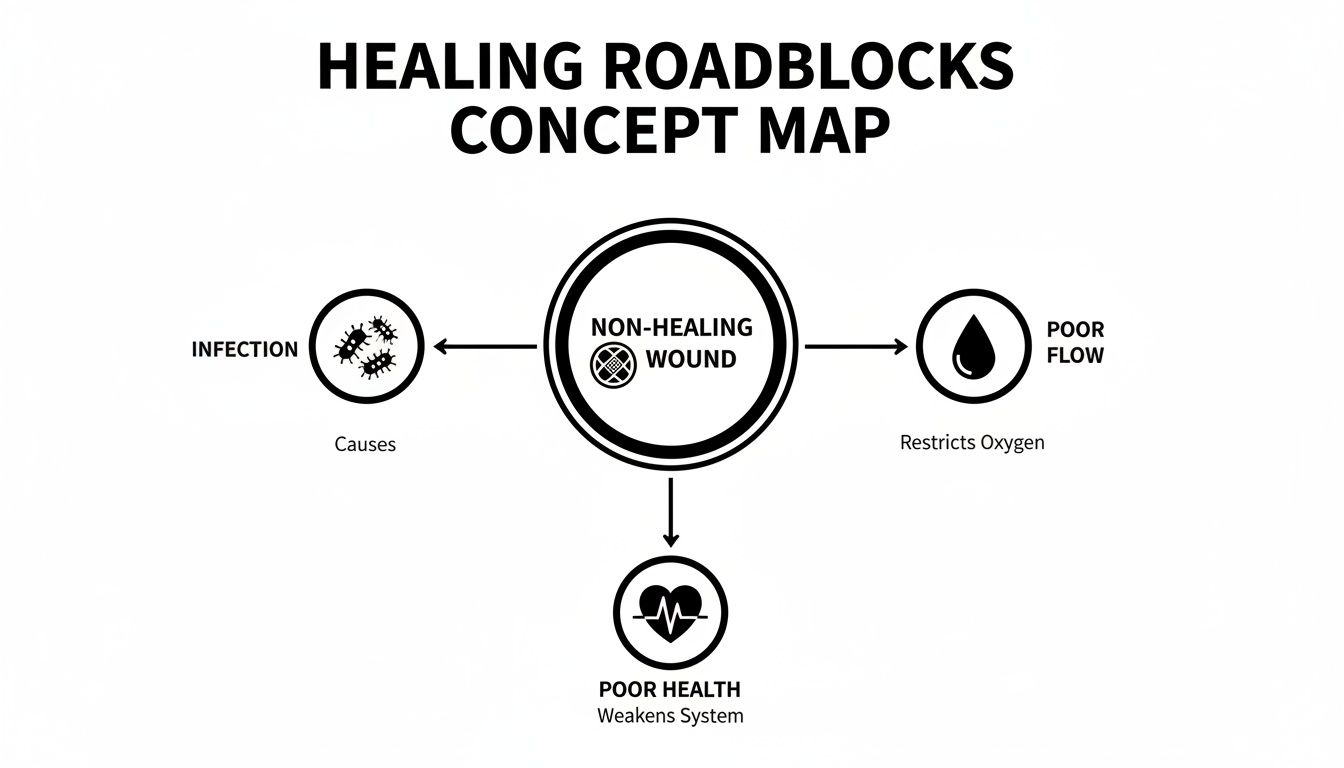
As you can see, the core issues usually boil down to infection, poor circulation (ischemia), and underlying health conditions that weaken your body's overall ability to repair itself.
A wound is considered chronic if it fails to progress through the normal stages of healing in an orderly and timely sequence. It's a clear signal that something is interfering with your body's natural repair mechanisms.
To make it simple, here’s a quick overview of the most common reasons a wound stops healing, what they do, and the signs to watch out for.
Common Reasons a Wound Stops Healing
| Healing Roadblock | How It Stops Healing | What It Looks Like |
|---|---|---|
| Persistent Infection | Bacteria form a protective shield called a biofilm, locking the wound in a constant state of inflammation and blocking healing. | Increased redness, warmth, persistent drainage, foul odor, or fever. |
| Poor Blood Flow | Reduces the delivery of essential oxygen and nutrients needed to build new tissue, effectively starving the wound. | A wound on the leg or foot, pale or bluish skin, and little progress. |
| Underlying Conditions | Diseases like diabetes damage nerves and blood vessels, while poor nutrition deprives the body of necessary building blocks. | Slow or no change in wound size, especially with known health issues. |
Each of these roadblocks requires a different strategy to overcome, which is why a proper diagnosis from a wound care expert is so critical.
Unmasking the Invisible Battle of Wound Infection
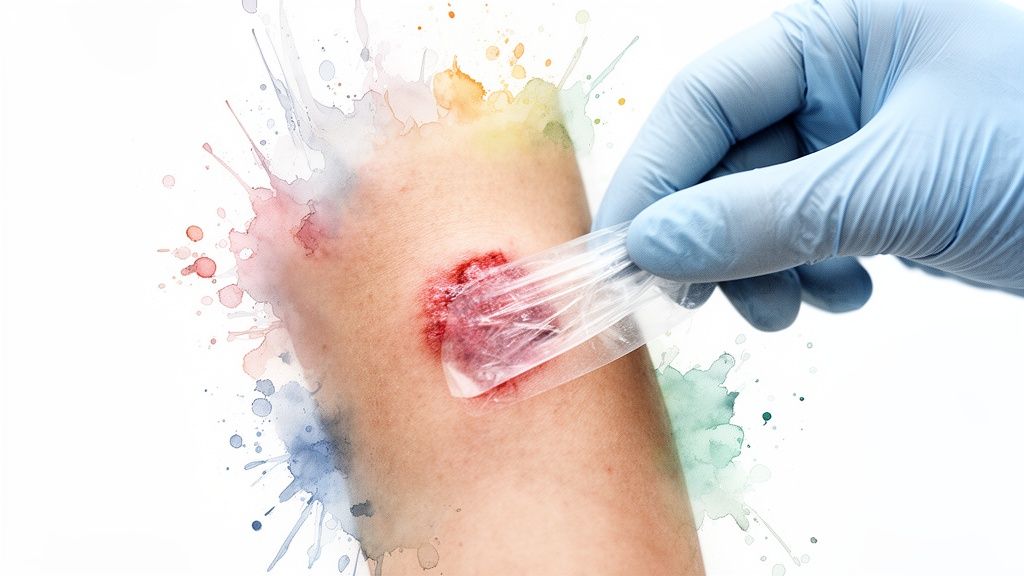
When a wound just won’t get better, one of the most common culprits is an invisible enemy working just beneath the surface. We tend to think of infection in terms of obvious signs—bright red skin, heat, or pus. But a chronic wound is often dealing with something far more complex and stubborn.
The real reason your wound might be stalled is a persistent, low-grade infection that has learned to hide from your body’s defenses. This isn't just a random collection of germs; it's a highly organized colony of bacteria that has built itself a fortress.
The Hidden Fortress Called Biofilm
Imagine trying to clear weeds from a garden, only to discover they’ve built an invisible, concrete shield just below the soil. You can pull at the tops all day, but the roots remain protected, allowing them to thrive and spread. This is exactly what biofilm does inside a wound.
A biofilm is a community of bacteria that latches onto the wound bed and secretes a slimy, protective shield around itself. This barrier makes the bacteria incredibly resistant to both your immune system and standard antibiotics. It’s a sophisticated survival strategy that brings the healing process to a dead stop.
Instead of moving on to the rebuilding phase, your body gets stuck in a state of chronic inflammation, constantly fighting a battle it simply cannot win. The biofilm acts like a permanent roadblock, preventing new, healthy tissue from ever taking hold.
Biofilm is a primary reason why wounds become chronic. It locks the wound in the inflammatory stage, creating a cycle of damage that prevents any meaningful progress toward healing.
This hidden bacterial shield explains why a wound might even look clean but still show zero signs of improvement. The real problem isn't what you see on the surface; it's within the microscopic fortress that has taken over the wound bed.
Why Standard Tests Often Miss the Real Problem
A common source of frustration for patients is getting a negative result from a wound culture or swab, even as the wound continues to get worse. This happens because a simple swab only picks up the free-floating bacteria on the surface. It completely misses the highly organized, protected colonies hiding deep within the biofilm.
This is a critical diagnostic challenge. If you don't accurately identify the true cause of the infection, any treatment you prescribe is just a shot in the dark. It’s like trying to put out a forest fire by spraying only the visible flames while ignoring the smoldering embers underground.
To win this fight, we need better tools to see what’s really going on inside the wound. Modern diagnostics are essential for unmasking these hidden invaders.
Key Diagnostic Tools Include:
- Fluorescence Imaging: This technology uses a special light to make bacterial colonies glow in real-time. It allows clinicians to see the exact location and extent of the biofilm, providing a visual guide for effective cleaning and debridement.
- Rapid Molecular Testing: Instead of waiting days for a culture to grow, these advanced tests identify the specific genetic material of bacteria and fungi within hours. This gives us a fast and precise roadmap for choosing the most effective antibiotic.
By using these powerful methods for advanced pathogen detection, specialists can finally get an accurate picture of the infection. We can move beyond guesswork and create a targeted plan to dismantle the biofilm and eliminate the bacteria causing the problem.
The presence of biofilm is a massive factor in delayed healing. In fact, studies estimate that biofilms are present in up to 60% of chronic wounds, locking them in that inflammatory phase and stretching healing times from weeks into months or even years. This challenge is a key driver of the global wound care expenditure, which was estimated at roughly $148.65 billion in 2022. For someone with a diabetic foot ulcer that has stalled, a hidden biofilm is a very likely cause that traditional swabs will miss completely.
Restoring Your Body's Healing Supply Lines
For a wound to heal, it needs a constant, steady delivery of oxygen and nutrients through your bloodstream. Think of it like a major construction project. For any building to go up, you need open roads to bring in concrete, steel, and skilled workers. If those roads are blocked, the project grinds to a halt, no matter how great the crew is.
Your wound is that construction site. It's actively trying to rebuild, but it can't do it without a steady supply of materials. When your circulation is poor, those vital supply lines are cut off. This starves the wound of everything it needs to repair tissue, essentially abandoning the project before it can even get started.
This breakdown in delivery is one of the biggest reasons a wound won’t heal, especially in the lower legs and feet where blood has to travel the farthest.
When Blood Flow Becomes the Bottleneck
The most common culprit behind this supply line failure is Peripheral Arterial Disease (PAD). With PAD, the arteries carrying blood to your limbs get narrow or even blocked by plaque. This chokes off the flow of oxygen-rich blood, creating a state of starvation at the cellular level.
Without enough oxygen and nutrients, the cells in charge of rebuilding tissue simply can't do their job. They can't fight infection, create new skin, or build the collagen framework needed for closure. This is exactly why lower-leg wounds and diabetic foot ulcers are so notoriously stubborn—they're often sitting right in the middle of a circulation "desert."
A non-healing wound is often a direct symptom of a circulation problem. You can put the most advanced dressing on top, but it will fail every time if the tissue underneath isn't getting the blood flow it needs to survive and rebuild.
It’s a simple but critical concept. You can’t build a house on a crumbling foundation, and you can't heal a wound that’s been cut off from its life source.
Diagnosing the Circulation Problem
Before we can even think about healing, we have to find out if the "supply lines" are open. A true wound care expert doesn't just look at the wound; they investigate the entire system supporting it. The first step is always to measure blood flow to the area using simple, non-invasive tools.
One of the most important tests we use is the Ankle-Brachial Index (ABI). This is a quick, painless test that compares the blood pressure in your ankle to the pressure in your arm.
- A normal ABI tells us that blood flow to your legs is strong and sufficient for healing.
- A low ABI is a red flag. It signals a likely blockage and confirms that poor circulation is a major roadblock.
This simple number gives us a clear, objective picture of the wound’s healing potential. If the ABI is low, we know that just treating the wound itself is only half the battle. To get anywhere, the underlying vascular issue has to be addressed first.
This is also true for venous disease, another common circulation problem where blood pools in the legs instead of returning to the heart. Learning more about how vein health clinics can help is a critical step for many patients with chronic leg wounds.
Reopening the Supply Lines for Healing
Poor blood flow is a massive barrier to healing. Data shows that Peripheral Arterial Disease affects an estimated 200 million people worldwide, dramatically increasing the risk of a non-healing limb, especially when combined with diabetes. For anyone with a diabetic foot ulcer, having PAD significantly raises the odds that the wound will fail to heal, which can lead to a major amputation. Without restoring blood flow, healing times can stretch from the expected 4–12 weeks to many, many months. You can discover more insights about these findings from population studies.
This is why a collaborative approach is non-negotiable. Wound care specialists must work hand-in-hand with vascular experts to restore circulation. By using procedures to open up blocked arteries, they re-establish the critical supply lines your body needs. Once blood flow is back, the wound finally has the resources to move forward, allowing advanced treatments to work their magic and paving the way for a successful closure.
How Your Overall Health Can Sabotage Wound Repair
Sometimes, the real reason a wound won’t heal has nothing to do with the injury itself. The problem lies deeper, within your body's overall operating system.
Think of it like trying to run a high-performance car. If the engine is struggling or you're using the wrong kind of fuel, it doesn’t matter how new the tires are—the car just won't perform. In the same way, your general health creates the internal environment your body needs to heal. When systemic conditions are lurking, they act like internal saboteurs, quietly undermining every effort your body makes to repair itself.
A non-healing wound is often a red flag, signaling a bigger, unmanaged health issue that needs your full attention. This is why we have to look at the whole picture. True healing means treating the whole person, not just the hole in the person. Once we address the root causes, we can finally create the right conditions for your body's natural repair mechanisms to kick in and do their job.
The Impact of Diabetes on Healing
Diabetes is one of the most notorious saboteurs of wound repair. When blood sugar stays high, it acts like a corrosive agent, slowly degrading the very systems your body relies on for healing. It launches a two-pronged attack on your nerves and your blood vessels.
First, nerve damage, or neuropathy, dulls sensation, especially in the feet. A person with diabetes might not even feel a small cut, blister, or splinter. This allows a minor issue to escalate into a serious wound before it’s ever noticed.
At the same time, high glucose levels wreak havoc on the small blood vessels, choking off the flow of vital oxygen and nutrients. This deadly combination of nerve damage and poor circulation creates a perfect storm for chronic wounds—particularly diabetic foot ulcers—that just can't seem to heal.
Other Systemic Saboteurs to Consider
While diabetes is a major player, other aspects of your overall health can also slam the brakes on recovery. Your body's ability to mend itself is an incredibly complex process, and it depends on a lot of different systems working in harmony.
- The Aging Process: As we get older, our skin naturally thins and becomes more fragile. The cellular machinery that rebuilds tissue also slows down, making the entire healing process less efficient and far more prone to delays.
- Poor Nutrition: Healing is hard work, and it requires the right building blocks. A diet that’s low in protein, vitamins (like Vitamin C and A), and minerals (like zinc) starves your body of the raw materials it needs to construct new tissue.
- Certain Medications: Some crucial medications, like steroids or chemotherapy drugs, can suppress the immune system. While they’re necessary for treating other serious conditions, this side effect can leave a wound defenseless against infection and slow down the initial inflammatory response needed to kickstart healing.
A wound that refuses to close is more than just a surface-level problem; it's a direct reflection of your internal health. Addressing systemic issues is not just a part of the solution—it is the solution.
Globally, these systemic factors are a massive driver of non-healing wounds. The number of adults with diabetes, which was 537 million in 2021, is still climbing. Diabetic foot ulcers alone affect up to 1.5 million Americans every year. This, coupled with an aging population whose cellular repair capacity is naturally declining, is fueling the demand for advanced wound care.
On top of that, studies show that protein-calorie malnutrition can double or even triple healing times while significantly increasing infection risk. You can find more details on the market impact of these comorbidities from Amarex CRO.
Using Advanced Treatments to Jumpstart Healing
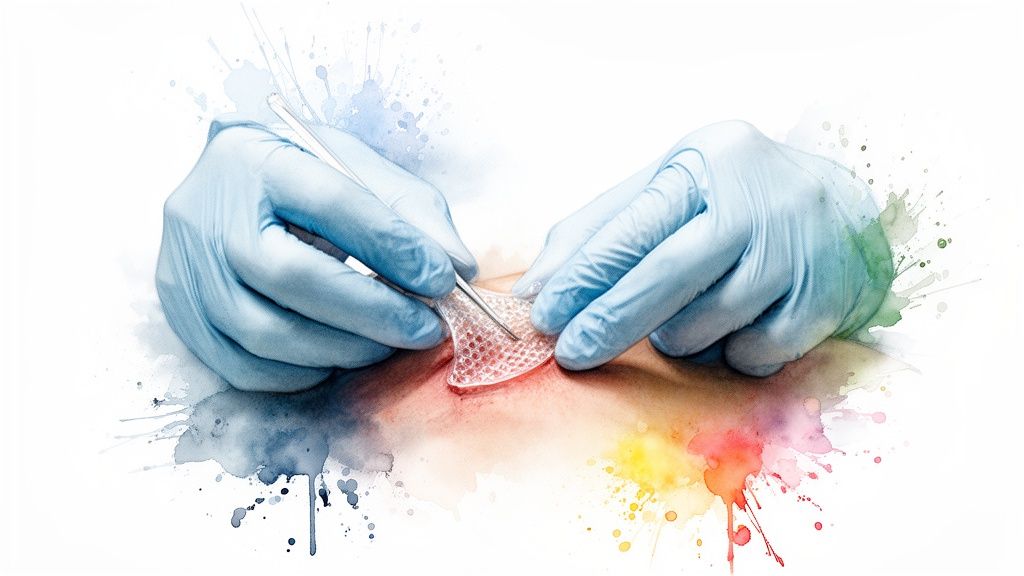
Once we’ve identified the roadblocks stalling recovery, the conversation changes. We stop asking, "Why won't my wound heal?" and start asking, "How do we actively fix this?" A specialist doesn’t just cross their fingers and wait; they get in there and create the perfect environment for the body to succeed. This means rolling out modern, evidence-based treatments designed to dismantle the specific barriers holding a wound back.
A successful game plan is never one-size-fits-all. It's a personalized, multi-step strategy that methodically clears away obstacles, crushes infection, and gives your body the raw materials it needs to rebuild.
Clearing the Way with Debridement
You can’t build a new house on a crumbling foundation. The same idea applies to a chronic wound, which is why debridement is such a critical first step. It’s the careful process of removing all the dead, damaged, or infected tissue—what we call necrotic tissue or slough—from the wound bed.
This unhealthy tissue isn't just taking up space; it’s an active saboteur. It’s a five-star hotel for bacteria, it physically blocks healthy new cells from growing, and it can completely hide the true size of a nasty biofilm infection.
Think of debridement like preparing a garden for spring. You have to pull all the weeds, dig out the rocks, and clear away last year's dead roots before you can even think about planting new seeds. If you skip that prep work, nothing healthy will ever have a chance to grow.
By clearing out all that debris, debridement finally exposes the healthy, bleeding tissue underneath—the bedrock for new growth. It also smashes the biofilm's fortress, allowing our infection-fighting treatments to finally hit their targets.
A Targeted Attack on Infection
With a clean wound bed, the next job is to eliminate any lingering infection. As we've covered, a simple antibiotic cream just won't cut it against the complex biofilm communities thriving in chronic wounds. That’s where our precision diagnostics, like fluorescence imaging and rapid molecular testing, come into play.
These tools give us a crystal-clear battle plan. They show us exactly where the bacteria are hiding and which specific antibiotics will actually work against them. This allows for a targeted assault instead of a shot in the dark, massively increasing our odds of success. We use the right tool for the right job to make sure the infection is truly gone, so the body can finally focus all its energy on rebuilding.
Unlocking the Body's Regenerative Potential
One of the most powerful tools in our arsenal is regenerative medicine. When a wound is stuck, it’s often because the body has simply run out of the key growth factors and structural materials needed to build new tissue. This is where advanced biologics, especially amniotic membrane allografts, make a huge impact.
Imagine a construction site that’s ground to a halt because the crew ran out of scaffolding and blueprints. An amniotic membrane allograft is like a delivery that provides both.
- Biological Scaffold: It provides a natural, structural framework that your own cells can climb onto and use to build new tissue from the ground up.
- Growth Factors: It’s loaded with the essential proteins and signaling molecules that act like a foreman’s instructions, telling your cells to start dividing, moving into place, and forming new blood vessels.
These allografts essentially give the wound a fresh start. They deliver a biological "jumpstart," providing the exact components needed to get the healing engine turning again. When a wound has been depleted for weeks or months, this infusion of regenerative materials can be the one thing that finally turns the tide. You can learn more about the full range of advanced treatment options from Primus Specialty Wound Care to see how these solutions work.
Removing Pressure with Offloading
For wounds on the feet or other high-pressure spots, even the most advanced treatments are doomed to fail if the area is constantly under duress. Every step you take can crush fragile new cells and choke off blood flow, effectively re-injuring the wound over and over again.
Offloading is the strategy of taking that damaging pressure out of the equation. This might involve anything from specialized boots and casts to custom shoe inserts. The goal is simple: shield the wound from the physical forces that are actively working against it. For any diabetic foot ulcer or pressure injury, offloading is completely non-negotiable. Without it, you're trying to build on ground that’s constantly shaking.
Knowing When to Seek a Wound Care Specialist
Navigating the healing process can feel confusing, and it’s natural to second-guess whether things are on the right track. While small cuts and scrapes usually heal on their own, a wound that just won't close is your body sending a very clear signal: it needs expert help.
Ignoring that signal can lead to serious, and often preventable, complications. A non-healing wound isn't something you just have to live with—it's a solvable medical problem that requires a specific set of skills and tools. The trick is knowing how to spot the red flags that mean it's time to move beyond basic first aid and see a specialist. Waiting too long is never the answer.
Clear Signs It Is Time for an Expert
You don’t have to be a medical professional to see the warning signs. Your body gives you clear clues when a wound is struggling. If you notice any of the following, it's a definitive sign that you should get a professional evaluation from a wound care expert.
- No Improvement After Two Weeks: If a wound has shown zero progress in getting smaller or shallower after 14 days, it's officially stalled.
- Any Wound on a Diabetic Foot: Because of the high risk of nerve damage and poor circulation, even a minor cut on the foot of someone with diabetes needs immediate specialist attention.
- Signs of Spreading Infection: This includes redness that expands, increasing warmth around the area, a foul smell, or a fever. These are all signs the infection is getting worse.
- Increasing Pain: A healing wound should gradually feel better, not worse. A spike in pain is a major red flag.
- Excessive Drainage: Constant fluid leaking from the wound, especially if it’s thick, yellow, or green, points to a deeper issue.
A chronic wound is not a personal failure; it's a complex medical condition that has overwhelmed your body's natural healing capacity. Seeking a specialist isn't giving up—it's taking control.
What to Expect at a Specialty Clinic
Walking into a specialty wound clinic is a different experience than a typical doctor's appointment. The entire visit is laser-focused on one goal: figuring out why your wound won't heal and creating a direct path to get it closed.
Your first visit will likely involve a deep dive into your health history and a thorough examination of the wound itself. Specialists use advanced tools to get answers quickly, like fluorescence imaging to see hidden bacterial biofilm or non-invasive tests to measure blood flow to your limbs. This detailed information allows them to build a personalized treatment plan that attacks the root cause of the problem. If you feel professional help is the next step, you can schedule a consultation to start this process.
The message here is one of hope and proactivity. With the right expertise and advanced treatments, healing isn't just possible—it's expected.
Your Wound Healing Questions, Answered
When a wound just won’t heal, it’s natural to have questions. The uncertainty can be frustrating, so let's clear things up with straightforward answers to some of the most common concerns we hear from patients.
How Long Is Too Long for a Wound to Heal?
Every person and every wound is different, but there’s a general rule of thumb. A wound is typically considered "stalled" or chronic if it hasn't shown clear signs of healing within four weeks. Progress means it's getting smaller, shallower, or draining less.
But for anyone with high-risk factors like diabetes or poor circulation, that timeline shrinks dramatically. If you see zero improvement after just two weeks, it's absolutely time to see a specialist.
Do Over-the-Counter Antibiotic Creams Actually Work?
For a simple papercut or a minor scrape, those triple-antibiotic ointments can be fine to prevent an initial infection. But for a stubborn, non-healing wound, they often do more harm than good.
The bacteria in a chronic wound are smart. They create a protective shield around themselves called a biofilm, and basic topical creams just can't get through it. Slathering on ointment might just irritate the surrounding skin or even contribute to antibiotic resistance, all while the real infection continues to thrive underneath.
Think of it this way: Treating a chronic wound requires a completely different strategy than simple first aid. Standard creams fail because they can't break down the fortress—the biofilm—where the real problem is hiding.
How Much Does My Diet Really Affect Healing?
Your diet isn’t just a small factor; it’s the fuel for the entire healing process. Your body is trying to build brand-new tissue from scratch, and that requires a serious supply of energy and raw materials.
- Protein: This is the absolute essential building block for new skin, blood vessels, and muscle.
- Vitamins and Minerals: Nutrients like Vitamin C and zinc are critical for tasks like creating collagen (the skin's scaffolding) and mounting a strong immune defense.
Without enough of these key nutrients, the healing process can slow to a crawl or stop completely. A wound care expert can help pinpoint any nutritional gaps that might be holding you back.
What’s the Difference Between My Doctor and a Wound Care Specialist?
A wound care specialist brings a highly focused set of skills, experience, and technology aimed at one thing: solving complex wounds. We use advanced diagnostic tools that go far beyond a visual check. Think of fluorescence imaging to instantly see bacterial biofilm or vascular testing to map out your blood flow.
This allows us to uncover the real reason a wound is stuck. And while this article focuses on the medical side of things, it's interesting to see how technology is also changing patient support, with innovations like Chatbots for Healthcare offering new ways to get answers. From there, we create a holistic plan using advanced treatments like regenerative biologics and other targeted therapies to get you healing again.
At Specialty Wound Care, our mission is to combine cutting-edge diagnostics with evidence-based treatments to figure out why your wound is stalled. We create a personalized roadmap to get you firmly on the path to recovery. Find out how our expert team can help you heal by visiting us at https://specialtywoundcare.com.