Uncategorized

What Is a Chronic Wound and How Does It Heal

Primus Healthcare | December 12th, 2025


When you get a paper cut or scrape your knee, you expect it to heal.Your body has a remarkable, built-in repair system that kicks into gear, patching things up in a predictable order. But what happens when that system breaks down and a wound just… stays?

That’s the reality of a chronic wound. It’s not just a slow-healing injury; it’s one that has become stuck, failing to move through the normal healing process within the expected four to six weeks. This stall is a major red flag, signaling a deeper, underlying problem that’s preventing your body from doing its job.

Understanding Why Some Wounds Never Heal

A timeline of human growth on the left, contrasted with a hand tending to a foot wound on the right.

Think of a simple cut—what clinicians call an acute wound—like a well-organized construction project. The moment the injury happens, specialized crews (your cells) arrive on schedule. They clear out the debris, lay a new foundation of tissue, and methodically rebuild the structure until the job is done.

A chronic wound is like that same construction project, but with a persistent roadblock. The crews show up, but they can’t get past the first stage. They remain stuck in a state of inflammation, unable to start rebuilding. The site stays open, vulnerable, and in a constant state of distress.

Acute vs Chronic Wounds at a Glance

This fundamental difference is why a chronic wound demands specialized medical attention. While your body can handle a minor scrape on its own, a non-healing wound is a sign that it needs expert help to clear the roadblock and restart the healing engine.

Let’s break down the key differences.

Characteristic Acute Wound (e.g., paper cut, minor scrape) Chronic Wound (e.g., diabetic ulcer, pressure sore)
Healing Time Follows a predictable timeline, healing within 4-6 weeks. Becomes stalled and lasts longer than 6 weeks.
Underlying Cause Usually from simple, external trauma. Linked to underlying health conditions like diabetes or poor circulation.
Healing Process Moves smoothly through the four stages of healing. Gets stuck, typically in the inflammatory phase.
Outcome Heals completely, often with minimal scarring. Fails to close without specialized medical intervention.

Seeing it laid out like this makes it clear: these are two completely different problems requiring vastly different approaches.

The impact of these non-healing wounds is staggering. In the United States, they affect roughly 10.5 million Medicare beneficiaries—that’s about one in six elderly individuals. The financial burden is just as massive, with Medicare spending an estimated $22.5 billion each year to manage what many experts have called a silent epidemic. You can read the full research on this public health issue here.

A chronic wound is more than just a break in the skin; it's a complex medical problem where the body's healing signals have gone silent. Restoring those signals requires a targeted approach that goes beyond a simple bandage.

Recognizing these distinctions is the first step toward getting the right care. It also underscores why collaborative models are so critical for tackling these complex cases. You can learn more about the goals of advanced home wound collaborative care and see how modern strategies are making a real difference. The journey from a stalled wound to a healed one begins by figuring out why the process stopped in the first place.

The Hidden Culprits That Stall Wound Healing

To figure out what makes a wound chronic, we have to look past the skin's surface and find the roadblocks stalling the body’s natural repair process. These wounds don't stick around out of stubbornness; they're symptoms of deeper, underlying issues. Three main culprits are usually responsible for turning a simple injury into a long-term battle.

The most common saboteur is poor circulation. Think of your healing process like a massive construction project. Your blood vessels are the highways delivering all the essential materials—oxygen, nutrients, and cellular "workers"—to the job site. When circulation is weak, those supply lines are cut off, and the wound is starved of everything it needs to rebuild.

This problem is almost always tied to other health conditions. For example, peripheral artery disease (PAD) narrows the arteries, while diabetes can damage the tiny blood vessels, creating a physiological drought right where the body needs moisture and nutrients the most.

Sustained Pressure and Constant Irritation

Another major obstacle is sustained pressure. When one part of the body—often over a bony spot like a heel or hip—is under constant pressure, it squeezes the blood vessels shut. It’s just like standing on a garden hose; no water can get through to nourish the plants.

This lack of blood flow robs the tissue of oxygen, causing it to break down and form an ulcer. People with limited mobility are especially vulnerable because they can't shift their weight often enough to let the blood flow back in. To make matters worse, constant friction and shear forces, which stretch and tear the skin, only add to the damage.

It's not just about outside forces, either. Internal conditions are critical. Compromised blood flow, or a lack of proper understanding tissue perfusion and its importance, can bring the healing process to a complete halt.

Unchecked Inflammation and Infection

The last major culprit is a biological standoff caused by infection or chronic inflammation. In a normal healing process, inflammation is a good thing—it’s a temporary stage where the body cleans the wound. But in a chronic wound, the body gets stuck in this phase, and the inflammation starts doing more harm than good.

An infected or overly inflamed wound is like a battlefield where the conflict never ends. The constant fighting prevents any rebuilding, and the body's resources are exhausted just trying to manage the chaos.

Bacteria can create a protective shield around themselves called a biofilm, which makes them incredibly resistant to both your immune system and antibiotics. This persistent microbial presence keeps the wound in a state of high alert, preventing it from ever moving on to the rebuilding phase.

Identifying which of these culprits—or what combination of them—is at play is the essential first step. Only then can we develop a treatment plan that finally clears the roadblock and gets the healing journey back on track.

Identifying Common Types of Chronic Wounds

While the root causes of a chronic wound often boil down to a few key culprits—poor circulation, infection, or relentless pressure—how they show up can look very different from person to person. Think of chronic wounds not as a single problem, but as a family of related issues, each with its own story and distinct profile.

Recognizing the specific type of wound is the first step. More often than not, these wounds are a symptom of a much larger, systemic health issue. That means we aren't just treating a sore; we're managing an underlying condition.

Diabetic Foot Ulcers

For anyone living with diabetes, even a tiny blister or cut on the foot can escalate into a serious health threat. Diabetic foot ulcers are open sores that crop up most often on the bottom of the feet, and they’re a direct consequence of two major diabetic complications: nerve damage (neuropathy) and poor circulation.

Neuropathy is the real troublemaker here. It dulls sensation, so a person might not even feel the initial injury. A small problem can then go unnoticed, festering until it becomes a significant ulcer. These often look like a deep crater surrounded by a border of callused skin.

A diabetic foot ulcer is a stark reminder of how a systemic disease can manifest locally. The lack of sensation and blood flow creates a perfect storm where minor trauma can lead to a non-healing wound that risks infection and even amputation if left untreated.

Venous Leg Ulcers

By far the most common type we see, venous leg ulcers typically appear on the lower leg, somewhere between the knee and the ankle. The underlying cause is venous insufficiency, a condition where the veins in your legs just can't effectively pump blood back up to the heart.

This causes blood to pool in the lower legs, which ramps up the pressure inside the veins. Fluid starts to leak into the surrounding tissues, making the skin fragile, swollen, and discolored—often a telltale reddish-brown. Eventually, the skin breaks down, forming a shallow but often large, irregularly shaped sore that may ooze fluid.

The diagram below breaks down the three main factors that conspire to stall the healing process.
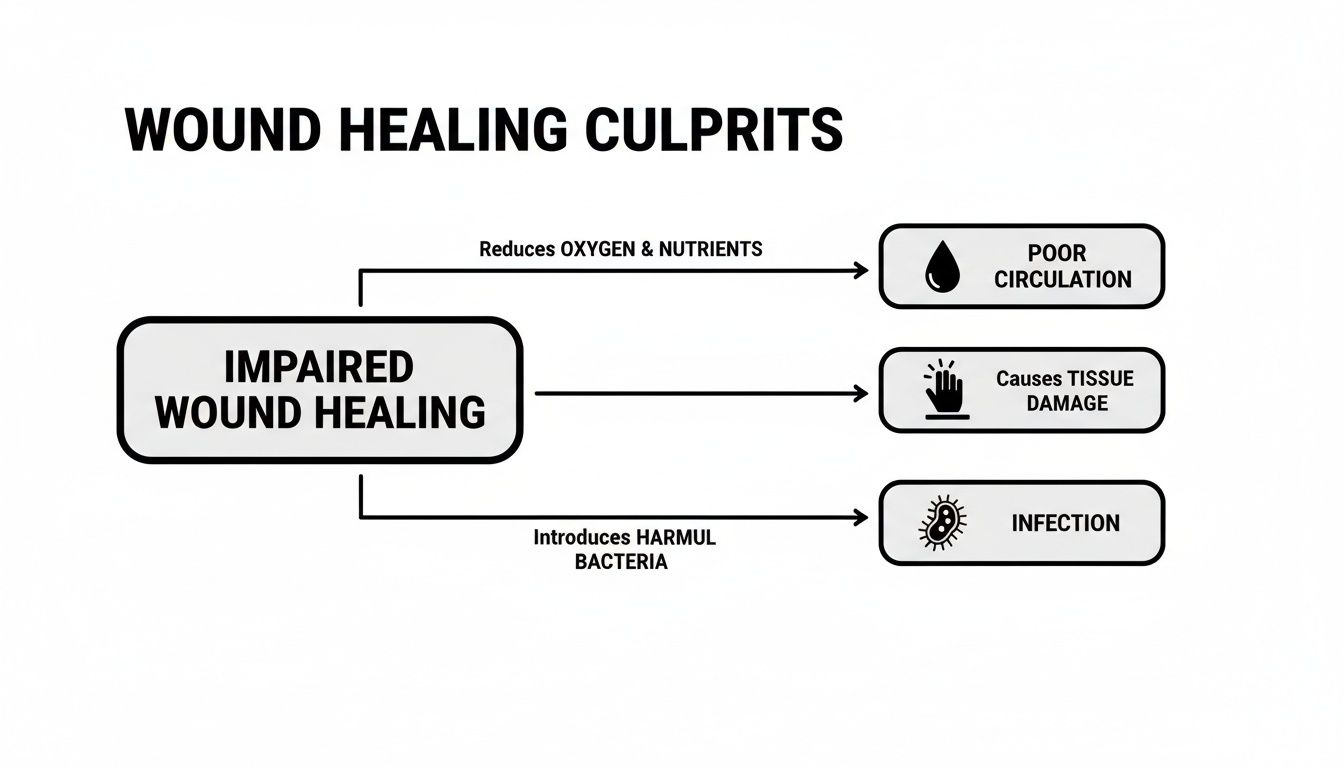
A diagram illustrating factors that impair wound healing: poor circulation, tissue damage, and infection.

As you can see, poor circulation, sustained tissue damage, and infection create a vicious cycle that keeps a wound from closing.

Arterial Ulcers and Pressure Injuries

On the flip side of venous ulcers, we have arterial ulcers (also called ischemic ulcers). These are caused by the exact opposite problem: not enough oxygen-rich blood is getting to the legs and feet because of blocked arteries.

  • Appearance: They have a classic "punched-out" look—deep, circular, and with very well-defined borders. Because of tissue death, the wound bed is often pale or even black. The surrounding skin can feel cool to the touch and may look shiny and hairless.
  • Location: You’ll usually find these painful ulcers on the toes, heels, or bony parts of the ankles.

Finally, there are pressure injuries, which you might know as bedsores or decubitus ulcers. They are caused by prolonged, uninterrupted pressure on the skin, which cuts off blood flow and leads to tissue damage. They almost always develop over bony areas like the hips, tailbone, heels, and elbows, particularly in people with limited mobility. The severity can range from a patch of red, unbroken skin to a deep, open wound exposing muscle and bone.

Chronic wounds aren't just a medical issue; they're a massive public health and economic challenge. An estimated 2% of the US population is dealing with a chronic wound, and that figure climbs to nearly 3% for those over 65. The financial burden is staggering. In the US, venous leg ulcers alone cost an estimated $4.94 billion to treat each year. You can discover more insights about the chronic wound care market here.

How Specialists Diagnose a Non-Healing Wound

Figuring out why a wound won’t heal is a lot like detective work. It’s not a quick glance; it’s a full-on investigation to uncover what’s stalling your body’s natural repair process. When you see a specialist, they’re piecing together clues to get to the root of the problem. After all, the only way to fix the wound is to address what’s causing it in the first place.

The whole process kicks off with a detailed conversation. Your provider will want to know your complete medical history—everything from conditions like diabetes or heart disease to the medications you take and your daily habits. They’ll also ask about the wound’s origin story: how it started, how long it’s been there, and what you’ve tried so far.

The Hands-On Examination

Next, the specialist will do a physical examination of the wound and the skin around it. You’d be surprised how much they can learn just by looking and feeling.

  • Wound Characteristics: They’ll carefully measure the wound's size and depth. They're also checking for red flags of infection, like a foul odor or redness, and assessing the kind of tissue in the wound bed itself.
  • Periwound Skin: The skin surrounding the wound tells its own story. Is it swollen, discolored, or thin and fragile? These signs can point directly to issues like poor circulation.
  • Circulation Check: To get a real-time sense of your blood flow, your provider will feel for pulses in your feet and legs.

A proper diagnosis is a systematic process of elimination. The specialist starts with the big picture—your overall health—and gradually narrows down the focus to the specific biological roadblocks preventing your wound from closing.

This initial hands-on assessment helps the specialist form a working theory. To confirm what they suspect, they’ll turn to objective diagnostic tests that give them a crystal-clear picture of what’s happening beneath the surface.

Using Advanced Tools for a Deeper Look

To move from an educated guess to a firm diagnosis, specialists use specific tools to measure how your body is functioning and identify any hidden issues.

One of the most common and vital tests is the Ankle-Brachial Index (ABI). It’s a simple, non-invasive test that compares the blood pressure in your ankle to the pressure in your arm. The result gives a straightforward score that shows how well blood is flowing to your legs and feet, making it an excellent tool for diagnosing peripheral artery disease.

In some cases, a small tissue sample, known as a biopsy, might be needed to check for infection deep within the wound or to rule out other problems. Modern diagnostics have completely changed the game here. For instance, using methods for advanced pathogen detection can rapidly identify the specific bacteria causing an infection. This allows for highly targeted antibiotic treatment, getting you on the right medication much faster than traditional lab cultures ever could.

Modern Treatments That Kickstart Healing
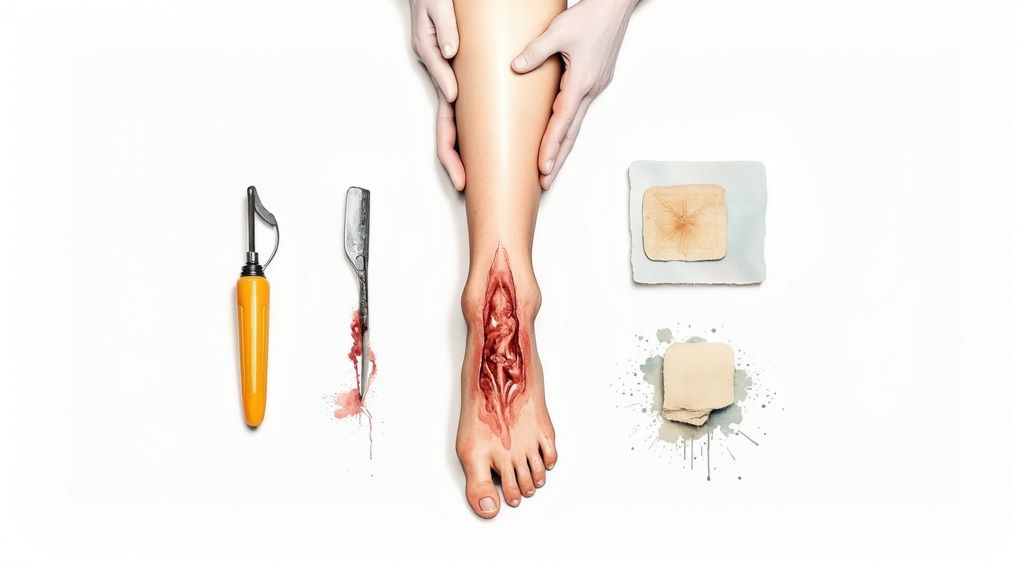
Realistic depiction of a deep leg wound, a razor, a peeler, and medical dressings.

Once a chronic wound is identified and properly staged, the real work begins. We have to shift gears from just managing the problem to actively kickstarting the body's stalled healing engine. Modern wound care isn't about slapping on a bandage and hoping for the best; it's a proactive strategy to clear out the roadblocks that are preventing recovery.

Think of it like trying to revive a neglected garden. You wouldn't just throw seeds on hard, weed-infested soil. First, you have to pull the weeds, aerate the ground, and add the right nutrients. It’s the same with a chronic wound—we have to prepare the wound bed before it can truly start to heal.

Laying the Foundation for Healing

The first, and maybe most critical, step is debridement. This is just a clinical term for the careful removal of any dead, damaged, or infected tissue from the wound. This unhealthy tissue acts like a shield, physically blocking the healthy, healing cells from getting to work and rebuilding.

Next, we focus on choosing the right advanced dressings. These are a world away from the simple gauze pads you might find in a first-aid kit. Modern dressings are engineered to create the perfect microenvironment for healing. They can maintain ideal moisture levels, absorb excess fluid without drying things out, and protect the fragile new tissue from bacteria.

Finally, for many wounds, offloading is non-negotiable. This simply means taking every ounce of pressure off the injured area. For a diabetic foot ulcer, this could mean a special boot or cast designed to redistribute body weight, allowing critical blood flow to reach the wound site and fuel the healing process.

A successful wound care plan is built on these three pillars: a clean wound bed (debridement), a protected and moist environment (dressings), and the removal of physical stress (offloading). Without this solid foundation, even the most powerful therapies will struggle to make a difference.

Advanced Therapies That Accelerate Recovery

With the basics firmly in place, a specialist can bring in more powerful therapies to give the body an extra push. One of the most common and effective is Negative Pressure Wound Therapy (NPWT). This involves placing a specialized foam dressing over the wound, sealing it with a film, and connecting it to a small, portable vacuum pump.

The gentle but constant suction works wonders—it pulls excess fluid away, reduces swelling, and actively encourages the growth of healthy new tissue from the bottom up.

Another game-changer is the use of cellular and tissue-based products. Think of these advanced biologics, like amniotic membrane allografts, as a natural scaffold. They provide the structure and the critical growth factors your own cells need to migrate across the wound and build new skin. This is especially useful for those large, deep, or stubborn wounds that the body just can't seem to bridge on its own.

Overview of Modern Wound Care Therapies

To put it all together, here’s a quick look at how these different therapies fit into a comprehensive treatment strategy. The right tool is chosen for the right job, always with the goal of moving the wound toward closure.

Treatment Category Primary Goal Commonly Used For
Debridement Remove non-viable tissue to create a clean wound bed Wounds with slough, eschar, or signs of infection
Advanced Dressings Maintain a moist, protected healing environment All chronic wound types, tailored to exudate levels
Offloading Relieve pressure to restore blood flow and prevent re-injury Diabetic foot ulcers, pressure injuries
Negative Pressure Wound Therapy (NPWT) Reduce edema and stimulate granulation tissue formation Deep, complex wounds with moderate to heavy exudate
Cellular & Tissue-Based Products Provide a scaffold and growth factors to stimulate healing Large, non-healing wounds that have stalled

Ultimately, a specialist will develop a personalized plan, often drawing on established frameworks like these practical treatment plan examples to structure the care.

These interventions show that healing a chronic wound isn't about waiting—it's about acting with a precise, scientific strategy. You can learn more about the specific advanced treatment options that combine these methods to deliver targeted, effective care right where it's needed.

Got Questions About Chronic Wounds? We Have Answers.

Walking the path of chronic wound care can feel confusing, and it's completely normal to have questions. We've gathered some of the most common concerns we hear from patients and their families, offering clear, straightforward answers to guide you on your healing journey.

How Long Does It Take for a Chronic Wound to Heal?

This is one of the first questions we get, and the honest answer is: there's no magic number. A wound's healing timeline is as unique as the person it's on. It really hinges on what caused the wound in the first place, your overall health, and how closely you can stick to the treatment plan.

The real goal isn't speed, it's steady progress.

Some wounds show amazing improvement within a few months of dedicated care. Others might take a year, or even longer, to fully close. The most important thing is tackling the root cause—like getting blood sugar under control for a diabetic ulcer or boosting circulation for an arterial ulcer. That's what truly paves the way for healing.

When Should I See a Wound Care Specialist?

If you have any wound that hasn't shown clear signs of healing within two to four weeks, it's time to call in an expert. Don't wait and hope for the best; early intervention is key.

There are also a few red flags that mean you should seek help right away:

  • Pain that’s getting worse: Healing shouldn't become more painful over time.
  • A bad smell: A persistent, foul odor is a major sign of infection.
  • A lot of drainage: An unusual amount of fluid, especially if it's thick or has changed color, needs to be checked out.
  • Redness spreading outward: If the skin around the wound is getting redder or feels warm, that can signal a spreading infection.

And if you're managing a condition like diabetes, peripheral artery disease, or venous insufficiency, our advice is to see a specialist for any new wound on your feet or legs. These areas are at high risk, and getting an expert involved from day one can make all the difference.

You should not have to "tough out" significant pain from a chronic wound. It's often a sign of a deeper issue, like infection or poor blood flow, that a specialist needs to address as part of your overall treatment plan.

Can My Diet and Lifestyle Really Affect Wound Healing?

Absolutely. Think of it this way: your body is a construction site, and the wound is a major repair project. What you eat and how you live are the supplies and the workforce.

Proper nutrition provides the essential building blocks for your body to create new skin and blood vessels. A balanced diet should be rich in:

  • Protein: This is the literal raw material for tissue repair.
  • Vitamins: Vitamin C and Vitamin A are particularly critical for the healing process.
  • Minerals: Zinc is a key player in helping new cells grow and repair the damage.

Lifestyle choices are just as crucial. Smoking, for example, constricts your blood vessels and chokes off the blood flow that healing tissue desperately needs. It can bring the entire process to a grinding halt. Quitting is one of the single most powerful things you can do to help your wound heal.

The same goes for managing your other health conditions. Diligently controlling your blood sugar if you have diabetes or consistently elevating your legs for venous ulcers aren't just suggestions—they are active, non-negotiable parts of your treatment plan that directly support the work your wound care team is doing.


At Specialty Wound Care, we don't just treat the wound; we investigate the "why" behind it. By combining advanced diagnostics with personalized treatment plans, we get to the root cause of why a wound isn't healing. If you or someone you care about is struggling with a stubborn wound, we’re here to clear the roadblocks and get you firmly on the path to recovery. Learn how our expert team can support you by visiting https://specialtywoundcare.com.

Why Advanced Imaging is a Game-Changer for Wound Care

Specialty Wound Care | December 11th, 2025


Why Advanced Imaging is a Game-Changer for Wound Care

Advanced imaging is changing wound care by giving you clearer, faster insights into wound conditions. Tools like the MolecuLight DX deliver precision wound analysis that helps guide treatment decisions with accuracy. This technology not only improves documentation but also supports better patient outcomes through detailed visualization. Keep reading to see how Specialty Wound Care’s advanced imaging solutions can enhance your wound care approach. Learn more here.

Benefits of Advanced Imaging in Wound Care

Advanced imaging is reshaping the way wounds are assessed and treated, leading to improved care and outcomes. Here’s how these technologies make a difference in wound management.

Precision Wound Analysis Techniques

Imagine being able to see wounds with clarity that reveals hidden issues. This is what precision imaging offers. It provides high-resolution images that show the wound’s true condition. With tools like MolecuLight DX, you can identify bacterial presence without guessing. This accuracy helps in choosing the right treatment and tracking healing progress effectively. By spotlighting what the naked eye might miss, precision imaging becomes a vital part of your wound care toolkit.

Improving Patient Outcomes with Imaging

Clearer insights mean better decisions. When you use advanced imaging, patient outcomes improve. You can catch potential complications early and adjust treatments promptly. This proactive approach not only speeds up healing but also reduces the chance of infections. Patients experience less discomfort and recover faster, getting back to their lives sooner. With fewer setbacks, healthcare providers can focus on maintaining high standards of care.

Advanced Imaging Technologies Explained

Understanding the technology behind advanced imaging is key. Systems like MolecuLight DX use fluorescence to detect bacteria. This method is non-invasive and quick, providing immediate feedback. Such technologies are essential in modern wound care, offering a real-time view of the healing process. As these tools evolve, they continue to refine how wounds are treated, ensuring that healthcare providers are always a step ahead in patient care.

MolecuLight DX: A Closer Look

Taking a closer look at the MolecuLight DX reveals its pivotal role in wound care. Its features and applications set a new standard for how wounds are analyzed and treated.

Key Features of MolecuLight DX

The MolecuLight DX stands out with its unique capabilities. It offers real-time bacterial detection, a game-changer in wound management. This feature allows you to visualize bacteria instantly, guiding more precise treatment plans. Another key benefit is its portability. The device can be easily used at the bedside, making it accessible for various healthcare settings. Such adaptability ensures that precise analysis is within reach whenever needed.

How MolecuLight DX Enhances Care

Incorporating the MolecuLight DX into care routines enhances treatment quality. By showing where bacteria are present, it helps target interventions precisely. This targeted approach reduces unnecessary treatments and promotes faster healing. Patients benefit from less invasive procedures and shorter recovery times. For healthcare providers, it means delivering care that’s both efficient and effective, improving overall patient satisfaction.

Real-World Applications in Healthcare

The real-world applications of MolecuLight DX are vast. From hospitals to nursing homes, this tool has proven its worth. In clinical settings, it helps in assessing chronic wounds, ensuring that treatment is spot-on. The device’s ability to provide detailed insights quickly makes it invaluable in emergency care. This versatility solidifies its role as a staple in modern wound care practices.

Specialty Wound Care Solutions

Specialty Wound Care offers comprehensive solutions that integrate advanced imaging technologies to enhance healing processes and patient experiences.

Comprehensive Wound Care Technology

Specialty Wound Care is at the forefront of wound management technology. They provide a suite of solutions that cater to every aspect of wound care, from initial assessment to treatment monitoring. Their use of the latest technology, like advanced imaging, ensures that healthcare providers have all the tools needed for exceptional care. This comprehensive approach leads to more efficient and effective treatment plans tailored to each patient’s needs.

Partnering with Specialty Wound Care

Joining forces with Specialty Wound Care means accessing top-tier resources and expertise. Their collaborative model allows healthcare providers to integrate advanced solutions seamlessly. By partnering with them, providers gain support in implementing cutting-edge treatments that boost patient recovery rates. This partnership also means ongoing education and support, ensuring that your team is always informed about the latest advancements in wound care.

Advanced Imaging for Better Health Outcomes

The ultimate goal of advanced imaging in wound care is better health outcomes. Specialty Wound Care’s commitment to innovation ensures that patients receive the best possible treatment. By utilizing state-of-the-art technology, they not only enhance healing but also improve the overall patient experience. This focus on quality care and patient well-being underscores their position as leaders in wound management, making them an ideal partner in healthcare.

No external links were provided, so the focus was on delivering value through content. If links become available, they can be integrated naturally to enhance the post further.

Uncategorized

What is negative pressure wound therapy and how it speeds healing

Primus Healthcare | December 11th, 2025


When a wound just won't heal, standard bandages often feel like a temporary fix for a much deeper problem. That's where Negative Pressure Wound Therapy (NPWT) comes in. It's an active treatment, often called a "wound vac," that uses a special vacuum device to accelerate healing in complex acute or chronic wounds.

By applying controlled suction through a sealed dressing, NPWT draws out excess fluid, reduces swelling, and actively encourages new, healthy tissue to grow.

Demystifying Negative Pressure Wound Therapy

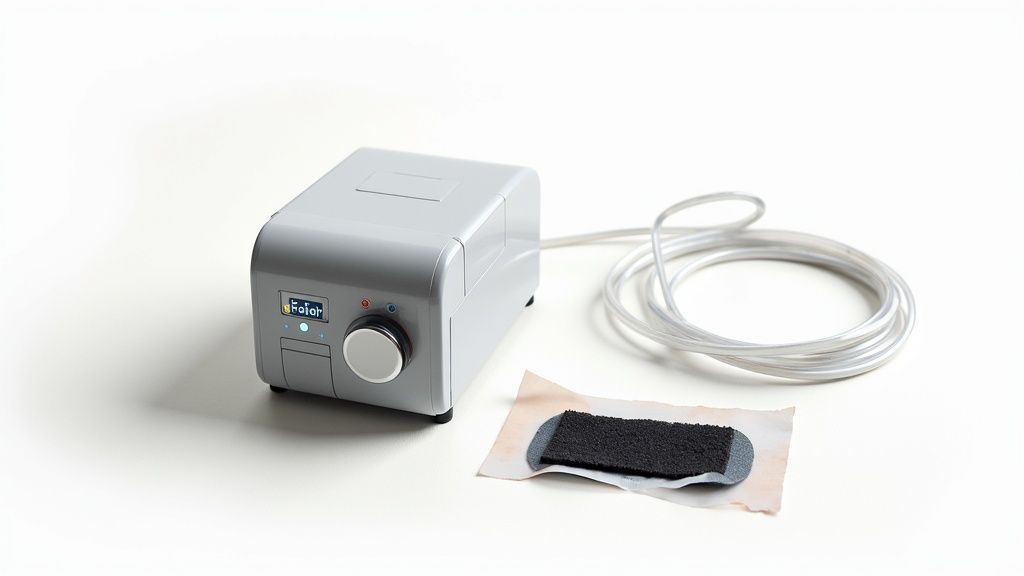
A gray negative pressure wound therapy (NPWT) device with a tube and a wound dressing on a white background.

Think of a stubborn wound as a small, swampy patch of ground where nothing can grow. A traditional bandage is like throwing a tarp over it—it covers the problem but does little to fix the soggy environment underneath.

NPWT, on the other hand, works like a sophisticated drainage system. It doesn't just cover the wound; it actively manages the environment to create ideal conditions for the body’s natural healing processes to finally take hold.

A computerized pump delivers gentle, continuous negative pressure (suction) across the entire wound bed. This transforms wound care from a passive act to an active, healing engine, making it a game-changer for wounds that have stalled.

The Core Components of an NPWT System

An NPWT system might sound complex, but it’s built on three core parts working together. Breaking them down shows just how elegantly this therapy works.

  • Specialized Wound Dressing: This isn't your typical gauze. It’s a porous foam or gauze dressing carefully cut to match the exact size and shape of the wound. This piece acts as the direct contact layer, making sure the negative pressure is spread evenly across the entire surface.
  • Adhesive Film Drape: A thin, clear film is laid over the dressing, extending onto the healthy skin around the wound. This creates an airtight seal, which is critical for maintaining the vacuum and shielding the wound from bacteria and other contaminants.
  • Therapy Unit and Tubing: A flexible tube connects the sealed dressing to a portable pump. This compact machine is the brains of the operation, generating the controlled suction needed to pull fluid and infectious material away from the wound and into a sealed collection canister.

By actively removing fluid, reducing bacterial load, and stimulating blood flow, NPWT creates a clean, moist, and protected environment that is ideal for the body's natural healing processes.

This technology has quickly become a cornerstone of modern wound management. The global NPWT market was valued at around USD 2.59 billion and is expected to climb to an estimated USD 3.84 billion by 2030. This growth underscores its critical role in treating chronic wounds, which affect up to 2% of the world's population. You can dive deeper into the data on the global wound therapy market and what’s driving its expansion.

NPWT At a Glance: Key Components and Functions

To make it even clearer, here’s a quick summary of the main parts of an NPWT system and the specific job each one does.

Component Function Primary Goal
Specialized Dressing A foam or gauze that fills the wound cavity and distributes pressure evenly. Ensure consistent therapeutic suction across the entire wound bed.
Adhesive Film Drape Creates an airtight seal over the dressing and surrounding healthy skin. Maintain negative pressure and prevent external contamination.
Therapy Unit (Pump) A computerized vacuum that applies controlled, continuous, or intermittent suction. Actively remove exudate, reduce swelling, and stimulate healing.
Connecting Tubing Connects the sealed dressing to the therapy unit and collection canister. Transport fluid and infectious material away from the wound site.
Collection Canister A disposable container that safely collects all the fluid drawn from the wound. Contain biohazardous waste and allow for fluid output measurement.

Each piece plays a vital role, working in concert to create an optimal healing environment that passive dressings simply can't replicate.

How NPWT Actively Accelerates Healing

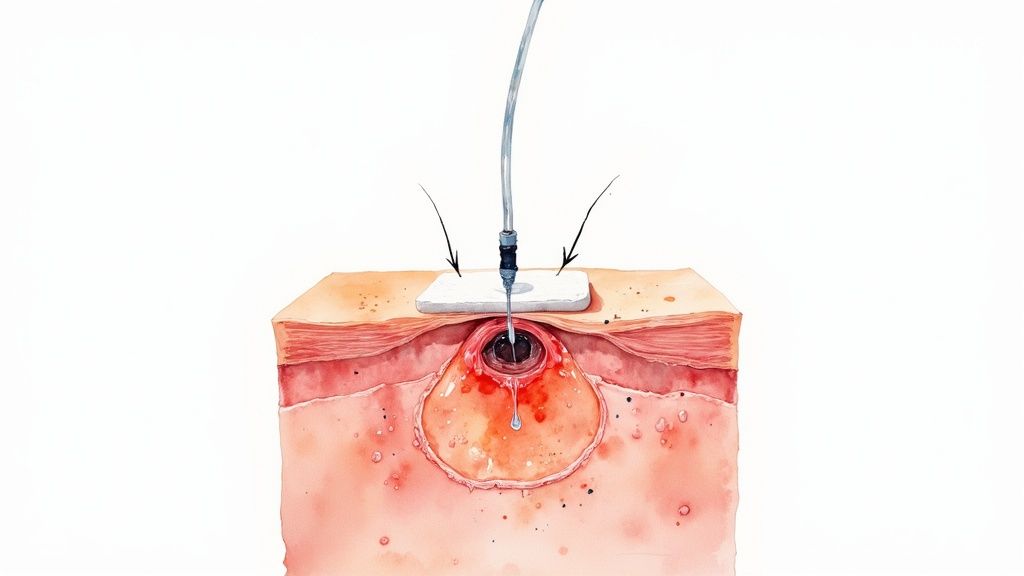
A cross-sectional diagram illustrating a negative pressure wound therapy (NPWT) device on skin.

Negative Pressure Wound Therapy is so much more than a high-tech bandage. It’s an active healing system, one that triggers real, profound physiological changes right at the wound bed. The gentle, controlled suction kicks off a cascade of four key mechanisms that work in concert to tear down the barriers preventing a wound from closing.

When you understand how these mechanisms work, it becomes crystal clear why NPWT is a game-changer compared to traditional, passive dressings. It doesn't just sit on top of a wound; it fundamentally alters the wound’s environment to supercharge the body's natural repair process. This active intervention is what makes it a cornerstone of modern wound care.

The Four Pillars of NPWT Healing

At its core, NPWT speeds up healing through four distinct but interconnected actions. Each one plays a vital role in preparing the wound for closure and helping healthy tissue grow back. Let's break down exactly what's happening on a biological level.

  • Macrodeformation (Drawing Wound Edges Together): The negative pressure creates a gentle, uniform contraction in the foam dressing. In turn, this pulls the edges of the wound closer together. Think of it like a tailor carefully gathering fabric before stitching a seam—this action physically shrinks the wound, giving the body less ground to cover.
  • Microdeformation (Stimulating Cell Growth): On a microscopic level, the foam’s porous structure applies a tiny amount of mechanical stress to the individual cells in the wound bed. This controlled strain is a powerful signal that encourages the formation of granulation tissue—that bright red, bumpy tissue that tells you a wound is healing properly. This process is absolutely essential for filling in the wound's defect.
  • Fluid Removal (Controlling Exudate and Edema): Many chronic wounds produce way too much fluid (exudate), which is often loaded with enzymes that can damage new, healthy tissue. The continuous suction acts like a sophisticated drainage system, constantly pulling this harmful fluid away. This also reduces swelling (edema) in the surrounding area, which immediately improves blood flow and creates a cleaner, healthier environment for new cells to thrive.
  • Environmental Control (Protecting the Wound): The sealed dressing creates a closed, moist, and warm environment—the perfect incubator for cell migration and growth. It also acts as a physical shield, protecting the fragile new tissue from outside bacteria and contamination. This drastically lowers the risk of infection.

How Suction Promotes New Tissue Growth

The stimulation of new granulation tissue is arguably the most critical function of NPWT. That microdeformation we mentioned, caused by the foam under suction, is the primary driver behind it.

When the suction is active, the cells inside the wound are gently stretched. This mechanical stimulation is a wake-up call, signaling them to multiply and start producing the building blocks for a new tissue scaffold.

This cellular activity also triggers angiogenesis—the formation of new blood vessels. These tiny new vessels are the supply lines, delivering the oxygen and nutrients needed to sustain the healing process and build strong, healthy tissue. If you want a deeper dive, explore our guide on how negative pressure wound therapy accelerates granulation tissue formation.

The magic of NPWT lies in its ability to simultaneously clean, contract, and stimulate the wound. It addresses multiple healing barriers at once, creating an optimal environment that passive dressings simply cannot replicate.

This multi-pronged attack transforms a stagnant, non-healing wound into a dynamic site of tissue regeneration. By managing fluid, keeping bacteria out, boosting blood flow, and directly stimulating new growth, NPWT gives the body everything it needs to finally close the wound. It's a powerful intervention that turns the tide firmly in favor of healing.

Who Is an Ideal Candidate for NPWT

Negative Pressure Wound Therapy is a powerful tool, but it’s not for every wound. Like any specialized treatment, it delivers the best results when used in the right situation. Figuring out who makes a good candidate involves a close look at the wound, its history, and the patient's overall health.

This therapy is often the perfect intervention for wounds that have stalled out and just aren't healing on their own. The decision to use NPWT is where clinical know-how meets practical, real-world application. It’s a targeted solution for complex wounds where standard dressings aren’t enough to manage fluid, control bacteria, and kickstart new tissue growth.

Common Wounds Treated with NPWT

Certain wounds consistently respond well to NPWT because of the specific challenges they present, like poor blood flow, heavy drainage, or a high risk of infection. For these wounds, NPWT provides the active support needed to break through healing barriers.

  • Diabetic Foot Ulcers: These wounds are notoriously stubborn due to nerve damage and poor circulation. NPWT helps manage the heavy drainage, reduces the bacterial burden, and encourages healthy new tissue to form in a clean, controlled space.
  • Pressure Injuries (Bedsores): For more severe Stage 3 and Stage 4 pressure injuries, NPWT is incredibly effective. It helps clear away dead tissue and excess fluid while gently pulling the wound edges closer, getting the wound bed ready for closure or a skin graft.
  • Venous Stasis Ulcers: Often found on the lower legs and caused by poor circulation, these ulcers can produce a lot of fluid. NPWT is excellent at managing this heavy exudate, which helps bring down swelling and creates a much better environment for healing.
  • Complex Surgical or Traumatic Wounds: After an accident or major surgery, some wounds can split open (dehisce) or have very irregular shapes. NPWT helps stabilize these wounds, lowers the infection risk, and fills in deep tissue gaps before final closure.

The need for advanced treatments like NPWT is growing. Chronic wounds are a massive global health challenge, with the worldwide wound care market expected to hit USD 27.2 billion by 2027. This growth is driven by technologies like NPWT, which are critical for managing the 1.5 million diabetic foot ulcers that occur each year in the U.S. alone. You can discover more insights about the wound care market outlook on amarexcro.com.

When NPWT Should Not Be Used

Knowing when not to use NPWT is just as important as knowing when to use it. Applying this therapy in the wrong situation can be ineffective at best and harmful at worst. These are called contraindications, and a clinician must rule them out before even considering the treatment.

A crucial part of responsible wound care is recognizing the limits of any therapy. NPWT is not a one-size-fits-all solution, and patient safety always comes first.

For instance, applying suction over certain areas, like exposed blood vessels or organs, can cause serious harm. It’s also vital to understand that NPWT doesn't treat an active, unmanaged infection—the infection has to be under control first. You can also learn more about whether negative pressure is safe for all ages in our detailed guide. A thorough assessment is key to making sure the powerful benefits of NPWT are applied safely and effectively.

NPWT Indications vs Contraindications

Deciding on NPWT is all about weighing the pros and cons for a specific wound. Here’s a quick look at when it’s a great option versus when it should be avoided.

Ideal for NPWT (Indications) Avoid NPWT (Contraindications)
Chronic, non-healing wounds Malignancy in the wound (cancerous tissue)
Acute and traumatic wounds Untreated osteomyelitis (bone infection)
Diabetic, pressure, and venous ulcers Non-enteric and unexplored fistulas
Surgical wounds and skin grafts Necrotic tissue with eschar present (dead tissue must be removed first)
Wounds with moderate to heavy exudate Exposed blood vessels, nerves, or organs

In the end, the final call always rests with a qualified wound care specialist. They have the expertise to weigh the potential benefits against any risks, ensuring NPWT is the right choice to get a patient firmly on the path to healing.

What to Expect During an NPWT Dressing Change

Knowing what happens during a Negative Pressure Wound Therapy dressing change can make the whole process feel much less intimidating. It's a routine procedure, typically done by a healthcare professional every 48 to 72 hours, that follows a clear, systematic path to keep your healing on track. Understanding these steps helps you feel more in control and involved in your own recovery.

The process kicks off with some careful prep work. Your clinician will turn off the NPWT pump, clamp the tubing, and then gently loosen the adhesive film around the edges. After the old dressing is off, the wound gets a thorough but gentle cleaning with a sterile solution. This clears out any debris and gets the area ready for a fresh start.

Placing and Sealing the New Dressing

With the wound bed clean and dry, it's time for the new dressing. Your clinician will cut a piece of sterile foam or gauze to fit the wound's exact shape. This isn't a one-size-fits-all situation—a precise fit is key to making sure the negative pressure is distributed evenly across the entire wound surface, without touching the healthy skin around it.

Once the foam is positioned just right, a transparent adhesive film is laid over the top. This sheet is much larger than the wound itself, extending several inches onto the surrounding skin to create a completely airtight seal. This part is critical; if the seal isn't perfect, the vacuum won't hold, and the therapy can't do its job. Your clinician will smooth out every last wrinkle to ensure it's sealed tight.

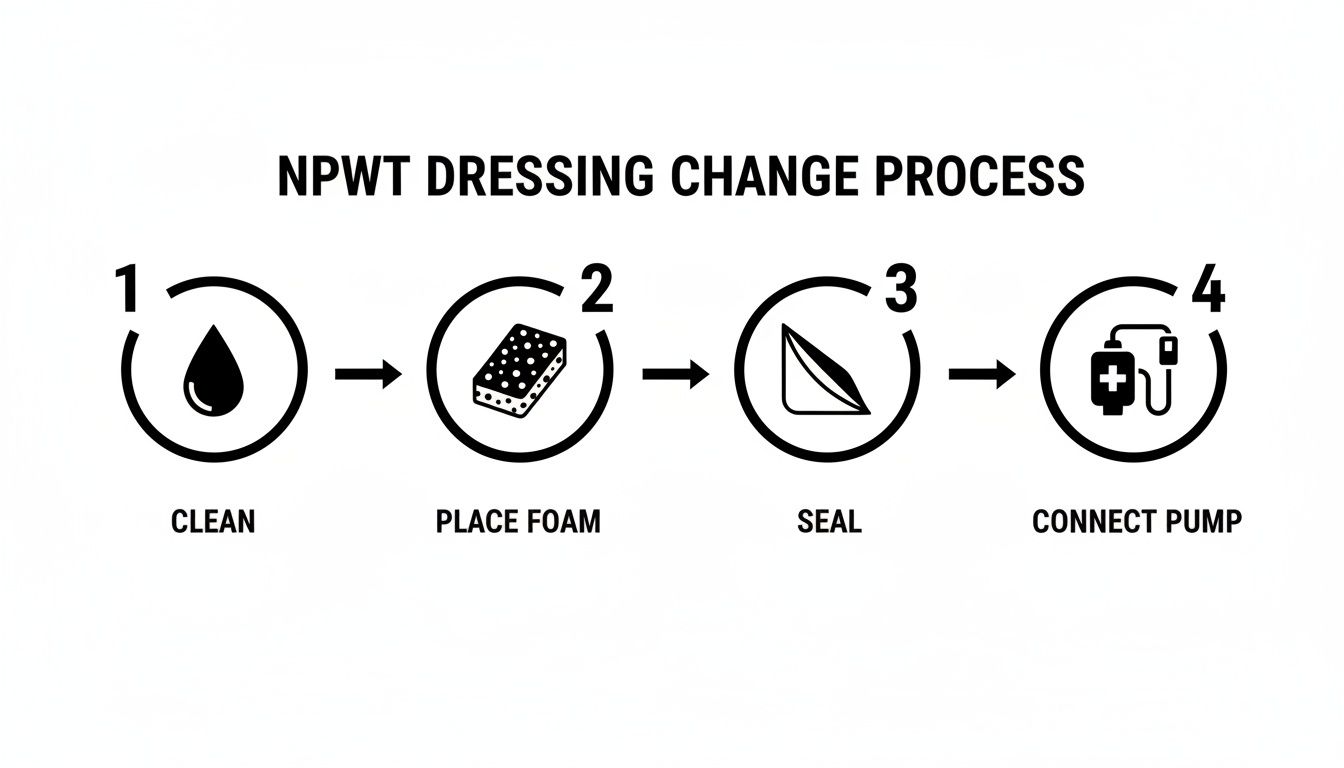
The visual below shows you just how straightforward this four-step process is, from cleaning the wound to getting the therapy running again.

A four-step diagram illustrating the NPWT dressing change process: clean, place foam, seal, and connect pump.

Each step logically builds on the one before it, all working together to create the ideal healing environment.

Connecting and Activating the System

With the new dressing sealed, the final move is connecting it to the pump. A small opening is created in the adhesive film where a tubing port is attached. This port is the bridge that links the sealed dressing to the therapy unit through a flexible tube. For a closer look at this stage, our guide on how to clean wounds with negative pressure therapy has more detail.

When the pump switches on, you’ll likely feel a gentle pulling or tightening sensation. That's the air being drawn out as the dressing cinches down over the wound—it's the first sign that the system is working perfectly.

Your clinician will do a final check to confirm the seal is solid and the machine is set to the exact pressure your doctor prescribed. You'll hear the quiet, steady hum of the pump, which will run based on its programming. Just like that, a simple dressing change reactivates a powerful healing system, setting you up for more progress until the next appointment.

Weighing the Benefits Against the Potential Risks

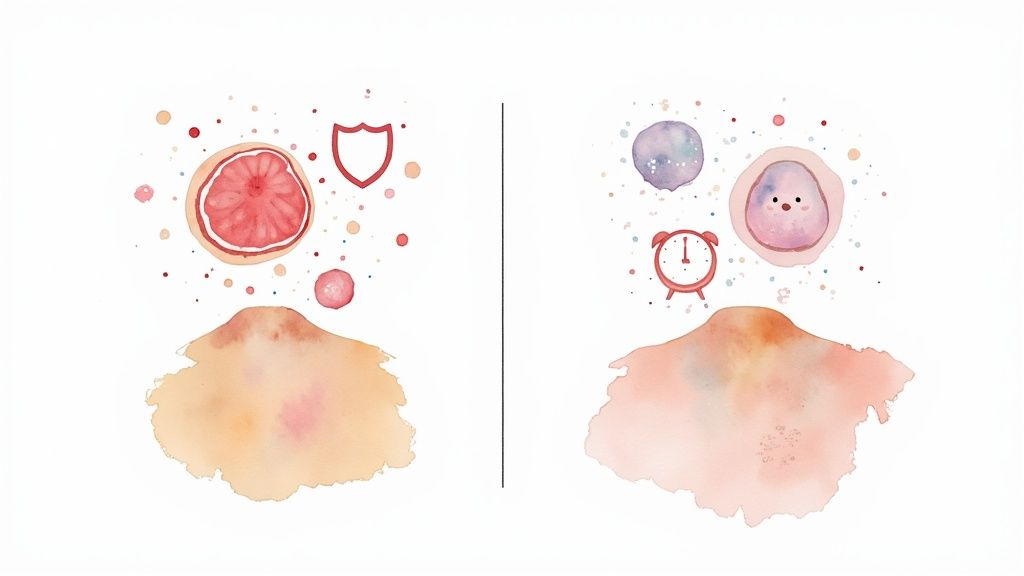
Watercolor illustration comparing grapefruit and shield with a cell, clock, and purple orb over skin.

To really understand what negative pressure wound therapy is all about, we need a balanced look at its powerful advantages and manageable risks. By weighing both sides, patients and their families can feel confident making informed decisions with their healthcare team. The benefits are often dramatic, completely changing the healing path for difficult wounds.

But like any medical treatment, NPWT isn't entirely without potential complications. A clear-eyed view of these possibilities ensures that any issues can be spotted and handled quickly. This keeps the healing process on track and puts patient safety first, which is always the top priority.

The Powerful Upsides of NPWT

The biggest benefit of NPWT is its incredible ability to accelerate healing time. By actively managing the wound environment, it helps many patients get to wound closure much faster than with traditional dressings alone. For you, that means fewer dressing changes, a quicker return to your daily life, and a real improvement in your overall well-being.

Another major win is infection control. The sealed dressing acts like a shield, blocking outside germs from getting in. At the same time, the continuous suction pulls away fluid, which reduces the amount of bacteria inside the wound. This is a huge deal after surgery, where NPWT is increasingly used to prevent serious complications.

Globally, an estimated 313 million surgical procedures are performed each year. Studies show that prophylactic NPWT can lead to a 57.8% relative reduction in wound dehiscence and a 9.1% reduction in hospital length of stay, highlighting its protective value. You can read the full research about these findings from Smith+Nephew.

Understanding and Managing Potential Risks

While NPWT is generally very safe, it’s smart to be aware of the potential issues. Keeping an open line of communication with your clinical team is the absolute best way to stay ahead of them.

Here are a few common concerns:

  • Discomfort During Changes: Some people feel mild pain or a pulling sensation when dressings are changed. Your clinician can give you pain medication beforehand to make things much more comfortable.
  • Skin Irritation: The sticky film can sometimes bother the skin around the wound. Special barrier creams or different types of adhesive can help protect your skin.
  • Device Alarms: The therapy machine has built-in alarms that go off if there’s an air leak or the canister gets full. These are just safety features doing their job, and your nurse will show you what each sound means and what to do.

A critical piece of patient safety, especially in wound care, is making sure all equipment is completely sterile to prevent infections. Proper medical device sterilization validation is a fundamental process that confirms every piece of equipment is safe before it ever gets near a patient.

Serious issues like bleeding are rare, but they do require immediate medical help. Your care team will give you very clear instructions on what to do in an emergency, so you're prepared for any scenario. By staying vigilant and working closely with your provider, you can navigate the treatment process safely and successfully.

Integrating NPWT into a Complete Care Plan

Negative Pressure Wound Therapy is a powerhouse, but it’s rarely a standalone cure. Its real strength is unleashed when it’s a key player in a broader, expert-led wound care strategy. Think of NPWT as a high-performance engine; it’s incredibly powerful, but you still need a chassis, fuel, and a skilled driver to actually win the race.

The best outcomes happen when NPWT is combined with other crucial treatments. A wound care specialist orchestrates this approach, making sure all aspects of healing are addressed at the same time. This is where the art and science of wound management really come together.

The Holistic Approach to Healing

A specialist's first move is always a thorough assessment to figure out if NPWT is even the right path for a patient's unique situation. This evaluation looks at the wound type, the patient's overall health, and any underlying conditions that might get in the way of healing. If NPWT gets the green light, it becomes just one part of a multi-faceted plan.

This integrated strategy often includes:

  • Systematic Debridement: Cleaning out dead or infected tissue from the wound bed is non-negotiable. NPWT works best on a clean foundation, and debridement is what creates that optimal starting point.
  • Targeted Infection Management: If an infection is present, it has to be dealt with using the right antibiotics or antimicrobial dressings. While NPWT helps manage the wound environment, it doesn't replace the need to treat the core infection.
  • Proper Nutritional Support: The body needs specific building blocks—like protein, vitamins, and minerals—to create new tissue. A complete care plan includes nutritional guidance to fuel the healing process from the inside out.

A successful wound care plan is a dynamic blueprint, not a static prescription. Specialists constantly monitor progress, adjusting NPWT settings and other therapies to respond to the wound's changing needs. This ensures the most effective and efficient path to closure.

Customizing Therapy for Maximum Effect

There’s no "one-size-fits-all" setting for NPWT. Wound care specialists tailor the therapy parameters, including the level of negative pressure and whether the suction is continuous or intermittent. This precise calibration is based on the wound's size, depth, and how much fluid it’s producing.

To make sure NPWT is used effectively, it's crucial to follow established clinical practice guidelines, which provide an evidence-based framework for making treatment decisions. By integrating this powerful technology into a holistic and individualized strategy, a dedicated team of specialists can achieve optimal healing, helping patients get back on their feet faster and more completely.

Answering Your Questions About NPWT

Even after learning the basics, it’s natural to have practical questions about negative pressure wound therapy. Let's tackle some of the most common ones we hear from patients and their families to help you feel more comfortable and confident with the treatment.

Is Negative Pressure Wound Therapy Painful?

Most people don't find the therapy itself painful. When the pump is first activated, you might notice a gentle pulling or stretching feeling as the dressing settles over the wound. This sensation usually goes away as you get used to it.

Dressing changes can sometimes cause discomfort. To manage this, your clinical team can give you pain medication about 30-60 minutes before they start, making the process much more comfortable. Always let your provider know what you're feeling—open communication is the best way to manage any discomfort.

How Long Will My NPWT Treatment Last?

There’s no one-size-fits-all answer here; the duration of NPWT is different for everyone. How long you’ll need it depends on the wound's size and type, your overall health, and how your body responds to the therapy.

Some acute wounds might only require a few weeks of treatment. On the other hand, more complex or chronic wounds could need several months of therapy to heal properly. Your wound care specialist will track your progress closely and give you a clearer timeline as you go.

The goal of NPWT is not just to cover a wound, but to actively prepare it for the final stages of healing. Treatment continues until the wound bed is healthy enough for closure, which might involve sutures, a skin graft, or allowing it to close on its own.

Your provider will set specific healing goals. As soon as you hit those milestones, the therapy can be stopped, marking a huge step forward in your recovery.

Can I Shower with the NPWT Device?

This is an excellent and very common question. Yes, in most cases, you can shower. The key is that you cannot get the dressing itself wet, because that would break the airtight seal and interrupt the therapy.

Your clinician will teach you how to safely and temporarily disconnect the pump from the dressing's tubing. The dressing is water-resistant and needs to stay sealed and in place. Once you're done showering, you just reconnect the tubing and turn the pump back on. It’s really important to follow the specific instructions for your device to keep the therapy working effectively.

What Does It Mean When the Machine Alarm Goes Off?

Don't panic when an alarm sounds! The alarms on an NPWT machine are important safety features, not a sign that something is terribly wrong. They’re designed to alert you to common issues that are usually easy to fix.

Here are the most frequent reasons for an alarm:

  • Air Leak: This is the #1 cause. It happens when the seal is broken, often because the adhesive film has wrinkled or peeled up at an edge. Your provider will show you exactly how to find and fix these minor leaks.
  • Canister is Full: The pump is just letting you know that the collection canister needs to be changed. This is a normal, routine part of the process.
  • Low Battery: If you have a portable device, the alarm is your reminder to plug it in and charge the battery.
  • Blockage in Tubing: An alarm might go off if the tubing gets kinked or clogged, which stops the pump from delivering the right amount of pressure.

Your care team will walk you through troubleshooting steps for every alarm, so you'll feel empowered to manage the device with confidence at home.


At Specialty Wound Care, we believe expert guidance and advanced therapies like NPWT are essential for overcoming the challenges of hard-to-heal wounds. Our specialists integrate these powerful tools into personalized care plans designed to get you back on your feet faster. Learn how our comprehensive approach can help you or a loved one by visiting us at https://specialtywoundcare.com.
Article created using Outrank

Uncategorized

A Definitive Guide to the Best Treatment for Pressure Ulcers

Primus Healthcare | December 10th, 2025


Finding the best treatment for pressure ulcers isn’t about a single magic bullet. It’s a coordinated strategy, kicking off with one non-negotiable step: getting the pressure off. From there, it’s all about an accurate assessment of the wound’s stage, combining consistent offloading, proper cleansing, and stage-specific care to give the body a fighting chance to heal.

The Foundation of Healing: Pressure Ulcer Assessment

Think of a pressure ulcer like a distressed patch of land. Before you can hope to restore it, you have to survey the damage. Is it just the topsoil that’s eroded, or has the problem reached all the way down to the bedrock? This initial investigation is the single most critical step. It sets the entire course for treatment.

Pressure ulcers (often called bedsores) form when constant pressure cuts off blood flow to the skin, causing the tissue to die. This is often made worse by friction and shear—think of skin rubbing against sheets or sliding down in a bed. If you don’t address the number one cause of pressure ulcers, no treatment in the world will work.

Decoding the Damage: The Staging System

Clinicians use a staging system to classify just how severe a pressure ulcer is. This isn’t just medical jargon; it’s a universal language that tells the entire care team what they’re up against and guides the whole treatment plan. Each stage signals a deeper level of tissue damage.

  • Stage 1: This is the earliest warning sign. The skin is still intact but shows a persistent area of red, non-blanchable skin (meaning it doesn’t turn white when you press on it).
  • Stage 2: Now we have partial-thickness skin loss. It might look like a shallow, open crater, a blister filled with clear fluid, or a simple abrasion.
  • Stage 3: The damage has gone deeper, extending through the skin into the fatty tissue below. It looks like a deep crater, but you can’t see muscle, tendon, or bone yet.
  • Stage 4: The most severe stage. Here, there’s full-thickness tissue loss, and muscle, tendon, or even bone is exposed. These wounds are complex and carry a serious risk of infection.

We also have two other important classifications: Unstageable ulcers, where the wound base is hidden by dead tissue (slough or eschar), making it impossible to see the true depth, and Deep Tissue Injury (DTI), which appears as a purple or maroon patch of intact skin, signaling serious damage to the soft tissue underneath.

To help you visualize this process, here’s a quick look at the Pressure Ulcer Staging system.

Pressure Ulcer Staging at a Glance

This table breaks down the stages into what you’ll see and what your first move should be.

Stage Appearance Key Action
Stage 1 Intact skin with non-blanchable redness. Relieve all pressure immediately; protect the area.
Stage 2 Partial-thickness skin loss (shallow crater or blister). Offload pressure, gently cleanse, and apply a protective dressing.
Stage 3 Full-thickness skin loss into the fat layer (deep crater). Offload, cleanse, debride if needed, and apply an absorptive dressing.
Stage 4 Full-thickness loss with exposed bone, tendon, or muscle. Immediate offloading and expert consultation; surgical intervention likely.
Unstageable Base is covered by slough or eschar. Offload and debride to reveal the true wound depth.
DTI Purple or maroon area of intact skin. Offload completely and monitor closely for rapid deterioration.

This systematic approach, from visual check to initial action, is the bedrock of effective pressure ulcer management.

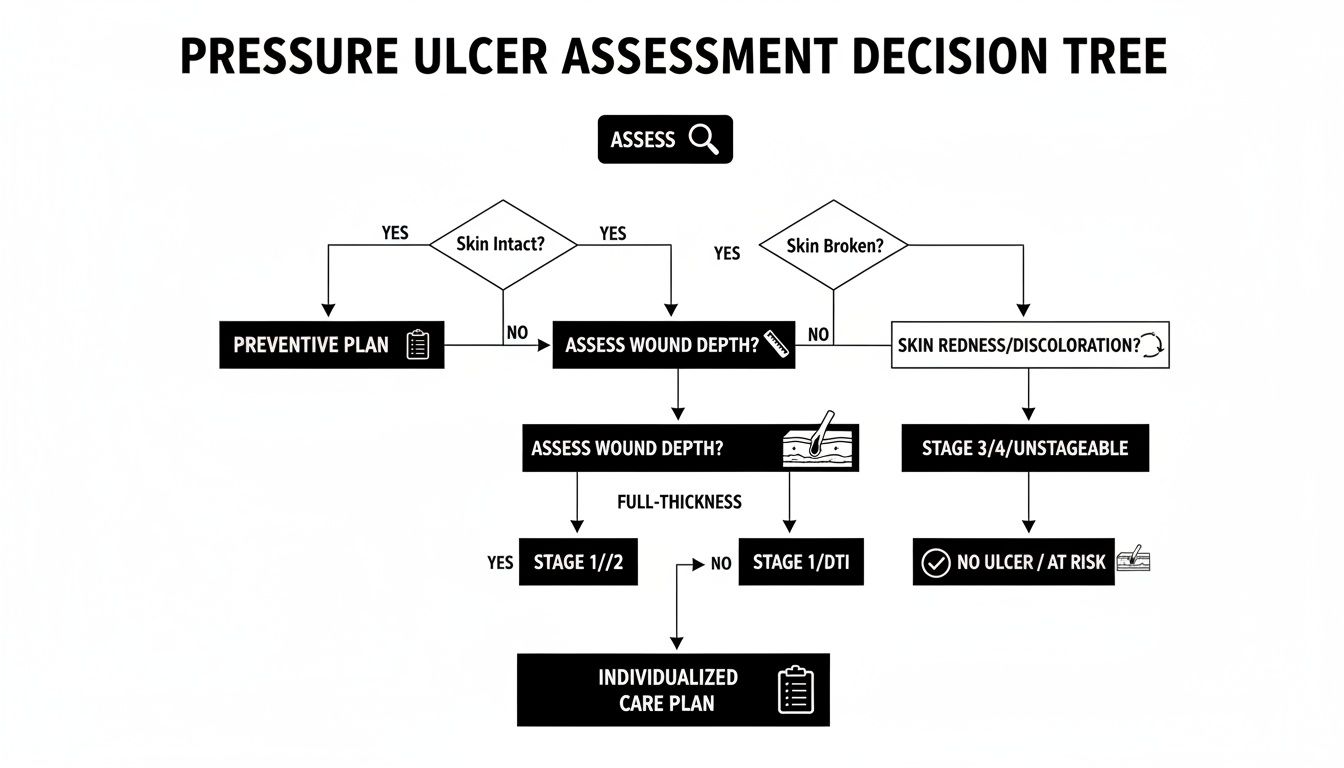
This decision tree shows how those crucial first steps flow together, moving from initial assessment to staging and, finally, to creating a smart, individualized plan.

Flowchart illustrating a pressure ulcer assessment decision tree for diagnosis and individualized care planning.

As you can see, a successful outcome isn’t about guesswork. It’s a logical, step-by-step process that hinges on getting that first evaluation right.

Your Initial Action Plan

Once you’ve identified and staged a pressure ulcer, you have to act fast to stop further damage. This immediate response is just as vital as any advanced dressing or therapy that comes later.

The core principle of pressure ulcer management is simple yet non-negotiable: you must remove the pressure. Without this fundamental step, no amount of wound care will be effective.

First, reposition the individual to completely offload the affected area. Use pillows, foam wedges, or specialized cushions to redistribute their weight and protect vulnerable bony spots like the sacrum, heels, and elbows.

Next, get a good look at the skin. Keep the area clean and dry, especially from moisture caused by incontinence. For a Stage 1 ulcer, this might be all you need to do. For open wounds, the next step is a gentle cleanse with saline before putting on a dressing that’s right for the stage. This immediate, proactive response lays the groundwork for everything that follows, giving the body the best possible shot at healing itself.

Core Principles of Pressure Ulcer Wound Care

Once you’ve staged a pressure ulcer, your focus has to shift to managing the wound itself. This isn’t just about slapping on a bandage; it’s about creating the perfect environment for the body to do what it does best—heal. The best treatment at this stage really comes down to three things: cleaning the wound gently, keeping it moist, and picking the right dressing for the specific job.

It all starts with cleaning. You need to clear out any debris or bacteria that could get in the way of healing, but you have to be gentle. Harsh antiseptics like hydrogen peroxide or iodine are a big no-no. They’re toxic to the delicate new cells trying to form and can actually “burn” the very tissue you’re trying to save.

The gold standard here is simple: sterile normal saline. It’s isotonic, which means it matches the salt concentration of our body’s fluids, so it cleans without damaging cells. The goal is to irrigate, not scrub—just enough gentle pressure to flush the wound bed without causing more trauma.

The Greenhouse Effect for Healing

After a good cleaning, the next priority is to create a moist wound environment. For years, the common wisdom was to “let it air out,” but we now know that’s one of the worst things you can do. A dry wound forms a thick scab, and new skin cells have to waste precious energy burrowing underneath it. It slows the whole process way down.

Think of a healing wound bed like a small greenhouse.

A moist, balanced environment allows new cells to glide freely across the wound surface, build new tissue, and close the gap much, much faster. Just like plants thrive in a humid greenhouse, skin cells thrive in a moist wound bed.

This environment also helps the body’s natural enzymes break down dead tissue in a process called autolytic debridement. The key word, though, is balance. The wound should be moist, not sopping wet. Too much fluid can macerate (or waterlog) the healthy skin around the wound, making it weak and prone to breaking down itself.

For anyone managing these wounds at home, getting this part right is absolutely vital. Resources like your guide to home wound care offer practical, step-by-step instructions that can make a huge difference in healing outcomes.

Choosing the Right Wound Dressing

The primary tool for maintaining that perfect greenhouse environment is the dressing. There’s no single “best” dressing for every situation. The right choice depends completely on the ulcer’s stage, depth, location, and how much fluid (exudate) it’s producing. What works for a dry Stage 2 ulcer is totally wrong for a heavily draining Stage 4 wound.

Here’s a quick look at the main categories and where they fit in:

  • Foam Dressings: These are your workhorses. They’re super absorbent and provide a nice cushion, making them perfect for ulcers with moderate to heavy exudate.
  • Hydrocolloids: These react with wound fluid to form a soft gel, locking in moisture. They’re best for shallow wounds with minimal to moderate drainage, like a Stage 2 or a shallow Stage 3.
  • Alginates: Made from seaweed, these are incredibly absorbent. They are the go-to choice for wounds that are draining heavily or bleeding, as they form a gel that traps fluid and bacteria.
  • Hydrogels: These are water or glycerin-based dressings designed to donate moisture to a dry wound bed. They’re ideal for dry ulcers that need rehydration to kickstart the healing process.

Picking a dressing isn’t a one-and-done decision. A wound’s needs change as it heals. It might start out needing an alginate for heavy drainage, but as it improves, a foam or hydrocolloid might become the better choice. You have to constantly reassess to make sure the dressing is always supporting, not hindering, the path to recovery.

When a pressure ulcer just won’t heal with the basics, it’s a clear signal to bring in the heavy hitters. Think of it like a garden that isn’t responding to regular watering and sunlight. Sometimes you need specialized fertilizers or soil treatments to kickstart growth. In the same way, advanced wound care modalities give that extra push to jumpstart healing in complex or stalled wounds.

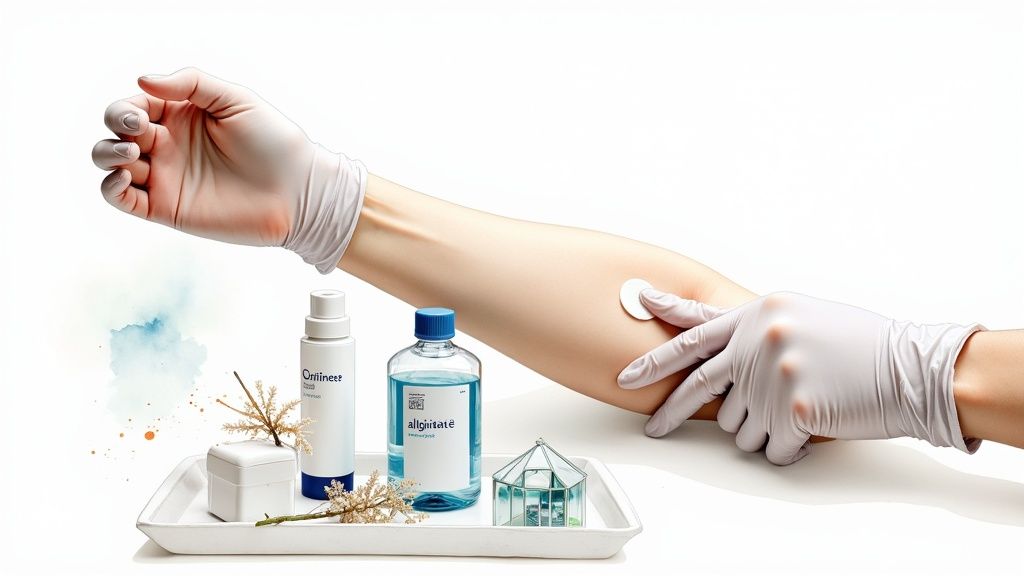
A medical professional in white gloves applies a circular patch to a patient's arm, with care products on a tray.

These treatments are especially crucial for patients whose underlying conditions get in the way of healing. The geriatric population—those 60 and older—accounts for roughly 50% of the global pressure ulcer treatment market. As factors like reduced mobility and thinning skin increase risk with age, the need for effective, advanced care skyrockets. The market reflects this, with U.S. revenues hitting approximately USD 2.7 billion in a recent year, showing just how many resources are dedicated to tackling these challenging wounds.

Clearing the Way with Debridement

Before new, healthy tissue can form, you have to get rid of the old, dead stuff. This process is called debridement, and it’s a lot like weeding a garden before you plant new seeds. Dead tissue—either slough (the yellow, stringy stuff) or eschar (thick, black, leathery tissue)—is a breeding ground for bacteria and creates a physical barrier that stops healthy cells from moving in.

There are a few ways to get this done, each with its own place in the toolkit:

  • Autolytic Debridement: This is the body’s own natural process. By keeping the wound moist with the right dressing, we let the body’s enzymes do the work of breaking down dead tissue. It’s gentle, but slow.
  • Enzymatic Debridement: Here, we apply a topical ointment containing enzymes that specifically dissolve non-viable tissue, leaving the healthy tissue alone.
  • Sharp Debridement: A trained clinician uses sterile tools like scalpels or forceps to precisely cut away the dead tissue. It’s fast, effective, and often done right at the bedside.
  • Mechanical Debridement: This is an older method that uses physical force, like wet-to-dry dressings or high-pressure irrigation, to remove debris. It’s less favored now because it can be non-selective and damage healthy granulation tissue.

No matter the method, the goal is always the same: create a clean, healthy wound bed so the body can get back to the business of healing.

Negative Pressure Wound Therapy (NPWT)

One of the most powerful advanced treatments in our arsenal is Negative Pressure Wound Therapy (NPWT), often just called a wound vac. Picture a tiny, gentle vacuum working on the wound 24/7. A special foam dressing is placed inside the wound bed, sealed with a clear film, and hooked up to a small, portable pump.

NPWT works by creating a controlled, sub-atmospheric pressure environment. This gentle suction pulls excess fluid and infectious material from the wound, reduces swelling, and promotes the formation of new, healthy granulation tissue.

This therapy essentially pulls the edges of the wound together on a microscopic level, which stimulates circulation and encourages much faster closure. It’s a fantastic option for deep Stage 3 and Stage 4 ulcers, especially those with heavy drainage that need a major boost to get healing on track.

Fueling Healing with Oxygen and Biologics

For the most stubborn wounds that resist other treatments, we sometimes need to intervene at the cellular level. These advanced options provide the essential building blocks that a compromised body may be struggling to supply on its own.

To make an informed choice, it helps to see how these therapies stack up against each other. Each has a specific role and set of considerations for the patient.

Comparing Advanced Treatment Options

Treatment Best For Mechanism Consideration
Hyperbaric Oxygen Wounds with poor blood flow, persistent infections, or stalled healing. Increases oxygen saturation in the blood, which fuels cell repair, fights anaerobic bacteria, and reduces swelling. Requires multiple sessions in a specialized chamber; patient must be able to tolerate pressure changes.
Biologics/Allografts Large, deep wounds (Stage 3/4) or non-healing ulcers that need a structural foundation for new tissue. Provides a scaffold for the patient’s cells to migrate into and rebuild tissue. Can also deliver growth factors. Can be costly; requires a clean, well-prepared wound bed for successful application.
NPWT Deep wounds with heavy exudate, post-surgical wounds, or traumatic injuries. Removes fluid, reduces edema, increases blood flow, and promotes granulation tissue formation through suction. Requires consistent power source and dressing changes every 48-72 hours; not for use on necrotic tissue.

Ultimately, the right advanced therapy depends entirely on the specific wound, the patient’s overall health, and the clinical goals.

For wounds that just won’t close, advanced options like wound oxygen therapy can make a world of difference. In hyperbaric oxygen therapy (HBOT), the patient breathes pure oxygen inside a pressurized chamber. This floods the bloodstream with oxygen, supercharging the body’s natural healing powers and helping to knock out tough infections.

Another powerful tool is the use of biologics or skin substitutes. These are advanced dressings and grafts derived from sources like amniotic membranes or engineered tissues. They act as a scaffold, giving the patient’s own cells a framework to grow on and rebuild the damaged area. This is often the best path forward for pressure ulcers that are extremely large, deep, and have failed to respond to every other type of care. These therapies represent the pinnacle of modern wound care, offering real hope for even the most difficult cases.

The Crucial Role of Support Surfaces and Offloading

No matter how sophisticated your dressings or therapies are, they’re all destined to fail if you don’t address the root cause of a pressure ulcer: unrelenting pressure.

Think of it like trying to patch a hole in a tire while the car is still moving—it’s an exercise in futility. That’s why offloading, the deliberate act of removing pressure from the wound, isn’t just part of the plan; it is the plan.

When pressure over a bony spot becomes greater than the pressure inside the capillaries, blood flow grinds to a halt. Cut off from oxygen and nutrients, the tissue begins to die, and an ulcer forms. Offloading is what gets the blood flowing again, finally giving the body a fighting chance to heal.

Given the high cost and debilitating nature of these wounds, it’s no surprise that the global pressure ulcer treatment market was valued at around USD 6.7 billion and continues to grow. You can learn more about the growing pressure ulcer treatment market and the demand for effective solutions.

Choosing the Right Support Surface

For anyone at risk, the bed or chair they use transforms from a piece of furniture into a critical medical device. These are known as support surfaces, and their entire purpose is to redistribute pressure away from those vulnerable, bony areas. They generally fall into two main categories.

  • Static Surfaces: These are your non-powered options, like high-density foam or gel mattresses and cushions. They work by allowing the body to sink in just enough to spread the weight over a much larger surface area. They’re a solid choice for individuals who can still shift their own weight and are at a moderate risk.
  • Dynamic Surfaces: These are powered systems, with the most common being alternating pressure air mattresses (APAM). These mattresses contain air cells that inflate and deflate on a timer, constantly shifting the points of pressure so no single spot bears the load for too long. They are absolutely essential for people with very limited mobility or those who already have deep tissue injuries.

A high-tech surface is a powerful tool, but it’s not a substitute for repositioning. It helps minimize tissue damage between turns, but a consistent turning schedule remains the cornerstone of pressure management.

The right choice always comes down to a thorough risk assessment. You can dive deeper into when to consider offloading techniques in our detailed guide on the topic.

Beyond the Bed: Repositioning and Shear Prevention

True offloading goes far beyond the mattress. For anyone who spends significant time in a wheelchair, a specialized pressure-redistributing cushion is non-negotiable. But the most important tool is one that requires no technology at all: a consistent, documented repositioning schedule.

A standard, evidence-based guideline is the two-hour turning rule for anyone confined to a bed. For those in a chair, it’s even more frequent—pressure relief should happen every 15 to 30 minutes.

It’s also vital to protect the skin from friction and shear during every move. Shear is that damaging force that occurs when the skin is pulled in one direction while the bones beneath it move in another, stretching and tearing tiny blood vessels.

Here’s how to prevent it:

  • Use lifting devices or draw sheets to move individuals. Never drag them across the bed.
  • Keep the head of the bed elevated no more than 30 degrees unless medically necessary. A higher angle causes the body to slide down, creating significant shear forces on the sacrum.
  • Use pillows or foam wedges to support the body in a side-lying position. This simple step keeps bony prominences like the ankles and knees from pressing against each other.

Managing Nutrition and Complications

You can have the most advanced dressing and a perfect care plan, but a pressure ulcer simply won’t heal if the patient’s body doesn’t have the fuel to rebuild. Effective treatment is as much about what you put into the body as what you put on the wound.

Think of it like trying to build a house. You can have the best crew and blueprints, but if the supply trucks don’t deliver bricks, lumber, and mortar, the project is dead in the water. Healing is a construction project on a cellular level, and nutrients are the raw materials. Without them, everything grinds to a halt.

Comparison of a woman sitting on a firm foam mattress versus a conforming dynamic mattress.

Fueling the Healing Process

A nutritional assessment isn’t optional; it’s a cornerstone of any serious wound care strategy. We need to make sure the body has a surplus of specific building blocks to mend itself from the inside out.

Here are the non-negotiables:

  • Protein: This is the absolute foundation of tissue repair. Protein provides the amino acids needed to construct new skin, collagen, and blood vessels. Skimp on protein, and you’re setting the wound up for failure.
  • Calories: Healing is hard work and burns a ton of energy. Adequate caloric intake is crucial so the body can use precious protein for rebuilding tissue instead of just burning it to keep the lights on.
  • Vitamin C: Think of this as the mortar that holds the cellular bricks together. It’s essential for synthesizing collagen, which gives new tissue its strength and integrity.
  • Vitamin A: This nutrient is a key player in managing the inflammatory response and kickstarting the growth of new skin cells (a process called epithelialization).
  • Zinc: A critical mineral that acts as a catalyst, helping the enzymes responsible for cell growth and tissue repair do their jobs effectively.

Understanding how malnutrition contributes to pressure injury risk is fundamental. It directly connects what a patient eats to their body’s ability to defend itself and heal.

Recognizing and Managing Wound Infection

Even with a perfect diet, complications can throw a wrench in the works. An infected pressure ulcer is a serious red flag that demands immediate action before it escalates into a systemic problem.

An infection happens when harmful bacteria take over the wound, overwhelming the body’s natural defenses. Learning to spot the early warning signs is one of the most important skills in wound management.

Keep a sharp eye out for these classic signs of a localized infection:

  • Increased pain or new tenderness at the wound site
  • Redness that spreads out from the wound, often with warmth
  • A foul odor that wasn’t there before
  • Purulent drainage (thick, cloudy, or discolored pus)
  • New or worsening swelling around the ulcer

If you see these signs—especially if the patient also has a fever or chills—it’s time for an urgent medical evaluation. Treatment typically involves wound cultures to identify the culprit bacteria and systemic antibiotics to attack the infection from within. This kind of proactive management is a major reason why pressure ulcer mortality rates, while still a concern, have seen a modest but steady decline over the last 30 years. These global trends in wound care show how much progress has been made through improved clinical practices.

Prevention: The Ultimate Pressure Ulcer Treatment

After diving deep into the complexities of treating pressure ulcers, we land on the most fundamental truth in wound care: the best treatment is preventing them in the first place. While all the advanced therapies we’ve discussed are invaluable, they’re reactive. A proactive, consistent prevention strategy is always the more effective—and compassionate—approach.

Think of it like maintaining the roof on your house. It’s far smarter to do regular inspections and fix a few loose shingles than to wait for a massive leak to ruin your home’s structure. In the same way, a dedicated prevention protocol protects the skin’s integrity before the first hint of breakdown appears.

Identifying At-Risk Individuals

The first step in any solid prevention plan is figuring out who is most vulnerable. This isn’t a guessing game; we use validated, systematic tools to assess risk. One of the most common and trusted is the Braden Scale, which scores six key risk factors.

  • Sensory Perception: Can the person feel and respond to pain or pressure-related discomfort?
  • Moisture: How often is the skin exposed to moisture from things like sweat or incontinence?
  • Activity: How much is the individual moving around physically?
  • Mobility: Can they change and control their body position on their own?
  • Nutrition: What does their typical daily food intake look like?
  • Friction and Shear: Is there a risk of skin being pulled or rubbed against surfaces?

A lower score on the Braden Scale means a higher risk, which should immediately trigger a more intensive prevention plan. This simple assessment gives us a clear roadmap to build an individualized care strategy right from the start.

Building a Proactive Defense

Once you’ve identified the risk, it’s time to build a multi-faceted defense. This isn’t about a single action but a series of consistent habits woven into the daily care routine. The goal is to tackle every potential cause of skin breakdown before it even has a chance to become a problem.

Prevention isn’t a task to check off a list; it’s a mindset to adopt. Every single interaction, from repositioning a patient to helping with a meal, is an opportunity to protect vulnerable skin and bolster the body’s natural defenses.

Key prevention strategies include:

  1. Systematic Skin Inspections: Get in the habit of performing daily, head-to-toe skin checks. Pay extra attention to bony hotspots like the sacrum, heels, hips, and elbows. Look for any redness or discoloration that doesn’t disappear when you press on it.
  2. Moisture Management: Skin needs to be kept clean and dry. Use barrier creams to shield the skin from incontinence, and make sure bedding is changed immediately if it gets damp.
  3. Optimized Nutrition and Hydration: From day one, focus on a diet rich in protein, calories, vitamins, and minerals. Proper hydration is just as crucial, as it keeps the skin supple and more resilient to damage.
  4. Promoting Mobility: Encourage as much movement as possible, even if it’s just small shifts in position. For individuals who can’t move on their own, a strict and documented repositioning schedule is non-negotiable.

Answering Your Questions About Pressure Ulcer Care

When you or a loved one is dealing with a pressure ulcer, a lot of questions come up. It’s completely normal. Let’s walk through some of the most common concerns to give you clear, practical answers and help you feel more confident in the healing journey.

How Long Does It Take for a Pressure Ulcer to Heal?

This is probably the number one question we hear, and the honest answer is: it depends. The healing timeline is incredibly varied, hinging on the ulcer’s stage, the person’s overall health, and how closely the treatment plan is followed. A Stage 1 ulcer, for instance, might clear up in just a few days once pressure is removed.

On the other hand, a deep Stage 4 ulcer is a much longer road. We’re often talking months, sometimes even years, and surgical help might be necessary. The single most important factor for speeding things up is sticking to the care plan, day in and day out.

Can a Pressure Ulcer Heal Without a Special Dressing?

It’s a tempting thought, but for most wounds, it’s not a safe bet. While a very minor Stage 1 sore might resolve on its own by simply getting pressure off the area, anything from Stage 2 onward absolutely needs a dressing to heal properly.

Dressings do several critical jobs:

  • Protect the Wound: They act as a shield, keeping bacteria and other contaminants out.
  • Balance Moisture: A properly moist environment is a non-negotiable for new, healthy cells to grow.
  • Manage Drainage: They pull excess fluid away from the wound, which prevents it from damaging the healthy skin nearby.

The right dressing is always chosen based on what the wound needs at that moment—how much it’s draining, whether there’s dead tissue, and other factors.

When Should I See a Doctor for a Pressure Ulcer?

The simple answer? Immediately. You should get in touch with a healthcare professional the moment you suspect a pressure ulcer, even if it just looks like a Stage 1 red spot. Early intervention is the absolute key to stopping a small problem from becoming a big one—it’s the foundation of the best treatment for pressure ulcers.

You must seek immediate medical help if you see any signs of infection, like a fever, pus, a foul smell, or redness that’s spreading. Worsening pain or a wound that’s getting bigger are also red flags.

For any ulcer that reaches Stage 3 or Stage 4, a specialized wound care team isn’t just a good idea; it’s essential for managing the wound’s complexity and getting a good outcome.


At Specialty Wound Care, we pair advanced diagnostic tools with proven therapies to build personalized healing plans for even the most difficult wounds. Find out how our expert team can support your recovery by visiting us at Specialtywoundcare.com.

Article created using Outrank

Wound Care Empowerment

Specialty Wound Care | December 10th, 2025


Empowering Patients: The Importance of Wound Care Education in Recovery

Most people don’t realize how much their own care affects wound healing. When you understand wound care education, you gain control over your recovery instead of feeling lost. Knowing the right healing techniques, spotting infection signs early, and keeping up with follow-up care can build your confidence and improve your health. This guide will show you how to take charge of your treatment plans and boost your quality of life. For more insights, visit this resource.

The Role of Wound Care Education

Wound care education is not just about healing wounds—it’s about empowering you. Here’s how understanding wound care can transform your recovery journey.

Empowering Patient Involvement

When you know more about your care, you become an active participant in your recovery. No longer just following orders, you’re making informed decisions. This shift can significantly alter your healing outlook. For example, understanding how to change a dressing correctly doesn’t just keep your wound clean—it gives you a sense of control. Most people assume wound care is solely the doctor’s job, but your actions are crucial, too.

Empowerment comes from knowledge. As you learn about wound care, you discover the small steps that lead to big improvements. Learn more about empowering patient strategies.

Building Patient Confidence

Confidence in recovery stems from knowing what to do and why you’re doing it. Recognizing the signs of healing versus complications boosts your confidence levels. For instance, knowing when to call a healthcare provider can prevent small issues from becoming major setbacks.

When you feel unsure, you’re less likely to adhere to treatment plans. But when you’re confident, adherence improves, leading to better outcomes. Most people think confidence is inherent, yet it’s a skill you can build with practice and education.

Enhancing Health Recovery

The more you know about wound care, the better your recovery chances. Knowledge helps you avoid common pitfalls, like improper bandaging or ignoring subtle infection signs. Every step you take, informed by education, propels you toward a healthier recovery.

Seeing your efforts translate into healing progress reinforces your commitment to care. You realize that each action counts, motivating you to stay engaged in your treatment. Here’s the key insight: consistent education leads to consistent healing. Explore effective wound care management principles here.

Key Components of Wound Care

Understanding the core components of wound care can accelerate healing. Here’s what to focus on for effective recovery.

Recognizing Infection Signs

Spotting infection signs early can prevent complications. Redness, heat, and unusual discharge are common indicators. If you notice any of these, it’s time to contact your healthcare provider. Awareness of these symptoms means you can act promptly, reducing the risk of serious issues.

Many people overlook minor signs, thinking they’re part of normal healing. This misconception can delay necessary treatment. Remember, catching infections early helps avoid hospital visits and speeds up recovery.

Effective Wound Healing Techniques

Using the right techniques can make a significant difference in healing. Regular cleaning, proper dressing changes, and maintaining a balanced diet are key. These actions help maintain a clean environment for the wound, minimizing infection risk and promoting healing.

Techniques like these are simple yet effective. Most believe complex treatments are needed for healing, but often, basic care is the foundation. Sticking to proven methods ensures steady progress.

Importance of Follow-Up Care

Follow-up care bridges the gap between treatment and full recovery. Regular check-ins with your healthcare provider help track your progress and adjust care as needed. Follow-ups ensure that any issues are addressed quickly, preventing setbacks.

Skipping follow-up care is a common mistake. Many think healing is complete once the wound closes, but ongoing care is vital. It ensures you’re truly healed and reduces the chance of reopening the wound.

Improving Patient Adherence

Boosting adherence to treatment plans is crucial for successful recovery. Here’s how education and support systems help.

Utilizing Educational Materials

Educational materials provide ongoing support. Pamphlets, videos, and online resources offer step-by-step guidance on wound care. They reinforce what you learn from healthcare providers, helping you stick to your care plan.

Most people think they can remember every detail from doctor visits, but having resources at hand is beneficial. These materials act as a safety net, ensuring you have the information needed, anytime.

Encouraging Treatment Plan Commitment

Commitment to a treatment plan is essential. Set reminders for medication, create a checklist for wound care tasks, and involve family or friends for support. This structured approach keeps you on track and ensures all aspects of care are covered.

The idea that commitment solely relies on willpower is misleading. Structure and support foster adherence, leading to better outcomes. Knowing you’re not alone in your journey encourages continued engagement.

Boosting Quality of Life Through Support Systems

Support systems significantly improve your quality of life during recovery. Friends, family, and healthcare providers form a network that offers encouragement and assistance. This support helps manage emotional challenges and keeps you motivated.

Most assume recovery is a solo process, but involving others makes it more manageable. Share your journey with those who care. The longer you wait to seek support, the harder the process becomes. By engaging with support systems, you enhance both your recovery and overall well-being.

By understanding and applying wound care education, you take control of your healing journey, boosting confidence and improving health outcomes. Through empowerment and support, you can achieve a quality of life that reflects your commitment to recovery.

Visit now

Wound Care Empowerment

Specialty Wound Care | December 10th, 2025


Empowering Patients: The Importance of Wound Care Education in Recovery

Most people don’t realize how much their own care affects wound healing. When you understand wound care education, you gain control over your recovery instead of feeling lost. Knowing the right healing techniques, spotting infection signs early, and keeping up with follow-up care can build your confidence and improve your health. This guide will show you how to take charge of your treatment plans and boost your quality of life. For more insights, visit this resource.

The Role of Wound Care Education

Wound care education is not just about healing wounds—it’s about empowering you. Here’s how understanding wound care can transform your recovery journey.

Empowering Patient Involvement

When you know more about your care, you become an active participant in your recovery. No longer just following orders, you’re making informed decisions. This shift can significantly alter your healing outlook. For example, understanding how to change a dressing correctly doesn’t just keep your wound clean—it gives you a sense of control. Most people assume wound care is solely the doctor’s job, but your actions are crucial, too.

Empowerment comes from knowledge. As you learn about wound care, you discover the small steps that lead to big improvements. Learn more about empowering patient strategies.

Building Patient Confidence

Confidence in recovery stems from knowing what to do and why you’re doing it. Recognizing the signs of healing versus complications boosts your confidence levels. For instance, knowing when to call a healthcare provider can prevent small issues from becoming major setbacks.

When you feel unsure, you’re less likely to adhere to treatment plans. But when you’re confident, adherence improves, leading to better outcomes. Most people think confidence is inherent, yet it’s a skill you can build with practice and education.

Enhancing Health Recovery

The more you know about wound care, the better your recovery chances. Knowledge helps you avoid common pitfalls, like improper bandaging or ignoring subtle infection signs. Every step you take, informed by education, propels you toward a healthier recovery.

Seeing your efforts translate into healing progress reinforces your commitment to care. You realize that each action counts, motivating you to stay engaged in your treatment. Here’s the key insight: consistent education leads to consistent healing. Explore effective wound care management principles here.

Key Components of Wound Care

Understanding the core components of wound care can accelerate healing. Here’s what to focus on for effective recovery.

Recognizing Infection Signs

Spotting infection signs early can prevent complications. Redness, heat, and unusual discharge are common indicators. If you notice any of these, it’s time to contact your healthcare provider. Awareness of these symptoms means you can act promptly, reducing the risk of serious issues.

Many people overlook minor signs, thinking they’re part of normal healing. This misconception can delay necessary treatment. Remember, catching infections early helps avoid hospital visits and speeds up recovery.

Effective Wound Healing Techniques

Using the right techniques can make a significant difference in healing. Regular cleaning, proper dressing changes, and maintaining a balanced diet are key. These actions help maintain a clean environment for the wound, minimizing infection risk and promoting healing.

Techniques like these are simple yet effective. Most believe complex treatments are needed for healing, but often, basic care is the foundation. Sticking to proven methods ensures steady progress.

Importance of Follow-Up Care

Follow-up care bridges the gap between treatment and full recovery. Regular check-ins with your healthcare provider help track your progress and adjust care as needed. Follow-ups ensure that any issues are addressed quickly, preventing setbacks.

Skipping follow-up care is a common mistake. Many think healing is complete once the wound closes, but ongoing care is vital. It ensures you’re truly healed and reduces the chance of reopening the wound.

Improving Patient Adherence

Boosting adherence to treatment plans is crucial for successful recovery. Here’s how education and support systems help.

Utilizing Educational Materials

Educational materials provide ongoing support. Pamphlets, videos, and online resources offer step-by-step guidance on wound care. They reinforce what you learn from healthcare providers, helping you stick to your care plan.

Most people think they can remember every detail from doctor visits, but having resources at hand is beneficial. These materials act as a safety net, ensuring you have the information needed, anytime.

Encouraging Treatment Plan Commitment

Commitment to a treatment plan is essential. Set reminders for medication, create a checklist for wound care tasks, and involve family or friends for support. This structured approach keeps you on track and ensures all aspects of care are covered.

The idea that commitment solely relies on willpower is misleading. Structure and support foster adherence, leading to better outcomes. Knowing you’re not alone in your journey encourages continued engagement.

Boosting Quality of Life Through Support Systems

Support systems significantly improve your quality of life during recovery. Friends, family, and healthcare providers form a network that offers encouragement and assistance. This support helps manage emotional challenges and keeps you motivated.

Most assume recovery is a solo process, but involving others makes it more manageable. Share your journey with those who care. The longer you wait to seek support, the harder the process becomes. By engaging with support systems, you enhance both your recovery and overall well-being.

By understanding and applying wound care education, you take control of your healing journey, boosting confidence and improving health outcomes. Through empowerment and support, you can achieve a quality of life that reflects your commitment to recovery.

Visit now

The Power of Collaboration: Accelerating Patient Recovery through Provider Partnerships

Specialty Wound Care | December 10th, 2025


The Power of Collaboration: Accelerating Patient Recovery through Provider Partnerships

Provider collaboration is often overlooked but plays a critical role in accelerating patient recovery. When healthcare professionals and wound care specialists work together, they combine expertise and advanced wound healing technology to tackle complex wounds more effectively. This partnership approach leads to better outcomes and faster healing times, giving patients renewed hope. Let’s explore how these healthcare partnerships make a real difference in advanced wound care today. Read more about interprofessional collaboration benefits.

The Role of Provider Collaboration

At the heart of effective healing lies strong partnerships. When different healthcare providers join forces, they create a robust support system for their patients.

Enhancing Patient Care

When you bring together diverse medical minds, patient care improves. Imagine your doctor working closely with a wound care specialist. They can share insights and craft the perfect treatment plan. This collaboration ensures you receive tailored care that addresses all your needs. Let’s take an example: a patient with a complex wound that resists traditional treatments. By collaborating, providers can quickly adjust strategies, ensuring faster healing and less pain. This teamwork not only speeds recovery but also boosts patient satisfaction.

Streamlining Treatment Plans

Streamlined plans mean fewer delays and better results. With all providers on the same page, you get consistent care. Picture this: your healthcare team discussing your progress in real-time, adjusting treatments as needed. This approach reduces the chance of miscommunication and ensures everyone knows their role. The benefits extend beyond just speed. You also gain a sense of confidence, knowing your care is well-coordinated. When healthcare providers collaborate effectively, they make your treatment journey smoother and more predictable.

Advanced Wound Care Technologies

Advanced technologies have revolutionized wound care. These innovations not only enhance the healing process but also support collaborative efforts among providers.

MolecuLight DX Benefits

The MolecuLight DX is a game-changer in wound care. This device offers real-time images, helping providers see wound details that are invisible to the naked eye. When your healthcare team uses this tool, they can pinpoint problem areas and make informed decisions. For example, say your wound shows signs of bacterial load. The MolecuLight DX identifies these areas quickly, allowing for targeted treatments. This ensures treatments are effective and timely. The result? A faster healing process with fewer complications.

Triple-Layer Allografts Explained

Triple-layer allografts are another breakthrough. These allografts provide a scaffold that supports natural tissue growth. When applied to your wound, they encourage healing from the inside out. Here’s how it works: the triple-layer structure mimics the body’s natural processes, providing the right environment for cells to thrive. This technology is especially beneficial for complex wounds that struggle to heal with standard treatments. By using these allografts, your healthcare providers can offer you a cutting-edge solution that accelerates recovery.

Building Effective Healthcare Partnerships

Strong partnerships between providers and specialists are vital. They create a seamless network of care that benefits both patients and healthcare professionals.

Benefits for Providers

For providers, these partnerships mean access to shared resources and expertise. Working together allows them to learn from each other, improving their skills and patient outcomes. For instance, a doctor might collaborate with a wound care specialist to gain insights into the latest treatments. This knowledge exchange enhances the overall quality of care, making providers more equipped to handle complex cases. By joining forces, they not only enhance their capabilities but also increase their professional satisfaction.

Patients’ Improved Outcomes

When healthcare providers work in harmony, patients experience better outcomes. You benefit from a coordinated approach, where every aspect of your care is considered. With a team of experts focused on your recovery, you can expect more efficient treatments and a quicker return to health. This collaborative approach also means you’re less likely to experience treatment delays or errors. The longer you wait, the more complicated wounds can become. But with a collaborative team by your side, you receive timely, effective care that leads to a healthier, happier you.

🌟

Wound Healing Innovations

Specialty Wound Care | December 8th, 2025


Enhancing Patient Outcomes: How Strategic Partnerships Fuel Advancements in Wound Healing

Most wound care efforts fall short because they rely on isolated solutions. You know better—healing requires teamwork across healthcare fields. This post shows how strategic partnerships and fresh approaches can reshape patient outcomes and push wound healing forward.

Strategic Partnerships in Wound Care

Strategic partnerships are redefining the landscape of wound care, fostering collaboration among healthcare professionals to enhance patient outcomes. Let’s explore how these partnerships build effective collaborations and drive results.

Building Effective Collaborations

Creating a successful partnership in wound care means aligning goals and resources. Imagine a scenario where a hospital teams up with a specialized wound care provider. This collaboration leads to a 30% increase in healing rates because both parties share insights and resources.

  • Shared Expertise: Partners combine their knowledge, which results in more comprehensive treatment plans.

  • Resource Pooling: By working together, partners access advanced technologies and treatments.

This cooperative approach ensures patients receive the best care possible, reducing recovery times and improving overall health.

Benefits of Healthcare Collaboration

Collaboration in healthcare brings numerous benefits, especially in wound care. When professionals join forces, they often see remarkable improvements in patient care strategies.

  • Faster Healing: Patients recover quicker when treatments are well-coordinated across disciplines.

  • Patient Satisfaction: Collaborative efforts often lead to higher patient satisfaction, as care is more personalized and effective.

These partnerships not only enhance patient outcomes but also empower healthcare providers to innovate and excel in their fields.

Innovative Approaches to Wound Healing

Innovation in wound healing is crucial for developing effective treatments. New methods and technologies are constantly emerging, offering fresh solutions to age-old problems.

Cutting-edge Treatment Techniques

Modern treatment techniques are revolutionizing wound care. For instance, the use of specialized allografts has shown to significantly accelerate healing times.

  • Allografts: These are biological dressings derived from human tissue that promote faster skin regeneration.

  • Advanced Dressings: Utilizing materials that keep wounds moist and protected can lead to a 40% faster recovery.

These techniques address the root causes of chronic wounds, offering hope for patients who previously faced prolonged healing periods.

Advanced Technologies in Patient Care

Technology plays a pivotal role in enhancing wound care. Tools like the MolecuLight DX improve diagnosis and treatment precision.

  • Wound Imaging: This technology provides detailed images of wounds, guiding treatment and ensuring accuracy.

  • Data-Driven Decisions: With precise data, healthcare providers can tailor treatments, improving outcomes and reducing complications.

As technology advances, the possibilities for improving wound care become limitless, offering exciting prospects for both patients and providers.

Enhancing Patient Outcomes

Now, let’s focus on the direct impact these innovations and partnerships have on patient outcomes. Enhanced strategies lead to remarkable improvements in healing rates and patient satisfaction.

Improving Wound Care Strategies

Refining wound care strategies ensures that patients receive optimal care. Incorporating comprehensive testing and evidence-based treatments can transform patient experiences.

  • Pathogen Identification: Early detection of infections allows for prompt treatment, reducing complications.

  • Tailored Treatments: Customizing care plans based on individual needs improves recovery speed.

These strategic improvements result in fewer hospital readmissions and a significant boost in patient confidence.

Successful Case Studies in Healing

Real-world examples highlight the success of innovative wound care methods. A recent study showed a 50% reduction in healing time for diabetic foot ulcers when using advanced allografts.

  • Case Example: A patient with a chronic ulcer experienced complete healing within weeks, thanks to a new treatment regimen.

  • Outcome: The patient’s quality of life improved drastically, demonstrating the power of modern wound care techniques.

These success stories underline the importance of continuing to explore and implement advanced wound care solutions. As the field progresses, so do the possibilities for improving patient outcomes and advancing healthcare standards.

Healing Chronic Wounds in a Burn Survivor with PTSD

Primus Healthcare | November 24th, 2025


Understanding the Challenges of Healing Chronic Wounds in Burn Survivors with PTSD

Burn injuries are devastating and life-altering. They not only cause physical damage, but also emotional and psychological trauma. In addition to dealing with the physical pain and scars, burn survivors often struggle with Post-Traumatic Stress Disorder (PTSD), a mental health disorder that can develop after experiencing a traumatic event.

For burn survivors with PTSD, the process of healing chronic wounds can be even more challenging. The combination of physical and psychological factors can significantly impact wound healing and overall well-being. Let’s take a closer look at the challenges faced by burn survivors with PTSD and how they can be overcome.

The Impact of PTSD on Wound Healing

PTSD can have a direct effect on the body’s ability to heal wounds. The constant state of stress and anxiety that individuals with PTSD experience can suppress the immune system, making it harder for the body to fight off infections and heal wounds. This is especially problematic for burn survivors, as their wounds are often large, deep, and prone to infection.

Furthermore, individuals with PTSD may engage in behaviors, such as smoking or drinking, that can further hinder the body’s healing process. They may also have difficulty following wound care instructions and keeping up with appointments, leading to delayed healing and potential complications.

The Psychological Toll of Chronic Wounds

Chronic wounds can also take a toll on a burn survivor’s mental health, exacerbating their existing PTSD symptoms. The constant pain, discomfort, and appearance of the wound can trigger feelings of shame, frustration, and helplessness. These negative emotions can worsen PTSD symptoms, such as flashbacks, nightmares, and avoidance behaviors.

Additionally, the prolonged healing process can lead to feelings of hopelessness and despair, as the survivor may fear that their wound will never heal. This can further impact their mental health and motivation to actively participate in their wound care.

Strategies for Overcoming Challenges

Healing chronic wounds in burn survivors with PTSD requires a multidisciplinary approach, addressing both physical and psychological factors. This may include:

  • Effective wound care: The first step is to properly manage the wound itself. This may involve regular dressing changes, debridement, and other advanced wound care techniques to promote healing and prevent infection.
  • PTSD treatment: Addressing the underlying PTSD is crucial for improving wound healing. This may include therapy, medication, and other coping strategies to manage symptoms and reduce stress.
  • Supportive care: Burn survivors with PTSD may benefit from support groups, where they can connect with others who have gone through similar experiences. This can provide a sense of community and understanding, reducing feelings of isolation and stigma.
  • Healthy lifestyle choices: Encouraging burn survivors to quit smoking, limit alcohol consumption, and maintain a healthy diet and exercise routine can improve their overall health and aid in wound healing.

The Importance of Compassionate Care

Healing chronic wounds in burn survivors with PTSD requires not only medical expertise, but also compassion and understanding. It’s important for healthcare providers to acknowledge the emotional and psychological impact of burn injuries and work together with the patient to develop a holistic treatment plan.

Burn survivors with PTSD may also benefit from having a designated caregiver or support person who can provide emotional support and assistance with wound care. This can help alleviate some of the burden and improve the patient’s overall well-being.

It’s also crucial for healthcare providers to educate their patients on the importance of wound care and the potential impact of PTSD on healing. By providing information and resources, patients can better understand their condition and actively participate in their own care.

Conclusion

Healing chronic wounds in burn survivors with PTSD is a complex and challenging process. However, with a multidisciplinary approach and compassionate care, these individuals can overcome the obstacles and achieve successful wound healing. By addressing both physical and psychological factors, we can help improve the quality of life for burn survivors and support their journey to recovery.

For more information and expert wound care resources, visit SpecialtyWoundCare.com.

Tips for Applying Dressings in Sweaty or Damp Conditions

Primus Healthcare | November 5th, 2025


Tips for Applying Dressings in Sweaty or Damp Conditions

As the weather gets warmer and humidity levels rise, it is common for people to experience increased sweating and dampness on their skin. This can pose a challenge for those who need to regularly change and apply dressings to their wounds. Not only can sweat and moisture make it difficult for dressings to adhere properly, but it can also create an ideal environment for bacteria to thrive and lead to infection. If you find yourself in this situation, here are some tips to help you effectively apply dressings in sweaty or damp conditions.

1. Keep the wound area clean and dry

The first step in applying dressings in sweaty or damp conditions is to ensure that the wound area is clean and dry. Wipe away any excess sweat or moisture with a clean cloth or gauze, being careful not to touch the wound directly with your fingers. If possible, gently pat the area dry with a clean towel. This will help the dressing adhere better and prevent bacteria from entering the wound.

2. Use a moisture-absorbing dressing

When dealing with excessive sweating or dampness, it is important to choose a dressing that is specifically designed to absorb moisture. Look for dressings that are made of a hydrocolloid material, which can help to keep the wound area dry and promote healing. These dressings also have the added benefit of creating a barrier between the wound and external moisture, reducing the risk of infection.

3. Consider using a waterproof dressing

If you know that you will be in a situation where you will be sweating or exposed to water, consider using a waterproof dressing. These dressings are designed to stay in place even when exposed to moisture, making them ideal for use in sweaty or damp conditions. They are also helpful for those who need to shower or bathe regularly, as they can be worn for several days without needing to be changed.

4. Use skin prep or barrier spray

In addition to using a moisture-absorbing or waterproof dressing, you can also apply a skin prep or barrier spray to the surrounding skin. These products create a protective layer that helps to keep moisture away from the wound and prevent bacteria from entering. They can also help to improve the adherence of the dressing and reduce the risk of skin irritation.

5. Change dressings more frequently

In hot and humid conditions, it may be necessary to change dressings more frequently to prevent excess moisture from building up. This is especially important for wounds that are prone to infection or those that are healing slowly. Keep an eye on the dressing and change it if it becomes saturated with sweat or other fluids. This will help to keep the wound area clean and reduce the risk of infection.

6. Seek professional advice

If you are unsure about how to properly manage your wound in sweaty or damp conditions, do not hesitate to seek advice from a healthcare professional. They can provide you with specific recommendations based on your individual wound and help you find the best dressing and care routine for your needs.

By following these tips, you can effectively apply dressings in sweaty or damp conditions and promote proper healing of your wound. Remember to always keep the wound clean and dry, choose the right dressing for your situation, and seek professional advice if needed. With proper care, your wound will heal in no time.

For more information and expert wound care resources, visit SpecialtyWoundCare.com.

Facebook
Instagram
LinkedIn
SOCIALICON
Youtube
X (Twitter)
Bluesky