Uncategorized

Choosing the Best Wound Care Products A Clinician’s Guide

Primus Healthcare | December 17th, 2025


Picking the best wound care product isn’t about simple coverage anymore. It’s about strategically choosing a tool that can actively steer the wound environment toward healing. The most effective options—like advanced dressings, biologics that kickstart tissue repair, and medical devices like Negative Pressure Wound Therapy (NPWT)—are all selected based on a deep understanding of the wound and the patient.

Decoding the Modern Wound Care Formulary

Choosing a wound care product today is a world away from just grabbing a bandage off the shelf. It's a critical clinical decision that hinges on knowing how different products can guide the healing process. The old one-size-fits-all mentality simply doesn't work for the complex, non-healing wounds we see so often now.

This reality is largely driven by major demographic shifts. With an aging population and a steady rise in chronic conditions like diabetes and vascular disease, clinicians are facing an epidemic of stalled wounds. This has, in turn, fueled a massive expansion in our treatment toolkit. The global wound care market, valued around USD 20.95 billion in 2024, is expected to jump to USD 35.86 billion by 2032, a clear sign of the urgent demand for better solutions. You can find more details on this market growth and what's driving it at fortunebusinessinsights.com.

Understanding the Core Product Pillars

To make sense of all the options, it helps to stop thinking of products as a random list and start seeing them as a formulary built on three core pillars. Each pillar offers a different level of intervention designed to tackle specific problems within the wound bed.

  • Advanced Dressings: These are the daily workhorses. Foams, alginates, hydrocolloids, and hydrogels do far more than just cover a wound—they actively manage moisture levels, help control bacteria, and create a safe space for new tissue to grow.
  • Biologics and Active Therapies: When a wound is stuck and just won't progress, these are the products we bring in to jump-start the body’s natural healing cascade. This category includes cellular and tissue-based products (CTPs) and collagen matrices, which provide a biological scaffold or release growth factors to get the rebuilding process moving again.
  • Medical Devices: This pillar includes powerful technologies that physically change the wound environment. The most well-known example is Negative Pressure Wound Therapy (NPWT), which uses a specialized vacuum to pull away excess fluid, shrink swelling, and encourage the growth of healthy new tissue.

The goal is to move beyond brand names and start thinking like a wound-environment engineer. Every product choice should be a deliberate intervention designed to correct a specific deficit—whether it's managing heavy exudate, donating moisture, or delivering cellular signals for repair.

Ultimately, mastering product selection means building a mental framework that connects the right product to the right wound at precisely the right time. By understanding these core pillars, clinicians can design truly individualized care plans that don’t just manage wounds, but actively accelerate healing. You can explore a variety of these advanced treatment options by Primus Specialty Wound Care to see how they are integrated into patient-centered protocols.

Mastering the Core Arsenal of Advanced Dressings
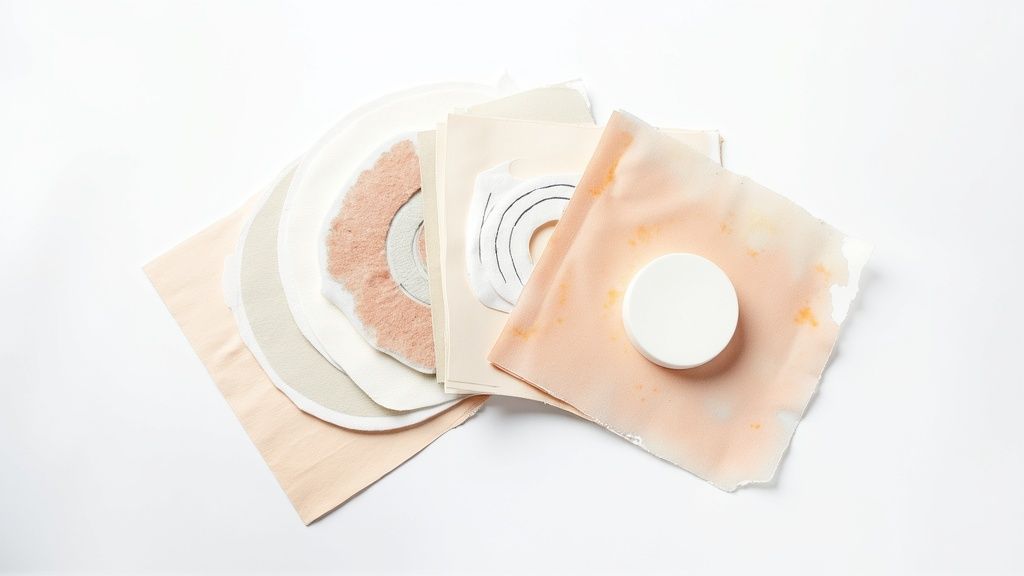
A top-down view of various ostomy care supplies and a cream container on a white surface.

Forget simple bandages. The advanced dressings we use today are the foundational tools of modern wound management, acting less like passive covers and more like active participants in the healing process. Think of each one as a tiny, specialized engine designed to create the perfect environment for cells to do their work.

At the heart of every dressing choice is a single, critical concept: moisture management. A wound bed that’s too dry stalls healing because cells can't move and multiply. On the flip side, a wound that's too wet can macerate—or break down—the healthy skin around it. The right dressing is a master regulator, either adding or absorbing moisture to hit that perfect "not too wet, not too dry" sweet spot.

Matching the Dressing to the Wound Need

Choosing the right dressing isn't a guessing game; it's about reading the wound's needs and responding with the right tool. This quick-reference table breaks down the most common dressing categories by what they do best, helping you match the product to the problem.

Dressing Type Primary Function Ideal For (Wound Characteristics) Clinical Pro-Tip
Foams High Absorption Moderate to heavy exudate, pressure injuries, leg ulcers Provides excellent cushioning over bony areas. Some come with silicone borders for gentle adhesion.
Alginates Maximum Absorption Heavy exudate, deep or tunneling wounds, infected wounds Turns into a gel as it absorbs, making it easy to remove from deep cavities without leaving fibers behind.
Hydrocolloids Moisture Retention Light to moderate exudate, partial-thickness wounds, autolytic debridement Creates a "bubble" as it absorbs fluid, which is a visual cue that it's working. Don't mistake it for infection!
Hydrogels Moisture Donation Dry wounds, wounds with slough or eschar, painful wounds Excellent for hydrating a dry wound bed to soften dead tissue and promote natural debridement.
Transparent Films Protective Barrier Superficial wounds with no drainage, securing other dressings Allows for constant visual inspection of the wound or IV site without removing the dressing.
Collagen Scaffolding Stalled or chronic wounds that need a "kick-start" Provides a structural template to encourage new tissue growth where the body's own efforts have slowed.

Understanding these core functions is the first step toward building effective, individualized treatment plans that get real results.

High Capacity Sponges for Wet Wounds

When a wound is weeping or producing a lot of fluid—what we call exudate—the number one job is to manage that moisture. This is where the heavy lifters of the dressing world come in: foams and alginates. They are the high-capacity sponges in your toolkit.

  • Foam Dressings: These are champions of absorption. They pull excess fluid away from the wound and lock it inside their structure, protecting the wound bed and preventing the surrounding skin from getting soggy. They're my go-to for wounds with moderate to heavy drainage.

  • Alginate Dressings: Made from seaweed, alginates are incredibly absorbent. Their real magic happens when they come into contact with wound fluid—they transform into a soft gel. This feature makes them perfect for packing deep or tunneling wounds, as the gel conforms to the wound's shape and is simple to remove.

Smart Second Skins for Drier Wounds

On the other end of the spectrum are dry wounds or those with very little drainage. Here, the goal is to add moisture or trap what little the wound produces. That's a job for hydrocolloids and hydrogels.

You can think of a hydrocolloid dressing as a "smart second skin." Its gel-forming agents create an insulated, moist healing environment perfect for shallow wounds with light drainage, like early-stage pressure injuries. As it works, it forms that characteristic gel bubble over the wound, letting you know it's doing its job.

A hydrogel dressing, in contrast, is a "moisture donor." It's mostly water in a gel base and actively hydrates dry, sloughy wounds. This softens up dead tissue and encourages autolytic debridement, which is just the body's natural process for cleaning out a wound.

Your dressing choice is a direct response to what the wound bed is telling you. A heavily draining venous leg ulcer screams for an absorbent foam or alginate, while a dry eschar-covered wound needs the hydrating power of a hydrogel to facilitate debridement.

Specialized Tools for Specific Jobs

Beyond just managing moisture, some dressings are designed for very specific tasks. These are the niche players that can solve unique challenges.

Transparent Films are like putting a clear, protective window over a wound. They’re waterproof but breathable, allowing for constant visual checks without disturbing the site. I often use them to cover IV catheters or protect areas prone to friction.

Collagen Dressings serve as a biological scaffold. Sourced from bovine or porcine tissue, they give the body a structural framework, encouraging its own cells to migrate and rebuild. These are invaluable for chronic wounds that have stalled, essentially providing a blueprint to get the repair process back on track.

Activating Healing with Biologics and Active Therapies
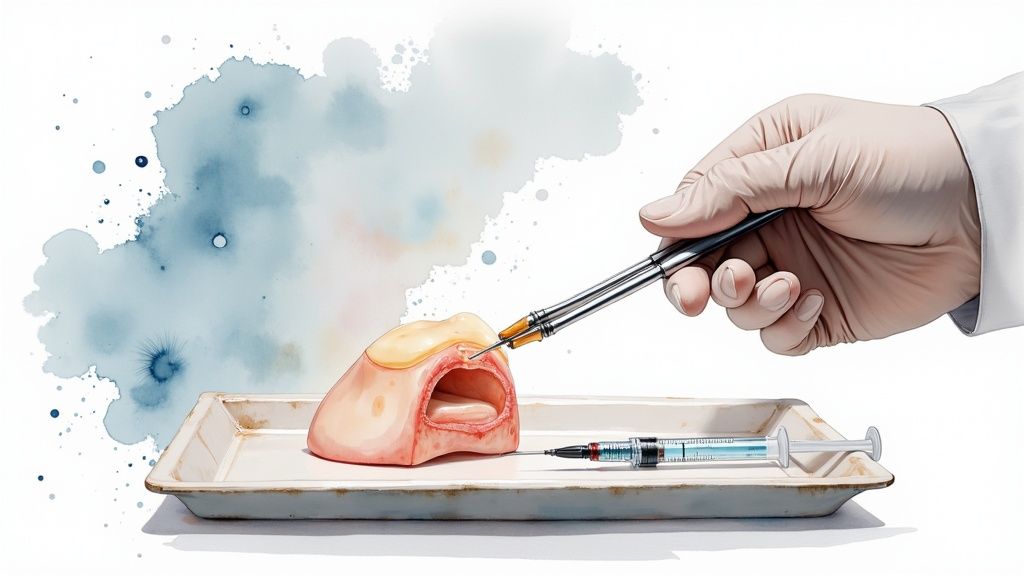
A gloved hand holds a medical instrument interacting with a biological tissue model on a tray.

When a wound just won't heal, even with excellent standard care, it’s a clear sign the body's own repair crew has clocked out. This is exactly where we bring in the specialists: advanced biologics and active therapies. These aren't just passive dressings; they are the best wound care products for actively signaling the body to get back on the job.

Think of a chronic wound as a construction site that’s been abandoned. The workers have gone home, and the blueprints are nowhere to be found. Biologics step in like a new foreman with a fresh set of plans, providing the missing signals and structures the body needs to start building healthy tissue again.

This strategic shift is making waves across the industry. The advanced wound care market, valued at USD 15.6 billion in 2024, is expected to soar to USD 27.5 billion by 2034. This explosive growth isn't just about numbers; it reflects a clinical reality where active treatments are solving the toughest healing challenges. For a deeper dive into this market expansion, check out the analysis at gminsights.com.

Providing a Scaffold for New Growth

One of the main jobs of a biologic is to lay down a structural foundation—a scaffold—for new cells to build upon. In a wound that's been open for a long time, the body's natural matrix has often broken down and become useless.

  • Collagen Matrices: Often made from bovine or porcine sources, these dressings place a purified collagen framework right into the wound bed. This structure acts like a welcome mat, inviting the body’s own fibroblasts to move in and start weaving new, healthy tissue.

  • Cellular and Tissue-Based Products (CTPs): This is the next level. CTPs often contain living cells and growth factors embedded within a biological scaffold. Amniotic allografts are a fantastic example, providing a nutrient-rich matrix that kickstarts cellular attachment and tissue regeneration.

These products are game-changers for stalled diabetic foot ulcers or venous leg ulcers, where the body’s own construction capabilities are seriously compromised.

The Importance of a Clean Foundation

Here’s the thing about these powerful therapies: they need a clean worksite. Applying a high-cost biologic to a wound covered in dead tissue (slough or eschar) is like trying to build a house on a pile of rubble. It just won’t work. Meticulous wound bed preparation is non-negotiable.

Biologics are the "finish carpenters" of wound care. They require a clean, viable, and well-prepared worksite to be effective. This means the wound must be thoroughly debrided and free of significant bioburden before these therapies are applied.

Skipping this crucial first step wastes the investment in the product and, more importantly, robs the patient of a critical opportunity to heal.

When to Escalate to Active Therapies

Pulling the trigger on a biologic is a strategic clinical decision, not a first-line defense. It's time to consider escalating to these active therapies when a wound hits these specific benchmarks:

  1. Failure to Progress: The wound hasn’t shrunk by 40-50% after four weeks of good, standard wound care.
  2. Clean Wound Bed: The wound is clear of necrotic tissue and has been optimized for moisture and bioburden.
  3. Addressed Underlying Issues: Key problems like poor circulation, uncontrolled blood sugar, or inadequate pressure offloading have been managed.

For example, a diabetic foot ulcer that remains stagnant despite proper offloading and advanced dressings is a perfect candidate for a product like a dual layer allograft that can force a "reboot" of the healing process. These therapies jump-start repair where the body’s own efforts have failed, offering a clear path forward for even the most difficult wounds.

Getting Active with Technology: NPWT and Other Devices

Beyond dressings that passively manage the wound environment, technology gives us a much more hands-on way to encourage healing. Advanced devices are some of the best tools in our wound care arsenal because they physically manipulate the wound bed, pushing the repair process forward in ways a simple dressing just can't.

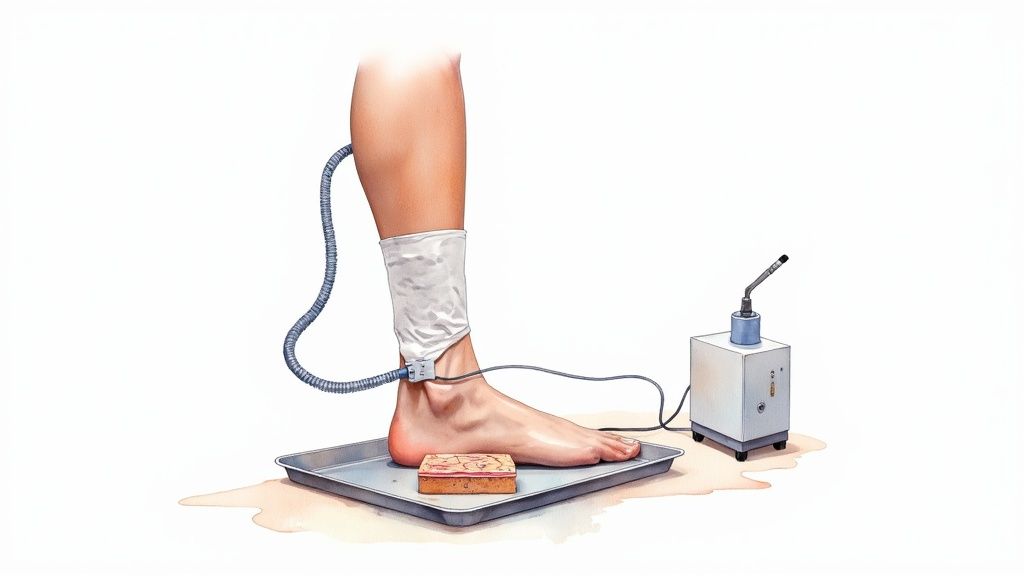
At the top of this list is Negative Pressure Wound Therapy (NPWT). Picture a wound as a tiny, disorganized construction site. Debris and excess fluid are everywhere, slowing the whole project down. NPWT acts like a highly specialized, gentle vacuum, creating a sealed, controlled environment right over the wound.

This "healing vacuum" is a master multitasker. It constantly pulls away excess fluid (exudate) and infectious material, which immediately lowers the bacterial burden. At the same time, the negative pressure physically draws the wound edges closer, shrinks swelling (edema), and powerfully stimulates the growth of new, healthy granulation tissue.

When to Bring in the NPWT System

NPWT is a heavy hitter, so we reserve it for specific situations where its unique power can make the biggest difference. It’s the go-to choice for large, complex, and deep wounds that are producing a lot of fluid.

You'll often see clinicians turn to NPWT for:

  • Deep surgical wounds or incisions that have split open (dehisced).
  • Acute and traumatic wounds that demand intensive management from the start.
  • Stage 3 and 4 pressure injuries where there's been significant tissue loss.
  • Diabetic foot ulcers and other chronic wounds that have stalled and aren't healing.

This kind of technology is a huge deal in our field. The wound care market is projected to swell from a 2024 baseline of around USD 22.85 billion to nearly USD 40.85 billion by 2035, and that growth is being pushed by the proven clinical success of high-value systems like NPWT. You can get a closer look at the companies and trends shaping this market over at sphericalinsights.com.

Critical Times Not to Use NPWT

Knowing when to use NPWT is only half the battle; knowing when not to is just as crucial. Applying negative pressure in the wrong scenario is downright dangerous and can cause serious harm.

Negative Pressure Wound Therapy is an active intervention, not a passive dressing. You absolutely cannot use it if there's malignancy in the wound, untreated osteomyelitis (bone infection), non-enteric or unexplored fistulas, or over exposed blood vessels or organs.

Another huge mistake is applying NPWT over dead, leathery tissue (necrotic tissue with eschar). The wound bed must be cleaned out and properly debrided before starting the therapy. This ensures the negative pressure can actually stimulate the healthy tissue underneath.

Beyond the Vacuum: More Game-Changing Devices

While NPWT might be the most well-known device, it’s not the only piece of tech transforming how we manage wounds. A whole suite of other tools now gives clinicians invaluable data and treatment options, finally moving wound care from a subjective art to an objective science.

  • Ultrasonic Debridement Tools: These devices use low-frequency ultrasound waves to meticulously lift away dead tissue, slough, and bacteria. This method is often less painful than sharp debridement and is incredibly effective for cleaning up wounds with complex surfaces.
  • Tissue Perfusion Scanners: How do you know for sure if a wound is getting enough oxygenated blood to heal? These scanners use technologies like spectroscopy to give us real-time, non-invasive measurements of blood flow and oxygenation in the tissue around the wound.
  • Advanced Imaging Devices: Modern tech lets us see what the naked eye misses completely. For example, fluorescence imaging devices can pinpoint the exact location of high bacterial loads in a wound, which guides us to debride and sample with much greater precision. Our guide on a point-of-care wound imaging device explains exactly how this helps clinicians make smarter decisions right at the bedside.

These technologies give us a constant stream of objective data we simply never had before. By measuring blood flow, visualizing bacteria, and precisely removing non-viable tissue, these devices empower clinicians to make smarter, evidence-based decisions. They help us understand why a wound isn't healing and point us directly to the best products and therapies to get things back on track.

Building Your Wound Product Selection Framework

Knowing the individual tools is one thing; building the machine is another. This is where theory meets practice, where we create a repeatable framework for choosing the best wound care products for the right patient, every single time. It's a systematic process that moves beyond just looking at the wound to consider the whole person.

The process kicks off with a thorough evaluation of the wound itself. You have to become a detective, piecing together clues from its appearance, location, and behavior. This initial assessment guides your entire strategy, ensuring your product choice directly addresses the immediate problem stalling the healing process.

From there, the framework expands to include patient-specific factors. Let's be honest—a clinically perfect product is useless if it doesn't fit into the patient's lifestyle, abilities, or overall health status. This holistic view is the secret to creating treatment plans that are not just effective, but actually sustainable in the real world.

Starting with the Wound Itself

Every wound tells a story. Your first job is to listen carefully and translate that story into a clear set of needs. This involves a multi-point assessment that forms the very foundation of your product selection.

  • Wound Type and Depth: Is it a shallow pressure injury or a deep surgical wound? The depth dictates the need for packing materials like alginates or the potential use of technologies like NPWT.
  • Exudate Level: Is the wound bed dry, moist, or heavily draining? This is probably the most critical question for dressing selection. A dry wound needs a hydrogel to donate moisture, while a weeping wound needs an absorbent foam to manage it.
  • Bioburden and Infection: Are there signs of a high bacterial load or clinical infection? This might point you toward an antimicrobial dressing or a cleanser like hypochlorous acid to prep the wound bed properly.

This simple decision tree shows a common clinical thought process for deep, complex wounds.
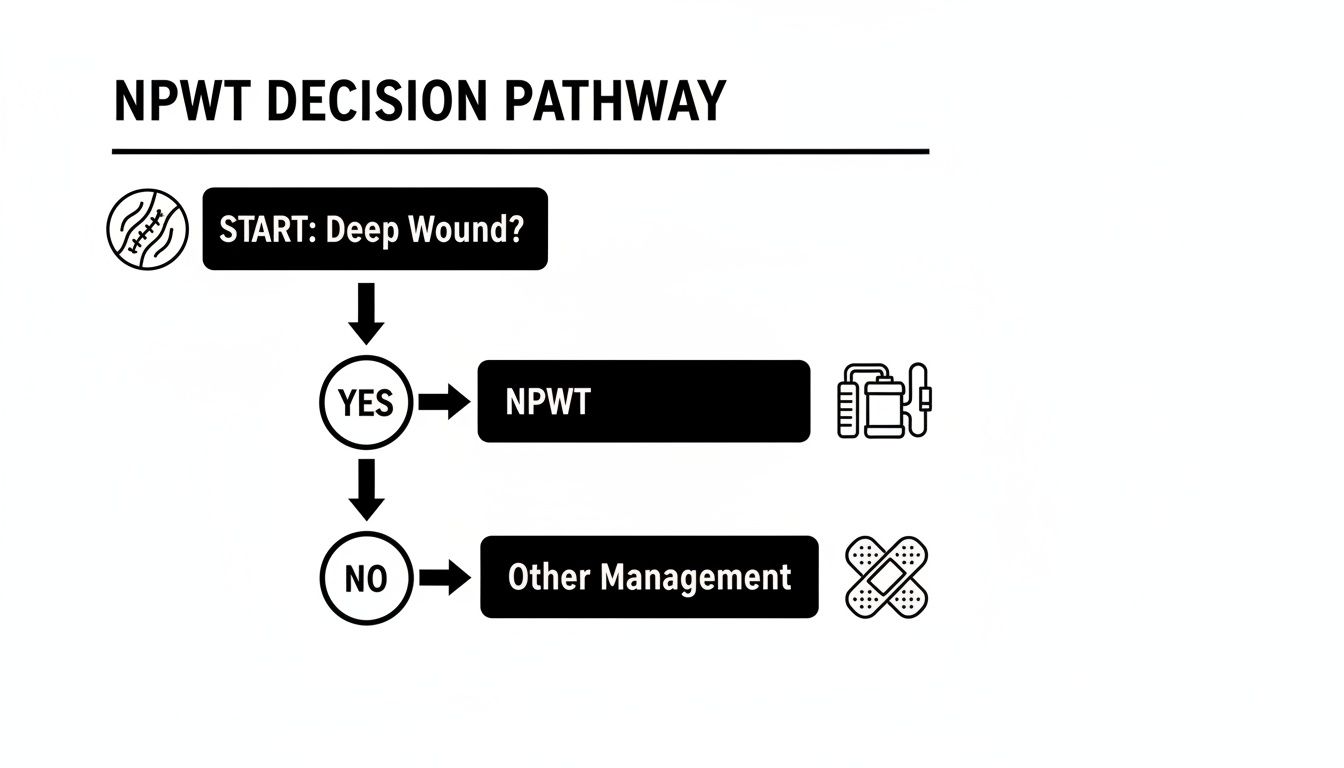
Decision pathway flowchart for NPWT based on whether a wound is deep or not.

As you can see, a single characteristic—in this case, wound depth—can immediately steer treatment toward or away from advanced devices like NPWT.

Connecting the Product to the Healing Goal

Your product choice must be directly tied to the current phase of healing. The goal for a wound covered in dead tissue is completely different from the goal for one filled with healthy, new granulation tissue.

Choosing a product is an active intervention, not just a passive cover. You are selecting a tool to achieve a specific, immediate objective: debride, granulate, or epithelialize.

For example, if the primary goal is debridement (clearing out non-viable tissue), your best options are products that help with that, like hydrogels or hydrocolloids that support autolytic debridement. If the goal is to promote granulation (filling the wound with new tissue), you might reach for a collagen dressing or even consider NPWT.

Expanding the View to the Patient

The wound doesn't exist in a vacuum. The patient’s overall condition plays a massive role in both their healing potential and your product selection. Overlooking these factors is a common reason why technically "correct" treatment plans end up failing.

Think through these key patient-centered questions:

  1. What are their comorbidities? Conditions like diabetes or peripheral artery disease severely impact healing and absolutely must be managed at the same time.
  2. How is their nutrition? A patient who isn't getting enough protein simply can't build new tissue. Nutritional support, like protein shakes or specialized drink mixes, can be just as important as the dressing you choose.
  3. What is their mobility and support system? Can the patient or a caregiver realistically manage complex dressing changes? Ease of use and wear time become critical factors for success at home.

Addressing the Practical Realities of Care

Finally, a truly effective framework has to acknowledge the practical hurdles of healthcare. Cost-effectiveness and reimbursement aren't secondary concerns; they are central to whether a patient can access and continue their treatment.

When building a comprehensive plan, it's also smart to integrate secure patient communication strategies. For instance, using a HIPAA compliant chatbot can help manage data and coordinate care securely. After all, a product choice that isn't covered by insurance or is prohibitively expensive is not a viable solution.

By systematically working through these layers—from the wound bed to the patient's life to the healthcare system—you move from simply picking products to designing intelligent, empathetic, and effective wound care strategies that deliver real results.

Common Questions About Wound Care Product Selection

Even the most experienced clinicians can feel swamped by the sheer volume of wound care products on the market. With new options popping up all the time, it's natural to have questions when you're standing at the bedside trying to make the right call.

Let's cut through the noise. Here are some direct, experience-driven answers to the questions we hear most often in the field. Think of this as a practical guide to help you turn your clinical knowledge into confident, real-world decisions for your patients.

How Do I Choose Between So Many Different Wound Dressings?

It's easy to get lost in the weeds here, but you can simplify things dramatically by asking one core question: What does this wound need right now? More specifically, think of yourself as a moisture regulator for the wound bed. Is it too wet, or is it too dry?

Your answer will immediately rule out dozens of options and point you in the right direction.

  • Is the wound draining heavily? You need something that absorbs. Think of high-capacity options like a foam dressing or an ultra-absorbent alginate to pull that excess fluid away from the wound and protect the surrounding skin from getting waterlogged.

  • Is the wound bed dry and struggling? It needs moisture. A hydrogel dressing is your go-to here. It actively donates hydration to soften up dead tissue and create the perfect environment for healthy new cells to get to work.

  • Are you trying to protect fragile new tissue? Be gentle. A dressing with a silicone adhesive border offers a secure barrier that won't tear away all your hard-earned progress when you change it.

It all comes down to matching the dressing’s primary job to the wound's most immediate need.

When Should I Consider Advanced Therapies Like Biologics or NPWT?

Think of these as your heavy hitters. You don't bring them in for every situation, but they are absolutely essential for wounds that are "stuck" and just aren't moving forward despite solid, consistent standard care.

Negative Pressure Wound Therapy (NPWT) is a fantastic choice for those big, deep, and heavily draining wounds—think of a dehisced surgical incision or a significant pressure injury. It's a workhorse that actively manages the wound environment while stimulating new tissue growth, making it perfect for complex cases.

Biologics, like amniotic allografts, are a different tool for a different job. They shine in chronic wounds, such as stubborn diabetic foot ulcers. You bring them in when the wound bed is clean and well-prepped but just seems to have forgotten how to heal. Biologics essentially reboot the healing process at a cellular level, providing the signals needed to finally close the gap.

What Is the Most Common Mistake in Product Selection?

The single biggest mistake we see is a "set it and forget it" mentality. Wound healing is a dynamic process; what a wound needs this week can be completely different from what it needed last week.

The perfect dressing for absorbing heavy drainage last Monday might be the very thing drying out the wound bed and stopping healing this Friday. That’s why you have to reassess the wound at every single dressing change.

If you aren't adjusting your plan based on what the wound is telling you, you risk stalling out or even going backward. The best product is always the one that meets the wound's needs today.

How Do Cost and Reimbursement Factor into My Choice?

In the real world, cost isn't just a factor; it's a massive one. The most clinically advanced product is useless if the patient or facility can't get it paid for.

You have to be a pragmatist. Always know your facility's approved formulary and what the patient's insurance will actually cover. Sometimes, a more affordable, traditional dressing that can be changed as often as needed is a far more effective real-world solution than a pricey advanced product that isn't covered or gets used too sparingly to cut costs.

A truly successful treatment plan works both clinically and financially. Balancing those two realities is one of the most critical skills any wound care provider can have.


At Specialty Wound Care, we know that choosing the right product is just one piece of the puzzle. Our teams bring together advanced diagnostics, biologics, and evidence-based protocols to build individualized treatment plans that address every angle of the healing process. Find out how our comprehensive approach can help your patients achieve better, faster outcomes by visiting https://specialtywoundcare.com.

Staying Ahead in Specialty Wound Care: Embracing Innovations for Professional Growth

Specialty Wound Care | December 16th, 2025


Staying Ahead in Specialty Wound Care: Embracing Innovations for Professional Growth

Wound care innovations are reshaping how we treat complex wounds every day. If you’re not keeping up, your practice might miss vital advances that improve healing and patient outcomes. This post highlights key specialty wound care breakthroughs like MolecuLight DX and triple-layer allografts—and shows how staying current sharpens your wound care expertise and professional development in healthcare. Explore our latest resources and training opportunities to stay at the forefront of wound care innovation by visiting Wound Care University.

Importance of Staying Current

In today’s fast-paced medical field, keeping up with new developments is crucial. As a healthcare professional, staying informed translates to better care and outcomes for your patients.

Enhancing Patient Outcomes

Focusing on the latest in wound care can dramatically boost patient recovery. New technologies and treatments allow for quicker healing times. For example, studies show that using advanced wound care methods can reduce healing time by 30%. This means your patients get back to their daily lives faster, which enhances their overall well-being. It’s not just about healing wounds; it’s about improving lives. You’re not just using the latest tools—you’re delivering hope and reassurance to those in your care.

Professional Development in Healthcare

Keeping your skills sharp is essential for your career growth. Engaging with the latest training not only enriches your practice but also positions you as a leader in your field. Imagine being the go-to expert in your area for advanced wound healing. This reputation is built through continuous learning and adopting the best practices. By staying current, you set a standard for excellence that others will follow, enhancing your professional standing and opening new doors in your career.

Innovations in Wound Care

Cutting-edge technologies and solutions are transforming wound care. Let’s dive into two key innovations that are making waves in the industry.

MolecuLight DX Technology

MolecuLight DX revolutionizes how wounds are assessed. This tool provides real-time imaging, helping you identify bacterial hotspots with ease. Visual cues allow for targeted treatment, ensuring more precise outcomes. Imagine reducing complications because you can see what others can’t. This device also facilitates documentation, making your work more efficient. The result? Less guesswork, more informed decisions, and improved patient care.

Triple-Layer Allograft Solutions

Triple-layer allografts represent a breakthrough in scaffold technology. These allografts mimic the body’s natural healing processes, offering a scaffold that promotes tissue regeneration. For wounds that are hard to heal, this solution can make all the difference. You’ll find that using these allografts can speed up recovery time, providing your patients with much-needed relief. They’re not just a treatment; they’re a promise of recovery, approved by both the FDA and AATB for your peace of mind.

Resources for Continued Growth

To stay ahead, tapping into educational resources is key. Fortunately, there are many opportunities to expand your knowledge and skills in wound care.

Healthcare Professional Training Opportunities

Training is essential for keeping up with the latest advancements. Courses and certifications in wound care provide valuable insights and skills. Websites like Skilled Wound Care offer a range of options tailored to your needs. By investing in your education, you not only enhance your practice but also improve patient outcomes. This commitment to learning ensures that you remain at the forefront of your field.

Upcoming Webinars and Events

Webinars and conferences, such as those hosted by HMP Global, are excellent ways to stay informed about the latest trends and innovations. These events offer opportunities to network with industry leaders and peers. You’ll gain insights into new technologies and strategies that can be immediately applied in your practice. Attending these events demonstrates your commitment to excellence and positions you as a forward-thinking professional in wound care.

Uncategorized

A Clinicians Guide to Wound Debridement Techniques

Primus Healthcare | December 16th, 2025


Wound debridement isn't just a procedure; it's the fundamental first step toward healing. Think of it as clearing a construction site before laying a new foundation. We’re removing all the dead, damaged, or infected tissue from a wound so the body’s own healing mechanisms can finally get to work.

By clearing out this biological debris, debridement helps reduce infection risk and perfectly prepares the wound for advanced therapies. Without a clean wound bed, even the most advanced treatments will struggle to be effective.

The Evolution of Wound Debridement

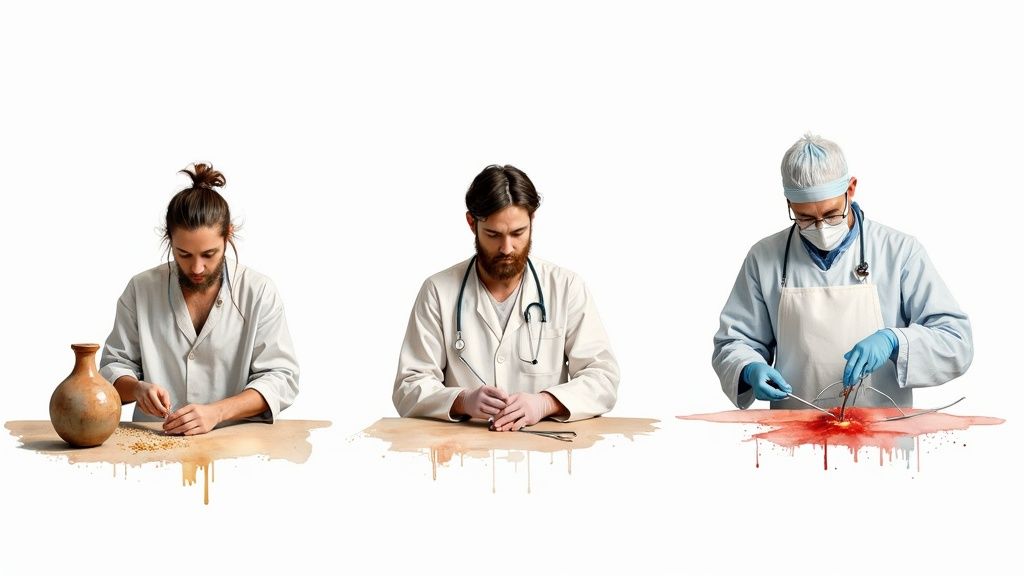
Artistic depiction of wound care evolution: traditional preparation, clinical tool use, and surgical debridement.

The idea of cleaning a wound to help it heal is as old as medicine itself, refined over thousands of years through sheer necessity. To really get why we use today’s specific debridement techniques, it helps to look back at where it all started. This journey from simple wound washing to precise, evidence-based protocols has always been driven by one goal: preparing the wound for a successful recovery.

It’s like trying to grow a garden in soil choked with weeds and rocks. No amount of water or fertilizer will help if the seeds can't reach fertile ground. A wound filled with non-viable tissue is exactly the same. Early healers knew this instinctively and developed methods to clear the "soil" of the wound bed.

Ancient Roots of Wound Care

The practice of cleaning wounds goes back over 5,000 years. Around 3000 BCE, the Sumerians were already documenting detailed wound treatments, creating plasters from things like beer, turpentine, and pine resin. For them, beer wasn't just for drinking; they had 19 different types specifically for healing.

The ancient Egyptians took things a step further, creating adhesive bandages and using honey-grease-lint plasters. The honey was a powerful antibacterial agent, and the lint helped draw fluid away from the wound—one of the earliest systematic approaches to cleaning and managing the wound environment. You can learn more about how surprisingly effective these ancient medical practices were.

“The fundamental principle of wound debridement—removing barriers to allow healing—has remained constant through history. What has changed is our understanding of the science behind it and the precision of our tools.”

This history is important. It shows that controlling the wound environment has always been at the heart of patient care, setting the stage for the scientific breakthroughs that would follow.

The Battlefield Forges Modern Debridement

The real leap from ancient art to modern science happened on the battlefield, where severe trauma created an urgent need for better solutions. Through the 19th century, surgeons started to formalize the removal of dead tissue, but high infection rates meant outcomes were still grim.

Then came pioneers like Carl von Reyher during the Russo-Turkish War. He didn't just cut away damaged tissue; he combined it with the antiseptic principles of Joseph Lister. This dual approach—aggressively cleaning the wound and preventing new bacterial growth—was a game-changer.

By applying this method, Reyher saw a stunning 43% drop in mortality rates compared to earlier battlefield treatments. His success proved just how critical aggressive debridement was, cementing its place as a standard of care in both military and civilian medicine. This history is a powerful reminder that today's debridement techniques were forged through centuries of trial, error, and life-saving innovation.

Why Debridement Is Critical for Wound Healing

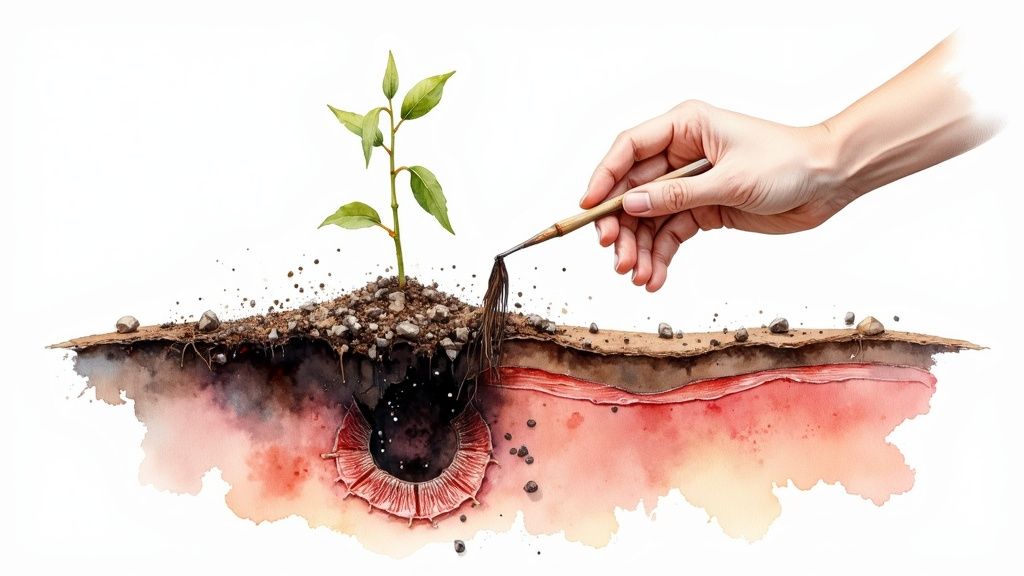
Watercolor illustration of a hand debriding a subsurface wound beneath a growing plant.

To grasp why wound debridement is so fundamental, think of a neglected garden. It’s choked with weeds, dead plants, and debris. No matter how much you fertilize or water, new life can't take root until you clear the soil. A chronic wound is much the same.

A wound bed covered in non-viable tissue is a wound that's stuck. This buildup of necrotic tissue, slough, or eschar creates a physical wall, stopping healthy new cells from migrating across the surface to close the gap. But it's not just a passive barrier; it actively sabotages the healing process.

Removing the Barriers to Healing

The main goal of any debridement technique is to get rid of these roadblocks. Necrotic tissue isn’t just dead weight—it’s a five-star buffet for bacteria. This non-viable material provides an endless food source for pathogens, helping them multiply and form stubborn communities called biofilms.

Biofilms are a major problem in wound care. They create a slimy, protective shield that makes bacteria incredibly resistant to both the body’s immune defenses and antibiotics. This persistent bacterial presence, or high bioburden, locks the wound in a state of chronic inflammation, preventing it from ever moving forward into the rebuilding phases of healing.

By physically removing the dead tissue and biofilm, debridement breaks the bacterial stronghold, dials down inflammation, and essentially hits the "reset" button on the wound. This clears the way for the body’s natural healing cascade to finally get to work.

This is why we see debridement as an active, therapeutic procedure, not just a simple cleaning step.

Enabling Accurate Assessment and Treatment

Another crucial role of debridement is that it allows clinicians to see what’s really going on under the surface. A wound buried under thick eschar is like a house with the curtains drawn—you have no idea what’s happening inside.

Clearing away the surface debris is the only way to:

  • Accurately measure the wound: Clinicians can finally determine the true depth, width, and overall volume.
  • Visualize underlying structures: It reveals if any bone, tendon, or other vital tissues are exposed and need protection.
  • Assess tissue viability: Debridement makes it possible to distinguish healthy, pink granulation tissue from unhealthy, compromised tissue.

This clear view is absolutely vital for staging the wound correctly and choosing the right treatment path. Without it, clinicians are essentially flying blind. Accurate assessment also depends on knowing which specific pathogens are present, and you can learn more about how advanced pathogen detection can guide treatment by providing fast, precise answers.

Ultimately, debridement prepares the wound bed for everything that comes next. Whether the plan involves a simple dressing or an advanced therapy like a skin graft, success hinges on a clean, healthy, and receptive wound environment. Debridement is the essential first step that makes all other care possible, converting a chronic, stalled wound into an acute wound that is ready to heal.

Exploring the Five Types of Wound Debridement

Wound debridement isn't a one-size-fits-all procedure. It’s actually a spectrum of specialized techniques, and knowing which one to use is a lot like a skilled tradesperson choosing the right tool for the job. You wouldn't use a sledgehammer where a fine-tipped brush is needed. The best approach depends entirely on the wound's condition, the patient's overall health, and the clinical goals we're trying to achieve.

The five primary methods—surgical, enzymatic, autolytic, mechanical, and biological—each offer a unique way to clear the wound bed. Let's break down how they work and when to use them.

Surgical and Sharp Debridement: The Gold Standard for Speed

When speed is critical, surgical and sharp debridement are the go-to methods. These are often seen as the most aggressive options, where a qualified clinician uses sterile instruments like a scalpel, curette, or scissors to physically cut away dead or infected tissue.

Think of it like a sculptor carefully chipping away stone to reveal the healthy form underneath. A clinician does the same, precisely removing tough eschar and necrotic debris to expose the healthy, bleeding granulation tissue that signals a viable wound bed. This technique is invaluable for clearing large amounts of devitalized tissue or when an infection is spreading fast.

Its roots trace back to military medicine, where quick, decisive action saved lives. The term was popularized by Carl von Reyher in the late 19th century, whose battlefield work transformed medical practice. By combining debridement with antiseptics, he achieved a staggering 43% drop in mortality rates—a landmark achievement that proved the power of aggressive wound cleaning. That legacy continues today, with sharp debridement used in over 70% of surgical cases, making it a cornerstone of modern wound care. You can learn more about the historical impact of debridement on patient outcomes in medical literature.

Enzymatic Debridement: Dissolving Debris Chemically

Enzymatic debridement takes a chemical approach. Instead of cutting, it uses prescribed ointments or solutions that contain enzymes to break down and liquefy necrotic tissue. The most common enzyme is collagenase, which specifically targets and digests the collagen fibers that anchor dead tissue to the wound bed.

Because it leaves healthy tissue alone, this method is far more selective than some mechanical options. It's a great choice for patients who can't tolerate a surgical procedure or for those in long-term care where daily application is more practical. The trade-off is time; it's a slow and steady process that requires patience and consistency.

Key Takeaway: Enzymatic debridement shines when a slower, more selective, and less painful approach is needed for wounds with moderate necrotic tissue. It's often used to prepare a wound for other methods or as a maintenance therapy.

Autolytic Debridement: Harnessing the Body's Own Power

Of all the methods, autolytic debridement is the most natural and gentle. It works by creating a moist wound environment, which lets the body's own enzymes and white blood cells (macrophages) do the work of breaking down and digesting devitalized tissue.

We achieve this by applying moisture-retentive dressings, such as:

  • Hydrocolloids: These form a gel over the wound, trapping moisture.
  • Hydrogels: These donate moisture to dry wounds, kicking off the autolytic process.
  • Transparent films: These trap the wound's own fluid, letting endogenous enzymes work their magic.

Because it leans on the body's innate healing capacity, autolytic debridement is incredibly selective and typically painless. It's perfect for patients with minor to moderate amounts of non-viable tissue who have a healthy immune system and good circulation. The only real downside is that it's the slowest of all debridement techniques.

Mechanical Debridement: Physical Force for Removal

Mechanical debridement uses physical force to remove debris from the wound surface, but it's often non-selective. This category covers several methods, all of which use some form of force to dislodge and clear away contaminants.

One of the oldest forms is wet-to-dry dressings. A moist gauze is placed in the wound, allowed to dry, and then pulled away, taking dead tissue with it. While it can be effective, this method is often painful and can accidentally remove healthy granulation tissue along with the necrotic debris.

Other mechanical methods include:

  • Wound Irrigation: Using a pressurized stream of saline to flush out loose debris.
  • Hydrotherapy (Whirlpool): Submerging the area in moving water to soften and wash away dead tissue.
  • Pulsed Lavage: A system that delivers a pressurized, pulsed stream of fluid combined with suction to remove the liquid and debris.

Because of the risk of harming healthy tissue, older methods like wet-to-dry dressings are falling out of favor, replaced by more selective alternatives.

Biological Debridement: Nature's Most Precise Surgeons

Biological debridement, better known as larval therapy or maggot debridement therapy (MDT), might sound unsettling, but it’s an incredibly precise technique. It uses medical-grade, sterile larvae of the green bottle fly. These tiny organisms are masters of precision, consuming only necrotic tissue and bacteria while leaving healthy tissue completely untouched.

The larvae work in three powerful ways:

  1. They secrete digestive enzymes that liquefy dead tissue, which they then ingest.
  2. Their secretions have antimicrobial properties that help reduce the wound's bacterial load.
  3. Their subtle movements on the wound bed can help stimulate the growth of new, healthy granulation tissue.

This method is remarkably effective for stubborn, non-healing wounds or those infected with antibiotic-resistant bacteria like MRSA. While it takes some getting used to for patients, it's a highly effective, painless, and well-established medical procedure.

Comparison of Wound Debridement Techniques

Choosing the right debridement method is a clinical decision based on a careful assessment of the wound, the patient, and the treatment goals. Each technique has its own profile of benefits and drawbacks.

The table below offers a quick, side-by-side comparison to help illustrate where each method shines.

Technique Selectivity Speed Pain Level Ideal For
Surgical/Sharp High (in skilled hands) Very Fast High (requires anesthesia) Large wounds, advancing infection, urgent cases.
Enzymatic High Slow Low / None Non-surgical candidates, long-term care settings.
Autolytic Very High Very Slow None Stable wounds with minimal debris, palliative care.
Mechanical Low / Non-selective Moderate Moderate to High Wounds with large amounts of loose debris.
Biological Very High Moderate Low (mild tingling) Non-healing wounds, antibiotic-resistant infections.

As you can see, there's a clear trade-off between factors like speed and selectivity. The fastest method, surgical debridement, requires immense skill and anesthesia, while the most selective and painless method, autolytic debridement, is also the slowest. Ultimately, a skilled wound care professional will often use a combination of these techniques over the life of a wound to achieve the best possible outcome.

How to Select the Right Debridement Technique

Choosing a debridement technique isn't about finding the single "best" method. It’s about picking the right one for the patient in front of you. Think of it like a master chef selecting the right knife: a heavy cleaver is perfect for tough jobs but useless for delicate garnishes.

In the same way, the right debridement method has to perfectly balance the wound's needs, the patient's overall condition, and the resources you have on hand. This is a careful clinical calculation, moving beyond just spotting dead tissue to seeing the whole picture. A successful outcome hinges on matching the technique to the specific goals for that patient at that exact moment in their healing journey.

The Three Pillars of Debridement Decisions

Every solid debridement choice rests on three pillars: the wound, the patient, and the clinical setting. Each one brings up a series of questions that steer you toward the safest, most effective option. If you neglect any one of these pillars, you risk a poor outcome or even creating new complications.

This systematic approach is what turns theory into confident, evidence-based action at the bedside. It provides a clear framework for making the best possible decision.

The flowchart below gives you a simplified decision tree, showing how a factor as basic as urgency can point you toward one technique over another.

Flowchart illustrating the wound debridement decision path from patient assessment to various treatment options.

As you can see, high-urgency situations—like a rapidly spreading infection—demand decisive action like sharp debridement. Lower-urgency cases give you the flexibility to use slower, more passive methods.

Assessing the Wound Itself

The wound’s own characteristics are your first and most crucial clue. The type, amount, and location of non-viable tissue will immediately narrow down your choices.

  • Urgency and Tissue Type: Are you dealing with thick, leathery eschar or signs of an advancing infection? If so, urgent sharp or surgical debridement is almost always the right call to get that threat under control, fast.
  • Infection Status: A clinically infected wound demands a rapid takedown of the bacterial load. Slower methods, like autolytic debridement, simply won't be aggressive enough to win that fight. Advanced tools can help you confirm your suspicions; for example, a point-of-care wound imaging device detects bacterial presence and can guide a more precise debridement strategy.
  • Wound Location: Debriding a wound near a major blood vessel, tendon, or prosthetic joint requires extreme precision. In these cases, highly selective and controlled methods like biological or enzymatic debridement might be the safer path.

Here’s a critical rule of thumb: before you debride any wound on a lower extremity, you must assess the vascular supply. Debriding an ischemic wound without adequate blood flow can make healing impossible, potentially creating a larger, more complex wound or even leading to amputation.

Considering the Patient and Their Environment

The patient is always more than just their wound. Their overall health, pain tolerance, and where they are receiving care play a massive role in choosing a debridement strategy that will actually work. A theoretically perfect plan is useless if the patient can't tolerate it or if it's not feasible in their environment.

For instance, a patient with a very low pain threshold or who is taking anticoagulant medication is likely not a good candidate for sharp debridement at the bedside. In that scenario, a gentler approach like enzymatic or autolytic debridement makes far more sense, trading speed for comfort and safety.

Ask yourself these key patient-centered questions:

  • Pain Tolerance: Can the patient handle a potentially painful procedure? If not, painless options like autolytic or biological debridement are the way to go.
  • Comorbidities: Does the patient have other health issues, like poor circulation or a compromised immune system, that could complicate healing or increase risk?
  • Care Setting: Is the patient at home, in a long-term care facility, or in a hospital? The available resources, the skill level of the clinicians, and the frequency of visits all dictate what is practical.

We know these techniques work. In major markets like the US and Europe, where chronic wounds affect 2% of the population (that's 6.5 million Americans every year), debridement has been shown to cut healing times by 20-50%. This is especially true when paired with the moist wound environments that revolutionized care back in the 1960s.

Pairing Debridement with Advanced Wound Therapies

Watercolor illustration of medical professionals examining a large wound, with a device emitting purple light for debridement.

Think of debridement not as the final step in healing, but as the critical opening act. It’s like preparing a garden plot before you plant anything valuable. You have to till the soil, pull the weeds, and clear out the rocks. Only then can you expect the seeds to take root and flourish.

In the same way, advanced wound therapies need a clean, viable wound bed to do their job. Debridement is the process that creates this ideal environment, essentially hitting the reset button on a chronic, stalled wound and making it biologically ready to heal. This partnership between clearing out the old and bringing in the new is the cornerstone of modern wound management.

Guiding Debridement with Diagnostic Tools

Precision is everything. We’ve moved past the days of relying solely on what the naked eye can see. Today’s diagnostic tools give us a detailed map of the wound environment, allowing for a much more targeted and effective approach to debridement.

Take fluorescence imaging, for example. These handheld devices use specific light wavelengths that make certain bacteria glow in real-time. By seeing the exact location and spread of high bacterial loads, we can perform sharp debridement with incredible accuracy, removing only the contaminated tissue while preserving healthy areas. It turns a subjective guess into an objective, guided procedure.

By integrating advanced diagnostics, clinicians can ensure their debridement efforts are focused precisely where they are needed most, maximizing the benefit of each intervention while minimizing trauma to the healing wound bed.

Preparing the Wound Bed for Advanced Therapies

Once the wound bed is properly debrided, it’s primed and ready for a range of powerful, advanced treatments. These therapies are potent, but they all depend on that clean slate to work their magic.

Some of the most common pairings include:

  • Negative Pressure Wound Therapy (NPWT): This therapy uses a vacuum to pull fluid from the wound and ramp up blood flow. It’s most effective on a clean wound bed, as any eschar or thick slough would just clog the system and block the benefits.
  • Cellular and Tissue-Based Products (CTPs): Think of these as advanced biological dressings, like skin substitutes or amniotic allografts, that introduce new cells and growth factors to jumpstart regeneration. Applying them to a non-debrided wound is like trying to plant seeds on concrete—the valuable cells have nowhere to go and nothing to integrate with.
  • Hyperbaric Oxygen Therapy (HBOT): This treatment floods the body with pure oxygen in a pressurized room to accelerate healing. Its effectiveness is multiplied when that oxygen-rich blood can get to a clean, well-vascularized wound bed that’s been cleared by debridement.

This focus on evidence-based practice marks a huge shift from older methods. A key breakthrough in the 1960s showed that moist wounds healed 50% faster than dry ones, which changed everything and led to the occlusive dressings we rely on today. Now, with over 5,000 products available—from alginates that can absorb 20 times their weight to bioengineered skins—proper wound bed preparation is more critical than ever.

When we use these advanced therapies, it’s vital to track their performance, which underscores the importance of outcome measurement in clinical practice. A well-debrided wound also creates the perfect surface for a dual-layer allograft to adhere properly and support tissue growth, bridging the gap between a clean wound and complete closure.

Common Questions About Wound Debridement

Even when you understand the different debridement techniques, it's natural to have practical questions about what to expect. Answering these common concerns is a huge part of managing expectations, keeping patients comfortable, and showing just how vital this step is for healing.

Let's walk through some of the questions we hear most often from both patients and clinicians.

Is Wound Debridement a Painful Procedure?

The honest answer? It depends entirely on the method we use.

Surgical or sharp debridement can definitely be painful, which is exactly why we always use local or topical anesthetics to make sure the patient is comfortable. Mechanical debridement can also cause some pain, especially when old dressings are removed from the wound bed.

On the other hand, autolytic and enzymatic debridement are usually painless because they work so slowly and selectively. Larval therapy might cause a mild tingling sensation, but that’s typically it. A good clinician will always talk through pain management options beforehand to make the whole process as comfortable as possible.

How Often Does a Wound Need Debridement?

The frequency really comes down to the wound's condition and the technique we've chosen. For a wound with a lot of necrotic tissue, we might start with an aggressive sharp debridement and then schedule regular follow-ups, often weekly, to keep it clean.

Many chronic wounds need what we call "maintenance debridement" to stop non-viable tissue and biofilm from building back up. With slower methods like autolytic debridement, the process is actually continuous with every single dressing change. We’ll assess the wound bed at every visit to decide if more debridement is needed to keep the healing on track.

A key takeaway is that debridement is not always a one-time event. For many chronic wounds, it becomes a recurring part of the care plan to keep the wound bed clean and progressing toward closure.

Can Debridement Make a Wound Worse?

When a trained professional performs debridement correctly, the benefits to healing are overwhelming. But like any medical procedure, there are some risks. If non-selective methods are used improperly, they can damage healthy granulation tissue and actually slow things down.

It's also absolutely critical to check a patient's vascular supply before performing sharp debridement on an ischemic limb, as this could accidentally create a much larger wound. A thorough assessment of both the patient and the wound is non-negotiable—it’s how we pick the right method and ensure the benefits far outweigh any potential risks. The goal is always to remove barriers, not create new ones.

The field is constantly improving, with newer approaches making traditional methods even better. For instance, Negative Pressure Wound Therapy (NPWT) can speed up debridement by 30-40%, while hyperbaric oxygen therapy helps 85% of wounds that just won't heal. Even ancient practices like larval therapy are making a comeback, clearing stubborn biofilms in just 72 hours and cutting treatment costs by 25%. You can read more about the evolution of wound care practices to see how far we've come.


At Specialty Wound Care, we pair precise debridement with the most advanced diagnostic and therapeutic tools available. Our goal is to create an optimal healing environment for every patient, reducing healing times and helping you return to your life. Learn more about our comprehensive approach to managing complex wounds.

Building Strong Provider Networks: Enhancing Patient Outcomes in Wound Healing

Specialty Wound Care | December 15th, 2025


Building Strong Provider Networks: Enhancing Patient Outcomes in Wound Healing

Building strong provider networks changes how wound healing happens. When healthcare professionals join forces, patient outcomes improve faster and with fewer complications. You’ll see how Specialty Wound Care’s collaborative model connects advanced wound care technologies with expert teams to make a real difference. Keep reading to learn why building these networks matters for your practice and your patients. For more information, you can follow this link.

Benefits of Provider Networks

Creating alliances in healthcare leads to significant benefits. When providers work together, patients feel the impact.

Enhancing Patient Outcomes

Effective networks mean better care for your patients. By sharing knowledge and resources, treatment becomes more efficient. For instance, many healthcare teams who collaborate see a 20% improvement in recovery times. Imagine the difference this can make for someone with a chronic wound! When you team up with others, patient satisfaction often increases, too. People are happier when they heal faster and face fewer complications.

In a shared network, you also have access to specialized expertise. This means you can offer advanced treatments that might not be available in smaller practices. A well-connected team can address complex cases that are otherwise challenging. For more insights on improving wound care outcomes, refer to patient education strategies.

Strengthening Wound Healing Practices

Improved practices in wound healing are another major benefit. When you join forces with others, you’re not just getting shared knowledge. You also get access to the latest research and technology. This can lead to better treatment strategies and protocols. The longer you avoid collaboration, the more you miss out on these advancements.

A network also means a support system. Facing challenges alone can be daunting, but with a team, solutions are easier to find. Most think they can achieve top results alone, but a network shows otherwise. Discovering new techniques and sharing tools strengthens your practice overall. Curious how to start building such a program? Check out how to build a wound management program.

Advanced Wound Care Solutions

Provider networks pave the way for advanced solutions. They unlock potential for cutting-edge treatments that transform patient care.

Cutting-edge Technology and Equipment

Advanced technology is crucial. Using tools like the MolecuLight DX provides clear insights into wound conditions. This device detects bacteria in wounds, helping you make informed decisions. Such advancements mean you can treat wounds more accurately.

With high-tech solutions, the care you offer is more effective. The MolecuLight DX, for example, not only finds bacteria but also captures images for monitoring progress. These tools make wound care a lot more precise. Many providers see a 30% reduction in treatment times when using advanced equipment. This not only benefits patients but also enhances your practice’s efficiency.

Comprehensive Allograft Solutions

Allografts provide another innovative solution. Our triple-layer allograft is designed to support tissue regeneration. It acts as a scaffold, assisting the body’s natural healing processes. This product is compliant with FDA standards, ensuring safety and reliability.

Using allografts can lead to faster recovery and fewer complications. They provide a protective barrier and promote tissue growth in challenging cases. Many facilities report improved patient outcomes when integrating allograft solutions into their treatment plans. By incorporating such comprehensive solutions, you give your patients the best chance at recovery.

Healthcare Collaboration Opportunities

Collaboration within healthcare opens doors for strategic growth. By forming alliances, practices can expand their reach and enhance services.

Building Strategic Partnerships

Strategic partnerships are the backbone of successful networks. By aligning with other healthcare providers, you can share resources and expertise. This collaboration often leads to improved patient care. For instance, most successful partnerships result in better treatment outcomes and operational efficiencies.

To build these partnerships, start by connecting with local providers. Sharing goals and visions can lay the groundwork for a fruitful collaboration. Engaging with others also brings diverse perspectives, leading to innovative solutions. If you’re looking for ways to start, check out tips on building a mobile wound care referral network.

Contacting Specialty Wound Care

Consider reaching out to Specialty Wound Care to explore collaboration opportunities. With their expertise, you can elevate your practice’s wound care offerings. They specialize in cutting-edge treatments and equipment designed to improve patient outcomes.

The team at Specialty Wound Care is ready to assist in forming strategic alliances. By partnering with them, you gain access to advanced technology and comprehensive solutions. Whether it’s integrating new equipment or exploring training opportunities, their support can be invaluable. Contacting them is your first step towards enhancing your practice and delivering superior care to your patients.

How to Prevent Diabetic Foot Ulcers: Essential Tips for Daily Foot Care

Primus Healthcare | December 15th, 2025


When it comes to preventing diabetic foot ulcers, nothing beats a consistent, proactive daily foot care routine. This isn't optional; it's a non-negotiable habit. For many of my patients, this simple, five-minute practice is the line in the sand between lasting foot health and a serious, life-altering complication.

The daily trifecta is inspection, cleansing, and moisturizing.

Building Your Daily Foot Protection Routine

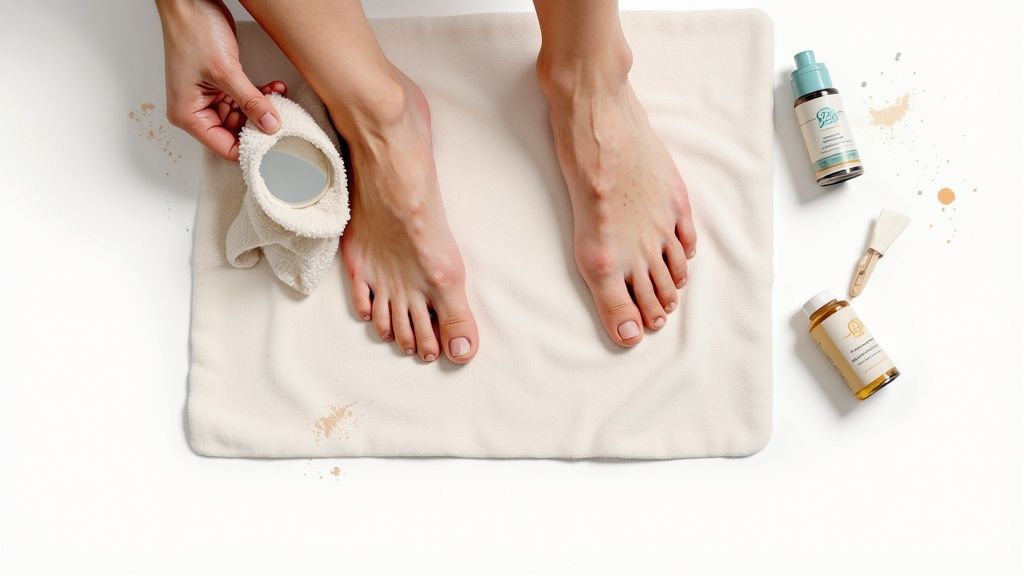
A person's feet on a light mat with hands holding a mirror for foot care products.

The real foundation of ulcer prevention isn't found in a high-tech medical procedure. It's built in the quiet, consistent habits you form at home. With diabetes, especially if neuropathy has dulled your ability to feel pain, a tiny problem can escalate into a major threat almost overnight. A dedicated daily routine makes you the first line of defense.

Think of it as your personal "3-minute drill" for limb preservation. It’s a moment to check in with your body and catch trouble before it ever gets a foothold. For those who might struggle with self-care due to mobility issues or other health challenges, understanding what a home health aide is can open up new avenues for maintaining this crucial daily routine and overall wellness.

The Art of the Daily Inspection

Your eyes are your most powerful tool. Since diabetic neuropathy can completely mask injuries, a thorough visual check is the only way to catch issues you literally cannot feel. This isn't just a quick glance; it requires a systematic approach.

  • Good Lighting is a Must: Sit in a well-lit room where you can see every part of your feet without shadows.
  • A Mirror is Your Best Friend: An unbreakable, long-handled mirror is perfect for examining the bottoms of your feet and heels—areas that are otherwise impossible to see on your own.
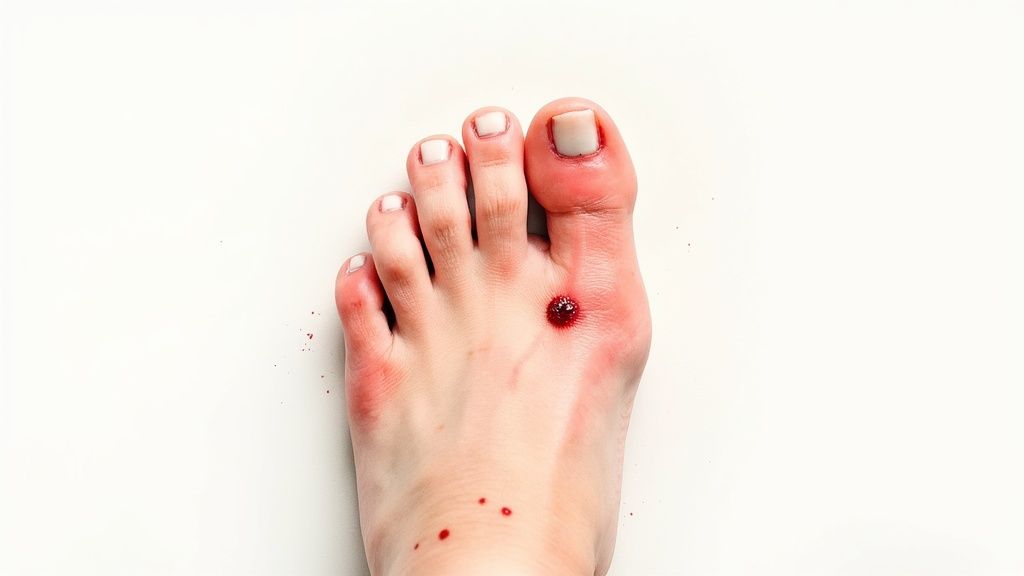
  • Check Everywhere: Look for anything out of the ordinary—blisters, cuts, scratches, redness, or swelling. Pay special attention to the areas between your toes, a common spot for moisture to build up and cause skin breakdown.
  • Feel for Temperature Changes: Use the back of your hand to check for any spots that feel unusually hot or cold. A "hot spot" can be a sign of inflammation or a budding infection long before you see anything.

This daily check is your personal early warning system. Finding a small red spot or a blister today means you can address it immediately, stopping it from ever becoming a dangerous ulcer.

Proper Washing and Drying Techniques

Good hygiene isn't just about being clean; it's about creating an environment where your skin can thrive and fight off infection. Washing your feet the right way is a huge part of ulcer prevention.

Always use lukewarm water—never hot—and a mild soap. If you have neuropathy, you might not realize the water is hot enough to cause a burn. After washing, the drying process is arguably the most critical step.

The spaces between the toes are especially vulnerable to fungal infections and skin breakdown if they stay damp. Gently pat your feet dry with a soft towel, taking extra care to dry thoroughly between each and every toe.

Moisturizing for Skin Integrity

Dry, cracked skin is like leaving the door wide open for bacteria. Moisturizing every day helps maintain a strong, flexible skin barrier that is far less likely to break.

Apply a thin layer of a podiatrist-approved lotion or cream to the tops and bottoms of your feet. But there's one crucial exception: never put lotion between your toes. The extra moisture trapped in that area can encourage fungal growth, creating the exact problem you're trying to prevent.

Nail Care That Prevents Problems

I've seen it countless times: improper nail trimming is a frequent cause of ingrown toenails, which can get infected and quickly lead to an ulcer. The right technique is simple but absolutely vital.

  • Cut your toenails straight across.
  • Don't cut them too short or try to round the corners.
  • Use an emery board to gently file any sharp edges.

If you have thick nails, poor eyesight, or just have trouble reaching your feet, it is much, much safer to have a podiatrist trim your nails. This simple appointment removes a major risk factor and is a smart investment in your health.

Why Your Choice in Footwear Is a Medical Decision

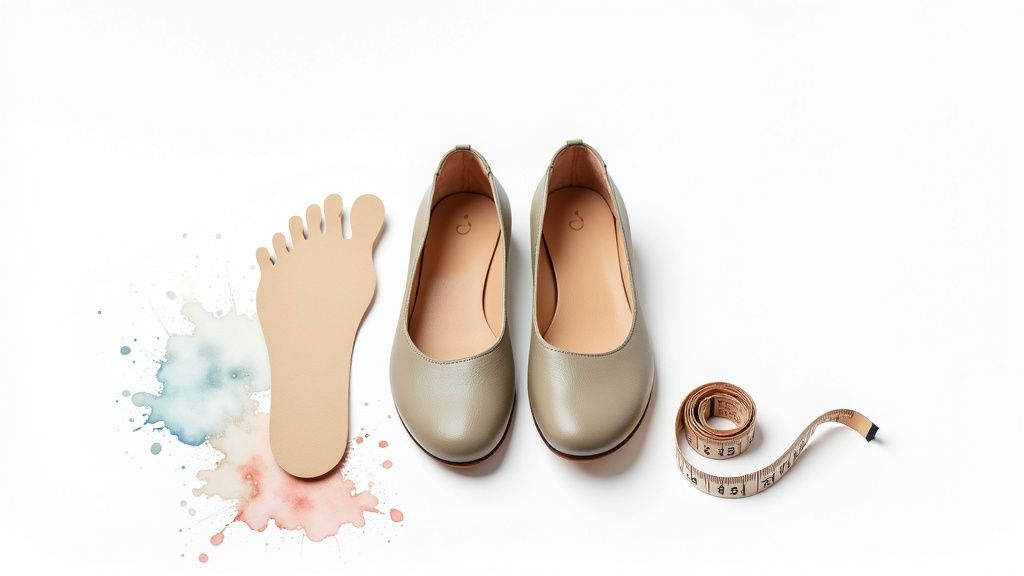
Foot-shaped cutout, ballet flats, and measuring tape on white with watercolor splatters.

For anyone living with diabetes, thinking of shoes as just another fashion accessory is a dangerous mistake. Your footwear is a medical device—a critical tool in your arsenal for preventing diabetic foot ulcers.

A shoe that rubs, pinches, or creates even a little bit of pressure can quickly lead to a blister or sore. With neuropathy in the mix, you might not even feel it until it has already become a serious wound.

This isn’t hyperbole. The wrong shoe can completely undermine all the hard work you put into your daily foot care routine. It creates constant, low-grade trauma on vulnerable skin, paving the way for breakdown and infection. On the flip side, the right shoe acts as a protective shield, distributing pressure evenly and guarding your feet against the hazards of daily life.

The Anatomy of a Protective Shoe

When you're choosing footwear, you have to look past the style and zero in on specific protective features. Therapeutic shoes designed for diabetic feet are engineered from the ground up to minimize risk. They aren't just about comfort; they are built for safety.

Look for these key characteristics:

  • A Wide Toe Box: This is absolutely non-negotiable. A wide, deep space for your toes keeps them from getting cramped, which cuts down on friction and prevents problems like hammertoes from getting worse.
  • Seamless Interior: Any seam on the inside can act like sandpaper against sensitive skin, creating a friction point that can easily become a sore. A smooth, seamless lining is essential.
  • Extra Depth: This feature lets your foot sit comfortably without pressure on top. It also provides that crucial extra space for custom orthotics or inserts if you need them.
  • Supportive, Cushioned Soles: A firm sole protects the bottom of your foot from sharp objects, while good cushioning helps absorb shock and distribute pressure away from high-risk spots like the ball of your foot.

Think of it this way: a regular shoe is like a standard car, but a therapeutic shoe is an armored vehicle designed specifically to protect its precious cargo—your feet.

Getting the Right Fit Every Time

An expensive therapeutic shoe is completely useless if it doesn't fit properly. Getting a professional fitting is one of the most important investments you can make in your foot health. Foot size and shape can change over time, especially with conditions like diabetes.

Here’s a practical tip I give all my patients: Always shop for shoes in the late afternoon or evening. Your feet naturally swell throughout the day. Fitting them when they are at their largest ensures you won't buy a pair that becomes painfully tight by the end of the day.

When you try on shoes, make sure you're wearing the same type of socks you normally would. You should have about half an inch of space—roughly a thumb's width—between your longest toe and the end of the shoe. And never assume your size is the same across different brands. A size 10 in one brand might fit like a 9.5 in another.

Offloading Pressure with Custom Insoles

One of the most critical concepts in preventing foot ulcers is offloading. In simple terms, this just means reducing or redistributing pressure from those vulnerable, high-pressure areas of your foot. Even in the best shoes, certain spots naturally bear more weight than others.

This is where custom orthotics and insoles come into play. A podiatrist can create inserts molded specifically to the unique contours of your feet. These devices provide targeted cushioning and support, effectively offloading the pressure points that are most prone to ulceration.

The science here is solid. Therapeutic footwear and custom insoles aren't just for comfort; they are evidence-based medical interventions that dramatically lower the risk of an ulcer returning.

For instance, studies consistently show that using therapeutic footwear and offloading devices can reduce ulcer recurrence by a remarkable 20% to 40% compared to wearing standard shoes. The data is clear: when patients switch to footwear that cuts peak plantar pressure by at least 30%, their risk of an ulcer returning within a year drops significantly. You can explore the detailed research behind these offloading strategies to understand their powerful impact.

Ultimately, choosing your footwear is an active part of your diabetes management plan. It’s a daily decision that directly impacts your risk of developing a foot ulcer. By investing in professionally fitted, therapeutic shoes and understanding the power of offloading, you transform a simple purchase into a powerful act of prevention.

Connecting Total Diabetes Management to Foot Health

It’s easy to think that diabetic foot care is just about, well, your feet. But that’s a dangerous oversimplification. I’ve seen time and again that the most powerful strategies for preventing foot ulcers start far away from the foot itself—they begin with how you manage your diabetes every single day.

The truth is, your body is one big interconnected system. Consistently high blood sugar, or hyperglycemia, isn't just a number on a meter; it creates a toxic internal environment. It slowly poisons your nerves and blood vessels, setting the perfect stage for the two main culprits behind ulcers: diabetic neuropathy and peripheral artery disease.

How High Blood Sugar Sets the Stage for Ulcers

Think of it this way: when blood glucose stays high, it attacks the delicate nerve endings, especially in your hands and feet. This is diabetic neuropathy. It can completely wipe out your ability to feel pain, heat, or cold. Your foot becomes a numb landscape where injuries simply go unnoticed. A small rock in your shoe, a blister from a new pair of loafers—these can exist for days without you feeling a thing.

At the same time, all that excess sugar is damaging the lining of your arteries, causing them to harden and narrow. This is peripheral artery disease (PAD), and it dramatically chokes off the flow of oxygen-rich blood to your feet. Poor circulation means that any small wound, like that blister you never felt, can't get the resources it needs to heal.

This combination is the perfect storm for an ulcer. Neuropathy lets an injury happen without you knowing, and PAD stops your body from healing it. This changes the game completely. Foot care isn't just about what you do to your feet, but what you do for your entire body.

Glycemic Control: Your Primary Defense

This brings us to the single most important thing you can do to protect your nerves and vessels: keep your blood glucose levels stable. This isn't about chasing a single "perfect" reading. It's about staying within your target range as consistently as possible. In fact, effective total diabetes management is the cornerstone of foot ulcer prevention. For some practical, actionable advice, you can explore these 8 Proven Ways to Stabilize Blood Sugar Levels.

Getting there requires a multi-pronged attack:

  • Mindful Nutrition: Focus on a diet packed with fiber, lean proteins, and healthy fats. Being smart about your carbohydrate intake helps prevent those sharp blood sugar spikes that do so much damage over time.
  • Consistent Physical Activity: Regular exercise, even just a daily walk, makes your body more sensitive to insulin and helps lower your blood glucose.
  • Medication Adherence: Whether you're on pills, insulin, or other injectables, take them exactly as prescribed. They're a critical tool for keeping your glucose levels where they need to be.

Think of stable blood sugar as a protective shield for your entire circulatory and nervous system. Your feet are just one of the biggest beneficiaries.

Every single time you make a healthy food choice, take your medication on schedule, or go for that walk, you are actively preventing a foot ulcer. It’s a direct cause-and-effect relationship.

The Overlooked Villains: Blood Pressure and Cholesterol

While blood sugar grabs all the headlines, controlling your blood pressure and cholesterol is just as vital for your foot health. High blood pressure puts constant, damaging strain on your artery walls, speeding up the damage that leads to poor circulation. High cholesterol adds to the problem by helping plaque build up in those arteries, narrowing them even more.

Managing the "ABCs of diabetes" is non-negotiable for protecting the fragile vascular network in your feet.

  1. A1c: Keeping your A1c in your target range is proof of good long-term glucose control.
  2. Blood Pressure: Work with your doctor to keep your blood pressure under control, which for most people with diabetes is typically below 130/80 mmHg.
  3. Cholesterol: Managing your LDL ("bad") cholesterol is key to keeping your arteries clear so blood can flow freely.

When you focus on your total diabetes management—glucose, blood pressure, and cholesterol—you're getting at the root causes of foot ulcers. It's this proactive, whole-body approach that offers the most powerful protection, helping to keep your feet healthy and ulcer-free for years to come.

The Importance of Professional Foot Examinations

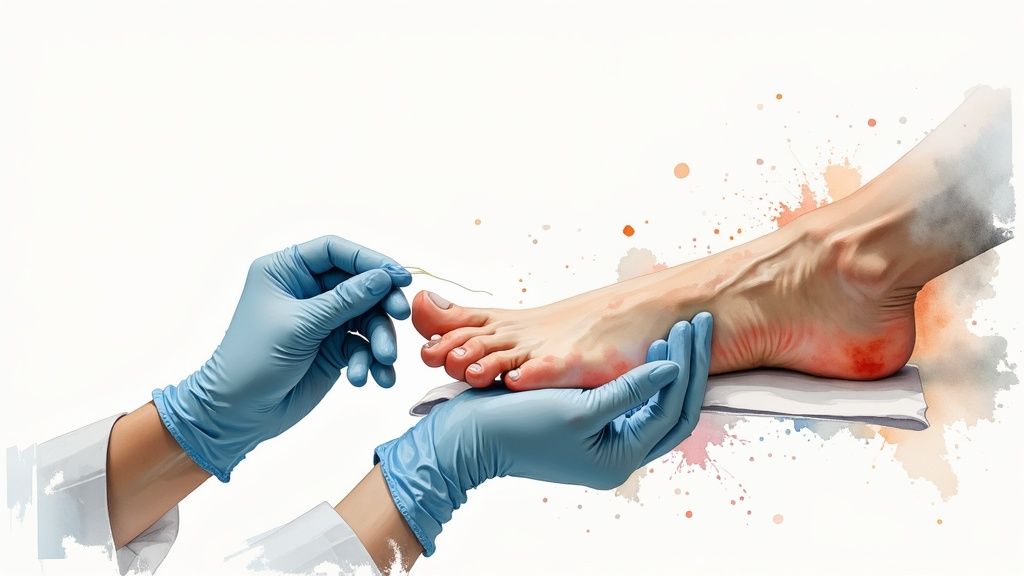
Gloved hands examine a human foot with red skin, possibly checking for diabetic foot ulcers.

Your daily foot check is your first line of defense, but it can only go so far. Think of it this way: your daily routine is like a motion sensor on a security system. It's great for catching obvious problems. The professional exam, on the other hand, is the expert who reviews the footage and inspects the wiring, spotting subtle issues that could lead to a major breach.

Even the most diligent person can miss the tiny, almost imperceptible changes that signal the start of a serious problem. This is especially true if you have diabetic neuropathy, which can effectively silence the pain signals your body would normally send. A podiatrist has the tools and training to detect problems you simply cannot see or feel.

This is why an annual comprehensive foot exam isn't just a suggestion—it's absolutely essential. The data is clear: structured foot care programs built around annual exams and patient education can slash the incidence of diabetic foot ulcers by a staggering 30% to 60%. Even more critically, these programs have been shown to reduce major amputation rates by about 50% in high-risk individuals.

What Happens During a Comprehensive Foot Exam

A professional exam is much more than just a quick look at your feet. It's a detailed assessment designed to pinpoint your specific risk level for developing an ulcer. Your podiatrist will run a series of tests to check three critical areas of foot health: neurological, vascular, and dermatological.

Here’s a breakdown of what you can expect:

  • Sensory Testing: Your podiatrist will likely use a monofilament—a soft, flexible nylon fiber—to test for any loss of protective sensation. They’ll touch various points on your feet and ask if you can feel it. It’s a simple, painless test, but it’s the gold standard for identifying neuropathy.
  • Vascular Assessment: They will check the pulses in your feet (the dorsalis pedis and posterior tibial pulses) to evaluate your blood flow. They might also check your capillary refill time, which shows how quickly blood returns to your skin after pressure is applied.
  • Skin and Structural Evaluation: The doctor will carefully inspect your skin for any calluses, blisters, or "hot spots" that indicate excess pressure. They’ll also assess your foot's structure, looking for deformities like bunions or hammertoes that could create friction points inside your shoes.

To help you feel more prepared for your next appointment, here's a look at what a thorough exam covers.

Your Annual Diabetic Foot Exam Checklist

This table breaks down the key assessments performed during a professional foot exam. Use it to understand what to expect and what questions to ask your provider.

Assessment Component What It Checks For Why It Matters for Prevention
Monofilament Test Loss of protective sensation (neuropathy). Detects nerve damage that could prevent you from feeling a small injury.
Vascular Pulse Check Strength and presence of blood flow to the feet. Poor circulation slows healing and increases ulcer and infection risk.
Skin Integrity Inspection Calluses, dryness, cracks, redness, or swelling. Identifies pressure points or early signs of skin breakdown.
Foot Structure Evaluation Deformities like bunions, hammertoes, or flat feet. Pinpoints areas prone to rubbing and pressure inside footwear.
Toenail Assessment Thickening, discoloration, or ingrown nails. Prevents nail-related injuries that could become infected wounds.
Footwear Review Proper fit, wear patterns, and appropriateness of shoes. Ensures your shoes aren't contributing to pressure or friction.

Remember, this exam is a crucial part of your preventative care strategy.

Partnering With Your Healthcare Team

Your relationship with your podiatrist and healthcare team should be a partnership. You are the expert on your own body, while they bring the clinical expertise. To make the most of this, you need to be an active participant in your care.

Come to your appointments prepared with questions. Don't be afraid to ask things that empower you to take better care of yourself.

Consider asking your doctor direct questions like, "Based on this exam, what is my personal risk level for developing an ulcer?" or "Are there any specific warning signs I should be watching for at home?" This approach ensures you leave with clear, personalized advice.

If the exam uncovers concerns like poor circulation or pressure spots, your provider may suggest more frequent check-ups or a referral to a specialist. If you already have a small wound or a suspicious area, getting expert care immediately is vital. In those situations, it's wise to book a consult with a wound care specialist for a dedicated treatment plan.

By combining your daily routine with an annual professional exam, you create a powerful, multi-layered strategy for keeping your feet safe and healthy.

Recognizing Red Flags and Acting Quickly

A close-up of a human foot showing a bleeding wound and surrounding redness.

When it comes to diabetic foot care, hesitation is the enemy. Nerve damage, or neuropathy, often means your feet can't send the usual pain signals. A serious problem can develop without you feeling a thing, which makes your daily visual inspection absolutely critical—it's your only reliable alarm system.

Taking a "wait and see" approach is a gamble you just can't afford. A seemingly minor issue, like a small blister or a cut that isn't healing, can escalate into a severe infection in a matter of days. The goal is to spot these red flags early and get in touch with your doctor or podiatrist right away.

Immediate Action Warning Signs

If you notice any of these changes during your daily foot check, it’s time to pick up the phone. Don't try to treat these at home or hope they’ll get better on their own. These are clear signals that you need professional medical help immediately.

  • Any Break in the Skin: This includes cuts, blisters, scrapes, or cracks, no matter how small. An open wound is a direct invitation for bacteria, and with diabetes, your body’s ability to fight infection and heal is often compromised.
  • Drainage or Pus: Any fluid leaking from a sore is a major sign of infection, especially if it's cloudy, yellow, or greenish. You might also notice unexpected staining on your socks.
  • Changes in Skin Color: Look for new redness, which points to inflammation or infection. Also, be alert for skin turning pale, blue, or black—this could indicate a severe lack of blood flow.
  • Unusual Swelling: If one foot or part of your foot suddenly becomes swollen and puffy without a clear injury, it needs to be evaluated right away.

These signs are your body's way of shouting for help. Listening and acting quickly is a cornerstone of preventing a minor issue from becoming a limb-threatening emergency.

The Subtle but Serious Clues

Beyond the obvious, there are more subtle clues that something is wrong. These symptoms might not seem as alarming at first, but they are equally important red flags.

One of the most critical is a change in temperature. If one foot, or even just a specific spot, feels significantly warmer to the touch than the other, it can be an early sign of inflammation or a deep infection. This "hot spot" often shows up before any visible redness or swelling.

A foul odor coming from your foot or a sore that you can't explain is another major warning sign. This often points to an underlying infection with bacteria that produce gassy odors, and it requires urgent medical attention.

When to Contact a Wound Specialist

If you have a wound that isn't showing signs of improvement within a couple of days, or if you have any of the red flags we've discussed, don't hesitate. Your first step is contacting your healthcare provider. They can assess the situation and may refer you to a wound care specialist.

Advanced tools can help clinicians make faster, more informed decisions. For instance, understanding how a point-of-care wound imaging device detects bacteria shows how technology is supporting swift diagnosis and treatment. Early and expert intervention is the key to preventing a minor wound from turning into a major complication.

Common Questions on Preventing Diabetic Foot Ulcers

Even after you've learned the basics of diabetic foot care, real-world questions always pop up. Life with diabetes presents unique situations, and knowing how to handle them is a huge part of staying safe. This section dives into the most common questions we hear from patients, offering clear, straightforward answers to help you protect your feet.

Think of this as your go-to guide for those "what if" moments that can cause confusion. Getting these points straight will empower you to make smart, consistent choices for your foot health.

Is It Safe to Get a Pedicure If I Have Diabetes?

This is a question we get all the time, and the answer is a very cautious "maybe." A pedicure can feel wonderful, but it comes with real risks if you're not careful. The biggest dangers are infection from tools that haven't been properly sterilized and injuries from a technician being too aggressive.

If you still have good circulation and no nerve damage (neuropathy), you can consider it, but you have to be your own biggest advocate.

  • Choose Your Salon Wisely: Find a reputable place that uses an autoclave for steam sterilization or opens a brand-new, single-use set of tools for every single client. Don't be afraid to ask to see their process.
  • Speak Up Clearly: The moment you sit down, tell your nail technician that you have diabetes.
  • Set Firm Boundaries: Instruct them not to cut your cuticles or use any sharp tools like razor blades to remove calluses. A gentle file is a much safer way to smooth rough spots. They should also not push back your nail folds aggressively.

But let's be clear: if you have significant neuropathy, poor circulation (peripheral artery disease), or any history of foot ulcers, you should avoid salon pedicures completely. In that case, your podiatrist is the only person who should be handling your nail and foot care.

What Kind of Socks Are Best for Diabetic Feet?

The right socks are just as critical as the right shoes. This is the material that's directly against your skin all day, so its features matter—a lot. Your goal is to find socks that protect your skin, pull moisture away, and never, ever restrict blood flow.

Here’s exactly what to look for:

  • A Seamless Design: Seams are notorious for rubbing against the skin, causing friction that can lead to blisters and sores. A truly seamless sock gets rid of that risk.
  • Moisture-Wicking Fabric: Steer clear of 100% cotton socks. They trap sweat right against your skin, creating a perfect environment for fungal infections and skin breakdown. Instead, opt for materials like wool, bamboo, or synthetic blends designed to wick moisture away.
  • Non-Constricting Tops: That tight elastic band at the top of many socks can act like a tourniquet, impeding circulation. Look for non-binding or specifically labeled "diabetic" socks that stay up without squeezing your leg.
  • Light Colors: This is a simple but effective trick. White or other light-colored socks make it much easier to spot any blood or drainage from a wound you might not be able to feel.

The best sock is one you forget you're even wearing. It cushions and protects without rubbing, constricting, or making your feet feel damp. It should feel like a soft, protective second skin.

Can I Go Barefoot at Home if My Floors Are Clean?

The answer you'll get from nearly every podiatrist is a firm, unwavering no. Even in the most spotless home, the risk of injury is just too high when you have diabetes, especially if neuropathy has set in. You simply can't feel a tiny splinter, a dropped pin, or the sharp corner of a coffee table you accidentally kick.

That tiny, unnoticed injury can quickly become a serious problem. A small cut you don't feel can go unnoticed for hours or even days. Always, always wear well-fitting slippers or supportive house shoes inside. This one simple habit creates a constant barrier between your feet and a world of unseen hazards.

How Does Smoking Affect My Risk for Foot Ulcers?

Smoking is one of the single most destructive habits for your foot health when you have diabetes. It wages a multi-front war on your circulatory system, drastically increasing your risk of getting an ulcer and crippling your body's ability to heal one.

Here’s how it happens: Nicotine causes your blood vessels to constrict and narrow, which immediately chokes off the supply of oxygen-rich blood that can reach your feet. At the same time, smoking accelerates atherosclerosis—the hardening and clogging of your arteries. This combination is a devastating one-two punch for the tiny, delicate blood vessels in your lower legs and feet.

Quitting smoking is one of the most powerful things you can do to learn how to prevent diabetic foot ulcers and protect yourself from amputation.

For more in-depth answers to other common concerns, you can find a wealth of information by exploring these frequently asked questions about wound care.


At Specialty Wound Care, we are committed to providing advanced, patient-centered solutions to heal complex wounds and prevent serious complications. If you or a loved one is struggling with a non-healing wound, learn how our expert team can help by visiting https://specialtywoundcare.com.
Essential Wound Care Tips for Healthcare Professionals

Specialty Wound Care | December 14th, 2025


Essential Wound Care Tips for Healthcare Professionals

Wound care challenges demand more than routine steps—they require precise methods and the right tools. As healthcare professionals, you face complex cases that call for advanced wound healing strategies and innovative treatment options. This guide shares essential tips to refine your wound management approach and highlights technologies designed to improve patient outcomes. For more information, you can refer to this resource.

Best Practices in Wound Care

Start by assessing the wound to determine the best care plan. A careful examination can reveal hidden challenges. Here’s how to refine your approach.

Patient Assessment Techniques

Accurate patient assessment is crucial for effective wound care. Begin by observing the wound’s size, depth, and condition. Notice any signs of infection, such as redness or swelling. Use a simple checklist to ensure nothing is overlooked.

  1. Visual Inspection: Look for tissue discoloration and odor.

  2. Palpation: Gently feel for hardness or warmth.

  3. Measurement: Record the wound dimensions regularly.

These steps help you track healing progress. Don’t underestimate the power of a thorough assessment; it sets the foundation for the entire treatment process. Most people think assessing is straightforward, but details make all the difference.

Dressing Selection Guidelines

Choosing the right dressing impacts healing significantly. Match the dressing to the wound type to enhance recovery. Consider moisture levels and the need for protection.

  • Dry Wounds: Opt for hydrogels to maintain moisture.

  • Exudative Wounds: Use foam dressings to absorb excess fluid.

  • Infected Wounds: Antimicrobial dressings are essential.

Selecting the right dressing can reduce healing time. The longer you wait to adjust treatment, the more complicated recovery becomes. Each choice you make directly influences patient outcomes.

Innovative Treatment Options

Technological advancements are reshaping wound care. By integrating the latest tools and methods, you can achieve better results efficiently.

Advanced Testing Methods

Speed is vital in wound care diagnostics. Traditional methods can delay treatment. With advanced testing, you get results faster, guiding precise interventions.

  • Rapid Pathogen Identification: Some methods provide results in hours, not weeks.

  • Sensitivity Testing: Helps tailor antibiotic use to specific bacteria.

These tools empower you to act quickly, preventing complications. Faster diagnostics mean faster healing, a benefit every healthcare professional can appreciate.

MolecuLight DX Technology

This device revolutionizes wound analysis. It offers real-time insights, transforming how you approach treatment. MolecuLight DX enables you to see bacterial presence with clarity.

  • Visual Bacteria Detection: Guides targeted cleaning and debridement.

  • Accurate Measurements: Ensures consistent tracking of wound size.

By using this technology, you gain a deeper understanding of wounds. Most people think typical methods suffice, but advanced tools provide a competitive edge.

Collaborative Approaches for Optimal Outcomes

Working together enhances patient care. Collaborative strategies can lead to superior results in wound management.

Team-Based Care Strategies

Effective wound care involves more than just one person. A team-based approach ensures comprehensive treatment. Involve nurses, doctors, and specialists in planning.

  • Regular Meetings: Discuss patient progress and adjust plans.

  • Shared Protocols: Ensure everyone follows the same guidelines.

Teams can solve problems more efficiently. When you combine expertise, the potential for successful outcomes increases dramatically.

Partnering with Specialty Wound Care Solutions

Partnerships can enhance your practice. Specialty Wound Care offers resources and expertise to support patient care. Collaborate for access to the latest treatments and technologies.

  • Training Sessions: Stay updated with the latest techniques.

  • Resource Sharing: Access cutting-edge equipment and protocols.

By partnering with experts, you improve patient outcomes and expand your knowledge. It’s not just about what you do alone but what you achieve together.

What Causes Wounds Not to Heal and How to Treat Them

Primus Healthcare | December 14th, 2025


When a wound just won’t heal, it’s a sign that something is getting in the way of your body's natural repair crew. Figuring out what causes a wound to stall often comes down to four major culprits: poor circulation that starves the area of oxygen, uncontrolled diabetes that wreaks havoc on nerves and blood vessels, a stubborn infection that turns the wound into a battlefield, and constant pressure that won't let new tissue grow.

The Hidden Reasons Your Wound Is Not Healing

Think of healing as building a house. The four big problems are like a blocked supply road (no circulation), a bad batch of concrete (diabetes), vandals tearing down the work each night (infection), or the foundation constantly shifting (pressure). Any one of these can bring the whole project to a grinding halt.

When a wound sticks around for weeks or months, it's no longer just a simple cut; it has become a chronic wound. The construction site has been abandoned.

This isn’t just a small problem. Chronic wounds impact the quality of life for nearly 2.5% of the entire U.S. population, causing pain, limiting mobility, and creating constant anxiety. The financial burden is staggering, too—our nation spends over $25 billion a year tackling wound-related complications.

Key Barriers to Healing

To get a wound back on track, we have to identify what’s holding it back. These barriers can work alone or team up, creating a complex puzzle that needs the right approach to solve.

The most common roadblocks include:

  • Circulation Issues: If blood can’t get to the wound, neither can oxygen, nutrients, or the immune cells needed to rebuild. It's like trying to grow a garden without water.
  • Underlying Health Conditions: Systemic diseases, especially diabetes, are notorious for sabotaging the healing process. They damage blood vessels, weaken the immune system, and impair nerve signals.
  • Infection and Biofilm: Bad bacteria can completely take over, fueling inflammation and destroying any new tissue that tries to form. Even worse, they can create biofilms—a slimy, protective shield that makes infections incredibly tough to beat.
  • Sustained Pressure or Trauma: Constant pressure, whether from being bedridden or wearing shoes that don't fit, physically squeezes the life out of the tissue. It cuts off blood flow and makes it impossible for the wound edges to close.

A wound that isn’t showing clear signs of healing within four to six weeks has fallen off the normal repair schedule. It's stuck in a state of chronic inflammation, where the healing process is spinning its wheels.

Figuring out which of these issues is at play is the first real step toward a solution. The table below gives a quick overview of these primary barriers and how they stall healing.

Primary Barriers to Wound Healing at a Glance

This table breaks down the most common factors that stall the body's natural healing process and their direct impact on the wound.

Barrier to Healing How It Disrupts the Process Typical Wounds Affected
Poor Circulation Starves the wound of oxygen and essential nutrients needed for cell growth and repair. Arterial Ulcers, Diabetic Foot Ulcers
Infection Creates a state of constant inflammation, destroying new tissue as it forms. All wound types, especially deep or contaminated wounds.
Uncontrolled Diabetes Damages small blood vessels, impairs nerve function, and weakens immune defenses. Diabetic Foot Ulcers
Constant Pressure Compresses blood vessels, cutting off circulation and preventing tissue from closing. Pressure Injuries (Bedsores)

By recognizing these fundamental challenges, you can start to understand why a particular wound might be struggling and what kind of targeted help it needs to finally heal.

Understanding Your Body's Healing Blueprint

To figure out why a wound isn't healing, we first need to appreciate how the body pulls off this amazing feat when everything goes right. Normal wound healing isn’t a single event; it's more like a beautifully choreographed four-act play. Each stage has to wrap up successfully before the next one can even begin, ensuring a solid, lasting repair.

Let's think of it like a highly efficient road crew fixing a dangerous pothole. Every step is precise and absolutely essential.

Act 1: Hemostasis — The First Responders

The second an injury happens, the body’s first priority is to stop the bleeding. This is the hemostasis phase. Platelets in your blood swarm the site, clumping together to form a quick plug. It's just like a road crew throwing down traffic cones to secure the area and stop more cars from piling up.

This initial clot does more than just plug the hole. It also shoots out chemical signals, a call to action that summons the next wave of cellular "workers" to get to the site. It’s the foundation for everything that comes next.

Act 2: Inflammation — The Cleanup Crew

Once the bleeding is under control, the inflammation phase kicks in. A lot of people see inflammation—redness, swelling, heat—as a bad thing, but it’s a critical part of the process. Specialized white blood cells show up to fight off any invading bacteria and clear out damaged cells and other debris.

This is the cleanup crew, meticulously sweeping away broken asphalt and rubble from the pothole. That redness and swelling you see? It's just a sign that a healthy, active repair process is underway, getting the site prepped for rebuilding.

The body's blueprint for healing is sequential and interdependent. A delay or failure in one phase creates a cascade effect, stalling the entire process and leading to a chronic, non-healing wound.

The infographic below shows some of the biggest roadblocks that can derail this finely tuned process, turning a routine repair job into a long-term problem.

Diagram illustrating factors contributing to non-healing wounds: poor circulation, infection, pressure, and impaired blood flow.

As you can see, things like poor circulation, infection, and constant pressure are major disruptors that can grind the healing machine to a halt at any point.

Act 3: Proliferation — The Rebuilding Phase

With the area cleared and secured, the proliferation, or rebuilding, phase goes into overdrive. This is where the real magic happens. A fresh, healthy layer of new tissue, called granulation tissue, starts to fill the wound from the bottom up. It's bright red and bumpy because it's packed with new blood vessels.

Our road crew is now pouring fresh asphalt into the excavated hole. At the same time, new skin cells are migrating across the wound's surface, working to close the gap from the edges inward. This stage demands a huge supply of oxygen and nutrients, all delivered by the bloodstream.

Act 4: Maturation — The Final Touches

The final stage is maturation, sometimes called remodeling. Don't be fooled—this part can last for a year or even longer. The new tissue that filled the wound gets reorganized and strengthened as the body replaces weaker, temporary collagen with a stronger, more permanent type.

This is like the new asphalt curing and hardening over time, with the road crew returning later to repaint the lines. What you're left with is a durable scar. While it's never as strong as your original skin, it successfully restores that critical protective barrier. For a deeper look at how we can supercharge the body's natural repair systems, especially in tough cases, it's worth exploring the health benefits of hyperbaric oxygen therapy.

When Your Overall Health Sabotages Healing

While local problems like pressure or an infection can definitely stall healing, sometimes the real roadblock is deeper, woven right into your body's overall health. These systemic conditions act like a constant headwind, slowing down or even completely stopping the entire repair process.

Think of your body's healing capacity as a major construction project. A systemic health issue is like a city-wide power outage. It doesn't matter how skilled your workers are or how great your blueprints are; without electricity, everything just grinds to a halt. These conditions create an internal environment where the essential resources for healing—oxygen, nutrients, and immune cells—simply can't get to the job site.

The Overwhelming Impact of Diabetes

When we talk about systemic conditions, diabetes is one of the most notorious culprits behind stubborn, non-healing wounds. High blood sugar (hyperglycemia) isn't just a number on a lab report; it's a destructive force that systematically dismantles your body's natural repair mechanisms. It launches a multi-pronged attack on the healing process, creating a perfect storm for chronic wounds.

First, it damages the tiny blood vessels (microvasculature) that are supposed to deliver oxygen and nutrients to the wound. Imagine these vessels as small access roads to our construction site. When they become narrow and brittle from high sugar levels, the delivery trucks can't get through. This starves the site of vital supplies.

Second, diabetes often leads to nerve damage (neuropathy), especially in the feet. This means a person might not even feel a small cut, a blister, or a pressure spot from a shoe. The injury goes completely unnoticed, allowing it to get much worse before it's ever discovered. It’s like having a silent alarm system that's been disabled, letting intruders cause major damage without anyone knowing.

Finally, high blood sugar cripples the immune system. The white blood cells that act as the "cleanup crew" become sluggish and far less effective at fighting off bacteria. This leaves the wound wide open to infections that can quickly spiral out of control.

A diabetic foot ulcer is a devastating real-world example of this triple threat. A small, unfelt injury on the foot—starved of blood flow and defended by a weakened immune system—can rapidly escalate into a severe, non-healing wound that threatens the entire limb.

Malnutrition: The Silent Saboteur

Your body can't build new tissue out of thin air. It needs a steady supply of specific building blocks, and those come directly from your diet. When nutrition is poor, the healing process is one of the first things the body puts on hold to conserve resources for more critical, life-sustaining functions.

Several key nutrients are absolutely essential for any kind of repair:

  • Protein: This is the literal foundation for new tissue. Without enough protein, your body cannot produce collagen, the primary structural component of skin.
  • Vitamin C: This vitamin is a critical partner in making collagen. A lack of it is like trying to make concrete without water—the mixture simply won't set.
  • Zinc: This mineral is a key player in cell proliferation, helping new cells multiply to fill in the wound gap.

A deficiency in any of these can dramatically delay or completely stop healing. It's a stark reminder that what you eat directly impacts your ability to recover from an injury.

Other Systemic Stressors on Healing

Beyond diabetes and poor nutrition, other factors can drain your body's healing reserves. Advanced age, for example, naturally slows down cellular processes, reduces collagen production, and often comes with circulatory challenges.

Chronic stress is another huge factor. When you're constantly stressed, your body pumps out high levels of cortisol, a hormone that actively suppresses the inflammatory response. While "inflammation" sounds bad, a controlled amount is necessary to kickstart the healing cascade. By blunting this initial phase, chronic stress can delay the entire repair timeline.

Conditions like undiagnosed or poorly managed diabetes, often stemming from insulin resistance, significantly hinder the body's ability to repair itself. You can learn how to identify and manage insulin resistance to better support your body's healing functions.

The link between diabetes and non-healing wounds is a global health crisis. Diabetic wounds can heal up to 50% slower than non-diabetic ones, and high blood sugar impairs the body’s ability to create the growth factors needed for tissue repair. This is a major reason why the worldwide expenditure on wound care reached $148.65 billion in 2022, with a huge portion driven by diabetes-related chronic wounds.

Local Roadblocks Directly at the Wound Site

An artistic image of a truck on a surface with a painful, unhealing wound underneath.

While your overall health sets the stage for healing, sometimes the real problem is right at the wound itself. These local roadblocks can halt the repair process dead in its tracks, even in someone who is otherwise perfectly healthy.

Think of it this way: you can have the best construction crew with all the right materials, but if the road to the building site is washed out, nothing gets built. These local factors directly interfere with blood flow, invite destructive bacteria, or create physical barriers that make tissue repair impossible.

Poor Circulation Starving the Wound

One of the biggest culprits is ischemia—a severe restriction of blood supply to a specific area. Without a steady flow of blood, the wound is starved of oxygen, nutrients, and the immune cells it desperately needs to fight infection and build new tissue. It’s a construction site with no power, no water, and no building supplies.

This is a central issue for many chronic wounds, especially in the legs and feet. Conditions like Peripheral Artery Disease (PAD) cause arteries to narrow, choking off the fresh, oxygenated blood. On the flip side, venous insufficiency stops old blood from returning to the heart, causing it to pool in the legs. This creates a toxic, high-pressure environment that literally breaks the skin down from the inside out.

The impact here is massive. Chronic wounds driven by vascular disease and pressure injuries from immobility dominate the field, holding a 64.3% revenue share in the wound skin care market. The connection couldn't be clearer: when blood can't get where it needs to go, healing grinds to a halt.

Infection and the Rise of Biofilms

Even if a wound has great circulation, it can still become a battleground. When harmful bacteria invade, they can quickly overwhelm the body’s defenses and trigger a local infection. This kicks off a state of constant, out-of-control inflammation that destroys any new tissue the body manages to create.

But it gets much more complicated than that. Many bacteria are survival experts, forming a biofilm—a slimy, fortress-like colony that anchors itself firmly to the wound surface. This biofilm acts like a shield, making the bacteria inside incredibly resistant to both your immune system and antibiotics.

A biofilm isn't just a random clump of bacteria; it's an organized, self-sustaining community. It physically blocks healing cells from reaching the wound bed and fuels a persistent inflammatory state, putting the entire healing process on indefinite hold.

Getting rid of biofilms is one of the biggest challenges in modern wound care and a key reason some wounds stay open for months or even years. The first step is proper identification, and understanding the role of advanced pathogen detection shows how clinicians can pinpoint and target these stubborn bacterial fortresses.

Pressure, Trauma, and Edges That Refuse to Meet

The physical environment of the wound itself is incredibly important. Constant, unrelieved pressure is a perfect example. For someone who is bedridden or uses a wheelchair, sustained pressure over bony spots like the hips or heels can completely crush blood vessels, cutting off circulation and causing the tissue to die. This is exactly how pressure injuries (bedsores) form.

Repeated trauma is another physical barrier. A wound on a joint like an ankle is constantly being pulled and stressed with every step, tearing apart the delicate new tissue that’s trying to form. Even friction from poorly fitting shoes can continually damage the wound edges, preventing them from ever meeting in the middle.

In some chronic wounds, a frustrating condition called epibole develops. This is where the wound edges, instead of growing across the wound to close it, curl inward and roll under themselves.

  • What happens: The skin cells at the edge start migrating down the sides of the wound instead of across the top.
  • The result: The body gets tricked. It thinks the wound is closed because the downward-growing skin cells have met other skin cells on the rolled edge.
  • The outcome: The healing process stops completely, leaving the wound permanently open.

Fixing epibole often requires a clinician to carefully re-injure the wound edges with a sterile instrument to "reset" them and restart the proper migration process. It’s a powerful reminder of just how sensitive the healing cascade is to the physical cues right at the wound site.

Recognizing the Warning Signs of a Problem Wound

A hand holds a magnifying glass with a clock face over a bleeding wound on human skin, symbolizing time and healing.

Knowing when a wound has strayed from the normal healing path is the first, most critical step toward preventing serious complications. While every injury is unique, your body sends out clear signals when the repair process is in trouble. Ignoring these red flags can turn a minor issue into a chronic problem that demands specialized medical intervention.

A key indicator is simply the passage of time. Most acute wounds show obvious signs of improvement within the first two weeks—they start getting smaller, less red, and less painful. If your wound looks the same, or even worse, after a month, it's a strong signal that an underlying issue is jamming up the healing cascade.

Key Red Flags to Watch For

Beyond just the timeline, specific signs in and around the wound itself serve as urgent warnings. Think of them as distress signals from your body, telling you the local healing environment has been compromised and needs immediate attention.

Keep an eye out for these critical indicators:

  • Increasing Pain: Some discomfort is normal at first, but pain that gets worse over time, becomes severe, or just feels out of proportion to the injury is a major red flag.
  • Spreading Redness or Warmth: Redness that expands beyond the wound's original borders, or skin that feels hot to the touch, often points to a spreading infection.
  • Unusual Drainage or Odor: Any pus-like drainage—yellow, green, or thick—or the development of a foul smell is a classic sign of a significant bacterial infection.
  • No Signs of Closing: If the wound edges aren't pulling together and the wound simply isn't getting any smaller, the healing process has stalled out.

Any wound that fails to show significant progress within two to four weeks should be evaluated by a healthcare professional. This timeframe is a crucial checkpoint to distinguish between normal healing and a developing chronic wound.

The Role of Specialized Wound Care

When these warning signs appear, it’s often time to move beyond standard first aid and seek help from the experts. A specialized wound care center is a medical clinic staffed by a multidisciplinary team focused exclusively on diagnosing and treating complex, non-healing wounds.

These teams often include a mix of professionals with deep expertise, all working together to solve the healing puzzle:

  • Wound Care Nurses: Provide hands-on care, dressing changes, and critical patient education.
  • Podiatrists: Specialize in foot and ankle wounds, especially diabetic foot ulcers.
  • Vascular Surgeons: Address the circulation problems that starve wounds of oxygen.
  • Infectious Disease Specialists: Manage severe or antibiotic-resistant infections.

These centers also have advanced tools you won't find in a typical doctor’s office. For instance, new technologies can help clinicians visualize and target the bacterial burden directly on the wound's surface. Understanding how a point-of-care wound imaging device detects the presence of elevated bacteria really highlights the level of precision available in modern wound management. This allows for far more accurate debridement and sampling, directly addressing one of the biggest roadblocks to healing.

Seeking this level of specialized care isn’t an overreaction; it’s a proactive step. Catching a problem wound early and getting it into the hands of a dedicated team is the single most effective way to prevent long-term complications, including severe infection, limb loss, and a diminished quality of life. Don't wait for the problem to become overwhelming.

Got Questions About Wounds That Won't Heal?

After digging into the fascinating, complex world of healing and all the things that can throw a wrench in the works, it's totally normal to have a few more questions. Wound care can feel complicated, but getting straight, clear answers is the first step toward feeling in control of your health.

Here, we'll tackle some of the most common questions people have when faced with a stubborn wound that just refuses to close. Let's clear up the confusion.

Can a Healthy Person Get a Non-Healing Wound?

Yes, absolutely. While big-picture health problems like diabetes or poor circulation are major risk factors, even a perfectly healthy person can end up with a chronic wound. It often boils down to local issues that keep hitting the reset button on the healing process.

Think about a healthy person who gets a deep cut on their ankle. If they don't properly protect it and keep moving around as usual, that constant motion can tear the fragile new tissue that’s trying to form. This cycle of re-injury keeps the wound stuck in the inflammatory phase.

Other common scenarios include:

  • Constant Pressure: A healthy individual who is bedridden after surgery can get a pressure injury (or bedsore) if they aren't moved around often enough.
  • Stubborn Infection: A simple cut that isn’t cleaned well can get infected. If the bacteria create a protective shield called a biofilm, even a strong immune system can't break through, stalling the healing process for good.
  • The Wrong Approach: Using a dressing that dries out the wound or, conversely, keeps it too soggy can bring healing to a dead stop.

At the end of the day, healing is a delicate dance. Anything that constantly interrupts the steps—whether it's an internal health issue or an external force—can turn an ordinary wound into a chronic problem.

What is the Difference Between Acute and Chronic Wounds?

The biggest difference between an acute and a chronic wound is time. An acute wound is one that follows the rulebook, moving predictably through the four stages of healing. Think of a paper cut or a clean surgical incision—they usually heal up within a few weeks without any drama.

A chronic wound, on the other hand, is a wound that has gone off-script. It has failed to move through the healing stages in an orderly way and remains open for an extended period, typically longer than four to six weeks.

A chronic wound is essentially "stuck," often trapped in the inflammatory phase. The body is still sending out repair signals, but something is blocking the construction crew from actually rebuilding.

Here’s a simple way to look at it:

Characteristic Acute Wound Chronic Wound
Healing Time Predictable, usually 2-4 weeks Stalled, lasts > 4-6 weeks
Healing Process Orderly and sequential Disorganized and stuck
Underlying Cause Usually a single traumatic event Often linked to an underlying issue (e.g., poor circulation, infection)
Examples Minor cuts, scrapes, surgical incisions Venous ulcers, diabetic foot ulcers, pressure injuries

Recognizing when a wound has crossed over from acute to chronic is your cue to seek specialized medical help. To see what that next level of care looks like, exploring these advanced treatment options provided by wound care specialists can shed light on the powerful tools available today.

What Are the Most Important Nutrients for Wound Repair?

Good nutrition provides the raw materials for your body's cellular construction crew. If the building supplies don't show up, the project can't move forward. While a balanced diet is always a good idea, a few nutrients become absolute superstars when you're trying to heal.

Imagine you're building a brick wall. You need the bricks themselves (protein), the mortar to hold everything together (Vitamin C), and a skilled bricklayer to manage the process (Zinc).

Here are the key players for healing:

  1. Protein: This is the non-negotiable foundation for all new tissue—skin, blood vessels, and collagen. Not getting enough protein is one of the most frequent nutritional roadblocks to healing.
  2. Vitamin C: This vitamin is critical for creating collagen, the protein that gives new skin its strength and structure. Without it, any new tissue is flimsy and weak.
  3. Zinc: This mineral is a key player in cell division, helping new skin cells multiply and travel across the wound to close the gap.
  4. Hydration: Don't forget water! It's essential for good circulation, which is the delivery system for all these nutrients and life-giving oxygen.

If you're dealing with a non-healing wound, your doctor might recommend boosting your intake of these specific nutrients to give your body the tools it needs to finish the job.

How Does Smoking Impact the Healing Process?

Smoking is one of the absolute worst things you can do for a healing wound. It launches a two-pronged attack that systematically strangles your body's ability to repair itself. The main villains here are nicotine and carbon monoxide.

Nicotine is a vasoconstrictor, which is a fancy way of saying it clamps down on your blood vessels, making them narrow. This chokes off the supply of oxygen-rich blood that can get to the wound. Less oxygen means the cells trying to rebuild tissue are starved for fuel.

Meanwhile, Carbon Monoxide from the smoke hitches a ride on your red blood cells, taking up the seats that oxygen molecules are supposed to be in. This means that the little blood that does manage to reach the wound is carrying far less oxygen than your cells desperately need.

The result is a state of severe tissue hypoxia, or oxygen starvation. This alone can bring the entire healing cascade to a screeching halt, making smokers much more likely to develop chronic wounds and suffer from complications after surgery.


At Specialty Wound Care, we know that a non-healing wound is more than just a medical problem—it's something that stops you from living your life. Our expert teams use advanced diagnostics and proven treatments to find the real reason your wound is stuck and build a personalized plan to get you healing again. If you or someone you care about is struggling with a wound that won't heal, visit us at https://specialtywoundcare.com to see how our focused approach can help you get back to what matters.

The Future of Pathogen Detection in Wound Management: A New Era of Precision

Specialty Wound Care | December 13th, 2025


The Future of Pathogen Detection in Wound Management: A New Era of Precision

Traditional methods of pathogen detection in wound management often miss critical signs, delaying effective treatment. You know how frustrating it is when infections linger despite your best efforts. Specialty Wound Care’s advanced wound healing technology, including MolecuLight DX, offers precise, rapid identification of pathogens, helping you tailor treatments faster and with greater confidence. Explore how these innovations can improve your patient outcomes and streamline your practice today. Learn more about the advancements in pathogen detection here.

Advancements in Pathogen Detection

The world of wound management is changing. With new tools, identifying pathogens is becoming quicker and more precise. This opens the door to faster treatments and better outcomes.

Cutting-Edge Technologies Unveiled

Imagine having a tool that spots bacteria in a wound instantly. That’s what modern technology offers. New devices can highlight harmful bacteria, allowing you to act before problems grow. In a study, 90% of infections were identified faster with these tools. Learn more about this technology here. This means less time guessing and more time healing. Most people think traditional methods are enough, but these innovations change the game by reducing guesswork and improving accuracy.

Role of MolecuLight DX in Detection

MolecuLight DX is at the forefront. This gadget shows you where bacteria hide using light. You can see problem areas in real time. Here’s the key insight: with MolecuLight DX, you get precise images that guide your decisions. Studies show that using this tool cuts down treatment time significantly. Consider a scenario where you spot trouble early and adjust care immediately. It’s a game-changer for patient care. See how MolecuLight DX is transforming wound care.

Precision in Wound Management

Precision isn’t just a buzzword; it’s essential. Early detection means early intervention, leading to better healing and fewer complications.

Benefits of Early Pathogen Identification

The sooner you find the pathogen, the better. Early identification lets you choose the right treatment from the start. This reduces the risk of spreading infection. You might think waiting is okay, but acting quickly changes everything. 70% of treated wounds improved with early detection methods. By using advanced tools, you ensure the best care for your patients. Don’t wait until it’s too late to make a difference.

Impact on Treatment Strategies

When you know what you’re dealing with, your strategy changes. You can tailor treatments specifically to the infection type. This targeted approach improves healing rates and reduces hospital stays. In fact, studies show targeted treatments reduce complications by 30%. Think of it like a master key opening a locked door. You use the right key, and healing happens more smoothly. Explore more about tailored treatment approaches here.

Future Trends in Wound Care

What’s next in wound care? The future is bright with technology leading the way. You’ll see rapid innovations that will redefine patient care standards.

Embracing Advanced Wound Care Solutions

The future of wound care is here. By adopting new technologies, you provide superior care. Imagine using artificial intelligence to predict healing times or new dressings that adapt as wounds heal. These solutions mean quicker recoveries and fewer setbacks. Discover how AI is shaping wound management.

Specialty Wound Care’s Role in Innovation

Specialty Wound Care is a leader in this field. By integrating advanced tools and methods, they set new standards. Their approach combines science with care, ensuring the best outcomes. When you partner with them, you gain cutting-edge support and expertise. This collaboration means you’re not alone in your mission to provide exceptional care. Join the journey to revolutionize wound management and see the difference it makes in patient recovery.

Uncategorized

A Modern Guide to Venous Leg Ulcer Treatment and Healing

Primus Healthcare | December 13th, 2025


To really get a handle on venous leg ulcer treatment, you have to start with the root cause: veins that aren't working right. Think of it as a plumbing problem in your legs. When blood flow stalls, pressure builds up and starts damaging the skin from the inside out. To heal the wound, we have to tackle that pressure head-on and create the perfect environment for the skin to mend itself.

What Causes Venous Leg Ulcers to Form

Before you can fix a venous leg ulcer, you have to understand why it showed up in the first place. Imagine the veins in your legs are a one-way street, designed to push blood back up to your heart against gravity. This street is lined with tiny gates—or valves—that snap shut to stop blood from flowing backward.

But what happens when those gates get weak or fail? Blood starts to pool in your lower legs, creating a constant traffic jam. This condition is called chronic venous insufficiency, and it causes a slow, relentless rise in pressure inside the veins, a state we call venous hypertension.

From Hidden Pressure to Open Wound

This constant pressure is like a slow-motion flood inside your leg. Fluid, proteins, and even blood cells begin to leak out of the overwhelmed veins and into the surrounding tissue. This process essentially starves the skin of the oxygen and nutrients it needs to stay healthy. It becomes fragile, discolored, and swollen.

After a while, the skin gets so compromised that even a tiny bump, a simple scratch, or an insect bite can be enough to break it open, forming an ulcer. And because the underlying circulation problem is still there, the wound can't get the resources it needs to heal. That's what makes these ulcers so notoriously stubborn.

Venous ulcers are the most common type of chronic wound on the lower legs, affecting millions of adults. They aren't just a skin issue; they are a direct signal of an underlying vein disease that requires specialized medical attention to fix for good.

The Growing Need for Effective Treatment

This is a massive public health challenge. The global market for treating venous leg ulcers was valued at USD 2.96 billion back in 2018, and it's projected to climb to USD 7.21 billion by 2032. This isn't just a number; it reflects the real-world increase in chronic venous insufficiency, especially as our population ages.

The toll these wounds take, both financially and personally, highlights just how critical it is to get prompt, expert care. You can't just slap a bandage on the problem and hope for the best. Addressing the vein issues underneath is non-negotiable if you want lasting recovery and to stop the ulcer from coming back.

Visiting dedicated vein health clinics is a crucial first step. It's the only way to break the frustrating cycle of a wound that just won't heal. By tackling the root cause, we can finally move past just "managing" the wound and start achieving complete, durable healing.

Why Compression Therapy Is the Gold Standard Treatment

To actually heal a venous leg ulcer, you have to treat the root cause—not just put a bandage on the wound. This is where compression therapy comes in, and it's the undisputed gold standard for a reason. It works by applying steady, external pressure to the leg, directly fighting back against the damaging effects of venous hypertension.

Think of it this way: the veins in the leg have become weak, like a stretched-out rubber band. They can't effectively snap back to push blood up toward the heart. Compression bandages or wraps act as an external support system, giving the leg a gentle squeeze that helps those veins get their job done.

This simple mechanical support is powerful. It pushes pooled blood and excess fluid out of the lower leg and back into circulation. As a result, swelling goes down, more oxygen reaches the skin, and the wound finally has the right environment to start healing. Trying to heal a VLU without compression is like trying to bail out a boat with a hole in it—you're just fighting a losing battle against the underlying problem.

The diagram below shows exactly how venous insufficiency kicks off the chain reaction that compression is designed to stop.

Flowchart illustrating the VLU cause hierarchy: venous insufficiency leads to venous hypertension, resulting in leg ulcer formation.

As you can see, the ulcer is just the final, visible symptom of a deep-seated circulatory failure. That’s why applying external pressure is a non-negotiable part of the solution.

Choosing the Right Compression System

Not all compression is created equal. The right system depends entirely on the patient's situation, the condition of the wound, and who will be applying it. There are several go-to options, and each has its own strengths.

Common compression systems include:

  • Multi-Layer Compression Bandages: These are often the first choice when starting treatment. Made up of several layers, they provide high, sustained pressure and have to be applied by a trained clinician. They typically stay on for several days at a time.
  • Adjustable Compression Wraps: These systems use Velcro straps, which makes them much easier for patients or their caregivers to put on and adjust. They strike a great balance between effective compression and ease of use, which can make all the difference for long-term compliance.
  • Compression Stockings: While they are absolutely essential for preventing another ulcer after the current one has healed, stockings are notoriously difficult to pull on over an open wound. They come in different pressure levels and are key to stopping the cycle of recurrence.

Deciding which system to use is a clinical judgment call that should only be made after a complete assessment of the patient's leg, the ulcer, and their overall health.

Before diving deeper, this table breaks down the key differences between the most common compression therapy options, helping clarify which might be best for different clinical scenarios.

Comparing Compression Therapy Systems

System Type Key Features Ideal For Application Frequency
Multi-Layer Bandages Provides sustained, high, non-removable pressure. Requires professional application. Initial treatment of active VLUs, especially with significant edema. Patients who may not be compliant with removable systems. Every 3-7 days
Adjustable Wraps Velcro-based systems that are user-friendly. Allows for self-application and adjustment. Patients needing a balance of high compression and ease of use. Good for transitioning from multi-layer systems. Daily (applied by patient/caregiver)
Compression Stockings Prescribed pressure garments worn daily. Can be difficult to apply over an open wound. Long-term prevention after the ulcer has healed. Maintaining circulatory health. Daily
Two-Layer Systems A simpler alternative to 4-layer systems, often combining a padded layer and a cohesive compression layer. Patients who find 4-layer systems too bulky or for managing less severe edema. Every 3-7 days

Understanding these distinctions is the first step in tailoring a compression plan that a patient can actually stick with, which is the key to success.

The Critical Role of Consistent Application

The best compression system in the world is useless if it isn't used correctly and consistently. Sporadic use just won't cut it. The pressure has to be applied the right way—every single day—to keep venous hypertension in check and give the wound a fighting chance.

The success of compression therapy is not just in the product itself, but in the faithful, day-in-day-out application. It is the single most important factor in promoting healing and preventing the ulcer from returning.

This commitment can be a huge challenge for patients, but it’s the foundation that all other treatments are built on. The numbers back this up: compression therapy dominates the VLU market, accounting for 40% of spending, because it's the only way to counteract the underlying cause.

Studies have shown that consistent compression can slash healing time by 30-50%. It’s also the best defense against recurrence, which can happen in up to 40% of patients within a year if they stop therapy. You can find more data on the venous leg ulcer market on Precedence Research.

Ultimately, proper application ensures the pressure is graduated—tightest at the ankle and gradually decreasing up the leg—to give blood flow the upward push it needs. This consistent, correctly applied pressure is what makes compression therapy the true cornerstone of VLU healing.

How to Prepare the Wound Bed for Healing

Gloved hands performing a medical procedure on a lower leg with a blister, surgical tools nearby.

While compression gets to the root of the circulatory problem, we can't just ignore the wound itself. Think of preparing a wound bed like tending a garden. Before you can expect new seeds to sprout, you have to clear out all the weeds, rocks, and dead leaves.

In wound care, this essential "weeding" is called debridement. A venous leg ulcer is often covered in non-viable tissue—like yellowish slough or black eschar—that physically blocks new cells from growing. Even worse, this dead tissue is a five-star hotel for bacteria, inviting infection and bringing the healing process to a dead stop.

The Importance of Debridement

Debridement is the absolute cornerstone of local wound care. It’s the process of carefully removing all that unhealthy tissue to expose the healthy, bleeding wound bed underneath. This is the "fertile soil" where new granulation tissue can finally start to grow. Skipping debridement is like trying to build a house on a crumbling foundation; it’s just not going to work.

There are several ways to get the job done, and the right method depends on the situation:

  • Sharp Debridement: A clinician uses a scalpel or special scissors to precisely cut away the dead tissue. This is often the fastest way to remove a large amount of unhealthy material.
  • Enzymatic Debridement: A prescription ointment with special enzymes is applied directly to the wound. Over time, these enzymes work to chemically dissolve the dead tissue.
  • Autolytic Debridement: This is the most natural approach, using the body's own enzymes to break down non-viable tissue. We encourage this process by keeping the wound moist with specific dressings.

The best choice depends on how much dead tissue there is, the patient’s overall condition, and the clinician's expertise. A skilled provider knows exactly which tool to use to get the wound bed ready for healing.

Cleansing and Maintaining Moisture Balance

Once the weeds are gone, the garden needs just the right amount of water—not a flood, and not a drought. The same exact principle applies to a wound bed. You need proper cleansing and the perfect moisture balance for a VLU to heal.

Cleansing usually involves gently flushing the wound with a non-toxic solution, like sterile saline, to wash away loose debris and lower the bacterial count. Aggressive scrubbing is a big no-no, as it can easily damage the fragile new cells we’re trying to encourage.

Maintaining a moist wound environment is a fundamental concept in modern wound care. A wound that’s too dry will kill off new cells, but a wound that’s too wet can damage the healthy skin around it. The goal is that perfect equilibrium.

We use specialized dressings to manage the wound's moisture level. If a wound has heavy drainage, we'll choose an absorbent dressing to pull the excess fluid away. For a drier wound, we’ll use a dressing that donates moisture back to it. This careful management creates the ideal environment for cells to migrate across the wound bed and finally close the gap.

For those especially stubborn wounds, advanced treatments like a dual-layer allograft can provide a scaffold to support cell migration and kickstart healing. By combining debridement, cleansing, and moisture balance, we give the body its best possible shot at rebuilding and recovering.

Advanced Therapies for Non-Healing Ulcers

Sometimes, even with perfect compression and diligent wound care, a venous leg ulcer just refuses to heal. These stubborn, non-healing wounds can be incredibly frustrating for both patients and clinicians. When a wound stalls, it’s a clear sign it needs more than basic support; it requires a more advanced intervention to get the healing process back on track.

This is where the next level of venous leg ulcer treatment comes into play. These therapies are designed to give the body a powerful boost, tackling the biological roadblocks that keep a wound stuck in a chronic, inflammatory state. They move beyond just managing the environment and actively stimulate the body’s own regenerative capabilities.

Illustration of a human leg undergoing a medical procedure, possibly for a venous leg ulcer, with a therapeutic device and a tray.

Bioengineered Skin Substitutes

Imagine trying to build a new wall where the old one crumbled, but you have no framework to guide you. That’s the challenge the body’s cells face when trying to close a chronic wound. Bioengineered skin substitutes, also known as cellular and tissue-based products (CTPs), provide that missing framework.

These products act as a biological scaffold. Applied directly to the prepared wound bed, they deliver essential components like collagen, growth factors, and sometimes even living cells. This scaffold gives the body's own skin cells a structure to crawl across, encouraging them to migrate, multiply, and rebuild lost tissue much faster than they could on their own.

There are many types of skin substitutes available, each with its own unique properties:

  • Allografts: Sourced from human donor tissue (like amniotic membrane), these provide a rich matrix of growth factors that signal the body to calm inflammation and start rebuilding.
  • Xenografts: Derived from animal sources, these primarily offer a collagen scaffold that supports new tissue formation.
  • Synthetic Options: Lab-created materials designed to mimic the skin's natural structure, providing a clean and consistent framework for cellular growth.

The choice of product depends on the specific needs of the wound, but the goal is always the same: to jumpstart a healing process that has come to a grinding halt.

Negative Pressure Wound Therapy

Another powerful tool for these non-healing ulcers is Negative Pressure Wound Therapy (NPWT). This involves placing a specialized foam dressing over the wound, sealing it with a clear film, and connecting it to a small vacuum pump. The pump then creates a gentle, continuous negative pressure—or suction—over the entire wound bed.

Think of NPWT as a system that does two critical jobs at once. First, it actively pulls excess fluid and infectious material away from the wound, keeping it clean and dramatically reducing swelling. Second, this gentle suction stimulates blood flow to the area, drawing in the oxygen and nutrient-rich blood that’s vital for fueling new cell growth.

NPWT transforms a passive wound environment into an active one. By physically contracting the wound edges and promoting the formation of healthy granulation tissue, it can significantly accelerate healing in complex cases that have failed to respond to other treatments.

This technology has become a go-to solution for deep, heavily draining, or otherwise complicated wounds that need intensive management to get them ready for closure.

Uncovering Hidden Bacteria with Fluorescence Imaging

One of the biggest enemies of wound healing is bacteria, especially when it forms a hidden, slimy layer called biofilm. Traditional swabs can easily miss these entrenched bacterial colonies, leaving clinicians guessing why a wound isn't progressing. Fluorescence imaging is a game-changing diagnostic tool that finally makes the invisible visible.

This handheld device shines a safe, violet light onto the wound. In response, different tissues and bacteria glow in specific colors. Healthy tissue might glow green, while harmful bacteria like Pseudomonas aeruginosa light up in a distinct red or cyan.

This real-time bacterial map allows clinicians to:

  • Pinpoint Contamination: See exactly where high bacterial loads are hiding, even if they aren't visible to the naked eye.
  • Guide Debridement: More accurately remove contaminated tissue while preserving healthy areas.
  • Improve Sampling: Take cultures from the most problematic spots to get accurate diagnostic results.

By revealing the true bacterial burden of a wound, fluorescence imaging enables a much more targeted and effective venous leg ulcer treatment plan. This approach is part of a growing trend toward using advanced tools to solve complex healing challenges. The market for these technologies reached USD 2.1 billion in 2023 and is projected to hit USD 3.3 billion by 2034, driven by the proven success of NPWT and bioengineered dressings. You can discover more insights about the venous leg ulcer market on Biospace.

When standard protocols are not enough, these advanced options provide new hope. You can learn more about how these therapies are integrated into a complete care plan by exploring our guide on advanced treatment options by Primus Specialty Wound Care.

Building a Long-Term Plan to Prevent Recurrence

Getting a venous leg ulcer to finally heal is a huge accomplishment, but it's really only half the battle. The root cause of the ulcer—that pesky condition called chronic venous insufficiency—doesn't magically go away once the skin closes. This means without a solid long-term plan, the odds of that ulcer coming back are incredibly high.

Think of it like patching a leak in your roof. You can fix the spot that’s dripping, but if you don’t address the damaged shingles, the next big storm will have water pouring right back in. Preventing another ulcer requires a mental shift from treating a wound to managing a lifelong condition.

The best long-term strategy puts you in the driver's seat. It's all about building a consistent daily routine that supports your vein health and protects your skin. It’s the only way to break the painful cycle for good.

The Lifelong Commitment to Compression

Let's be clear: the single most important part of any prevention plan is lifelong compression therapy. The very same tool that helped heal your ulcer is the one that will stop a new one from ever starting. Wearing your prescribed compression stockings or wraps every single day is completely non-negotiable.

Compression garments do the heavy lifting that your veins can't. They give your legs the external support needed to keep blood from pooling and venous pressure from rising. Skipping even a day or two can be enough to let fluid build up, putting your fragile, newly-healed skin at risk all over again.

Without ongoing care like consistent compression and regular skin checks, venous leg ulcers have a high rate of recurrence. Lifelong management is the key to preventing this frustrating and painful cycle from repeating.

Your doctor will help you find the right type of garment and the correct pressure level for long-term wear. It might feel like a chore at first, but making compression part of your daily routine—just like brushing your teeth—is the strongest defense you have.

Empowering Yourself with Daily Habits

Beyond compression, a few simple but powerful lifestyle habits can make a massive difference in preventing another VLU. When done together, these habits work to ease the strain on your veins and keep your skin tough and resilient.

A strong prevention plan should include:

  1. Leg Elevation: Any time you're sitting down for a while, prop your legs up so your feet are higher than your heart. This simple trick uses gravity to your advantage, helping drain pooled blood from your lower legs and giving your veins a much-needed break. Try to do this for 30 minutes, three or four times a day.

  2. Appropriate Exercise: Movement is medicine for your veins. Your calf muscle acts like a powerful pump, squeezing the veins and pushing blood back toward your heart every time you take a step. Low-impact activities like walking are perfect for getting this "calf muscle pump" working.

  3. Daily Skin Care and Inspection: The skin on your lower legs will always be a bit more fragile after an ulcer. Keep it strong by moisturizing every day with a pH-balanced, fragrance-free lotion to prevent dryness and cracking. Just as important, give your legs and feet a quick look-over every single day. Watch for any signs of trouble like redness, new discoloration, or tiny breaks in the skin. Catching a problem when it's small is everything.

Building Your Long-Term Care Team

You don't have to manage this alone. Think of it as a team effort, and you're the star player. But every star player needs a good coach, and that means having specialists in your corner. Regular follow-up appointments with a vein specialist or wound care clinic are vital, even when you feel perfectly fine.

These check-ups are where your provider can:

  • Check your circulation, often with a quick ultrasound.
  • Make sure your compression garments still fit right and are providing enough pressure.
  • Spot any early skin changes before they have a chance to turn into a new wound.

Staying in touch with your care team keeps your prevention plan sharp and effective. By combining daily compression, healthy habits, and ongoing professional guidance, you can slash the risk of recurrence and take back control of your long-term leg health.

Common Questions About Venous Leg Ulcer Treatment

When you're dealing with a venous leg ulcer, a lot of questions pop up. Getting clear, honest answers is the first step toward feeling in control of your health. Let’s tackle some of the most common concerns to clear things up and give you the confidence you need for a successful recovery.

Knowing what to expect—and what to watch out for—can make all the difference in your healing journey.

How Long Does a Venous Leg Ulcer Typically Take to Heal?

This is usually the first question on everyone's mind, and the most truthful answer is: it really depends. There’s no magic number. The healing timeline is shaped by a few key things: the ulcer's size and depth, how long it's been there, your overall health, and—most critically—how closely you stick to your treatment plan.

With consistent, top-notch care that includes proper compression therapy and wound management, smaller ulcers can heal up in about 3 to 4 months. For larger, deeper, or more stubborn ulcers that have been around for a while, the process can easily take 6 to 12 months, sometimes even longer.

The single most important factor in speeding up healing is sticking to the plan your specialist creates. It’s the daily consistency with compression, wound care, and lifestyle adjustments that separates a wound that heals from one that just won't go away.

Patience and persistence are your best friends here. You have to remember, we're not just healing skin; we're fixing the underlying circulation problem that caused the ulcer in the first place.

Can I Treat a Venous Leg Ulcer Myself at Home?

While what you do at home is absolutely essential, a venous leg ulcer is not something you should ever try to manage on your own. This condition demands professional medical supervision from beginning to end. A wound care specialist needs to accurately diagnose the issue and make sure other serious problems, like arterial disease, aren't being missed.

Think of it like a partnership. Your healthcare provider is the coach, and you're the star player.

The provider's job is to:

  • Get the Diagnosis Right: Using tools like ultrasound to confirm it's actually venous insufficiency.
  • Prescribe the Right Compression: Figuring out the exact level of pressure your leg needs.
  • Perform Debridement: Safely cleaning the wound by removing dead tissue so healthy cells can take over.
  • Watch for Infection: Catching and treating bacterial issues before they become a major problem.

Your role at home is to follow the playbook they design for you. That means wearing your compression gear faithfully, elevating your leg, moving around, and never skipping an appointment. Trying to go it alone can lead to serious trouble, including out-of-control infections, a wound that gets worse, and a much, much longer healing time.

What Are the Signs My Ulcer Is Infected or Getting Worse?

Knowing the red flags for infection is one of your most important jobs in managing your wound at home. An infection that goes untreated can completely derail the healing process and lead to bigger health issues. You need to call your healthcare provider right away if you notice any of these changes.

Key Warning Signs of Infection:

  • More Pain: A sudden spike in pain or a new type of pain around the wound that feels different from the usual discomfort.
  • Spreading Redness: The skin around the wound becomes red and warm, and that redness starts creeping outward.
  • A Bad Smell: A distinct, foul odor coming from the wound, even right after it's been cleaned.
  • Changes in Drainage: The amount of fluid coming from the wound suddenly increases, or it changes color to a cloudy, yellow, or green.
  • Feeling Sick: You start running a fever, get the chills, or just feel generally unwell. This could mean the infection is spreading through your body.

Catching an infection early is everything. Don't ever hesitate to call your doctor or wound clinic if you even think something is wrong. It's always better to be safe and get a professional opinion than to wait and let a small issue turn into a huge setback for your venous leg ulcer treatment. Early action usually means a quick course of antibiotics and getting your healing journey right back on track.


At Specialty Wound Care, we combine advanced diagnostics with expert clinical care to create personalized treatment plans that accelerate healing. If you or a loved one is struggling with a non-healing wound, our team is here to help. Discover how our evidence-based approach can make a difference by visiting us at https://specialtywoundcare.com.
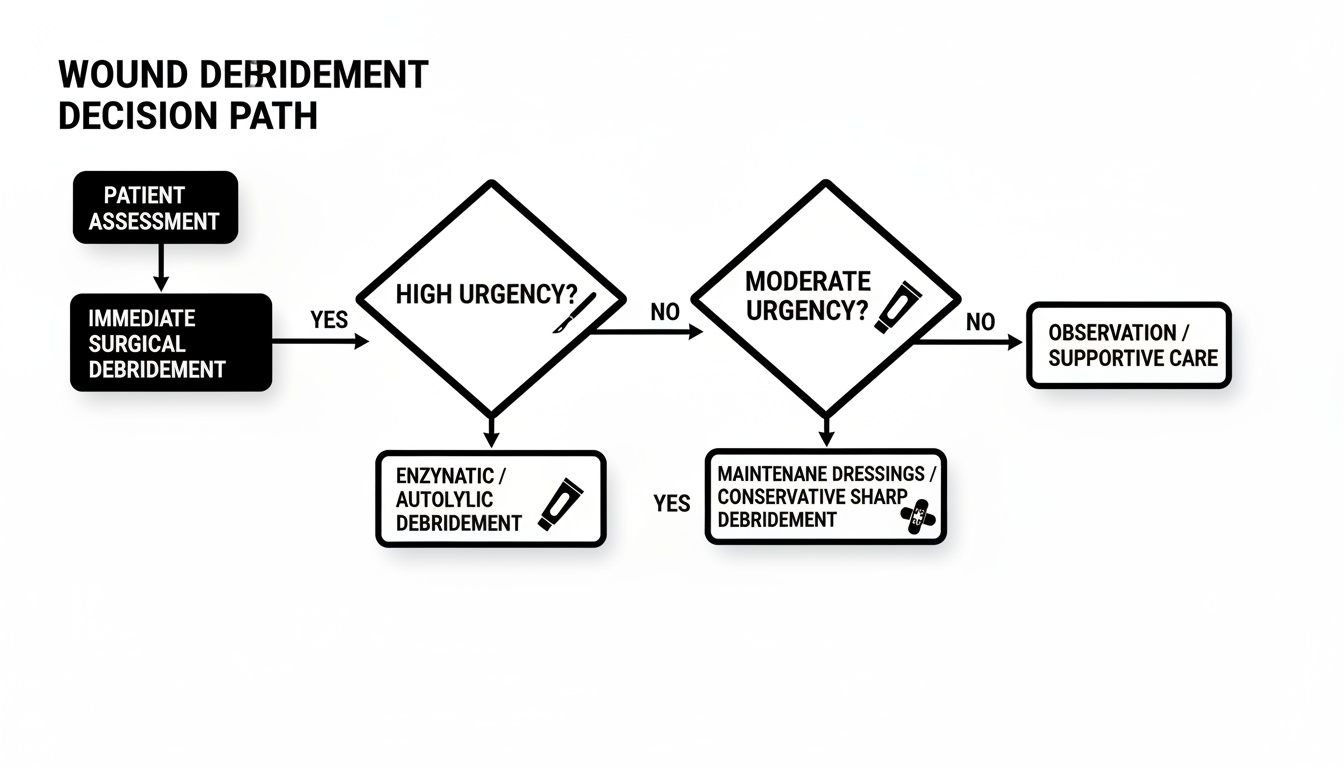
Unveiling the Healing Power of Triple-Layer Allografts for Challenging Wounds

Specialty Wound Care | December 12th, 2025


Unveiling the Healing Power of Triple-Layer Allografts for Challenging Wounds

Hard-to-treat wounds demand more than standard care—they need targeted solutions proven to work. Triple-layer allografts offer a unique approach by supporting faster tissue regeneration and reducing infection risks. In this post, you’ll learn how Specialty Wound Care’s advanced wound care strategies make a real difference in healing challenging wounds. Learn more here.

Benefits of Triple-Layer Allografts

Discover how triple-layer allografts bring significant advantages to wound healing. They are crafted to support rapid tissue repair and reduce infection risks, making them a powerful tool in advanced wound care.

Rapid Tissue Regeneration

Imagine a healing solution that speeds up tissue repair. That’s what triple-layer allografts offer. These allografts contain a dehydrated extracellular matrix that acts as a scaffold, guiding the native tissue to regenerate faster than traditional methods. This means your wounds could heal in a fraction of the time you might expect.

The structure of these allografts is like a biological bridge. It connects the gap in the wound, allowing new cells to grow effectively. This process not only speeds up recovery but also reduces the chances of complications during healing. For those dealing with chronic wounds, this is a game-changer.

Reduced Infection Risk

Infections can derail recovery. Triple-layer allografts help lower this risk. Their unique design creates a barrier against bacterial invasion, providing a cleaner environment for healing.

The allograft’s natural properties support your body’s defense mechanisms. By minimizing bacterial growth, they offer a protective shield that allows the wound to heal without the fear of infection. This reduces hospital stays and the need for antibiotics, leading to better overall outcomes.

Addressing Hard-to-Treat Wounds

Tackling challenging wounds requires an understanding of their complexities. This section delves into what makes certain wounds hard to treat and how effective strategies can make a difference.

Understanding Challenging Wound Types

Not all wounds are the same. Some are stubborn and refuse to heal easily. These may include diabetic ulcers, pressure sores, and venous ulcers. Each type comes with its own set of challenges, requiring specialized care and attention.

Challenging wounds often occur due to poor blood flow or underlying health issues. They need more than basic care; they demand tailored solutions that address their specific needs. Recognizing these differences is the first step in effective treatment.

Effective Treatment Strategies

Here’s the key insight: effective treatment starts with a thorough assessment. Identifying the wound type and understanding its root cause is crucial. Once that’s clear, targeted therapies like triple-layer allografts come into play.

These advanced solutions are designed to address the specific needs of hard-to-treat wounds. By focusing on reducing infection risk and promoting rapid healing, they offer a comprehensive approach that traditional methods might lack. This ensures that even the toughest wounds can heal effectively.

Specialty Wound Care Solutions

Specialty Wound Care provides a full range of products and solutions designed to support healing. By partnering with healthcare providers, they offer enhanced outcomes for even the most challenging cases.

Comprehensive Product Range

Specialty Wound Care is committed to offering cutting-edge solutions. Their product range includes everything from advanced testing methods to innovative wound care tools like the MolecuLight DX. Each product is designed with precision to tackle specific wound care challenges.

By using advanced technology, these products deliver precise results. For instance, thanks to tools like the MolecuLight DX, healthcare providers can make informed decisions about wound care, ensuring that treatment is effective and efficient.

Partnering for Enhanced Outcomes

Collaboration is at the heart of Specialty Wound Care. By working closely with healthcare providers, they ensure that patients receive the best possible care. This partnership approach not only enhances outcomes but also fosters innovation in wound care practices.

Most people think they need to navigate wound care alone, but Specialty Wound Care proves otherwise. By partnering with them, you gain access to a network of experts dedicated to improving patient recovery. The longer you wait, the longer it takes to heal. Start exploring these advanced solutions today and take the first step toward better healing outcomes.

For more detailed insights into wound care advancements, check this comprehensive resource.

Facebook
Instagram
LinkedIn
SOCIALICON
Youtube
X (Twitter)
Bluesky