Uncategorized

Your Complete Guide to Abdominal Muscle Strain Recovery

Primus Healthcare | January 7th, 2026


You’ve probably heard someone talk about a “pulled stomach muscle.” That’s just another name for an abdominal muscle strain, which is what happens when you tear or overstretch one of the muscles in your core. It's usually caused by a sudden, awkward movement or just plain overuse, and it brings on a sharp pain that loves to make itself known every time you cough, sneeze, or twist.

A Quick Tour of Your Abdominal Wall Anatomy
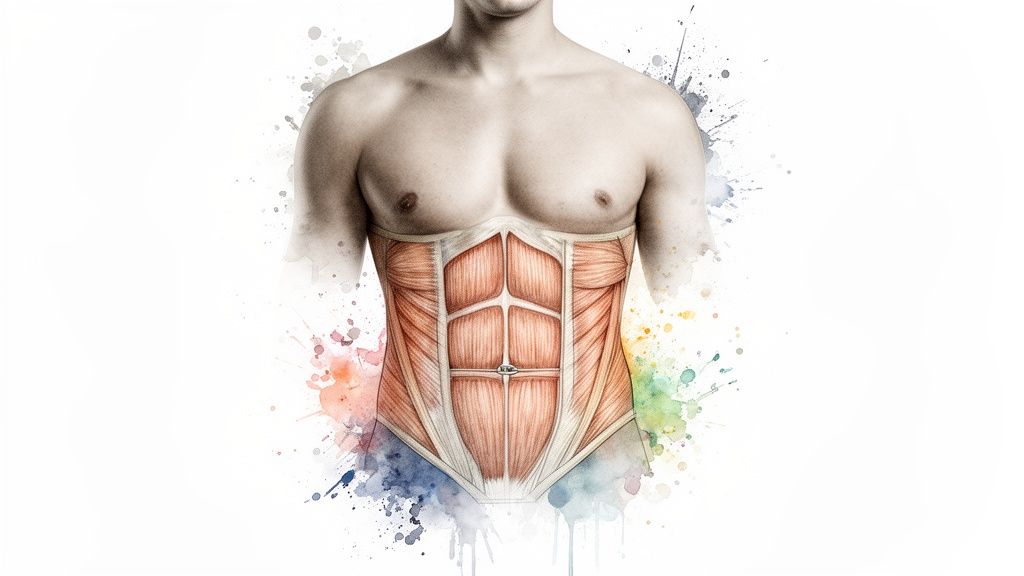
Anatomy illustration of a male torso showing abdominal muscles with a colorful watercolor effect.

To really get a handle on what an abdominal strain feels like and why it happens, it helps to picture your core. Don't think of it as one big muscle. Instead, imagine a dynamic, multi-layered corset that wraps snugly around your midsection. This intricate system is your body’s powerhouse, working around the clock to keep you stable, support your spine, shield your organs, and let you move freely.

These layers are your silent partners in everything from the simple act of sitting up in bed to the explosive power needed to swing a tennis racket. When you injure just one of these layers, the whole system feels it.

The Key Players in Your Core

Your abdominal wall is made up of three main muscle groups, and each one has a very specific job:

  • Rectus Abdominis: This is the one everyone knows—the "six-pack" muscle. It runs straight down the front of your torso from your ribs to your pelvis. Its main job is to flex your spine, which is the exact motion you use when doing a crunch.
  • Obliques (Internal and External): You'll find these muscles running along the sides of your torso. They’re in charge of all your twisting and side-bending movements. Think about the rotation needed for a golf swing or throwing a baseball; that's all thanks to your obliques.
  • Transversus Abdominis: As the deepest layer, this muscle acts like your body's own built-in weight belt. It wraps horizontally around your trunk, firing up to stabilize your spine and core before you even begin to move.

An abdominal muscle strain happens when the fibers in any of these muscles get stretched past their breaking point and tear. It’s a lot like a rubber band that’s been pulled too far and finally snaps. The damage can be anything from tiny, microscopic tears to a complete and painful rupture.

How Bad Is It? Understanding Strain Severity

To figure out the best way to treat a pulled muscle, healthcare providers classify strains into three different "grades." This system helps them understand the extent of the damage and create a recovery plan that’s right for you.

To give you a clearer picture, here’s a quick breakdown of what each grade means.

Quick Guide to Abdominal Muscle Strain Grades

Strain Grade Description Common Symptoms
Grade I (Mild) A minor overstretching or slight tearing of the muscle fibers. The muscle is tender but still has normal strength. Mild pain and tenderness, slight swelling, and minimal loss of function. You can still move, but it's uncomfortable.
Grade II (Moderate) A partial tear of the muscle fibers. This is a more significant injury with noticeable strength loss. Moderate pain that gets worse with movement, visible swelling or bruising, and a clear loss of strength.
Grade III (Severe) A complete tear or rupture of the muscle. This is a serious injury that often results in a total loss of muscle function. Severe, sharp pain, significant swelling and bruising, and the inability to use the muscle at all. Sometimes a "pop" is felt or heard.

Knowing the grade of your strain is key. It helps set realistic expectations for your recovery and ensures you’re not pushing yourself too hard, too soon.

A strain's grade has a direct impact on your healing timeline. A mild Grade I injury might feel better in a couple of weeks with rest. A severe Grade III tear, on the other hand, could take several months to heal properly and might even require more intensive medical care to get you back to normal.

This classification isn't just medical jargon; it's a road map for your recovery, guiding you on how to safely and effectively heal your injury.

Common Causes and Who Is Most at Risk

An abdominal muscle strain doesn't just happen out of the blue. It’s almost always the direct result of forces overwhelming your core muscles, either from one single, powerful event or from the slow accumulation of stress over time.

Think of it as a sudden shock to the system or a gradual wearing down of your muscular defenses. The most common culprits are explosive actions that demand a sudden, forceful contraction of your abdominal wall. These movements stretch and contract the muscle fibers faster than they can handle, leading to those tiny, painful tears.

On the other hand, a chronic strain is more subtle. This happens when you perform the same motion over and over without giving your muscles enough time to heal and recover. This constant stress gradually weakens the muscle fibers, leaving them vulnerable to injury even during routine activities.

High-Intensity Activities and Overuse

Certain activities dramatically increase your odds of pulling a stomach muscle simply because of the intense demands they place on the core.

  • Sudden Twisting: Sports like tennis, baseball, and golf are prime examples. They all require rapid, powerful torso rotation that puts immense strain on your oblique muscles.
  • Intense Exercise: Pushing for too many crunches or leg raises, especially if your form isn't perfect, is a classic path to an overuse injury.
  • Improper Lifting: We’ve all heard it: "lift with your legs, not your back." Using your back and core to hoist a heavy object is a textbook recipe for a strain.
  • Unexpected Slips or Falls: When you start to lose your balance, your body’s automatic response is a forceful, often awkward, contraction of your core muscles to try and stabilize you.

It's surprising, but even something as simple as a violent coughing fit or a powerful sneeze can generate enough internal force to strain the abdominal wall. These reflexive actions are incredibly powerful and can catch your muscles completely off guard.

Profiling High-Risk Groups

While anyone can pull a stomach muscle, some people are definitely more vulnerable because of their job, hobbies, or physical condition. Athletes are a primary high-risk group, especially those in sports that involve a lot of throwing, swinging, or sprinting.

Military personnel also face a significant risk. The intense physical demands of training—think obstacle courses and grueling drills—contribute to a high number of these injuries. In fact, one study of military trainees found that 58.8% reported an abdominal muscle strain, a rate far higher than for other musculoskeletal injuries. The severity is also a major issue, with 30.4% of those injured having to suspend their training. You can read more about the study's findings on military training injuries.

Key Takeaway: An abdominal muscle strain is not just an athlete's injury. It can affect anyone who pushes their core muscles beyond their current capacity, whether through a single forceful event or repetitive strain over time.

Beyond athletes and soldiers, individuals with weakened core muscles, poor posture, or a history of previous abdominal injuries are also more predisposed. Fatigue is another huge factor. Tired muscles are less able to absorb shock and maintain stability, making them much, much easier to injure.

How to Recognize the Signs of a Strain

Figuring out if you have a pulled abdominal muscle versus some other kind of stomachache can be surprisingly tricky. We often think of a sudden, sharp pain during a specific movement as the telltale sign, and while that's common, the symptoms are often more complex. Knowing what to look for is the first step toward getting the right care and, just as importantly, not making the injury worse.

The pain from a strain is usually very specific—so much so that you can often point to the exact spot that hurts. This discomfort will flare up anytime you use your core muscles. Simple actions like laughing, coughing, sneezing, or even just sitting up can trigger a sharp, localized ache.

Telltale Signs of a Pulled Abdominal Muscle

Beyond that initial jolt of pain, a true muscle strain comes with a few other physical clues you can see and feel. These signs help confirm the problem is with your muscles and not something deeper inside.

  • Localized Tenderness: The injured spot will probably feel sore and tender if you press on it gently.
  • Swelling or Bruising: For more significant tears (Grade II or III), you might notice some visible swelling or even a black-and-blue mark developing on your abdomen.
  • Muscle Spasms: It's common for the injured abdominal muscles to involuntarily cramp or twitch as a protective response.
  • Stiffness and Weakness: Your whole core area might feel tight, making it tough to bend or twist. You'll likely also notice a real sense of weakness when you try to use those abs.

Here's a key distinction: Pain from an abdominal muscle strain is directly tied to muscle use. It gets better when you rest and worse when you move. Pain from an internal issue, like a stomach bug or appendicitis, tends to be more constant and doesn't change much whether your muscles are working or not.

When to Seek Immediate Medical Attention

Most abdominal strains get better with time and rest, but there are a few "red flag" symptoms you should never ignore. These can signal a more serious problem, like a hernia, an issue with an internal organ, or a complete muscle rupture that needs urgent evaluation.

Give your doctor a call or head to an urgent care facility if you experience any of these:

  1. Severe, Unrelenting Pain: This is pain that doesn’t ease up with rest or is so intense that you can't go about your day.
  2. A Visible Bulge: If you see a noticeable lump or bulge under the skin, it could be a hernia—where an organ or tissue is pushing through the weakened muscle wall.
  3. Fever with Abdominal Pain: This combination is a classic warning sign of an internal infection, such as appendicitis.
  4. Inability to Move: If the pain is so bad that you can't walk or even have a bowel movement, it's time to get help right away.

How Doctors Figure Out If It's an Abdominal Strain

Getting to the root of your abdominal pain is the crucial first step toward getting better. Your road to an accurate diagnosis almost always starts with a simple conversation and a hands-on physical exam with your healthcare provider.

They’ll want to hear the whole story: exactly how the injury happened, what the pain feels like, and what specific movements make you wince. This isn't just small talk; it's detective work.

The Physical Exam: A Hands-On Approach

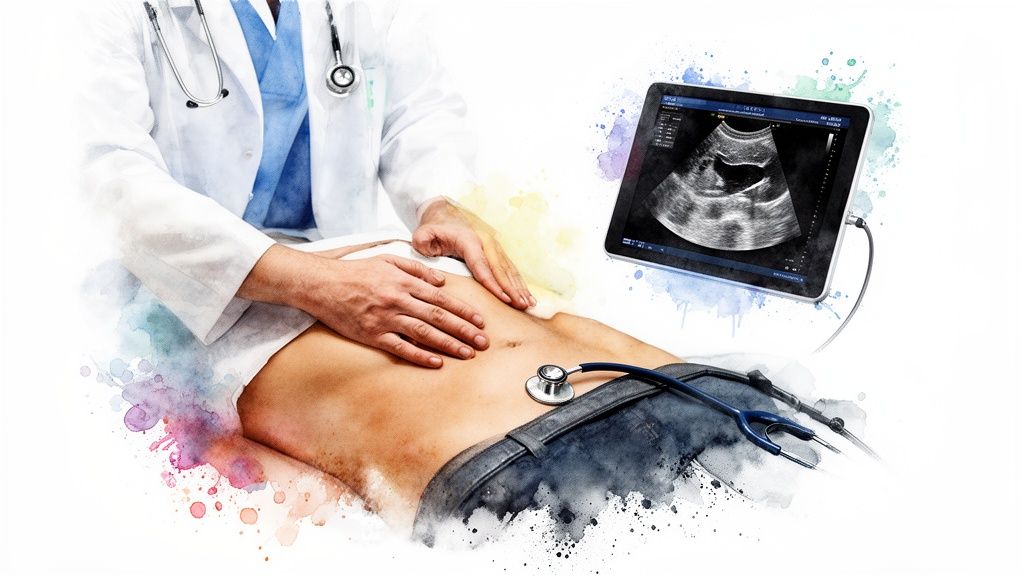
The initial check-up involves more than just questions. Your provider will gently press on different spots around your abdomen to pinpoint the exact location of the tenderness. They’ll also likely ask you to do a few simple movements, like trying to sit up from a lying position or twisting your torso.

This helps them see how you react. By assessing your pain levels, range of motion, and muscle strength, they can get a pretty good idea if the problem is coming from a muscle, not something deeper.

Looking Deeper with Imaging

A lot of the time, a good physical exam is all that’s needed to diagnose a minor abdominal strain. But sometimes, your doctor needs a clearer picture, especially if the injury seems severe or if they need to rule out other potential culprits like a hernia or an issue with an internal organ.

That’s when they might turn to diagnostic imaging tests:

  • Ultrasound: This is often the first choice. It uses sound waves to create a live picture of your muscles. It's a fantastic tool for letting a clinician see any tears, inflammation, or fluid that has built up around the injury.
  • MRI (Magnetic Resonance Imaging): Think of an MRI as the high-definition version. It gives an incredibly detailed view of all the soft tissues. It's the gold standard for confirming the exact grade of a muscle tear and spotting any damage to the surrounding area.

These tools don’t just confirm the diagnosis; they help measure just how significant the injury is, which is key to building the right treatment plan for you.

An accurate diagnosis is your recovery roadmap. It ensures the treatment plan is perfectly matched to the severity of your strain, preventing setbacks and helping you heal more efficiently.

Getting a clear diagnosis from qualified medical professionals is non-negotiable for a safe recovery. If you're looking for specialized care, you can find a network of experienced providers who can assist with complex wound and tissue injuries. By understanding each step of the diagnostic process, you can feel more confident and become an active partner in your own healing journey.

Your Step-By-Step Recovery and Treatment Plan

Recovering from a strained abdominal muscle isn’t a race. Think of it more like a structured journey with distinct stages—if you rush it, you’re just setting yourself up for another injury. Patience is your best friend here. The first priority is simply damage control: calm down the pain and swelling so your muscle fibers can get the best possible environment to start healing.

The initial game plan revolves around the classic R.I.C.E. method: Rest, Ice, Compression, and Elevation. While elevating your core is a bit tricky, the first three are absolutely essential.

Phase 1: Initial Care With The RICE Method

For the first 48-72 hours, your main job is to protect that injured muscle from any more stress. This is where the R.I.C.E. principles become your immediate action plan.

  • Rest: Stop doing whatever hurts. No core workouts, no heavy lifting, and definitely avoid any sharp, twisting movements. This is about relative rest—you don’t need to be stuck in bed, but you absolutely must stop straining the area.
  • Ice: Grab a cold pack, wrap it in a thin towel, and apply it to the sore spot for 15-20 minutes every 2-3 hours. The cold helps constrict blood vessels, which is fantastic for reducing swelling and dulling those pain signals.
  • Compression: Using a simple elastic bandage or an abdominal binder can provide some gentle, supportive pressure. This not only helps minimize swelling but can also feel comforting by limiting movements that would otherwise cause a painful twinge.

Once you’re past that initial inflammatory phase, you can start thinking about introducing some gentle heat. Many people find that alternating between ice and heat helps soothe any lingering stiffness. Some even explore options like sauna therapy for sore muscles to help move the recovery process along.

Phase 2: Reintroducing Gentle Movement

When the sharp, intense pain starts to back off, it’s a sign you’re ready for the next phase. The focus now shifts to gradually bringing back movement and starting the process of rebuilding strength without overwhelming the healing muscle.

Start with incredibly gentle core activation exercises. We’re not talking about a workout here; these are small movements designed to remind the muscle how to function properly. Things like pelvic tilts (lying on your back with knees bent and gently flattening your lower back to the floor) or a simple cat-cow stretch are perfect.

The golden rule here is pain-free movement. If any exercise triggers sharp or worsening pain, stop. Right away. Listening to your body is absolutely non-negotiable during this delicate stage.

The diagnostic process, which is outlined below, is what helps your provider determine just how severe the strain is and guides this entire treatment approach.
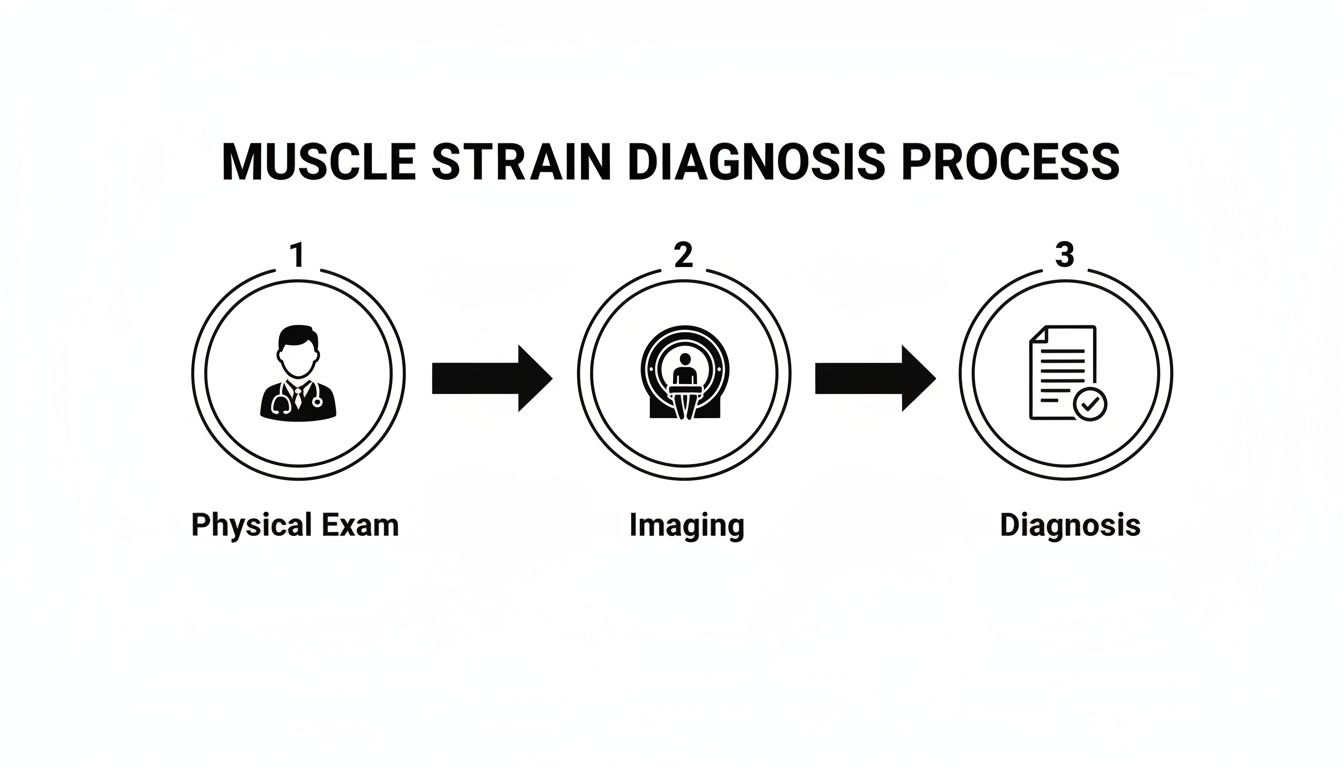
Diagram illustrating the three steps of the muscle strain diagnosis process: physical exam, imaging, and diagnosis.

As you can see, it all starts with a physical exam. From there, imaging might be used to get a clearer picture, leading to a precise diagnosis that allows for a realistic and effective recovery plan.

Phase 3: Progressive Return To Activity

The final phase is all about a structured, gradual return to your normal life, ideally guided by a physical therapist. They can build a personalized program that not only strengthens your core but also gets to the root of any weaknesses that might have led to the strain in the first place.

This stage is especially vital for athletes. It’s a big deal in sports, where groin and abdominal injuries can account for 2-5% of all sports-related injuries. For an athlete on the sidelines, getting the right care is crucial for a fast comeback, especially if surgery was involved. In fact, you can see how visiting nurses manage wound care in the community to get a sense of how important post-injury care is.

With 78.1% of these injuries responding well to focused, targeted interventions, a well-managed recovery plan isn't just a good idea—it’s the key to getting back in the game safely and for good.

Strategies to Prevent Future Abdominal Injuries

Once you've fully recovered from an abdominal muscle strain, the last thing you want is a repeat performance. The goal now shifts to prevention, which isn't about doing endless crunches. It's about building a smarter, more resilient core that can handle whatever you throw at it.

Think of it like building a protective shield around your midsection. This shield is forged from a smart mix of flexibility, functional strength, and paying attention to how you move. Nailing these areas is your best bet for significantly lowering the risk of getting hurt again.

First things first: always warm up properly. Cold, stiff muscles are practically begging to be injured. Before you start any workout or strenuous activity, spend a solid 5-10 minutes on dynamic stretching—these are active movements that get your muscles ready for the work ahead.

  • Leg Swings: Gently swing your legs forward-and-back and then side-to-side. This is great for waking up your hips and lower core.
  • Torso Twists: Stand with your feet about shoulder-width apart and gently rotate your upper body.
  • Cat-Cow Stretches: Get on your hands and knees and flow between arching your back up toward the ceiling and then letting it sink down. This mobilizes the spine beautifully.

This isn't just about going through the motions. A good warm-up literally increases blood flow to the muscles and gets your brain and muscles talking to each other again.

Building a Truly Functional Core

After you’re warm, it’s time to build real strength. The most effective prevention comes from exercises that teach your core how to keep your spine stable, not just how to bend it.

Your core's primary job is to resist unwanted movement and transfer power from your legs to your arms. Functional exercises train this exact skill, making your abdomen far less vulnerable to a sudden, awkward strain.

Bring exercises into your routine that build this kind of stability:

  1. Planks: This is a classic for a reason. It forces your entire core—front, sides, and back—to work as a single, stable unit.
  2. Bird-Dog: This movement is a fantastic challenge for your balance. It also forces those deep core muscles, like the transversus abdominis, to fire up and stabilize your torso.
  3. Glute Bridges: Don't forget your glutes! Strong glutes are crucial for supporting your lower back and pelvis, which takes a ton of unnecessary pressure off your abdominal wall.

Finally, get into the habit of using proper body mechanics for everything you do, especially lifting. Before you pick up something heavy, consciously tighten your abs like you're about to take a light punch to the gut. This simple "bracing" technique creates a firm, supportive cylinder around your spine, protecting both it and your abdominal muscles from being overloaded.

Frequently Asked Questions About Abdominal Strains

Dealing with an abdominal muscle strain naturally brings up a lot of questions about what to expect during recovery and what you can and can't do. Let's walk through some of the most common concerns with clear, expert-backed answers.

How Long Does a Pulled Abdominal Muscle Take to Heal?

The healing timeline really comes down to the severity of the injury. A mild Grade 1 strain, which is essentially a minor overstretching of the muscle fibers, usually feels better in about one to three weeks with the right care.

For a more serious Grade 2 strain, where there's a partial tear in the muscle, you're looking at a longer road—typically four to six weeks for a full recovery. The most severe cases are Grade 3 ruptures, which can take several months to heal and, in rare instances, might even require surgery. Sticking to a structured recovery plan is your best bet for healing as efficiently as possible.

Can I Exercise with an Abdominal Strain?

In the beginning, rest is non-negotiable. You have to give the initial inflammation a chance to calm down. Trying to push through the pain is a recipe for making the tear worse and dragging out your recovery time.

After the first couple of days, you can start to reintroduce some very gentle stretches and basic core activation exercises, but only if they are completely pain-free. It's crucial to stop any activity that causes a sharp or stinging feeling—things like crunches, heavy lifting, or running are off the table for a while. A slow, gradual return to your normal routine is the only way to go.

Listen to your body. Any sharp pain is a clear signal that you're pushing too hard. Stop what you're doing immediately and scale back.

How Do I Know if It Is a Strain or a Hernia?

While the pain from a strain and a hernia can feel surprisingly similar at first, there's often one key difference that helps tell them apart. A hernia will frequently create a visible or palpable bulge right under the skin. This lump might pop out or become more obvious when you cough, laugh, or strain to lift something.

An abdominal muscle strain, on the other hand, is a tear within the muscle tissue itself and doesn't usually create that kind of distinct, localized bulge. If you can see or feel a lump, it's really important to get it checked out by a doctor for an accurate diagnosis.

For complex issues that might come up from severe tears or post-surgical complications, you can book a consult with wound care specialists to explore more advanced treatment options.


At Specialty Wound Care, we are dedicated to accelerating the healing process for complex wounds, helping you return to your daily life safely and quickly. Find out more at https://specialtywoundcare.com.


Collaborative Partnerships: Elevating Wound Care Standards Nationwide

Specialty Wound Care | January 6th, 2026


Collaborative Partnerships: Elevating Wound Care Standards Nationwide

When wound care falls short, patients face longer healing times and greater risks. Specialty Wound Care’s collaborative partnerships with healthcare providers deliver advanced wound care solutions that tackle these challenges head-on. By combining proven wound healing technology with expert clinical support, they raise care standards nationwide—helping you achieve better patient outcomes every day. Learn more.

Enhancing Wound Care Practices

Importance of Collaborative Partnerships

In wound care, partnerships make a world of difference. When healthcare providers work together, they create a network of support that transforms patient care. Specialty Wound Care believes in this collaborative approach. They join forces with providers to address complex wound challenges. By sharing knowledge and resources, these partnerships lead to faster, more effective healing.

Role of Healthcare Providers

Healthcare providers are at the heart of wound care innovation. They bring expertise and compassion, ensuring patients receive top-notch care. Providers identify the right treatments and monitor progress closely, making a real impact on recovery. Specialty Wound Care supports them by offering advanced tools and training. With these resources, providers can tackle even the most stubborn wounds with confidence.

Advanced Technologies in Wound Care

MolecuLight DX Applications

Advanced technology is changing how we treat wounds. Take the MolecuLight DX, for instance. This device provides real-time images of wounds, highlighting areas with high bacterial loads. This means you can target problem spots more effectively. Imagine knowing exactly where to cleanse or apply treatment. It’s a game-changer for both providers and patients.

By using MolecuLight DX, healthcare teams can make informed decisions quickly. This reduces the guesswork and speeds up healing. Studies show that precise imaging can cut healing time significantly. For patients, this means fewer visits and quicker recovery. With tools like this, wound care becomes more efficient and effective. Explore more about MolecuLight DX.

Benefits of Triple-Layer Allografts

Another breakthrough is the triple-layer allograft. This product is designed to boost the healing process. It acts as a scaffold, supporting tissue growth and reducing recovery time. The allograft is made from safe, screened materials, ensuring quality care for patients. This innovation provides a protective barrier, helping wounds heal faster and better.

The triple-layer allograft is versatile. It’s used for different types of wounds, from chronic ulcers to surgical sites. With its unique structure, it adapts to each patient’s needs. This makes it a valuable tool in any healthcare provider’s arsenal. The results speak for themselves: quicker healing and improved patient satisfaction.

Improving Patient Outcomes

Success Stories and Case Studies

Real-world results highlight the effectiveness of advanced wound care solutions. For instance, a patient with a chronic ulcer saw remarkable improvement within weeks. Thanks to a combination of MolecuLight DX and allografts, the wound healed faster than expected. These success stories underscore the importance of innovative treatments.

In another case, a hospital reduced readmission rates by implementing these technologies. Patients experienced fewer complications, leading to better overall health outcomes. These examples show that with the right tools, healthcare providers can achieve outstanding results. Read more success stories.

Future Opportunities for Partnerships

The future of wound care is bright, with many opportunities for growth. As technology evolves, so do the possibilities for collaboration. Specialty Wound Care is committed to fostering partnerships that push the boundaries of what’s possible. By joining forces, providers can explore new treatment methods and share insights.

There’s always room to improve care standards and patient outcomes. By continuing to work together, healthcare providers can ensure that every patient receives the best treatment available. The journey of innovation and collaboration is ongoing, with endless potential for advancements in the field. Join the community of innovators.

Visit now

Uncategorized

Your Essential Guide to Navigating 37 Weeks Gestation

Primus Healthcare | January 6th, 2026


You’ve made it to 37 weeks—a huge milestone that officially kicks off the “early term” period. This is an exciting moment. It means your baby is developed enough that the major risks of preterm birth are now behind you.

Think of it like this: your baby is fully baked. These last few weeks are just for adding the final, perfect touches before their big debut.

What "Early Term" Really Means

Hitting 37 weeks is a massive sigh of relief for most parents-to-be. You're on the home stretch, and your baby is mature enough to thrive if they were born today. But even though the finish line is so close, these last few weeks are still incredibly important for final touches, especially for brain and lung development.

This stage is officially called “early term,” and it covers the period from 37 weeks and 0 days to 38 weeks and 6 days. It’s different from "full term" (which starts at 39 weeks) because it highlights that while your baby is ready, a little more time in the womb is still beneficial.

The term was created to make an important distinction. It acknowledges that while your baby has graduated from the "preterm" category, those born now might still face a few more minor hiccups than babies born just two weeks later.

Why This Week Is Such a Big Deal

So, what’s the magic of 37 weeks? It’s the point where the most serious risks tied to prematurity plummet. Every year, around 15 million infants worldwide are born before this mark, often facing significant health challenges. By now, your baby's systems are far more prepared for life on the outside. You can learn more about the global impact of preterm births from studies on the topic.

This guide will walk you through everything happening this week, from your baby’s final growth spurts to the first real signs of labor. We'll cover:

  • Your baby’s last-minute preparations for birth.
  • The physical symptoms you’re probably feeling right now.
  • How to tell the difference between practice contractions and the real deal.
  • Key medical checks, like the Group B Strep screening.

Knowing what’s going on at 37 weeks helps you navigate this final stretch with confidence, feeling ready for the incredible transition into parenthood.

Your Baby's Development at 37 Weeks

A pregnant woman cradles her belly, showing a baby and a spinach leaf in a watercolor style.

At 37 weeks, your baby is officially considered "early term." While that sounds like they’ve crossed the finish line, this week is still packed with crucial final preparations for life on the outside. Think of it less as waiting and more as the final training montage before the main event. They’re honing essential skills, building strength, and getting into the perfect position for their grand entrance.

Size and Appearance

Right now, your baby weighs around 6.5 pounds and measures about 19 inches long—roughly the length of a big stalk of Swiss chard. They're still packing on about half an ounce of fat every single day.

This isn't just for creating those adorable chubby cheeks we all love. That extra layer of fat is vital for helping them regulate their body temperature after birth, giving them a much-needed energy reserve for their first few days.

Key Developmental Milestones

Even though your baby might look fully cooked on an ultrasound, their brain and lungs are still maturing at an incredible pace. These final weeks are absolutely essential for strengthening these critical organs.

Here's a closer look at the key developments happening inside the womb right now.

Developmental Area Status at 37 Weeks Significance for Birth
Brain and Nerves Myelin sheaths continue to form around nerves, speeding up neural connections. Supports coordinated reflexes like sucking, swallowing, and grasping right after birth.
Lung Function Production of surfactant ramps up, preventing lung air sacs from collapsing. Crucial for ensuring your baby can take their first breaths without difficulty.
Reflex Practice Baby is actively sucking their thumb and swallowing amniotic fluid. These are practice runs for feeding and are key indicators of a healthy nervous system.
Immune System Continues to receive antibodies from you through the placenta. Provides passive immunity to help protect them from illness during their first months.

By the time you reach 37 weeks, your baby's coordination is surprisingly advanced. They can grasp firmly with their tiny fingers, and you might even catch them sucking their thumb during an ultrasound—a truly reassuring sign of their developing reflexes.

Getting Into Position for Birth

At this stage, most babies have settled into the ideal head-down position, which is the safest and most common orientation for a vaginal delivery. As your baby moves deeper into your pelvis in preparation for labor, you might feel a distinct shift known as "lightening" or "engagement."

This is the moment the baby "drops," and it’s a major signal that your body is getting ready for the big day.

What Is Lightening?

Lightening can feel like your entire center of gravity has shifted downward. You might glance in the mirror and notice your baby bump looks lower than it did before. One of the biggest perks? You might suddenly find it much easier to breathe, as the pressure is finally off your diaphragm.

Of course, this newfound space up top usually comes with a trade-off: more pressure down below. This can mean more frequent trips to the bathroom and the classic end-of-pregnancy "waddle" as your baby settles into the final stretch.

The timing of lightening is different for everyone. If this is your first baby, it could happen a few weeks before labor starts. For moms who've given birth before, it might not happen until contractions are already underway. Either way, it’s an exciting sign that you’re getting closer to meeting your little one.

Understanding Your Body's Changes and Symptoms

Pregnant woman sits cross-legged, holding her glowing belly, surrounded by watercolor splashes.

By 37 weeks, your body is deep in prep mode, sending you clear signals that the main event is just around the corner. It can almost feel like you're learning a new language, where every little ache and twinge seems to mean something. Learning to interpret these signals can help you feel more in control as you navigate these final weeks.

One of the most undeniable feelings is a heavy, persistent pressure in your lower abdomen and pelvis. This is often because your baby has "dropped" or settled deeper into your pelvis, a process called lightening. While this shift can make it easier to catch your breath, it puts a ton of new weight on your bladder, meaning even more trips to the bathroom.

Common Physical Symptoms and Sensations

As your body gears up for labor, you'll probably notice a whole host of physical changes. They're all a normal part of the journey, even if they're not always comfortable. Just knowing what they are can bring a lot of peace of mind.

Here are some of the most common things you might be feeling right now:

  • Braxton Hicks Contractions: Those "practice" contractions are likely getting stronger and more frequent. They usually feel like a tightening across your belly but are irregular and tend to fade if you move around or change positions.
  • Changes in Vaginal Discharge: You might notice you have more discharge than usual, or you could see a thick, mucus-like blob. This may be part of your mucus plug, which has been acting as a protective barrier for your uterus.
  • Pelvic and Back Pain: The hormone relaxin has been busy loosening up all your ligaments for months. This can lead to nagging aches in your lower back and hips as your body gets ready for the big day.

With all this pressure, you might also run into other discomforts. For instance, hemorrhoids are quite common at this stage; if that's happening, you can look into finding gentle natural hemorrhoid relief in pregnancy.

Managing Discomfort in Late Pregnancy

While some discomfort is just part of the deal, there are absolutely things you can do to feel better during these last few weeks. The number one rule is to listen to your body and rest whenever you get the chance. You'd be surprised how much a few simple adjustments can help.

Don’t underestimate the power of rest. Your body is doing an incredible amount of work, even when you're sitting still. Giving yourself permission to slow down is one of the best things you can do for yourself and your baby right now.

Try working these simple strategies into your day:

  1. Use Pillows for Support: When you're sleeping or just resting, tuck pillows between your knees and under your belly. This helps align your hips and can take a lot of pressure off your back.
  2. Take Warm Baths: Soaking in a warm (but not hot!) bath is fantastic for soothing sore muscles and helping you unwind.
  3. Practice Gentle Stretches: Simple movements like pelvic tilts or cat-cow stretches can ease lower back pain and might even encourage your baby to stay in a great position for birth.

Embracing these small comforts can make the physical challenges of 37 weeks gestation much more manageable, freeing you up to focus on the incredible arrival that's just around the corner.

Important Medical Checkups This Week

As you get closer to your due date, you'll probably notice your prenatal appointments shift to a weekly schedule. Your visit at 37 weeks is a big one—it’s all about checking on your well-being and making sure your baby is getting into a good position for a safe arrival. Your provider will do the usual checks like your blood pressure and fundal height and listen to that sweet heartbeat, but a couple of key screenings really take center stage this week.

These checkups are so important because they help screen for things that could impact your delivery. The 37-week mark is a major milestone worldwide, as it officially means you've crossed the line from "preterm" to "early term." The World Health Organization reported a staggering 13.4 million preterm births back in 2020, which really shows why monitoring in these final weeks is crucial for the best possible outcomes. You can learn more about the global health side of early-term births from this UCSF study.

The Group B Strep Screening

One of the most important tests you’ll have right around now is the Group B Streptococcus (GBS) screening. GBS is just a common type of bacteria that about 25% of healthy pregnant women carry, usually without causing any symptoms at all.

The test itself couldn't be simpler. Your doctor or midwife just uses a cotton swab to take a quick sample from your lower vagina and rectum.

If you test positive, don't worry. It just means the bacteria is present—it’s not an active infection and won’t harm you. The only concern is that it can be passed to the baby during a vaginal delivery, and in rare cases, that can lead to a serious infection. To prevent this, you'll simply be given IV antibiotics once you’re in active labor.

Understanding Cervical Checks

Sometime around now, your provider might start offering internal exams to check your cervix. This is a manual check where your doctor or midwife feels for three key signs of progress:

  • Dilation: How much your cervix has started to open (measured from 0 to 10 centimeters).
  • Effacement: How much your cervix has thinned out (measured as a percentage).
  • Station: How low your baby's head has dropped into your pelvis.

While these checks can give you a little snapshot of what your body is up to, they definitely aren’t a crystal ball. They can’t predict when labor will actually start. Some people walk around a few centimeters dilated for weeks, while others go from completely closed to ready-to-push in just a few hours.

Monitoring Fetal Movement at Home

Between your appointments, your most important job is keeping tabs on your baby's movements. You’re the expert on your baby's daily rhythm. Many providers suggest doing "kick counts" every day just to make sure your little one is happy and active in there.

How to Do Kick Counts: Pick a quiet time of day, get comfy on your side, and see how long it takes to feel 10 distinct movements. These can be kicks, flutters, swishes, or rolls. It should take less than two hours.

If you ever notice a big change in your baby's movement pattern or can't feel 10 movements within two hours, call your provider right away. Don't ever hesitate or wait it out. It's always, always better to be cautious and get checked. With regular appointments and your own monitoring, you’re making sure you and your baby get the best care possible. You can even schedule specialized appointments if you have specific concerns you want to discuss.

How to Recognize the Real Signs of Labor

The biggest question on your mind at 37 weeks gestation is probably, "Is this it?" After weeks of your body sending practice signals, it's finally time to learn how to spot the real thing.

Knowing how to tell the difference between early signs and active labor is a huge stress-reducer. It gives you the confidence to know exactly when to act. The three classic signs that labor is truly starting are consistent contractions, your water breaking, and seeing the "bloody show."

At 37 weeks, you're likely feeling all sorts of new sensations. To help figure out if it's the main event, it’s really helpful to understand how to distinguish between gas pains and contractions. Real labor contractions are different because they don’t just fade away—they build a clear, undeniable pattern.

Tracking True Labor Contractions

Unlike the random, annoying tightening of Braxton Hicks, true labor contractions will gradually grow stronger, last longer, and get closer together over time. They won't stop if you change positions, walk around, or chug some water. In fact, getting active often makes them even more intense.

A great way to track them is with the 5-1-1 Rule. This is a simple guideline that helps you decide when it's time to call your provider and head to the hospital.

  • Contractions are 5 minutes apart (measured from the beginning of one to the beginning of the next).
  • Each one lasts for about 1 minute.
  • This pattern has been going on for at least 1 hour.

This rule is a pretty reliable signal that you're shifting into the active phase of labor.

For a clearer picture, here’s a quick comparison to help you tell those pesky practice contractions from the real deal.

Braxton Hicks vs True Labor Contractions

Characteristic Braxton Hicks (Practice Contractions) True Labor Contractions
Frequency Irregular, unpredictable, and don't get closer together. Come at regular intervals and get closer together over time.
Strength Usually weak and don't get progressively stronger. Steadily increase in strength and intensity.
Location Often felt only in the front of the abdomen or in one specific area. Typically start in the back and move to the front.
Effect of Movement May stop when you walk, rest, or change positions. Continue regardless of movement or position changes.

Remember, Braxton Hicks are your body’s way of warming up, but true labor contractions are the main event, signaling that things are really getting underway.

Other Key Signs of Labor

Besides contractions, there are a couple of other classic signs that your baby is on the way. You might experience just one or all three, and they can show up in any order.

  1. Your Water Breaking (Rupture of Membranes): This can be a dramatic gush of fluid like you see in the movies, but it can also be a slow, steady trickle that you barely notice. Amniotic fluid is usually clear and odorless. If you think your water has broken—or if the fluid is greenish or brown—call your provider right away.
  2. The "Bloody Show": As your cervix starts to open (dilate), you might lose your mucus plug. This can come out with a small amount of pink or brownish blood. It’s a great sign that your cervix is changing to get ready for delivery.

Keep in mind that every labor is different. You might not get all of these signs, and the order can be totally unique to you. The most important thing is to listen to your body and trust your gut. When in doubt, always call your doctor or midwife.

This chart offers a simple way to think about monitoring your baby's activity, which is a super important job during this waiting game.

A black and white flowchart asking 'Is baby okay?'. It asks 'Feel movement?'. 'Yes' leads to 'You're okay', 'No' leads to 'Call doctor'.

The bottom line is that any change in your baby's normal movement pattern is a reason to call your healthcare provider for guidance.

Final Preparations for Birth and Beyond

An open bag filled with baby essentials, including a onesie, diapers, phone, and documents, on a vibrant watercolor background.

The finish line is so close you can almost feel it. At 37 weeks gestation, your focus naturally starts to shift from tracking pregnancy milestones to handling the real-world logistics of birth and what comes next. Now is the perfect time to get everything in order so you can feel calm and ready.

This isn’t just about packing a hospital bag. It's about setting yourself up mentally and emotionally for the "fourth trimester"—that crucial postpartum period. Getting these details sorted out now means less stress when labor starts, freeing you up to focus on the incredible moment of meeting your baby.

Fine-Tuning Your Birth Plan

Think of your birth plan as a guide, not a rigid script. Go over your preferences with your partner and provider one more time, but remember that labor has a mind of its own. Staying flexible is key.

Consider your final wishes for these important moments:

  • Pain Management: Revisit your options, whether that’s an epidural or unmedicated approaches like breathing techniques.
  • Labor Support: Confirm who you want in the room with you. Is your partner your primary support, or will a doula or family member be there too?
  • The Golden Hour: Do you want immediate skin-to-skin contact? Are you hoping for delayed cord clamping?
  • Newborn Procedures: Make sure you're clear on your preferences for things like the vitamin K shot and eye ointment.

Your birth plan is a powerful communication tool. It helps your care team understand your wishes, but remember the ultimate goal is always a safe delivery for you and your baby. Flexibility is your greatest asset.

Preparing for Postpartum Life

Your preparation doesn't end when your baby arrives. In fact, setting up your home and support system for the postpartum period is one of the most important things you can do right now.

Here’s a simple checklist to get you started:

  1. Pack Your Hospital Bag: Get those essentials ready for you, your baby, and your partner. Don’t forget the easy stuff—chargers, snacks, and clothes you’ll actually feel comfortable in.
  2. Set Up Baby’s Space: Make sure the crib or bassinet is assembled with a firm mattress and no loose bedding. Have diapers, wipes, and a few onesies within easy reach for those first few days.
  3. Arrange Your Support System: Now is the time to organize a meal train or graciously accept those offers from friends and family to help with chores. Having a support network in place is absolutely critical for your recovery.

Postpartum recovery is both a physical and emotional journey. If you find yourself with any health concerns after delivery, you can always book a consult to discuss your specific needs. Planning ahead for this period helps ensure you have the resources you need to confidently step into parenthood.

Frequently Asked Questions at 37 Weeks

As you get closer to the finish line, you're bound to have a ton of questions pop into your head. It's an incredibly exciting time, but it can also feel a little uncertain. We’ve pulled together some of the most common questions we hear to give you clear, reassuring answers as you get ready to meet your baby.

Is It Safe for a Baby to Be Born at 37 Weeks?

Yes, a birth at 37 weeks gestation is generally considered safe. Your baby is now officially in the "early term" category. This is great news! It means their major organs are fully developed and they’ve passed the most significant risks that come with being premature.

That said, those last couple of weeks before hitting "full term" (39 weeks) are still incredibly valuable. Think of it as bonus time for crucial brain and lung maturation, which often leads to better health outcomes right after birth. While an early-term baby might have a few minor hiccups like jaundice or some feeding challenges, they almost always do great with standard newborn care.

What Can I Do to Naturally Induce Labor?

It’s completely understandable to want to get things moving at this point, but it's almost always best to let labor start on its own. Those final weeks are so important for your baby’s final touches on development. Most of the popular "natural induction" methods you hear about, like eating spicy foods or going on long walks, aren't actually proven to work—and some can even have risks.

It's absolutely crucial to talk with your doctor or midwife before you try anything to bring on labor. They know your specific health situation and can give you the safest advice.

For more answers to common questions, feel free to check out the other FAQs on our website.

Overcoming Challenges in Wound Care: The Role of Technology

Specialty Wound Care | January 5th, 2026


Overcoming Challenges in Wound Care: The Role of Technology

Wound care challenges create barriers that slow healing and frustrate both patients and providers. Traditional methods often miss critical details, leaving wounds vulnerable to infection and delayed recovery. Specialty Wound Care solutions, like MolecuLight DX and the triple-layer allograft, offer new ways to address these obstacles with precision and care. Let’s explore how advanced wound care technology can improve your treatment results and support enhanced healing. For more insights, check out this source.

Understanding Wound Care Challenges

Healing wounds isn’t always straightforward. Factors like infections and delayed interventions can complicate recovery. Understanding these hurdles is crucial to improving patient outcomes.

Common Obstacles in Treatment

Treating wounds involves more than just bandaging. Imagine dealing with infections and poor circulation. These can turn a simple wound into a persistent problem. Statistics show that nearly 85% of amputations result from poorly managed ulcers. This highlights the need for better treatment methods. Often, traditional methods fail to address underlying issues. For example, untreated infections can worsen, prolonging the healing process.

Another challenge is the lack of comprehensive wound assessment tools. Traditional tools may overlook critical infection signs. This can lead to inadequate treatment and increased risk of complications. Read about telehealth solutions that are transforming how wounds are monitored and treated remotely.

Impact on Patient Recovery

Slow healing can frustrate patients and healthcare providers alike. Imagine how the ongoing pain and worry affect daily life. Patients with chronic wounds often face long hospital stays and multiple interventions. This not only affects their health but also their quality of life. 60,000 patients die annually due to complications from pressure ulcers.

Delayed healing impacts mental health, too. Patients may experience anxiety and depression. This emotional toll can hinder recovery even more. Addressing these challenges requires a shift towards innovative solutions and technologies.

Advanced Wound Care Technology Solutions

To overcome these challenges, new technologies are leading the way. Advanced tools and methods promise better outcomes and quicker recovery times.

Role of MolecuLight DX

MolecuLight DX is a game-changer in wound care. This technology provides detailed images of wounds, highlighting areas with high bacterial loads. This allows for informed decisions on cleaning and treatment. Traditional methods often miss these details. With MolecuLight DX, you can target problem areas precisely. This ensures that every part of the wound gets the attention it needs.

Consider this example: A patient with a non-healing wound received treatment guided by MolecuLight DX. The images revealed bacteria missed by other methods. After targeted cleaning and treatment, healing accelerated remarkably. The precision of MolecuLight DX reduces the risk of complications, supporting faster recovery.

Benefits of Triple-Layer Allograft

Another breakthrough is the triple-layer allograft. This allograft acts as a scaffold to support new tissue growth. Made from carefully screened materials, it enhances the healing environment. It provides essential nutrients and growth factors. This promotes faster and more effective healing.

For patients with hard-to-heal wounds, this means a significant difference. Instead of prolonged recovery, they experience quicker tissue regeneration. The allograft is compliant with FDA regulations, ensuring safety and efficacy. This innovation offers hope to patients and providers seeking reliable solutions.

Specialty Wound Care’s Innovative Approach

At Specialty Wound Care, innovation drives everything we do. We focus on providing technologies and methods that truly make a difference.

Enhancing Healing Outcomes

Our solutions aim to improve healing outcomes significantly. By integrating tools like MolecuLight DX and triple-layer allografts, we offer comprehensive care. This approach addresses the root causes of chronic wounds. Our goal is simple: help patients heal faster and return to their normal lives.

Imagine a world where wounds heal without complications. Where patients and providers trust the treatment process. Our advanced technologies are paving the way to make this a reality. Discover more about our innovative methods.

Partnering for Optimal Recovery

We believe in collaboration. Partnering with healthcare providers ensures the best outcomes for patients. Our team works closely with medical professionals to tailor treatments. This collaboration allows for personalized care plans that meet specific needs.

By choosing Specialty Wound Care, you gain access to a network of experts dedicated to your recovery. We support you every step of the way, combining technology and expertise to achieve optimal results. Together, we can redefine what’s possible in wound care.

Download our essential wound care problem guide today.

Uncategorized

Abdominal Pain Right Side: abdominal pain right side, Causes & Red Flags

Primus Healthcare | January 5th, 2026


That pain on your right side is your body trying to tell you something. It's an incredibly common signal, but it can mean anything from simple indigestion to a serious emergency like appendicitis. The first clue to figuring it out is simple: where, exactly, does it hurt? Is it higher up or lower down?

Understanding Your Abdomen's Geography

Think of your abdomen as a map divided into four quadrants. When you’re dealing with pain on the right side, a doctor immediately zeroes in on two of these zones: the upper right quadrant and the lower right quadrant. Each area houses a different set of organs, and knowing what lives where is the first step in decoding the pain’s message.

This simple geographical approach helps turn vague worry into a clear understanding of why location is so critical for diagnosis.

The Upper Right Quadrant

Your upper right quadrant, tucked just below your right ribs, is some seriously important real estate. The main residents here are:

  • The Liver: Your body's biggest internal organ, constantly filtering blood and making bile.
  • The Gallbladder: A small sac nestled under the liver that stores that bile.
  • The Pancreas: A gland sitting behind your stomach, with its "head" reaching into this quadrant.
  • Parts of the Small Intestine and Colon: Sections of your digestive tract are also passing through.

Pain that starts here is very often linked to the liver or gallbladder—think gallstones or inflammation.

The Lower Right Quadrant

Moving down, the lower right quadrant is another hot spot for diagnostic clues. This neighborhood contains:

  • The Appendix: That small, finger-shaped pouch connected to your large intestine.
  • The Ascending Colon: The first section of the large intestine.
  • Portions of the Small Intestine: The final parts of the small bowel.
  • The Right Ovary and Fallopian Tube (in women): Key reproductive organs.
  • The Right Ureter: The tube carrying urine from your right kidney.

This is the area famous for appendicitis pain, but it can also flag problems with the ovaries, intestines, or even a kidney stone on the move.

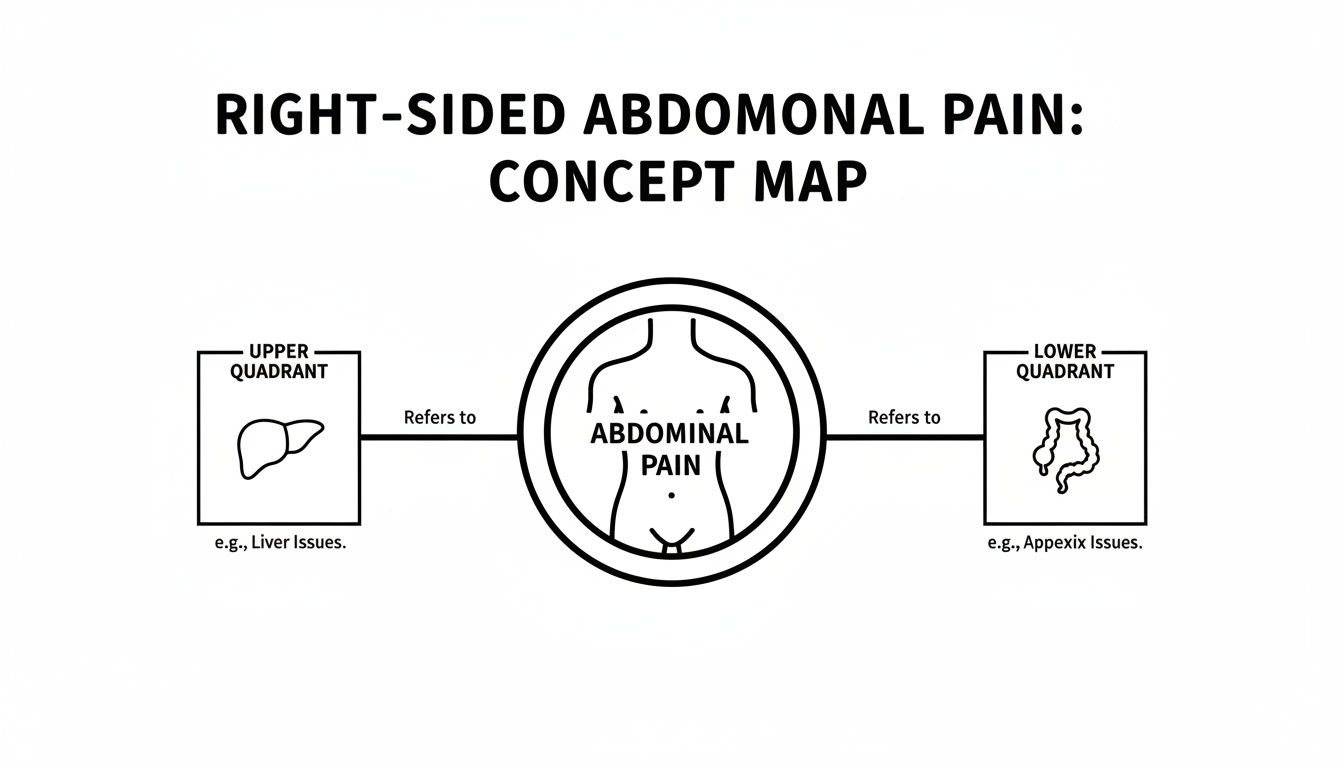
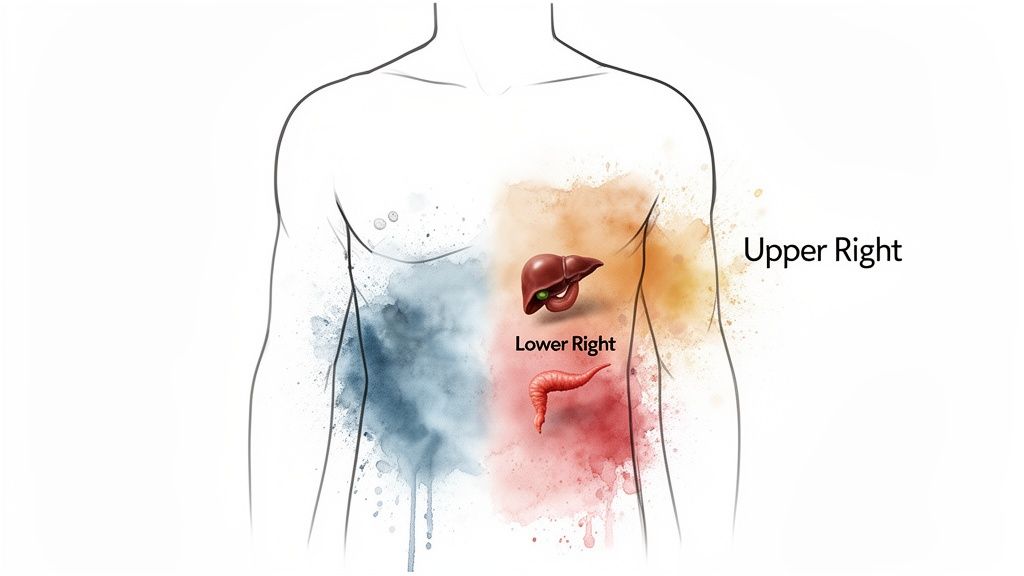
The map below helps visualize which organs are in the upper versus the lower right side.

Concept map illustrating right-sided abdominal pain, distinguishing between upper (liver issues) and lower (appendix issues) quadrants.

This visual really drives home how quickly location helps narrow down the possibilities, pointing toward the liver and gallbladder up top or the appendix down below.


Here's a quick reference table to help you connect the dots between where you feel the pain and what might be going on inside.

Quick Guide to Right-Sided Pain Locations and Potential Sources

Pain Location Quadrant Key Organs in This Area Common Causes of Pain
Upper Right Quadrant Liver, Gallbladder, Pancreas, Duodenum Gallstones, Hepatitis, Liver Abscess, Pancreatitis
Lower Right Quadrant Appendix, Ascending Colon, Right Ovary Appendicitis, Ovarian Cysts, Hernia, Kidney Stones, IBD

This isn't for self-diagnosis, of course, but it gives you a starting point for understanding what your healthcare provider is thinking about when they ask, "Where does it hurt?"


The number of people dealing with these issues is staggering. Pain on the right side of the abdomen is a major factor in nearly 10% of all emergency room visits around the world.

And appendicitis, the classic cause of sharp lower right abdominal pain, isn't rare—it affects about 7% of people in the U.S. during their lifetime, leading to over 250,000 hospitalizations every year in the States alone. You can dive deeper into the causes and treatments for right-sided abdominal pain to get a more complete picture.

Pain in Your Upper Right Abdomen Explained

When pain decides to set up camp on your right side, just under your ribs, it's usually pointing to a specific neighborhood of organs. This area, the upper right quadrant, is prime real estate for your liver, gallbladder, and parts of your pancreas and intestines. Any discomfort here is like a flashing light on your body's dashboard, often signaling trouble with the gallbladder or liver.

Anatomical illustration of human torso showing liver, gallbladder, and appendix in the right abdominal quadrants.

Learning to recognize the signature pain patterns of each organ is the first step toward figuring out what your body is trying to tell you. Of course, this doesn't replace a doctor's visit, but understanding these signals helps you give a much clearer picture of what's going on.

The Gallbladder: Common but Intense Pain

Your gallbladder is a small, pear-shaped organ tucked beneath the liver. Its main job is to store bile, a fluid your liver makes to help digest fats. Think of it as a small reservoir. The trouble often starts when you eat a fatty meal, and the gallbladder contracts to release that bile into your small intestine.

The most common culprit here is gallstones—hard, pebble-like deposits that form inside the gallbladder. They can be as tiny as a grain of sand or as large as a golf ball. Many people have them and never know it, but if they move and block a bile duct, the pain can be absolutely excruciating.

Gallstone-related pain, known as biliary colic, often feels like a sudden, intense ambush. It's a sharp, cramping, or gnawing pain that can stick around for 30 minutes to several hours.

This kind of pain is notorious for showing up after a heavy or greasy meal, often hitting in the evening or waking you up at night. The pain can be so severe it literally takes your breath away, and it might even radiate to your right shoulder or between your shoulder blades.

If a gallstone creates a stubborn blockage, it can lead to cholecystitis, which is just a fancy term for gallbladder inflammation. This is a more serious situation, bringing on a more constant, severe pain that's often joined by:

  • Fever and chills
  • Nausea and vomiting
  • Tenderness when you press on your upper right abdomen

The Liver: A Source of Dull, Aching Pain

The liver is a large and remarkably resilient organ, but it's not immune to problems. Unlike the sharp, sudden attacks from the gallbladder, pain coming from the liver is usually described as a dull, persistent ache or a feeling of fullness in that upper right area.

Several conditions can cause the liver to become inflamed and sore. Hepatitis, which simply means inflammation of the liver, is a major one. This can be caused by viral infections (like Hepatitis A, B, or C), drinking too much alcohol, or other underlying health issues.

Another increasingly common problem is fatty liver disease, where too much fat builds up in the liver cells. It's often silent in the early stages, but as it progresses, it can cause inflammation and that tell-tale nagging ache on your right side.

The Pancreas: An Overlapping Concern

While the pancreas is located more in the center of your abdomen, behind the stomach, its "head" actually reaches into the upper right quadrant. When the pancreas becomes inflamed—a condition called pancreatitis—it can cause severe upper abdominal pain that often radiates straight through to your back.

So, while the pain is technically more central, it's very common for people to perceive it as right-sided pain. This pain is usually constant, severe, and tends to get worse after eating or when you're lying down flat. Interestingly, gallstones are one of the leading causes of acute pancreatitis, creating a direct link between gallbladder and pancreas problems.

Getting to the Bottom of Lower Right Abdomen Pain

While the upper abdomen has its own common culprits, the lower right quadrant is a real diagnostic hotspot, notorious for causing intense and often urgent problems. When pain strikes this area, you need to pay close attention. It’s home to the appendix, parts of your colon, and crucial reproductive organs, so understanding what might be going on can help you figure out when a simple twinge has turned into a true emergency.

Illustration of a human torso experiencing sharp pain in the upper right abdomen, affecting the liver.

The complexity of this area is exactly why abdominal pain right side is a massive driver for healthcare visits. In the US, it's one of the top symptoms that sends people to GI outpatient appointments and is a regular feature in the ER. Globally, conditions like appendicitis are a leading reason for hospital stays, which just goes to show how often this specific pain is a sign of something serious. If you're interested in the numbers, you can dig deeper into the epidemiology of abdominal pain to see its widespread impact.

Appendicitis: The Most Famous Culprit

When you hear "pain in lower right abdomen," appendicitis is probably the first thing that pops into your head—and for good reason. It’s one of the most common causes of emergency abdominal surgery. The whole thing kicks off when the appendix, a small finger-shaped pouch hanging off the large intestine, gets inflamed and fills with pus.

The pain from appendicitis follows a classic, almost textbook progression. It usually starts as a dull, vague ache right around your belly button. But over the next few hours, that discomfort gets sharper and starts to move, settling into a constant, intense pain in the lower right quadrant.

Clinicians often pinpoint appendicitis pain at a spot known as McBurney's point—located about two-thirds of the way from your navel to the bony bump on your right hip. Just pressing on this area can cause significant tenderness.

A few other symptoms usually tag along, creating a pretty clear clinical picture:

  • A low-grade fever that might get worse as the inflammation ramps up
  • Nausea and even vomiting
  • A complete loss of appetite
  • Feeling bloated or constipated

If you ignore it, an inflamed appendix can actually burst. That’s a life-threatening complication that spreads infection all through the abdomen. This is why any worsening lower right abdominal pain is a signal to see a medical professional right away.

Other Potential Causes in the Lower Right Quadrant

While appendicitis gets all the headlines, it’s far from the only show in town. A few other conditions can cause similar symptoms down there, making a professional diagnosis absolutely critical.

Kidney Stones
When a kidney stone decides to make a run for it from the right kidney down the ureter, it can cause excruciating, sharp pain. People often describe this pain as "colicky," meaning it comes in intense waves and can even radiate down to the groin. It’s typically joined by other tell-tale signs like painful urination, seeing blood in your urine, or feeling a constant, urgent need to go.

Hernias
An inguinal hernia happens when tissue, like a piece of the intestine, pushes through a weak spot in your abdominal muscles. This can create a noticeable bulge in the groin or scrotum and cause anything from a dull ache to a sharp pain, especially when you cough, bend over, or lift something heavy.

Gender-Specific Causes of Lower Right Abdominal Pain

Because the lower right quadrant also houses key reproductive organs, some causes of pain are specific to a person's biology.

For women, several gynecological issues can create pain that feels a lot like appendicitis:

  • Ovarian Cysts: A ruptured cyst on the right ovary can trigger sudden, severe, and sharp pain.
  • Ovarian Torsion: This is a true medical emergency where the ovary twists on itself, cutting off its blood supply and causing intense pain.
  • Ectopic Pregnancy: When a pregnancy implants outside the uterus (usually in a fallopian tube), it can cause sharp pain and is another life-threatening condition.

For men, a condition called testicular torsion can cause severe pain that starts in the testicle and radiates up into the lower abdomen. Just like ovarian torsion, this is an emergency that needs immediate surgery to save the testicle. This wide array of possibilities is exactly why trying to self-diagnose abdominal pain right side is a bad idea—the stakes are just too high.

When Digestive Issues Are the Real Culprit

Not all right-sided abdominal pain screams for an emergency room visit. Sometimes, the problem isn’t a single, inflamed organ like the appendix or gallbladder. Instead, the discomfort comes from the way your whole digestive system is working—or not working—at the moment.

Think of it this way: conditions like simple indigestion, trapped gas, or Irritable Bowel Syndrome (IBS) can all throw a wrench in the works, causing very real pain that just happens to show up on your right side.

Illustration of a person holding their painful right abdomen, with watercolor splatters and internal organs.

Your large intestine, or colon, is a long and winding road. On the right side, right up near your liver, it takes a sharp turn known as the hepatic flexure. It's a bit like a tight corner on a highway, and it’s a classic spot for gas to get stuck. When that happens, it can cause sharp, stabbing pains that feel incredibly alarming, easily mimicking a gallbladder attack.

Similarly, a simple case of indigestion after eating too fast or indulging in greasy food can cause a dull, burning ache anywhere in your upper abdomen, including the right side. While it’s no fun, this kind of pain is usually short-lived and goes away on its own.

Irritable Bowel Syndrome: A Common Impersonator

Then there's Irritable Bowel Syndrome (IBS), a functional gut disorder. This means that even though your digestive system looks perfectly normal on scans, it just doesn't function correctly. IBS is really a collection of symptoms: cramping, bloating, gas, and unpredictable bowel habits like diarrhea, constipation, or a frustrating mix of both.

The pain from IBS often comes from intense muscle spasms in the colon. These spasms are unpredictable and can be quite severe. When they hit the right side of your colon, the pain can be sharp enough to make you worry something is seriously wrong.

Unlike the steady, escalating pain of appendicitis, IBS pain tends to be chronic. It follows a frustrating pattern of flaring up for a while before settling back down. Stress, certain foods, and even hormonal changes can all be triggers. This is why keeping a symptom and food diary is often the first and most powerful step toward figuring out your personal triggers and getting some relief.

Telling Functional Pain Apart From a True Emergency

So, how do you know if you're dealing with a manageable issue like IBS or a genuine medical emergency? The key is to look at the whole clinical picture, not just the pain itself.

  • The Pain Pattern: Has this pain been coming and going for weeks or months? That points more toward IBS. Is it a brand-new, severe pain that's getting worse by the hour? That’s a potential red flag for something like appendicitis.
  • What Helps (or Doesn't): Pain from gas or IBS often gets better after you have a bowel movement or pass gas. The pain from a true emergency won't be relieved by either.
  • The Red Flags: Watch out for "red flag" symptoms. A high fever, constant vomiting, a hard or rigid abdomen, or pain so bad you can't find any relief are all clear signals that you need to get medical help right away.

It's important to remember that general digestive discomfort is incredibly common. One massive global study found that 51.9% of adults experienced abdominal pain in the last three months, with many cases linked directly to eating—a common trigger for both gallstones and IBS. The research, detailed in the full Rome Foundation global study, also noted that frequent meal-related pain was more common in younger people and women, showing how these functional disorders can affect different groups.

While this kind of functional pain isn’t life-threatening, it can absolutely torpedo your quality of life. The bottom line is to work with your healthcare provider to get a solid diagnosis, rule out anything more serious, and build a management plan that actually works for you.

Red Flag Symptoms You Should Never Ignore

Most of the time, a pain on your right side is just a temporary nuisance. But sometimes, it's your body's version of a blaring fire alarm. Learning to spot these "red flag" symptoms isn't just a good idea—it can be life-saving. Think of them less as suggestions and more as direct orders to get medical help, fast.

The key is to quickly figure out if you're dealing with simple discomfort or a genuine crisis. When that pain is joined by other severe symptoms, the "wait and see" approach is off the table. Getting a fast, accurate diagnosis becomes the top priority.

When to Go to the Emergency Room

If your right-sided abdominal pain comes with any of the following, it's time to head to the nearest emergency room or urgent care center. For anyone experiencing these kinds of severe symptoms, a local Burton urgent care provider can offer immediate help. Don't hesitate if you notice:

  • Unbearable Pain: We're talking about pain so bad you can't stand up straight, get comfortable, or even think clearly. This is a massive warning sign that could point to a serious problem like a ruptured appendix or a blocked bile duct.

  • High Fever with Pain: A fever climbing above 100.4°F (38°C) alongside the pain is a classic sign of a significant infection. This could be anything from appendicitis to cholecystitis (gallbladder inflammation) or a nasty kidney infection.

  • Persistent Vomiting: Feeling a bit nauseous is one thing, but if you can't keep any food or even liquids down for hours, that's a major red flag. This can quickly lead to severe dehydration and might indicate an intestinal blockage.

A rigid, hard, or "board-like" abdomen is a critical sign of peritonitis—a dangerous inflammation of the abdominal lining. This is often caused by a ruptured organ and is a life-threatening medical emergency that needs immediate surgery.

Other Critical Warning Signs

Beyond those common red flags, a few other symptoms are just as urgent. These can signal internal bleeding, a widespread infection, or other system-wide problems that need immediate medical attention to stabilize.

Stay on high alert for:

  • Signs of Shock: Feeling dizzy, faint, or confused? Is your heart racing while your skin is pale and clammy? These are all signs your body is in distress and struggling to cope.
  • Noticeable Abdominal Swelling: If your abdomen is swelling up quickly or feels unusually distended, it could mean a dangerous buildup of fluid or internal bleeding. In some cases, severe underlying conditions can lead to issues like ascites, a complication often linked to pancreatic cancer, where fluid fills the abdominal cavity.
  • Changes in Skin Color: If you notice a yellow tint to your skin or the whites of your eyes (jaundice), it's a clear signal of a serious problem with your liver or gallbladder.

The bottom line is simple: trust your gut. If the pain feels severe, keeps getting worse, or shows up with any of these red flag symptoms, it's always better to be safe than sorry. Seek professional medical care right away.

What to Expect When You See a Doctor

Walking into a clinic with a mysterious pain in your side can feel pretty overwhelming. But knowing what the doctor is looking for can take a lot of the stress out of the visit. Think of your doctor as a detective trying to solve the case of your abdominal pain right side. The whole process is really just a methodical investigation, and it all starts with the most important clue: you.

You're the one experiencing the symptoms, so you're the best source of information. The more details you can provide about what you're feeling, the faster your doctor can start to connect the dots and figure out what’s going on.

The Medical History and Initial Questions

First things first, your doctor is going to have a conversation with you. This isn't just friendly chatter; every question is designed to build a profile of your pain.

They'll likely ask about a few key things:

  • Pain Characteristics: When did this all start? Is it a sharp, stabbing pain, or more of a dull, constant ache? Does it seem to come and go in waves?
  • Location and Radiation: Can you point with one finger to the exact spot where it hurts most? Does that pain seem to travel anywhere else, like into your back or up to your shoulder?
  • Triggers and Relievers: What makes it better or worse? Does eating a big, fatty meal set it off? Does lying down, walking around, or passing gas seem to help?
  • Associated Symptoms: Besides the pain, are you dealing with anything else? Think fever, nausea, vomiting, diarrhea, or any changes when you urinate.

Giving clear answers here is huge. For example, if you mention the pain started vaguely around your belly button and then shifted down to your lower right side, that’s a classic story that immediately makes a doctor think about appendicitis.

The Physical Examination

After getting your story, your doctor will need to do a physical exam. This hands-on step is all about confirming suspicions and pinpointing the trouble spot.

They'll probably start by just looking at your abdomen and listening with a stethoscope to check on your bowel sounds. Then comes palpation, which is just a fancy word for gently pressing on different parts of your belly. They’re feeling for any tenderness, rigidity, or swelling and trying to map out exactly where it hurts. This helps them figure out if the pain lines up with a specific organ, like the gallbladder in your upper right abdomen or the appendix down low.

This part of the exam is crucial. Your doctor might check for "rebound tenderness"—where it hurts more when they quickly let go after pressing down. That's a classic sign that the lining of your abdomen is inflamed, which often points to a more urgent problem.

Ordering Diagnostic Tests

Sometimes, your story and the physical exam are enough. But often, your doctor will need a bit more evidence to be certain. That's where diagnostic tests come into play. They aren't just ordered at random; each test is chosen to answer a specific question. If your doctor thinks you need a closer look, they'll explain what they're recommending. You can also learn more about various types of medical testing to get a better idea of what's involved.

Common tests for right-sided pain include:

  1. Blood Tests: A complete blood count (CBC) can show a high white blood cell count. That’s a major clue for an infection, which is common with things like appendicitis or cholecystitis.
  2. Urine Tests: A quick urinalysis can spot signs of a urinary tract infection or kidney stones, both of which can cause pain on your right side.
  3. Imaging Scans: This is where doctors get a direct look inside. An ultrasound or a CT scan can actually show them things like gallstones, an inflamed appendix, or an ovarian cyst.

By putting all these pieces together—your story, the exam, and the test results—your provider can solve the puzzle and get you on the right treatment plan. If you're dealing with symptoms that have you worried and you're not sure what to do next, you can always book a consult to talk things over with a healthcare professional.

Common Questions About Right-Sided Abdominal Pain

When you’re dealing with pain on the right side of your abdomen, it's natural to have a lot of questions. Below, we've answered some of the most common ones we hear, giving you straightforward answers to help you understand what might be going on.

Can Gas Cause Sharp Pain on My Right Side?

Yes, it absolutely can. It might be surprising, but trapped gas can cause incredibly sharp, stabbing pains anywhere in your belly, and the right side is a common spot.

This pain often feels like it's on the move, and you might get some relief after passing gas. Bloating is another classic sign that usually comes along with it. While it feels awful, gas pain typically isn’t accompanied by more serious symptoms like a high fever or vomiting that just won't stop.

But if the pain is severe, constant, and simply isn't getting better, it’s time to get it checked out. A doctor needs to rule out other, more serious causes of your abdominal pain right side.

How Can I Tell Appendicitis from Ovarian Cyst Pain?

This is a really tough one, and it’s a question we get all the time. Both conditions hit the lower right abdomen and can feel surprisingly similar at first. The real clues are in how the pain starts and what other symptoms pop up.

Appendicitis Pain:

  • The Journey: It often starts as a dull, annoying ache right around your belly button before it migrates to the lower right side.
  • The Feeling: The pain becomes constant and sharp, getting steadily worse over a matter of hours. You can often point to the exact spot.
  • The Sidekicks: It usually brings friends—namely, a loss of appetite, nausea, and a low-grade fever.

Ovarian Cyst Pain:

  • The Journey: Pain from a ruptured cyst is often a sudden, sharp jolt that’s intense right from the start.
  • The Feeling: It can be very sharp and localized, but sometimes it’s more of a dull, persistent ache, depending on what's happening with the cyst.
  • The Sidekicks: It might happen around the middle of your menstrual cycle and often doesn't come with a fever unless an infection has set in.

Because the symptoms can overlap so much, any severe pain in your lower right abdomen needs a professional medical evaluation. This isn't something you should ever try to diagnose on your own.

What Home Remedies Are Safe for Mild Abdominal Pain?

For mild pain that you're pretty sure is just from indigestion or gas, a few simple things can help bring relief.

Try resting in a comfortable position and applying a warm compress or hot water bottle to your abdomen. Sipping on clear fluids like water or peppermint tea can also be very soothing. It's a good idea to hold off on solid food for a few hours to give your digestive system a break.

Here’s a critical piece of advice: avoid taking pain medications like ibuprofen (NSAIDs) or aspirin. These can irritate the stomach and could make things like gastritis or an ulcer much worse.

If the pain doesn't ease up within a few hours or starts to get worse, that's your cue to stop self-treating and call a healthcare provider. For more general questions about medical care, our list of frequently asked questions has some great information.


At Specialty Wound Care, we are dedicated to providing advanced solutions and clear guidance for complex health issues. We believe informed patients are empowered to make the best decisions for their well-being. https://specialtywoundcare.com

Revolutionizing Patient Care: Innovations in Wound Imaging Technology

Specialty Wound Care | January 4th, 2026


Revolutionizing Patient Care: Innovations in Wound Imaging Technology

Wound imaging technology has changed how you assess and treat complex wounds. Tools like MolecuLight DX offer clear, real-time views that help you spot hidden bacteria and track healing more accurately. This means your wound management decisions become sharper, directly improving patient outcomes. Let’s explore how these advancements can enhance your practice and support better care for patients with chronic wounds. Learn more.

Advances in Wound Imaging

The latest advances in wound imaging are reshaping how healthcare professionals approach wound care. By offering a clearer picture, these technologies significantly impact patient outcomes.

Real-Time Visualization Benefits

Seeing is believing, especially in healthcare. Real-time visualization allows you to detect underlying bacteria in wounds quickly. This capability means you can make informed decisions on the spot. Imagine having the power to adjust treatments immediately. With tools like MolecuLight DX, this is now a reality. 75% of wounds show hidden bacteria, which can be spotted and treated effectively.

Moreover, these technologies help you monitor the progress of wound healing with ease. You’ll notice changes much quicker, allowing for timely interventions. This leads to improved care and faster recovery times for your patients. Learn more about how this technology is transforming care at Spectral AI.

Enhancing Patient Outcomes

Immediate access to accurate wound data plays a crucial role in enhancing patient outcomes. By understanding what’s happening beneath the surface, you can tailor treatments that work best for each case. Patients benefit from this personalized approach. They experience fewer complications, which leads to shorter hospital stays.

This kind of tailored care reduces the risk of wound infections by 60%, as timely interventions can prevent complications. What’s more, your patients will appreciate the attention to detail and the proactive care they receive. Most caregivers see a significant boost in patient satisfaction with personalized wound management.

Improving Wound Management

Integrating advanced imaging into wound management strategies boosts effectiveness. Not only do you get a clearer view, but you also gain comprehensive data that guides your actions. This data-driven approach helps in reducing guesswork and improving outcomes.

You can track healing progress accurately, adjust treatment plans effectively, and ensure that your patients receive the best care possible. For more insights into innovative wound care, visit West Coast Wound Care.

MolecuLight DX: A Closer Look

Switching focus, let’s dive deeper into the MolecuLight DX and its pivotal role in wound care. This tool is a game-changer for healthcare professionals.

Key Features of MolecuLight DX

MolecuLight DX stands out with its unique features. It offers fluorescence imaging to visualize bacteria in real-time. With this, you can identify bacteria load quickly and adjust treatments accordingly. This is crucial for wounds that don’t heal as expected, providing you with a clear path forward. Users often report a 40% faster wound healing rate when using advanced imaging.

Additionally, the device is portable, making it easy to use in various settings. Whether in a hospital or a patient’s home, its convenience adds value to your practice. It’s designed for ease of use, ensuring you can focus on what matters most—your patients.

Precision in Wound Assessment

Precision is key in wound care. With MolecuLight DX, you gain access to precise data that elevates your assessments. You’re no longer relying solely on visual inspection. Instead, you have a tool that gives a detailed view of the wound environment.

This precision leads to targeted treatments, reducing unnecessary procedures and promoting quicker healing. As a result, you can significantly improve the quality of care you provide. Curious about the impact of precision imaging? Explore further.

Documentation and Treatment Improvement

Efficient documentation is a cornerstone of modern healthcare. MolecuLight DX offers robust documentation capabilities that streamline patient records. You can capture, store, and review images easily. This feature enhances communication with your team and supports continuity of care.

Moreover, improved documentation ensures you have an accurate history of the wound, allowing for better treatment decisions. This not only benefits your patients but also supports your practice’s efficiency. For a comprehensive understanding of cutting-edge wound care, visit PMC.

With these insights, you’re ready to transform your approach to wound care. Embrace these advancements to enhance your practice and deliver exceptional care to your patients.

Visit now

Uncategorized

Decoding Abdominal Pain on Left Side What It Means and What to Do

Primus Healthcare | January 4th, 2026


That nagging ache or sharp jab in your left abdomen is your body's way of sending a signal—one you shouldn't ignore. When you feel abdominal pain on the left side, it's often a clue pointing to an issue with one of the organs located in that region, like your stomach, spleen, pancreas, or a section of your intestines. The first step to figuring out what's going on is to pinpoint the location.

Why Does My Left Side Hurt? A Quick Guide

Think of your abdomen as a map divided into four quadrants. When pain shows up, its location gives us vital clues about which organ might be in trouble. The left side is split into two main zones: the upper left quadrant and the lower left quadrant. Each quadrant is home to a unique set of organs, each with its own job to do.

Pain in the upper left quadrant could be related to your stomach, pancreas, or spleen. If the discomfort is in your lower left quadrant, it’s more likely to involve your large intestine (colon) or, for women, the left ovary. This simple geographical approach helps narrow down the potential culprits from a long list to a much more manageable one.

This image breaks down the left side of the abdomen into its upper and lower quadrants, showing the key organs in each area.

Concept map illustrating left abdominal pain, showing upper quadrant (stomach) and lower quadrant (intestines).

Visualizing your internal layout this way makes it much easier to connect what you're feeling to a specific area and the organs that live there.

To make this even clearer, the table below provides a quick overview of potential issues based on where you feel the pain.

Quick Guide to Left-Sided Abdominal Pain by Location

Pain Location Common Associated Organs Potential Causes Typical Symptoms
Upper Left Quadrant Stomach, Spleen, Pancreas, Colon Gastritis, Enlarged Spleen, Pancreatitis, Trapped Gas Burning or gnawing pain, feeling of fullness, severe radiating pain, bloating
Lower Left Quadrant Colon, Left Ovary & Fallopian Tube, Left Ureter Diverticulitis, Ovarian Cysts, Ectopic Pregnancy, Kidney Stones Sharp localized pain, dull ache, cramping, excruciating wave-like pain

This summary is a great starting point, but let's dive a bit deeper into what's happening in each quadrant.

Your Abdomen's Upper Left Neighborhood

The upper left quadrant, just below your rib cage, is a bustling area. It’s home to several vital organs, and if any one of them has a problem, it can cause quite a bit of discomfort.

The most common residents here include:

  • The Stomach: Problems like gastritis (inflammation of the stomach lining) or ulcers can trigger a burning or gnawing pain in this area.
  • The Spleen: Tucked away behind your stomach, the spleen can become enlarged from infections or other medical conditions, leading to a dull ache or a feeling of uncomfortable fullness.
  • The Pancreas: While the pancreas is located more centrally, its tail extends into this quadrant. Pancreatitis (inflammation of the pancreas) can cause severe pain that often radiates to your back.
  • Part of the Colon: The transverse colon passes through here, so something as simple as trapped gas can also be the source of pain.

By identifying which organ lives where the pain is, you and your healthcare provider can act like detectives, using clues to solve the mystery of your discomfort. This process is essential for an accurate diagnosis.

Your Abdomen's Lower Left Neighborhood

Moving down, the lower left quadrant is dominated by the final stretch of your large intestine. This is exactly why pain in this spot is so often connected to digestive issues.

The key players in this region are:

  • The Descending and Sigmoid Colon: This is the most common location for diverticulitis, a condition where small pouches in the colon wall get inflamed, causing sharp, localized pain.
  • The Left Ovary and Fallopian Tube (in women): Gynecological problems like an ovarian cyst or an ectopic pregnancy can cause anything from a dull ache to a sharp pain on the lower left side.
  • The Left Ureter: A kidney stone making its way down this tube from the kidney to the bladder can cause excruciating, wave-like pain known as renal colic.

Understanding this internal map gives you immediate context for your symptoms. It empowers you to describe what you're feeling more precisely to a provider—which is always the first step toward getting the right diagnosis and finding relief.

Exploring Lower Left Abdominal Pain

When pain shows up in the lower left part of your abdomen, it's often a signal from the final stretch of your digestive system. This area, located just inside your left hip bone, is home to the descending and sigmoid colon. Because of this anatomy, a lot of abdominal pain on the left side traces back to what’s happening in your bowels.

Think of your colon as a long, muscular tube that moves waste along. With time, especially as we get older, weak spots can develop in the colon wall and bulge out, forming little pouches. These are called diverticula. If one of these pouches gets inflamed or infected, you have diverticulitis—a very common culprit behind sharp, focused pain in the lower left abdomen.

The pain from diverticulitis is usually a constant, severe ache that can stick around for several days. It often brings along a few other symptoms that let you know an infection is brewing.

An anatomical illustration of human abdominal organs including the spleen, stomach, pancreas, and intestines.

Diverticulitis Signs and Symptoms

If diverticulitis is the problem, the pain is usually just one part of the picture. You’ll likely experience a few other tell-tale signs:

  • Fever and Chills: These are the body's classic alarm bells for an infection happening inside those inflamed pouches.
  • Nausea and Vomiting: When the colon is inflamed, it can throw your whole digestive process out of whack, leaving you feeling sick.
  • Changes in Bowel Habits: You might find yourself dealing with constipation or, in some cases, diarrhea.
  • Tenderness to the Touch: The lower left area of your belly will likely feel sore or tender if you press on it.

Diverticulitis is a major cause of lower left abdominal pain, especially for adults over 40. But it's certainly not the only possibility. Other, more common digestive issues can create similar discomfort in this region.

Other Common Digestive Causes

Beyond diverticulitis, sometimes the cause is much simpler. Everyday digestive troubles like constipation and trapped gas can be surprisingly painful.

Constipation happens when stool hangs around in the colon for too long, becoming hard, dry, and difficult to pass. This backup creates pressure and cramping, which you’ll often feel in the lower left abdomen—right where the colon is getting ready to empty.

Trapped gas can also lead to sharp, stabbing pains that seem to come and go. As gas collects, it stretches the walls of your intestines, which triggers pain. The pain might feel like it's moving around and often gets better after you pass gas.

For clinicians, differentiating is key. While constipation and gas are common, persistent or worsening pain warrants further investigation to rule out more serious conditions like diverticulitis or bowel obstruction, especially in older patients or those with a history of abdominal surgery.

Data confirms that while many cases of acute abdominal pain have clear causes, a large number remain non-specific. In a 2014 study analyzing 5,340 emergency department cases of acute abdominal pain, non-specific abdominal pain accounted for 31.46% of diagnoses. However, for left-sided pain, diverticulitis was a standout cause, particularly in older adults. You can review the full study and its findings on acute abdominal pain causes.

When It's Not Your Digestive System

Sometimes, the pain in your lower left abdomen has nothing to do with your intestines at all. Other organs in the neighborhood can also be the source of the trouble.

  • Kidney Stones: If a stone leaves your left kidney and starts making its way down the ureter, it can cause excruciating pain that comes in waves. This pain, called renal colic, is often severe and can wrap around from your back and side down toward your groin.
  • Hernia: A hernia occurs when tissue or an organ pushes through a weak spot in the abdominal muscles. An inguinal hernia, which is common in the groin area, can cause a dull ache or sharp pain on the lower left side, often accompanied by a noticeable bulge.

Gynecological Causes in Women

For women, the lower left abdomen also houses the left ovary and fallopian tube, which means gynecological issues are another important possibility to consider.

  • Ovarian Cysts: These are fluid-filled sacs that can develop on an ovary. Most are harmless and don't cause any symptoms, but if a cyst grows large or ruptures, it can trigger sudden, sharp pain on one side.
  • Ectopic Pregnancy: This is a serious condition where a fertilized egg implants outside of the uterus, most often in a fallopian tube. It can cause sharp pain and requires immediate medical help.
  • Menstrual Cramps: While cramps are usually felt in the center of the lower abdomen, the pain can sometimes be stronger on one side.

Understanding these different potential causes is the first step in figuring out what your body might be telling you and knowing when it’s time to call a doctor.

Investigating Upper Left Abdominal Pain

Let's move our focus up from the lower abdomen to the upper left quadrant. This area, tucked just under your left rib cage, is home to a different set of organs. When you get abdominal pain on the left side here, it often points to problems with the stomach, spleen, or pancreas. This region is a major hub for digestion and immune function, so pain can range from a dull, persistent ache to something severe and debilitating.

The discomfort here usually feels different from lower abdominal issues. Instead of the sharp, specific pain you might get with diverticulitis, upper left quadrant pain can feel like a burning sensation, a deep ache, or even an intense feeling of being too full. Knowing which organs live here and how they signal distress is the first step in figuring out what's wrong.

A medical illustration showing an inflamed diverticular pouch and a large colon tumor.

Stomach-Related Discomfort

Your stomach sits squarely in the upper left quadrant, making it a common source of pain. Any condition that irritates the stomach lining can trigger a nagging, burning ache that often gets worse with certain foods or on an empty stomach.

Two of the most frequent culprits are:

  • Gastritis: This is just the medical term for an inflamed stomach lining. A good analogy is a sunburn on the inside of your stomach—it's red, irritated, and very sensitive. Gastritis can be brought on by infections (like H. pylori), long-term use of certain painkillers (NSAIDs), or drinking too much alcohol. People usually describe the pain as a gnawing or burning feeling.
  • Peptic Ulcers: These are actual open sores that form on the stomach lining or in the top part of the small intestine. They cause a burning pain similar to gastritis, but it's often much more intense. If an ulcer starts to bleed, it can lead to serious symptoms like vomiting blood or having black, tarry stools. That's a clear sign to seek medical help right away.

When the Pancreas Is the Problem

Tucked in behind the stomach is the pancreas, a gland that's essential for producing digestive enzymes and hormones like insulin. When the pancreas gets inflamed, it's a serious medical condition called pancreatitis, and it causes severe upper abdominal pain.

The classic pain of acute pancreatitis is often described as a constant, severe, "boring" pain that feels like it's going straight through to your back. It usually gets worse after eating and can be accompanied by nausea, vomiting, fever, and a racing pulse. This isn’t a "wait and see" situation; it demands immediate medical evaluation.

Pancreatitis can be triggered by things like gallstones or heavy alcohol consumption. Unlike the dull ache of an enlarged spleen, the pain from pancreatitis is powerful and unmistakable.

Understanding Spleen-Related Pain

The spleen is located to the far left of your stomach and plays a key role in filtering your blood and supporting your immune system. It’s not a frequent source of pain, but some conditions can cause it to become enlarged, which is known as splenomegaly.

An enlarged spleen might not cause any symptoms at all. When it does, you might notice:

  1. A feeling of fullness: You might feel full after eating just a small amount of food.
  2. A dull ache: The pain is usually a persistent, dull ache in the upper left abdomen that sometimes spreads up to the left shoulder.
  3. Tenderness: The area might feel sore or tender if you press on it.

Spleen enlargement is typically a side effect of another problem, like an infection (mononucleosis is a classic example), liver disease, or certain blood disorders. The pain is generally less dramatic than pancreatitis, but it’s an important clue that something else is going on in your body that needs attention.

Knowing When to Call a Doctor

Trying to figure out what to do when you have abdominal pain on the left side can be nerve-wracking. Most of the time, that discomfort is just something minor like trapped gas or indigestion that will clear up on its own. The tricky part is knowing how to spot the signs that point to a more serious problem.

Listening to your body is always the first step. Think of your symptoms as clues. A mild, familiar ache that goes away after a few hours is a completely different story from a sudden, sharp pain that doubles you over.

This guide is designed to help you tell the difference between symptoms that just need a doctor’s appointment and those that call for an immediate trip to the emergency room. The goal is to give you clear, practical advice so you can make a confident decision without all the anxiety.

When to Schedule a Doctor's Visit

Some symptoms aren't a five-alarm fire, but they absolutely shouldn't be ignored. If your abdominal pain just won’t quit or keeps coming back, that’s your body’s way of telling you something isn't quite right. Scheduling an appointment is the best way to get to the bottom of it.

You should make a call if you’re experiencing any of these:

  • Dull, persistent pain: Pain that hangs around for more than a week, even if it’s not severe, needs to be looked at.
  • Pain that comes and goes: If the pain keeps showing up over weeks or months, especially if you notice it’s tied to eating or your menstrual cycle, it's time to talk to a provider.
  • Bloating that doesn't go away: We all get bloated, but if it’s persistent and doesn’t get better with diet changes or over-the-counter remedies, that's another reason to see a doctor.
  • Changes in bowel habits: If you’ve noticed ongoing constipation, diarrhea, or a weird change in the color or consistency of your stool, it’s time for an evaluation.
  • Unexplained weight loss: Losing weight without trying, especially when paired with abdominal pain, is a major symptom that requires a medical work-up.

These kinds of symptoms often point to a chronic or developing issue that a healthcare provider can diagnose and treat. Getting a proper diagnosis is also key to preventing future problems, like a non-healing wound that could pop up after surgery for a condition like diverticulitis. If you need expert guidance on complex medical issues, you can always book a consultation with a specialist to explore your options.

Recognizing Red Flags for Emergency Care

Sometimes, abdominal pain is a signal of a true medical emergency that needs immediate attention. In these situations, waiting for a doctor's appointment could lead to serious, even life-threatening, complications. The key difference is usually the severity and suddenness of the symptoms.

Think of it like this: a slow water leak under your sink is a problem you call a plumber for. A burst pipe flooding your kitchen is an emergency you deal with right now. Severe, sudden abdominal pain is the body’s equivalent of a burst pipe.

If you experience any of the following warning signs, go to the nearest emergency room or call for an ambulance right away.

Symptoms That Require Immediate Medical Help

These symptoms could indicate a life-threatening condition like a ruptured organ, a severe infection, or internal bleeding. Do not wait.

  • Sudden and excruciating pain: This is the kind of pain that’s so bad you can't stand up straight or find any position that brings relief.
  • High fever with abdominal pain: A fever over 101°F (38.3°C) along with chills and intense pain can signal a serious infection.
  • Persistent vomiting or diarrhea: Being unable to keep any food or liquids down for more than a day, or vomiting blood, is an emergency.
  • Bloody or black, tarry stools: This can be a sign of bleeding somewhere in your digestive tract.
  • A rigid or hard abdomen: If your belly feels hard to the touch and is extremely tender, it might mean you have widespread inflammation inside.
  • Signs of shock: Symptoms like a rapid pulse, dizziness, fainting, sweating, or confusion are critical red flags.
  • Pain that radiates: If the pain spreads to your chest, shoulder, or back, it could be related to your heart, gallbladder, or pancreas.

This table offers a simple side-by-side comparison to help you quickly assess what’s going on.

When to See a Doctor vs When to Go to the ER

Symptom Call Your Doctor If… Go to the Emergency Room If…
Pain Level The pain is mild to moderate, persistent, or comes and goes. The pain is sudden, severe, and unbearable.
Fever You have a low-grade fever that lingers for a few days. You have a high fever, chills, and intense abdominal pain.
Vomiting/Diarrhea You have mild, brief episodes of vomiting or diarrhea. You are vomiting blood or can't stop vomiting.
Bowel Changes You notice a gradual change in your stool over time. Your stools are black, tarry, or contain visible blood.
Overall Feeling You feel unwell but can manage daily activities. You feel dizzy, faint, or too sick to stand or walk.

At the end of the day, you know your body best. Trust your instincts. If something feels seriously wrong, it's always better to be cautious and seek emergency medical care.

How Doctors Diagnose Your Abdominal Pain

Walking into your doctor’s office with a persistent pain in your left side can feel daunting. The diagnostic process might seem like a black box, but it’s really a methodical investigation. Think of your doctor as a detective, and you’re the star witness providing the essential clues they need to solve the mystery of your discomfort.

The whole point is to systematically narrow down the dozens of possibilities, from simple trapped gas to more serious conditions, until the real culprit is found. This ensures you get the right treatment without undergoing a battery of unnecessary tests.

Starting with Your Story and a Physical Exam

Honestly, the most important part of the entire process is the conversation you have with your doctor. They’ll ask detailed questions about your pain, your personal and family medical history, and your lifestyle. This initial chat provides the critical context that guides the entire investigation.

Get ready to answer questions like:

  • Where is the pain, exactly? Is it higher up, near your ribs, or lower down?
  • How would you describe the pain? Is it a sharp stab, a dull ache, a burning sensation, or more like cramping?
  • How long has this been going on? Did it hit you out of the blue, or has it been building for a while?
  • Does anything seem to make it better or worse? Think about eating, moving around, or even just lying still. Does any of that change the feeling?

After hearing your story, your doctor will perform a physical exam. This means they'll gently press on different spots on your abdomen. It might be a little uncomfortable for a moment, but this step is crucial. It helps them pinpoint the precise location of tenderness, feel for any unusual masses or swelling, and listen to your bowel sounds.

A thorough physical examination is foundational. For clinicians, this hands-on assessment is invaluable for identifying signs of peritoneal irritation (like rebound tenderness or guarding), which can immediately signal a more acute process requiring urgent evaluation and potentially a surgical consult.

The combination of your story and the physical exam gives your doctor a solid working theory, which helps them decide what—if any—further tests are needed to nail down a diagnosis.

Using Lab Tests to Look for Clues

If your doctor thinks an infection, inflammation, or an issue with a specific organ might be the cause, they’ll almost certainly order some lab work. These tests give a snapshot of what’s happening inside your body at a cellular level, revealing clues that aren’t visible from the outside.

Common lab tests include:

  • Complete Blood Count (CBC): This fundamental test checks your red and white blood cells. A high white blood cell count is a classic sign that your body is fighting an infection, which is a key marker for conditions like diverticulitis.
  • Comprehensive Metabolic Panel (CMP): This panel gives a broad look at your kidney and liver function, plus your electrolyte and fluid balance. Abnormal results can point directly to problems with organs like the kidneys or pancreas.
  • Urinalysis: A simple urine test can quickly spot signs of a urinary tract infection or kidney stones.
  • Stool Test: If a digestive problem is on the table, a stool sample can be checked for hidden blood or infectious agents.

These tests are fantastic for confirming or ruling out those initial theories, bringing the diagnostic picture into much sharper focus.

Creating a Clear Picture with Imaging Tests

Sometimes, the physical exam and lab results don't tell the whole story. That’s when doctors turn to imaging tests to get a direct look at your internal organs. These tools act like a camera, letting them see the structure and condition of your stomach, spleen, colon, and other residents of your abdomen.

The type of imaging your doctor chooses depends entirely on what they suspect is causing your abdominal pain on left side:

  1. Ultrasound: This technology uses sound waves to create live images of your organs. It’s a great, non-invasive way to examine the spleen, kidneys, and, in women, the ovaries.
  2. Computed Tomography (CT) Scan: A CT scan provides incredibly detailed, cross-sectional "slices" of your entire abdomen. It’s one of the most effective tools for diagnosing conditions like diverticulitis, abscesses, or pancreatitis.
  3. Magnetic Resonance Imaging (MRI): An MRI might be used to get an even more refined look at soft tissues, which is particularly helpful for evaluating the liver and pancreas.

Navigating this diagnostic journey can feel complicated, but every step is designed to bring you closer to an answer and, more importantly, a solution. Healthcare professionals rely on this time-tested process to provide the best possible care. For those in the medical field interested in working with us, you can learn more about our network of expert providers and our approach to patient care.

Finding Relief: Treatments and Home Care

Once your provider pinpoints the cause of your abdominal pain on the left side, the focus can finally shift from diagnosis to recovery. This is a huge step. The right treatment plan is tailored entirely to the underlying issue, whether that's a bacterial infection, inflammation, or a chronic digestive condition.

This is where the path to feeling better truly begins. Medical treatments are designed to get to the root of the problem. If something like diverticulitis is the culprit, a course of antibiotics is a common first step to clear out the bacteria causing the inflammation. For stomach issues like gastritis, your doctor might prescribe medications that lower stomach acid, giving that irritated lining a chance to heal.

Doctor examining patient's abdomen with hands, while an ultrasound image is displayed on a tablet.

While these medical interventions are critical, they often work best when paired with supportive at-home care to manage your symptoms and help your body get back on track.

Practical Self-Care for Milder Pain

Not all left-sided abdominal pain requires a prescription. For milder discomfort, or while you're recovering from a flare-up, several simple home care strategies can bring significant relief and support the healing process.

Here are a few things you can try at home:

  • Give Your Digestive System a Rest: If you're dealing with a diverticulitis flare-up, your doctor might suggest a temporary liquid diet. Things like broths, clear juices, and gelatin give you nutrients without making your colon work overtime, which helps reduce inflammation.
  • Apply Gentle Heat: Never underestimate the power of a warm compress or heating pad. Placing one on your lower abdomen helps relax those tight abdominal muscles, easing cramps and general discomfort. For more on this, you can read about using heating pads for period cramps.
  • Stay Hydrated: Drinking plenty of water is always a good idea, but it's especially crucial if you’re dealing with constipation or recovering from an illness. Proper hydration keeps everything moving smoothly through your digestive system.

These simple steps can make a real difference in your day-to-day comfort.

Clinician Note: When advising patients on at-home care, especially post-diagnosis for conditions like diverticulitis, emphasize a gradual return to a high-fiber diet after the acute phase. This long-term dietary modification is key to preventing future episodes and potential complications that might require surgical intervention and subsequent wound management.

Navigating Over-the-Counter Pain Relievers

When you're in pain, it’s natural to want to reach for an over-the-counter (OTC) pain reliever. But it's critical to be careful. Some of the most common medications can actually make certain abdominal problems much worse.

For example, nonsteroidal anti-inflammatory drugs (NSAIDs) like ibuprofen (Advil, Motrin) and naproxen (Aleve) are known to irritate the stomach lining. If your pain stems from gastritis or a stomach ulcer, taking an NSAID could ramp up the irritation and even cause bleeding.

Always consult your doctor before taking any OTC pain medication for abdominal pain. They can make sure it’s safe for your specific condition and recommend the right option, which might be acetaminophen (Tylenol) in some cases, or something more targeted. Your safety is the top priority.

Frequently Asked Questions

Trying to figure out what's causing pain on your left side can definitely bring up a lot of questions. Let's walk through some of the most common concerns to help you get a clearer picture of what your symptoms might mean.

Can Gas Cause Sharp Pain on My Left Side?

Yes, and it’s one of the most common culprits. When gas gets trapped in the twists and turns of your colon, it can cause a surprisingly sharp, stabbing pain anywhere in your abdomen, including the left side.

This kind of discomfort usually comes and goes in waves. You might find relief after passing gas or having a bowel movement. While it's typically nothing to worry about, if the pain is intense or you have other concerning symptoms, it's always a good idea to check in with a doctor.

Is Left-Sided Pain a Sign of a Heart Attack?

This is a really important question. While the classic sign of a heart attack is chest pain, that pain can sometimes radiate or show up in other places, including the upper abdomen.

However, heart-related pain is rarely a solo symptom. It's usually accompanied by other tell-tale signs like shortness of breath, pain shooting down an arm or into the jaw, sweating, and an intense feeling of pressure. If your abdominal pain comes with any of these classic symptoms, you need to seek emergency medical help right away.

Key Takeaway: Always look at the full picture. Isolated abdominal pain is far less likely to be heart-related than pain that shows up with classic cardiac symptoms like chest pressure or shortness of breath.

How Do I Tell Kidney Stone Pain from a Muscle Strain?

These two can feel worlds apart once you know what to look for. Kidney stone pain is often described as a severe, sharp, and relentless pain deep in your flank (the area on your side and back, just below the ribs). A key sign is that the pain often radiates down toward the groin.

A muscle strain, on the other hand, is usually a duller, more localized ache that tends to get worse when you move, twist, or press on the area.

For more answers to help you understand your symptoms, take a look at our other Frequently Asked Questions about medical conditions.


At Specialty Wound Care, we're experts in healing complex wounds, including those that can arise from surgical complications. Our advanced treatments and dedicated clinical team are here to support you on the path to a faster, safer recovery. Learn more about our approach at https://specialtywoundcare.com.

Top Strategies to Reduce Pressure Ulcer Incidence in Long-Term Care Facilities

Specialty Wound Care | January 3rd, 2026


Top Strategies to Reduce Pressure Ulcer Incidence in Long-Term Care Facilities

Pressure ulcers remain a persistent challenge in long-term care, often causing serious complications for residents. Your facility’s success depends on effective pressure ulcer prevention and advanced wound care strategies that truly work. In this post, you’ll learn how Specialty Wound Care’s technology, like the MolecuLight DX and triple-layer allograft, can reduce ulcer incidence and improve patient outcomes in nursing home care. For more insights, consider reading this article.

Understanding Pressure Ulcer Prevention

Preventing pressure ulcers is vital to enhancing care quality in long-term facilities. Let’s explore why this is essential and identify the challenges your facility might face.

Importance in Long-Term Care

Preventing pressure ulcers is a cornerstone of quality care in nursing homes. These wounds are not only painful but can lead to severe health issues. By focusing on prevention, you ensure a healthier environment for residents. Studies show that effective strategies can significantly reduce ulcer incidence, improving residents’ quality of life. This proactive approach also reflects positively on your facility’s reputation, attracting more residents and families seeking quality care. For more details, check out this resource.

Key Challenges Faced by Facilities

Facilities often struggle with limited resources and staff training, making ulcer prevention challenging. Familiar issues include inadequate staff knowledge and insufficient pressure-relieving equipment. These hurdles can lead to higher ulcer rates, affecting patient health and facility ratings. Moreover, there’s a widespread belief that ulcers are inevitable in long-term care. Breaking this mindset is crucial. By addressing these challenges, your facility can improve outcomes and enhance care quality. Learn more about overcoming these barriers here.

Advanced Wound Management Techniques

To tackle ulcers effectively, modern techniques and technology play a critical role. Let’s delve into how these innovations can transform your wound care approach.

Role of MolecuLight DX

The MolecuLight DX is a game-changer in wound care management. This device enables precise wound analysis, guiding clinical decisions with accuracy. Its imaging technology helps detect bacterial presence without invasive procedures. This visibility allows timely interventions, reducing infection risks. Facilities using MolecuLight DX report quicker healing times and fewer complications. By adopting this tool, you improve patient care, making ulcer management more efficient and effective. Explore the benefits backed by research in this study.

Benefits of Triple-Layer Allograft

The triple-layer allograft offers a revolutionary approach to wound healing. Comprising three layers, it provides structural support for tissue repair. This allograft accelerates healing by mimicking the skin’s natural environment, promoting regeneration. Facilities using this product notice a decrease in wound healing time and improved patient outcomes. Its compliance with FDA standards ensures safety and efficacy. By integrating this into your care protocols, you offer patients a cutting-edge treatment option, boosting recovery rates. Discover more about its applications here.

Implementing Specialty Wound Care Solutions

Integrating advanced wound care solutions can significantly impact patient outcomes. Let’s look at how Specialty Wound Care can support your facility’s mission to improve care quality.

Integrating Advanced Wound Care

Integrating advanced wound care requires careful planning and training. Start by assessing your facility’s needs and resources. Implementing technologies like MolecuLight DX and triple-layer allografts can elevate your care standards. Ensure staff receive adequate training to utilize these tools effectively. Collaboration with Specialty Wound Care professionals can guide this process, ensuring successful integration. By investing in these solutions, your facility positions itself as a leader in patient-centric care, attracting more residents and improving quality metrics.

Enhancing Patient Outcomes in Nursing Home Care

Enhancing patient outcomes hinges on effective strategy implementation. With Specialty Wound Care’s solutions, your facility can achieve superior results. The focus on advanced technologies ensures faster healing and reduced complications, directly benefiting residents. A commitment to innovation fosters a culture of excellence, building trust with families and staff. As more facilities adopt these practices, the standard of care across the industry rises, setting a new benchmark for patient treatment. The longer you wait, the more opportunities you miss to transform patient care. Embrace change today for a healthier tomorrow.

Visit now

Uncategorized

Your Guide to Understanding and Treating an Abscess on Gum

Primus Healthcare | January 3rd, 2026


A gum abscess is more than just a sore spot—it's a painful, pus-filled pocket of infection that can form in your gum tissue or right at the root of a tooth. This isn't something you can ignore or wait out. A gum abscess is a serious dental emergency because the infection has nowhere to go and can't heal on its own. If you don't get it treated, that infection can spread to other parts of your body, which is why getting professional help right away is so critical.

What Is a Gum Abscess and Why Is It an Emergency

Dental illustration of a tooth showing a gum abscess with visible inflammation and infection.

Think of a gum abscess as a tiny, aggressive infection setting up a sealed-off camp inside your mouth. When harmful bacteria get trapped in a pocket, your body's immune system goes on the attack. This battle creates a buildup of pus—a thick fluid made of dead white blood cells, bacteria, and tissue debris. This collection of pus is what forms the painful, swollen bump you can see or feel.

This is much more than a simple pimple on your gums; it's a clear signal that a significant infection is brewing. The intense pain and potential health risks mean that finding prompt emergency dental care isn't just a good idea, it's essential.

Two Main Pathways to Infection

A gum abscess usually takes one of two routes, depending on where the trouble started:

  • Periapical Abscess: This kind of abscess begins deep inside the tooth itself. It’s often the endgame of an untreated cavity or an injury that allowed bacteria to get into the tooth's core, known as the pulp. From there, the infection travels down the root canal to the very tip of the root, where the abscess forms.
  • Periodontal Abscess: This infection gets its start in the gums. It's typically a nasty complication of gum disease (periodontitis). As the disease progresses, deep pockets can form between the teeth and gums, creating the perfect trap for bacteria to get stuck, multiply, and cause an abscess.

An abscess is your body's attempt to wall off a bacterial infection. But here's the problem: unlike a scrape on your knee, your body can't win this fight alone. The confined pocket of pus creates intense pressure, which is what causes the severe pain. This sealed environment also prevents your immune system from getting in to clear out the bacteria effectively.

Gum abscesses, which are often a direct result of untreated gum disease, are a massive global health problem. In fact, severe gum disease affects over 743 million people around the world. Here in the U.S., the numbers are just as staggering—more than 47% of adults over the age of 30 have some form of gum disease. You can dig deeper into these global gum disease findings to see the full scope of the issue.

Recognizing the Warning Signs of a Gum Abscess

Close-up of a mouth with a red, painful-looking lesion on the lower lip, surrounded by colorful watercolor splashes.

A gum abscess rarely shows up unannounced. It makes its presence known with a host of uncomfortable symptoms that serve as your body's alarm system, signaling a serious infection that needs attention. The most obvious and immediate sign is pain, but this isn't just any ache.

We're talking about a severe, persistent, throbbing pain that feels deeply rooted. It often feels like a pulsing heartbeat in your jaw. This intense discomfort can radiate outward, causing referred pain in your neck or even your ear on the affected side. It's the kind of pain that disrupts your day—making it hard to eat, sleep, or even think straight.

More Than Just Pain

While the throbbing ache is usually what gets your attention, a gum abscess brings along other clear warning signs you can see and feel. The underlying infection triggers significant inflammation, leading to noticeable changes inside and around your mouth.

Keep an eye out for these classic indicators:

  • A Visible Bump: You might spot a small, pimple-like lesion or a more pronounced, tender swelling on your gum. This is the abscess itself—a walled-off pocket of pus.
  • Redness and Swelling: The gum tissue around the problem tooth will often look angry—bright red, shiny, and swollen. Sometimes, this inflammation can even spread to your cheek or face.
  • Extreme Sensitivity: The nearby tooth can become incredibly sensitive to temperature changes. A sip of hot coffee or cold water might send a sharp jolt of pain right to the nerve.
  • Bad Taste or Odor: If the abscess drains on its own, you might suddenly get a foul, salty taste in your mouth, followed by a bad smell. While this can bring some temporary relief from the pressure, the infection is still active and needs to be treated.

As the infection progresses, it can start to impact your whole body. Pay close attention to systemic symptoms like a fever, chills, or swollen lymph nodes under your jaw. These are signs your body is fighting a spreading infection and are your cue to seek immediate dental care.

Periodontal vs Periapical Symptoms

Where the abscess starts—either in the gum pocket (periodontal) or at the tip of the tooth root (periapical)—can lead to slight differences in how it feels. Both are serious, but understanding the potential origin can help you give your dentist a more precise description of your symptoms.

Here’s a quick breakdown to help you tell the difference.

Periodontal vs Periapical Abscess Symptoms at a Glance

Symptom Periodontal Abscess (Originating in Gums) Periapical Abscess (Originating at Tooth Root)
Primary Pain Often a dull, continuous ache localized to the gum area. Typically a sharp, severe, throbbing pain originating from deep within the tooth.
Tooth Feeling The tooth may feel loose or slightly raised in its socket. The tooth is often extremely painful to any biting pressure or tapping.
Swelling Location Swelling is most prominent on the gum tissue right next to the tooth. Swelling may appear higher up on the gum, near the root tip.
Cause Primarily linked to advanced gum disease and deep gum pockets. Usually caused by severe tooth decay, a crack, or dental trauma.

While this table can offer some clues, a proper diagnosis always requires a professional examination. Pinpointing the source is the first critical step your dentist will take to get you on the road to recovery.

Understanding What Causes a Gum Abscess

A gum abscess doesn't just show up unannounced. It’s the final, painful result of a bacterial invasion that’s been brewing for a while. Think of it like this: your gums are the protective seal around your teeth. When that seal is broken, trouble gets in. The most common culprit is a breakdown in daily oral hygiene, which lets plaque—that sticky, bacteria-filled film—build up along the gumline.

Left unchecked, this plaque buildup ignites gum disease, also known as periodontitis. As periodontitis gets worse, it carves out deep pockets between your teeth and gums. These pockets become perfect breeding grounds for bacteria to thrive, eventually leading to a trapped, pus-filled infection we call a periodontal abscess.

Common Triggers for a Gum Abscess

While chronic gum disease is the main highway to an abscess, a few other specific events can give bacteria a shortcut. Each one creates an opening for an infection to take hold where your mouth is most vulnerable.

  • Deep Tooth Decay: A cavity that’s ignored can rot its way into the tooth's soft inner pulp. From there, bacteria can travel down the root and form a periapical abscess, which often shows up as a painful pimple on the gum.
  • A Cracked or Broken Tooth: Any kind of trauma that chips or fractures a tooth is like rolling out the red carpet for bacteria. It gives them a direct path past the hard enamel and into the sensitive tissues inside.
  • Foreign Object Impaction: It sounds strange, but sometimes a tiny piece of a popcorn kernel or a bristle from a toothbrush can get jammed deep into the gum tissue. This can introduce bacteria and kick off a localized infection.

Risk Factors That Increase Your Vulnerability

Some health conditions and habits don't cause an abscess directly, but they can seriously weaken your body's defenses, making you far more likely to develop one. They essentially set the stage for infection, making it easier for bacteria to thrive.

For example, people with diabetes often struggle to fight off infections in general, and high blood sugar levels can feed the very bacteria that cause gum problems. Smoking is another huge one; it cripples the blood flow to your gums, which slows down healing and can even hide the early warning signs of gum disease until it's much more advanced.

A weakened immune system, whether from a medical condition or specific medications, dramatically lowers your ability to fight off the bacteria responsible for an abscess. This makes diligent oral care and regular dental check-ups absolutely non-negotiable.

How Dentists Diagnose and Treat a Gum Abscess

Walking into a dental appointment for a painful abscess on the gum can be nerve-wracking. I get it. But knowing what your dentist is looking for and how they plan to help can take a lot of that anxiety away. The whole process is very systematic, with two clear goals: find out exactly where the infection is coming from, and then get rid of it for good.

The Initial Exam: What Your Dentist Sees

The moment you settle into the dental chair, the diagnostic process has already begun. Your dentist will start with a careful visual check, looking for the classic signs of redness and swelling to pinpoint the abscess.

They’ll then do a few simple hands-on tests. You might feel them gently tapping on the suspicious tooth and its neighbors—a surprisingly effective way to zero in on the source of the pain. They'll also likely measure the depth of the "pockets" where your gums meet your teeth, which is a key indicator of gum disease.

This decision tree gives a great visual of how different problems can all lead to an abscess.

Decision tree illustrating the causes of gum abscess, including poor oral hygiene, food impaction, and dental injury.

As you can see, while poor hygiene is a major culprit, something as simple as a piece of food getting stuck or a minor injury can also open the door for bacteria to move in.

Getting the Full Picture with Imaging

To see what’s going on below the gumline, a dental X-ray is absolutely essential. This is the only way your dentist can get a clear view of the tooth's root and the bone supporting it. An X-ray quickly confirms whether the abscess is periapical (starting at the root tip) or periodontal (starting in the gums) and shows just how much damage the infection has caused.

For really tricky cases, like a stubborn infection that isn’t responding to treatment, your dentist might need more information. This is where modern tools like advanced pathogen detection come into play, giving us a rapid and precise identification of the exact bacteria causing all the trouble.

The Two-Step Treatment Plan

Once your dentist has a firm diagnosis, treatment is usually broken down into two critical phases: draining the abscess to give you immediate relief and then treating the underlying problem to make sure it never comes back.

  1. Draining the Abscess: The top priority is relieving that intense, throbbing pressure. Your dentist will numb the area completely before making a tiny incision to let the built-up pus drain out. The relief is almost instantaneous.
  2. Eliminating the Source: Just draining the pus is like bailing water out of a boat with a hole in it—it's a temporary fix. To solve the problem permanently, the original cause has to be addressed. The right procedure depends entirely on the diagnosis.

A big misconception is that antibiotics can cure a gum abscess on their own. While they're often prescribed to keep the infection from spreading, they can't get to the source of the problem. Think of them as backup, not the main solution.

For a periapical abscess where the tooth's nerve is infected, a root canal treatment is usually the best way to save the tooth. If it’s a periodontal abscess, a deep cleaning called scaling and root planing is needed to clear out the plaque and tartar hiding in those deep gum pockets. In the most severe situations, where the tooth is beyond saving, an extraction is the only way to fully clear out the infection.

It's also interesting to see where these abscesses tend to show up. One study found a whopping 71.77% of dental abscesses occurred in the mandible, or lower jaw. That’s a 2.54 to 1 ratio when comparing the lower jaw to the upper. It's a reminder of just how complex and specific these dental issues can be.

Advanced Care for Complex or Non-Healing Oral Infections

While most gum abscesses get knocked out by standard dental treatments like a simple drainage or a root canal, some infections just refuse to quit. They dig in their heels and become far more stubborn.

This is especially true for patients with underlying health issues, like diabetes or a compromised immune system. For them, an ordinary abscess can spiral into a persistent, non-healing wound. That’s a clear signal that it’s time to call in a more specialized approach.

When a gum infection won’t heal, it tells us one of two things: either the bacteria are resistant to standard treatments, or the body’s own healing mechanisms are struggling. This is precisely where advanced wound care technologies come into play, offering powerful tools that you won’t find in a typical dental office.

Pinpointing the Exact Cause with Rapid Diagnostics

One of the biggest hurdles with a persistent abscess on gum is figuring out exactly which bacteria are causing all the trouble. Traditional lab cultures can feel like a waiting game, sometimes taking days to give you answers while the infection gets worse.

Advanced care flips the script by using rapid pathogen testing. This technology can identify the specific bacterial strains and—more importantly—their antibiotic sensitivities in a matter of hours, not days. This precision allows clinicians to prescribe the right antibiotic from the get-go, ditching the trial-and-error method for a targeted attack. For a deeper look into infections that pop up after dental procedures, understanding an abscess after root canal treatment can offer more specific insights.

Visualizing and Removing Hidden Bacteria

Even after an abscess is drained, microscopic colonies of bacteria can hide out in the tissue, just waiting for a chance to cause a reinfection. To hunt down these hidden invaders, specialists can use advanced imaging to see what the naked eye misses.

MolecuLight DX fluorescence imaging is a game-changer here. It uses a special light that literally makes bacteria glow. This allows a clinician to see the full extent of an infection and ensures every last bit of contaminated tissue is removed during cleaning.

This screenshot shows exactly what that looks like in practice. The glowing areas reveal bacterial presence that is otherwise completely invisible.

By mapping out the bacterial load so precisely, the imaging guides the clinician to target and remove all the infected tissue, leading to a much more thorough and effective cleaning.

Rebuilding Damaged Tissue with Regenerative Materials

A severe, long-lasting abscess doesn't just cause pain; it can physically destroy gum and bone tissue. This can leave behind a significant defect that the body simply can't repair on its own.

In these complex situations, regenerative medicine steps in to provide the raw materials for recovery. Some of the materials used include:

  • Amniotic Membrane Allografts: These are thin, natural tissues that act as a biological scaffold for new growth.
  • Cellular and Tissue-Based Products (CTPs): These products are packed with growth factors that send a powerful signal to the body, telling it to start building new, healthy tissue.

By placing these materials at the infection site, they encourage the body to rebuild what was lost, paving the way for faster and more complete healing. When you're up against a non-healing oral wound, exploring these advanced wound care treatment options can open up a path to recovery that standard care might not be able to offer.

Preventing Future Gum Abscesses for Good

Once your abscess is treated, the last thing you want is a repeat performance. The real key to prevention isn't just about brushing twice a day—it's about getting smart and disrupting the bacterial colonies that cause these painful infections in the first place.

Think of plaque as a stubborn, sticky film that bacteria build to protect themselves. Your job is to systematically tear down that film every single day. This means going beyond the tooth surfaces and focusing on the most critical area: where your teeth meet your gums.

Upgrading Your Daily Oral Care Routine

To keep another abscess from forming, you have to be intentional with your daily hygiene. It's not about brushing harder; it’s about brushing smarter and cleaning out the hiding spots where bacteria thrive.

Here are the non-negotiable habits for a healthier, abscess-free mouth:

  • Angle Your Toothbrush: Always tilt your toothbrush to a 45-degree angle aimed right at your gumline. This simple trick allows the bristles to sweep away plaque from just underneath the gum's edge, which is ground zero for gum disease and abscesses.
  • Floss Below the Gumline: Don't just snap floss between your teeth and call it a day. Gently guide it down, curve it into a C-shape against the side of each tooth, and slide it just beneath the gumline. This is where the most dangerous plaque and debris get trapped.
  • Use an Antiseptic Mouthwash: A good rinse helps knock down the overall bacterial load in your mouth, getting into nooks and crannies that your brush and floss might have missed.

Prevention is a team sport between you and your dental professionals. Your daily habits are the foundation, but only professional cleanings can remove hardened plaque (tartar) that’s impossible to get rid of at home.

A Holistic Approach to Oral Wellness

Your oral health doesn't exist in a vacuum; it’s directly tied to your overall health. Certain medical conditions can make you much more vulnerable to infections, including a nasty gum abscess. Managing your systemic health is a huge piece of the prevention puzzle.

For example, if you have diabetes, keeping your blood sugar levels stable is non-negotiable, as high glucose is like rocket fuel for bacterial growth.

This big-picture strategy is a lot like the philosophy behind advanced home wound care, where treating the whole person is essential for healing. You can learn more about the goals of advanced home wound collaborative care and see how a comprehensive approach can make all the difference. Sticking to regular dental check-ups and a diligent home care routine is your absolute best defense against future infections.

Common Questions About Gum Abscesses

When you’re dealing with a dental emergency like a gum abscess, a lot of questions pop up. Getting clear, straightforward answers is the first step toward feeling in control, getting the right treatment, and making sure it doesn’t happen again.

Can a Gum Abscess Go Away on Its Own?

Absolutely not. A gum abscess will never heal by itself. The pain might temporarily fade if the abscess bursts and releases pressure, but don't be fooled—the infection is still lurking deep inside the tissue.

Without a dentist draining the pus and getting rid of the bacteria, the infection will always come back. Worse, it can spread into your jawbone, sinuses, or even your bloodstream, leading to serious, body-wide health problems. This isn’t a wait-and-see situation; getting professional dental care right away is critical.

What Can I Do for Pain Before My Appointment?

That throbbing pain can be intense while you’re waiting to see the dentist. A couple of things can help you manage the discomfort, but remember, these are just for temporary relief and won’t touch the underlying infection.

  • Warm Salt Water Rinse: Gently swish with a warm salt water solution (about half a teaspoon of salt in a cup of warm water) a few times a day. This can help calm down some of the inflammation and feel soothing.
  • Over-the-Counter Pain Relievers: An anti-inflammatory medication like ibuprofen can help take the edge off the pain and reduce some of the swelling until your appointment.

It's crucial to understand these are just comfort measures. They are not a substitute for professional dental treatment. You have to see a dentist to get the infection handled properly.

How Long Does Recovery Take After Treatment?

Your recovery time really depends on how severe the abscess was and what kind of treatment was needed to fix it.

If it was a simple "incision and drainage" procedure, you'll probably feel a world of difference within a day or two. The gum tissue itself should be mostly healed in about a week. But if the problem required a root canal or even a tooth extraction, you can expect a longer healing process. Your dentist will give you a specific set of aftercare instructions to make sure everything heals up smoothly.


At Specialty Wound Care, we partner with clinicians to manage complex oral wounds that resist traditional treatments. Learn how our advanced diagnostics and regenerative therapies can accelerate healing for your patients. Visit us at https://specialtywoundcare.com.

Nutrition Essentials to Accelerate Tissue Repair and Healing

Specialty Wound Care | January 2nd, 2026


Nutrition Essentials to Accelerate Tissue Repair and Healing

Wound healing doesn’t happen by chance—it depends on the right nutrients working behind the scenes. Your approach to nutrition for wound healing can speed tissue repair and reduce complications. In this article, you’ll learn key tissue repair nutrition essentials and how Specialty Wound Care combines these with advanced wound care solutions for faster, safer recovery. To find more information, you can visit this resource.

Importance of Nutrition in Wound Healing

Nutrition plays a crucial role in how your body heals from wounds. Understanding the right nutritional approach can make a significant difference in recovery speed and quality.

Key Nutrients for Tissue Repair

Certain nutrients are vital in helping wounds heal effectively. Vitamin C is essential for collagen formation, which strengthens the wound. Including fruits like oranges and strawberries in your diet can boost your intake. Zinc, found in foods such as beef and spinach, supports cell growth and immune function, crucial for healing. Vitamin A aids in the inflammatory response and can be found in sweet potatoes and carrots. To learn more about foods that support wound healing, check out this guide.

Hydration is also key. Water helps transport nutrients and oxygen to the wound site, promoting healing. Think of it like oil in a car engine—without it, nothing runs smoothly. By focusing on these nutrients, you can support your body’s healing processes more efficiently.

Role of Protein in Recovery

Protein is a building block for tissue repair. Without enough protein, your body may struggle to heal wounds. Including lean meats, such as chicken and fish, can enhance your protein intake, supporting the repair of damaged tissues. Even plant-based sources like beans and tofu offer excellent protein options.

You may not realize that protein also helps prevent infection. It supports a healthy immune system, which is crucial for keeping wounds clean and protected. Most people underestimate how important protein is, but it’s a vital part of any healing diet. Consider consulting resources such as this one from Vanderbilt to deepen your understanding of nutrition for wound healing.

Advanced Wound Care Solutions

Beyond nutrition, advanced treatments play a vital role in wound recovery. Specialty Wound Care offers cutting-edge solutions that complement nutritional efforts, ensuring optimal healing.

Innovative Treatments and Equipment

Specialty Wound Care utilizes technologies like MolecuLight DX, which provides precise wound analysis. This helps identify areas with high bacterial loads, making treatment more effective. The use of triple-layer allografts, developed in compliance with FDA regulations, ensures swift and safe recovery. These advanced options can significantly reduce healing time compared to traditional methods.

Consider how much faster your recovery could be with the right tools. Specialty Wound Care’s technology is not just about speed—it’s about precision. This precision allows for targeted treatment that addresses your specific needs.

Specialty Wound Care Services

Our experts at Specialty Wound Care are dedicated to providing comprehensive services that enhance healing. We collaborate with healthcare providers to integrate these advanced technologies into your care plan. Our approach ensures not just recovery, but a return to full health.

Most wound care facilities offer standard care, but we go beyond that. By working with us, you’re choosing a partner committed to your health and recovery. Our services are crafted to support both medical professionals and patients in achieving the best possible outcomes.

Integrating Nutrition and Advanced Treatments

Combining nutrition with advanced wound care treatments offers a holistic approach to healing. This comprehensive strategy ensures that every aspect of recovery is addressed, leading to better results.

Benefits of a Comprehensive Approach

When you integrate nutrition with advanced treatments, you address the root causes of slow healing. This approach doesn’t just treat the symptoms but improves overall health. A well-rounded strategy can accelerate recovery times and reduce complications.

Consider this insight: good nutrition provides the fuel, while advanced treatments offer the tools. Together, they create a healing powerhouse. Ignoring one means missing out on potential benefits. Eating well is just as important as choosing the right medical interventions.

How Specialty Wound Care Can Help

Specialty Wound Care offers solutions that work in tandem with nutritional strategies. Our services are designed to maximize healing potential. By choosing us, you benefit from a team dedicated to your recovery. We offer not just treatments but a partnership in your health journey.

Most people think simple wound care is enough, but integrating advanced solutions with nutrition can make a difference. Don’t wait—embrace a comprehensive approach to healing today. When you partner with us, you’re choosing a path to faster, safer recovery.

Visit now

Facebook
Instagram
LinkedIn
SOCIALICON
Youtube
X (Twitter)
Bluesky