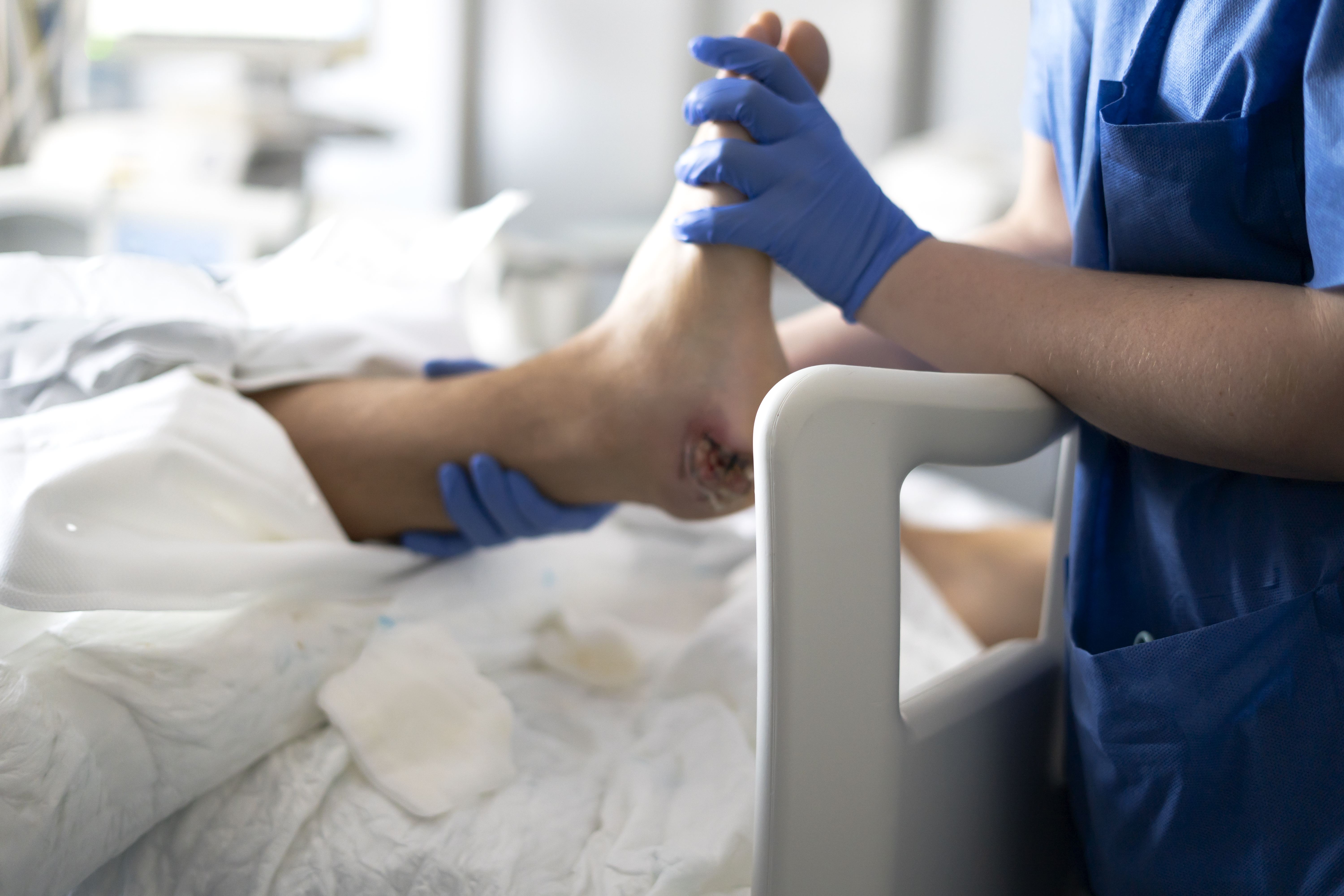
Top Strategies to Reduce Pressure Ulcer Incidence in Long-Term Care Facilities
Pressure ulcers remain a persistent challenge in long-term care, often causing serious complications for residents. Your facility’s success depends on effective pressure ulcer prevention and advanced wound care strategies that truly work. In this post, you’ll learn how Specialty Wound Care’s technology, like the MolecuLight DX and triple-layer allograft, can reduce ulcer incidence and improve patient outcomes in nursing home care. For more insights, consider reading this article.
Understanding Pressure Ulcer Prevention
Preventing pressure ulcers is vital to enhancing care quality in long-term facilities. Let’s explore why this is essential and identify the challenges your facility might face.
Importance in Long-Term Care
Preventing pressure ulcers is a cornerstone of quality care in nursing homes. These wounds are not only painful but can lead to severe health issues. By focusing on prevention, you ensure a healthier environment for residents. Studies show that effective strategies can significantly reduce ulcer incidence, improving residents’ quality of life. This proactive approach also reflects positively on your facility’s reputation, attracting more residents and families seeking quality care. For more details, check out this resource.
Key Challenges Faced by Facilities
Facilities often struggle with limited resources and staff training, making ulcer prevention challenging. Familiar issues include inadequate staff knowledge and insufficient pressure-relieving equipment. These hurdles can lead to higher ulcer rates, affecting patient health and facility ratings. Moreover, there’s a widespread belief that ulcers are inevitable in long-term care. Breaking this mindset is crucial. By addressing these challenges, your facility can improve outcomes and enhance care quality. Learn more about overcoming these barriers here.
Advanced Wound Management Techniques
To tackle ulcers effectively, modern techniques and technology play a critical role. Let’s delve into how these innovations can transform your wound care approach.
Role of MolecuLight DX
The MolecuLight DX is a game-changer in wound care management. This device enables precise wound analysis, guiding clinical decisions with accuracy. Its imaging technology helps detect bacterial presence without invasive procedures. This visibility allows timely interventions, reducing infection risks. Facilities using MolecuLight DX report quicker healing times and fewer complications. By adopting this tool, you improve patient care, making ulcer management more efficient and effective. Explore the benefits backed by research in this study.
Benefits of Triple-Layer Allograft
The triple-layer allograft offers a revolutionary approach to wound healing. Comprising three layers, it provides structural support for tissue repair. This allograft accelerates healing by mimicking the skin’s natural environment, promoting regeneration. Facilities using this product notice a decrease in wound healing time and improved patient outcomes. Its compliance with FDA standards ensures safety and efficacy. By integrating this into your care protocols, you offer patients a cutting-edge treatment option, boosting recovery rates. Discover more about its applications here.
Implementing Specialty Wound Care Solutions
Integrating advanced wound care solutions can significantly impact patient outcomes. Let’s look at how Specialty Wound Care can support your facility’s mission to improve care quality.
Integrating Advanced Wound Care
Integrating advanced wound care requires careful planning and training. Start by assessing your facility’s needs and resources. Implementing technologies like MolecuLight DX and triple-layer allografts can elevate your care standards. Ensure staff receive adequate training to utilize these tools effectively. Collaboration with Specialty Wound Care professionals can guide this process, ensuring successful integration. By investing in these solutions, your facility positions itself as a leader in patient-centric care, attracting more residents and improving quality metrics.
Enhancing Patient Outcomes in Nursing Home Care
Enhancing patient outcomes hinges on effective strategy implementation. With Specialty Wound Care’s solutions, your facility can achieve superior results. The focus on advanced technologies ensures faster healing and reduced complications, directly benefiting residents. A commitment to innovation fosters a culture of excellence, building trust with families and staff. As more facilities adopt these practices, the standard of care across the industry rises, setting a new benchmark for patient treatment. The longer you wait, the more opportunities you miss to transform patient care. Embrace change today for a healthier tomorrow.
Early Identification and Management of Chronic Wounds: A Clinical Guide
Chronic wounds demand attention before complications arise. Delayed wound management often leads to prolonged healing and greater patient risks. This clinical guide highlights key steps for early identification and effective treatment, featuring tools like MolecuLight DX and the triple-layer allograft to improve patient outcomes. Keep reading to strengthen your approach to advanced wound care and make a real difference in your patients’ recovery. For further insights, feel free to refer to this resource on wound care guidelines.
Importance of Early Identification
Understanding the significance of identifying chronic wounds early can save lives and prevent complications. Spotting these wounds in their initial stages allows for timely intervention.
Recognizing Chronic Wounds
Identifying chronic wounds requires keen observation. These wounds often linger beyond the usual healing time, typically over four weeks. They resist standard treatments and may show no signs of progress. Knowing the type of wound you are dealing with is crucial. Common chronic wounds include diabetic foot ulcers, pressure ulcers, and venous leg ulcers. Each demands a tailored treatment approach.
Signs and Symptoms to Watch
Look for persistent redness, swelling, and foul odor. These are red flags indicating infection or stalled healing. Pain levels that don’t decrease can also be a concern. Document any changes or lack of improvement. This data helps in determining the next steps in management. For a detailed guide on treatment, refer to the Pocket Guide on Wound Treatment.
Role of Early Detection in Healing
Early detection plays a pivotal role in speeding up recovery. Intervening early minimizes the risk of complications such as infections. Quick action can significantly reduce the overall healing time and improve outcomes. Most people think waiting for natural healing is enough, but timely action is essential.
Advanced Management Techniques
Once chronic wounds are identified, advanced techniques can aid in effective management. Leveraging modern tools and methods ensures better results for patients.
Utilizing MolecuLight DX
MolecuLight DX is a game-changer in wound management. This tool helps visualize bacterial presence in wounds, guiding precise interventions. With its real-time imaging, it allows for targeted debridement and treatment. Imagine having a clear roadmap to tackle infection effectively.
Benefits of Triple-Layer Allograft
The triple-layer allograft offers unmatched healing support. It serves as a scaffold promoting tissue repair while being compliant with FDA standards. This allograft accelerates healing by fostering a conducive environment for wound closure. Incorporating it into your practice could transform patient outcomes.
Integrating Specialty Wound Care Solutions
Specialty Wound Care solutions provide a comprehensive approach. These solutions incorporate cutting-edge technologies and personalized care strategies. By partnering with providers, they ensure the highest standard of wound care. Discover more about integrating solutions by exploring this comprehensive guide.
Enhancing Patient Outcomes
Implementing advanced techniques and early detection methods is only part of the equation. Consistent and holistic practices are vital in enhancing overall patient recovery.
Comprehensive Wound Care Practices
Comprehensive care involves more than treatments; it includes patient education and follow-up. Keeping patients informed about their care plan promotes better adherence. Regular monitoring and documenting progress provide insights into treatment efficacy. For further reading, consult the American Family Physician’s article on managing chronic wounds.
Collaborating for Better Results
Collaboration is key in wound care. Working with multidisciplinary teams enriches the treatment process. It opens up avenues for sharing knowledge and resources. Building a network with other professionals creates a support system that enhances patient care.
Continuous Education and Training
Stay updated with the latest in wound care by pursuing ongoing education. Regular training ensures that you are equipped with the latest techniques and information. This commitment to learning fosters better patient outcomes and professional growth. Unlock the potential of your practice by dedicating time to learning and application.
In conclusion, early identification and advanced management of chronic wounds are crucial in improving patient outcomes. By integrating modern tools and maintaining comprehensive care practices, healthcare professionals can make significant strides in patient recovery. Remember, the longer you wait, the harder it becomes to treat these wounds effectively. Stay proactive in your approach to wound care.
Effective pressure ulcer treatment guidelines are the bedrock of modern wound care. They give us a systematic, evidence-based roadmap to prevent, assess, and manage these incredibly complex wounds. By establishing best practices for everything from staging and debridement to nutrition and offloading, they standardize care. This ensures every patient receives high-quality, consistent treatment rooted in proven clinical outcomes.
Why Modern Pressure Ulcer Guidelines Matter
Imagine trying to build a house without a blueprint. You might have the right materials—dressings, support surfaces, and skilled staff—but the process would be chaotic, inconsistent, and probably doomed to fail. Modern pressure ulcer treatment guidelines are that essential blueprint for wound care.
These protocols aren’t just arbitrary rules. They represent the culmination of decades of hands-on clinical experience and hard-nosed scientific research. They create a common language and a standardized playbook, making sure every patient benefits from the most effective strategies known to medicine. That consistency is what truly moves the needle on improving patient outcomes.
The Evolution from Description to Evidence
In the early days, our approach was often descriptive and reactive. We saw a wound, we described it, we reacted. Today, the focus has flipped to a proactive, evidence-based model that reflects a much deeper understanding of wound physiology and the roadblocks to healing.
These guidelines have been refined over decades, moving from simple descriptive staging to comprehensive, multidisciplinary protocols. Now, the emphasis is squarely on risk assessment, prevention, and standardized measurement. A pivotal moment came in 2016 when the National Pressure Ulcer Advisory Panel (NPUAP), founded in 1987, updated its terminology. "Pressure ulcer" officially became "pressure injury" to better capture the full scope of underlying tissue damage, not just what's visible on the surface.
This solid, evidence-based foundation is what gives the guidelines their power. To really appreciate the science behind these protocols, it helps to know how to effectively read scientific papers and pull out the key clinical data.
Creating a Standard of Care
Ultimately, these guidelines establish a clear standard of care that protects both patients and clinicians. For patients, it means receiving care that is validated and effective, slashing the risk of devastating complications like infection and amputation.
For clinicians, it provides a defensible framework for decision-making, aligning their practice with nationally recognized best practices. Adhering to these guidelines is a core part of providing great collaborative care, no matter the setting. You can learn more about the goals of advanced home wound collaborative care in our related article. This systematic approach ensures that every step we take is purposeful and laser-focused on one thing: healing the wound.
Mastering Pressure Injury Staging and Assessment
Getting the staging right is the absolute foundation of any effective pressure ulcer treatment plan. Think of it as the GPS for wound healing—without knowing your exact starting point, you can’t map out the quickest, most direct route to recovery. This initial assessment isn't just about sticking a label on a wound; it’s about truly understanding its depth and severity so you can pick the right interventions from day one.
Treating a Stage 1 injury on intact skin is worlds apart from managing a Stage 4 that goes down to muscle or bone. When we nail the staging, we ensure the treatment plan is appropriate, stop the wound from getting worse, and set realistic goals for healing.
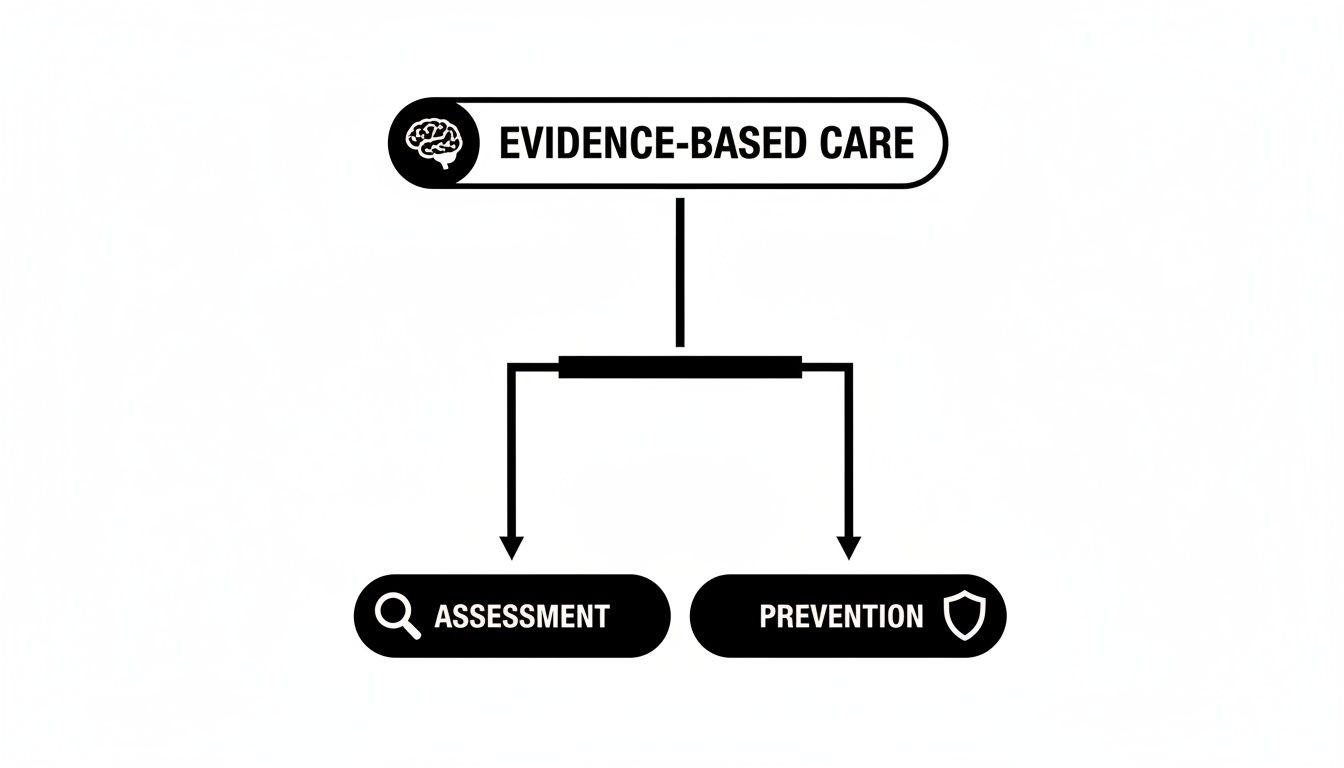
This visual shows how a commitment to evidence-based care is the bedrock for both assessment and prevention.
Simply put, a solid, evidence-based approach sharpens our ability to evaluate existing injuries and, just as importantly, to prevent new ones from ever forming.
Understanding the Stages of Pressure Injuries
To make sure everyone is speaking the same language, the National Pressure Injury Advisory Panel (NPIAP) created a standardized staging system. This system classifies injuries based on how much tissue damage we can see.
For a quick reference, this table breaks down the key characteristics of each stage, making it easier to identify them in a clinical setting.
Pressure Injury Staging at a Glance
Stage
Key Characteristics
Clinical Appearance
Stage 1
Non-blanchable erythema of intact skin.
Persistent redness that doesn't turn white when pressed. In darker skin, it may appear as a different color (purple/maroon) than surrounding skin. Area may be painful, firm, or have a different temperature.
Stage 2
Partial-thickness skin loss with exposed dermis.
A shallow, open ulcer with a red-pink wound bed. It might also look like an intact or ruptured serum-filled blister. No slough is visible.
Stage 3
Full-thickness skin loss.
Deeper than Stage 2, with visible adipose (fat) tissue. Slough may be present, but you can still see the depth of the wound. Muscle, tendon, and bone are not exposed.
Stage 4
Full-thickness skin and tissue loss.
The most severe stage. Muscle, tendon, ligament, cartilage, or even bone is directly visible. Slough or eschar may be present.
Unstageable
Obscured full-thickness skin and tissue loss.
The wound bed is completely covered by slough (yellow, tan, gray) or eschar (tan, brown, black). The true depth—and therefore the stage—can't be determined until the covering is removed.
Deep Tissue Pressure Injury (DTPI)
Persistent non-blanchable deep red, maroon, or purple discoloration.
Appears as a deep bruise under intact skin or as a blood-filled blister. This injury happens from intense pressure deep at the bone-muscle interface. It can evolve rapidly.
As you can see, the stages give us a clear, progressive picture of tissue damage. The ability to distinguish between a DTPI and a Stage 1, for example, is critical because their underlying pathology and potential for deterioration are vastly different.
Beyond Staging: A Comprehensive Wound Assessment
Correct staging is the first step, not the last. To build a truly effective treatment strategy, we need to perform a complete assessment that paints the full clinical picture. This means looking closely at the wound itself and the skin around it.
A thorough assessment should always include these key components:
Wound Dimensions: Accurately measure the length, width, and depth. Tracking these numbers over time is how we know if our plan is working.
Tissue Types: Document the percentage of different tissues in the wound bed—is it healthy red granulation tissue, or is it covered in yellow slough or black eschar?
Exudate Amount and Type: Note the volume of drainage (scant, moderate, copious) and its character (clear serous, bloody sanguineous, or pus-like purulent).
Periwound Skin: Examine the skin around the ulcer. Is it macerated from moisture? Is there spreading redness (erythema) suggesting infection?
The Role of Advanced Diagnostic Imaging
While a trained eye is our most fundamental tool, some problems hide beneath the surface. Advanced diagnostics can give us a look at what the naked eye can't see, like high bacterial loads that stall the healing process.
Fluorescence imaging, for instance, is a non-invasive technology that lights up bacteria in real time. This allows for incredibly targeted debridement and sampling, making sure we’re treating the problem area directly. You can see exactly how a point-of-care wound imaging device detects bacteria to guide treatment decisions.
When we combine our classic assessment skills with modern technology, we can make more informed decisions, which ultimately leads to better, faster healing for our patients.
Applying the TIME Framework for Wound Bed Preparation
Once you've staged and assessed a pressure ulcer, the real work begins: preparing the wound bed for healing. I always tell new clinicians to think of the wound bed like a garden plot. You can’t expect healthy tissue to grow if the soil is packed with weeds, rocks, and debris. This is where the TIME framework comes in as an indispensable tool, guiding our approach to modern pressure ulcer treatment.
The acronym TIME stands for Tissue, Infection/Inflammation, Moisture, and Edge. It's more than just a memory aid; it's a clinical checklist that forces us to tackle the four biggest local barriers that can stall—or completely stop—the healing process. By methodically working through each part, we create the perfect environment for the body's natural healing powers to take over.
This structured method shifts wound care from a reactive guessing game to a proactive, evidence-based strategy, ensuring we don't miss a single crucial step.
T is for Tissue Management
The "T" in TIME is all about Tissue management, which means removing non-viable or dead tissue. We call this process debridement. Dead tissue, whether it's yellowish slough or black, leathery eschar, is a major roadblock. It physically blocks healthy granulation tissue from forming and acts as a buffet for bacteria, dramatically increasing the risk of infection.
We have several debridement methods in our toolkit, and the right choice depends on the wound, the patient's overall condition, and the clinical setting.
Surgical/Sharp Debridement: This is the fastest method, using a scalpel or scissors to precisely cut away non-viable tissue. It's our go-to for wounds with extensive necrotic tissue or signs of a rapidly advancing infection.
Enzymatic Debridement: This involves applying a topical agent with enzymes that selectively break down dead tissue while leaving healthy cells alone.
Autolytic Debridement: Here, we leverage the body's own enzymes to liquefy the dead tissue. It's a slower, more selective process that we encourage by using moisture-retentive dressings.
Mechanical Debridement: Older methods like wet-to-dry dressings fall into this category. They're used much less frequently now because they can be non-selective and accidentally tear away healthy new cells along with the bad stuff.
Clearing out this dead tissue is the absolute, non-negotiable first step. Without it, you're not going to get far.
I is for Infection and Inflammation
Next up, the "I" focuses on managing Infection and Inflammation. A key thing to remember is that all chronic wounds have bacteria on them, but that doesn't mean they're all infected. Our goal is to manage the bacterial load, or bioburden, so it doesn't overwhelm the patient’s immune system and kick off a destructive inflammatory response.
A core principle in pressure ulcer treatment is telling the difference between bacterial colonization (where bacteria are present but not causing harm) and critical colonization or outright infection (where their presence is delaying healing and causing a reaction).
In chronic wounds, the classic signs of infection like fever might be absent. Instead, we have to look for more subtle clues: a sudden increase in pain, a change in the color or smell of the exudate, or a wound that simply stops making progress. These are the red flags. If we suspect an infection, we'll turn to antimicrobial dressings or, in more serious cases, systemic antibiotics, ideally guided by diagnostic tests.
M is for Moisture Balance
"M" stands for Moisture balance. Wounds need moisture to heal—it helps cells move around and get their work done. But it’s a delicate balance. Too much moisture, and the skin around the wound gets soggy and breaks down (a process called maceration). Too little, and the wound bed dries out, forming a hard scab that stops healing in its tracks.
Getting this balance right is truly an art. It’s all about picking the right dressing for the job. We need to decide if the wound needs a dressing that can donate moisture to a dry bed or one that can soak up excess fluid from a weeping wound. This is exactly why a one-size-fits-all approach to dressings is doomed to fail; the dressing choice has to match what the wound needs right now.
E is for Edge of the Wound
Finally, "E" represents the Edge of the wound, where we focus on epithelial advancement. For a wound to finally close, new skin cells have to migrate from the edges across the healthy, prepared wound bed. But if those edges are rolled under (epibole), dried out, or just plain unhealthy, that migration process grinds to a halt.
Managing the wound edge effectively often comes down to making sure the other three steps—debridement, infection control, and moisture balance—have been handled correctly. Sometimes, even with perfect preparation, the edges remain stubborn. In these cases, we might need to bring in advanced therapies to kickstart the healing cascade and finally get that wound to close.
Selecting the Right Dressings and Advanced Therapies
Once the wound bed is clean and ready, the next step in pressure ulcer treatment is picking the right dressing. Don't think of dressings as just simple covers; they are active tools we use to create the perfect healing environment. The sheer number of options can feel overwhelming, but it all gets simpler when you ask one key question: What does this specific wound need right now?
Getting the dressing right is all about moisture balance. The goal is to hit that sweet spot—not too dry, which stops healthy cells from moving in, and not too wet, which can macerate and damage the surrounding skin.
Matching Dressing Types to Wound Needs
Different dressings have different superpowers. Some are built to soak up a ton of fluid, while others are designed to add moisture. Here’s a quick rundown of common types and what they’re best for:
Transparent Films: These thin, see-through dressings are perfect for protecting Stage 1 injuries or covering shallow wounds that have very little drainage. They lock in moisture but aren't absorbent.
Hydrocolloids: These contain gel-forming agents that create a moist environment, which is ideal for helping the body’s own enzymes break down dead tissue (autolytic debridement). They work best for wounds with light to moderate drainage.
Foams: These are the real workhorses for absorption. Foam dressings are fantastic for managing moderate to heavy drainage, pulling that excess fluid away from the wound to keep the surrounding skin healthy.
Alginates and Hydrofibers: Made from seaweed (alginates) or super-absorbent fibers, these are the champions of absorption. They turn into a gel as they soak up heavy drainage, making them the go-to for deep or heavily draining wounds.
The key here is to keep reassessing. A wound that needs a heavy-duty alginate today might be ready for a simple foam dressing next week as it heals and drainage lessens.
When Standard Care Is Not Enough
Sometimes, even with the best wound prep and the perfect dressing, a wound just hits a wall. It stalls. When that happens, it's time to bring in advanced therapies.
Advanced therapies aren't a last resort. They are a strategic move when a wound shows no signs of healing after 2-4 weeks of solid, evidence-based standard care.
This is our cue to shift gears. Instead of just managing the wound environment, we need to actively kickstart the body's own regenerative engine. Escalating care at the right time is a core principle of modern pressure ulcer guidelines, ensuring our patients with stubborn wounds get the help they need.
Exploring Advanced Biologic Therapies
For these tough, non-healing wounds, advanced biologics like amniotic membrane allografts can be a game-changer. Think of a stalled wound like a construction site where the crew has run out of scaffolding. They have the materials (cells, growth factors) but no structure to build on.
Amniotic allografts provide that missing scaffold. These biologics deliver a rich matrix loaded with essential growth factors and proteins that do three crucial things:
Reduce Inflammation: They help calm the chronic inflammation that keeps a wound stuck in a non-healing state.
Support Cell Migration: They provide the physical framework cells need to travel across the wound bed and rebuild tissue.
Stimulate Healing: The growth factors they contain send a powerful signal to the body to ramp up its repair processes.
This structured approach is a key part of current treatment guidelines, which are built on clinical studies and measurable outcomes. By providing this biological jumpstart, amniotic allografts can effectively reboot the healing process in wounds that have stopped responding to conventional care.
You can learn more about the specific advanced treatment options available from Specialty Wound Care in our detailed guide. These therapies are a critical tool in our arsenal, allowing us to manage even the most difficult pressure injuries successfully.
Integrating Offloading and Nutrition Into Your Plan
When you're treating a pressure ulcer, it’s easy to get tunnel-vision and focus only on the wound itself. But effective treatment is about looking at the whole patient, not just the hole in the patient. Two of the most critical—and sometimes neglected—pieces of the puzzle are offloading and nutrition.
Think of it like this: the most advanced dressing in the world is fighting a losing battle if the underlying causes of the injury aren't fixed. You can't heal a pressure ulcer if the patient is still lying on it. And you can't expect the body to build new tissue without giving it the right raw materials.
Offloading: The Non-Negotiable First Step
Let’s be clear: offloading—removing all pressure from the injured area—is the absolute foundation of treatment. It’s not a suggestion; it’s a requirement. Without consistent, effective pressure redistribution, even the most expensive therapies are set up to fail.
The goal is simple: spread the pressure over a larger surface area and constantly change the points of contact. This one-two punch allows blood to rush back into those starved tissues, delivering the oxygen and nutrients they desperately need to start repairing themselves.
We make this happen with two key tactics:
Regular Repositioning: This means creating—and sticking to—a strict turning schedule. For someone in bed, that often means a repositioning move at least every two hours. For a patient in a wheelchair, pressure-relieving shifts need to happen much more frequently, as often as every 15 minutes.
Specialized Support Surfaces: These aren't your average mattresses or cushions. They are sophisticated medical devices designed specifically to redistribute pressure. Options run the gamut from reactive surfaces like high-density foam or gel overlays to active surfaces like alternating pressure air mattresses, which mechanically shift pressure points for the patient.
Fueling the Healing Engine with Nutrition
Wound healing is an incredibly demanding process for the body. A patient with a major pressure ulcer has a super-charged metabolism, almost like someone recovering from major surgery. If their nutritional needs aren't met, their body simply won't have the fuel to build new tissue, fight off infection, and close the wound.
Proper nutrition isn't just a good idea; it's a core component of international pressure ulcer treatment guidelines. The focus goes beyond just calories to the specific building blocks required for tissue repair.
Inadequate nutrition is a top risk factor for both developing pressure ulcers and the failure of existing wounds to heal. A nutritional assessment should be a standard part of every single initial wound evaluation.
Key Nutrients for Wound Repair
A targeted nutritional strategy is essential to support the body's healing cascade. Several key nutrients are the stars of the show, and a deficiency in any one of them can bring healing to a screeching halt.
Here are the most critical components to zero in on:
Protein: This is the absolute MVP of wound healing. Protein is vital for every single stage of repair, from making new cells and collagen to powering the immune system. Patients with pressure ulcers often need a lot more protein than the average person.
Vitamin C (Ascorbic Acid): You can't form collagen—the main structural protein in skin—without it. Vitamin C also acts as a potent antioxidant, protecting fragile new cells from damage.
Zinc: This mineral is a critical helper for many of the enzymes involved in making protein and dividing cells, making it essential for regenerating tissue.
Hydration: Staying well-hydrated is crucial for maintaining skin elasticity and supporting healthy blood flow to the wound. Dehydration can put a serious drag on the healing process.
By pairing a robust offloading schedule with a targeted nutrition plan, you create the perfect internal and external environment to give the body its best possible shot at healing.
Getting Your Documentation and Reimbursement Right
Great clinical care is one thing, but getting paid for it is another. The critical link between the two? Your documentation. You have to start thinking of your clinical notes as more than just a medical record. They are the story that proves the medical necessity of your care and justifies every decision you make.
When it comes to wound care, flimsy or vague documentation is a fast track to claim denials. Payers need to understand the why behind your treatment plan, plain and simple. Your notes have to paint a clear picture of the wound's complexity and how your clinical reasoning aligns with established pressure ulcer treatment guidelines.
How to Craft a Denial-Proof Wound Note
A solid wound note is so much more than just the wound’s stage. It's a living document that shows off your expertise and explains why you’re using certain resources. Each entry should build on the last, either showing progress or clearly explaining why you're shifting your strategy.
To make sure your notes hold up, they need to be packed with specific, measurable details. Throw out vague phrases like "wound looks better." That won't cut it. Instead, your documentation needs to be a precise log of the wound's entire journey.
Here’s what every single note must include:
Precise Measurements: Get out the ruler. Document the length, width, and depth in centimeters at every single visit. This data is your primary evidence of whether the wound is getting better or worse.
Tissue Type Percentages: Don't just eyeball it—quantify the wound bed. For example, write "70% granulation tissue, 20% slough, 10% epithelializing tissue."
Exudate Description: Note the amount (scant, moderate, copious) and type (serous, sanguineous, purulent). This detail is absolutely essential for justifying your choice of dressings.
Periwound Condition: What does the skin around the wound look like? Describe it. Is it intact, macerated, or showing signs of erythema?
Clinical Rationale: This is where you connect all the dots for the reviewer. Clearly spell out why you chose a specific dressing, debridement method, or advanced therapy based on the wound's current state.
Think of it this way: a well-documented note is your best defense in an audit. It should let a reviewer who has never even seen the patient completely understand the wound's status and why your treatment plan was necessary.
Supporting Medical Necessity for Advanced Care
When a wound hits a wall and you need to bring in advanced therapies like amniotic allografts or diagnostic imaging, your documentation has to work even harder. Your notes need to tell a clear story of why standard care just wasn't enough.
This means you must document the failure of conservative treatments over a period of 2-4 weeks. This is what establishes the medical necessity for escalating to a higher level of care.
Navigating this can be a headache, but you don't have to do it alone. At Specialty Wound Care, we have dedicated billing specialists and documentation workflows built specifically for wound management. Our team makes sure your notes are compliant and strong, cutting down your administrative burden so you can get the right reimbursement for the expert care you provide.
Answering Common Pressure Ulcer Treatment Questions
Even with the best guidelines, clinical practice is where the real questions pop up. You're at the bedside, managing a complex case, and you need practical answers. This is where we bridge the gap between textbook knowledge and day-to-day patient care.
Let's walk through some of the most frequent questions we hear from clinicians, breaking down the evidence-based principles that should guide your decisions. Getting these details right is what separates a good care plan from a great one—ensuring every action is consistent, defensible, and gets your patient closer to healing.
How Often Should a Pressure Ulcer Be Reassessed?
The standard guideline is a formal reassessment at least once a week. This isn't just a quick look; it means you're documenting measurements, identifying tissue types, and noting the amount and type of exudate.
But think of that as the bare minimum. For a patient in acute care or someone whose wound is changing quickly—for better or worse—you’ll want to assess it far more often. Consistent, detailed documentation is your best tool for proving medical necessity, tracking progress, and confidently adjusting the treatment plan.
When Should I Refer to a Wound Care Specialist?
Knowing when to call for backup is a crucial clinical skill. You should strongly consider referring to a wound care specialist if a pressure ulcer shows no clear signs of healing after 2 to 4 weeks of solid, standard care.
Other situations demand an immediate referral:
High-Stage Ulcers: Any Stage 3 or 4 pressure injury should have a specialist involved.
Unstageable Wounds: If necrotic tissue is hiding the true depth of the wound, you need an expert to debride it safely and effectively.
Suspected Deep Infection: Signs of osteomyelitis or a deep tissue infection are red flags that require advanced management.
Complex Comorbidities: Patients juggling conditions like severe peripheral artery disease or uncontrolled diabetes need a specialist's oversight.
Getting a specialist involved early doesn't just help the wound; it’s proven to prevent serious complications and get patients on a faster healing track.
Can a Pressure Ulcer Reverse Stage as It Heals?
This is a very common point of confusion, and the answer is a firm no. Pressure injuries do not heal in reverse. A wound closes by filling the damaged area with granulation tissue and, eventually, scar tissue. It doesn't magically regenerate the original muscle, fat, or bone that was lost.
So, when a Stage 4 ulcer is healing, you must document it as a "healing Stage 4 pressure injury"—not a Stage 3 or 2. This distinction is absolutely critical for maintaining an accurate medical record and ensuring everyone on the care team understands the wound's true history.
What Is the Role of Antibiotics in Treatment?
Good antibiotic stewardship is at the heart of modern wound care. We now know that topical antibiotics are generally not recommended for uninfected wounds. Why? They can promote bacterial resistance and even be toxic to the very cells trying to heal the wound.
Systemic (oral or IV) antibiotics are only for wounds with clear clinical signs of a spreading or systemic infection—think cellulitis, sepsis, or osteomyelitis. This decision should always be driven by a thorough clinical assessment, and whenever possible, by diagnostic tests that pinpoint the exact pathogen and its sensitivities. Using antibiotics "just in case" on a colonized wound is not best practice and can do more harm than good.
At Specialty Wound Care, we work alongside clinicians to navigate these tough treatment decisions every day. We provide the advanced diagnostics and therapies needed to tackle the most challenging cases. Find out how we can support your practice at SpecialtyWoundCare.com.
Forget everything you know about wound healing. Traditional treatments often fall short with complex wounds, leaving patients and providers frustrated. The triple-layer allograft from Specialty Wound Care offers a new path—FDA-compliant and designed to support faster tissue regeneration and better outcomes. Keep reading to see how this advanced wound care solution can change your practice and your patients’ recovery. [https://www.mdpi.com/1422-0067/26/7/3406]
Understanding Triple-Layer Allografts
In wound care, finding the right solution is crucial for both patient satisfaction and recovery. Triple-layer allografts are stepping up as a promising option, capturing the attention of healthcare providers.
What Are Triple-Layer Allografts?
Triple-layer allografts are specialized grafts designed to aid in wound healing. They consist of three distinct layers, each with a unique function to support tissue regeneration. These layers work together to create a supportive environment for healing.
Here’s how it works: The outer layer provides a protective barrier, safeguarding the wound from external elements. The middle layer, rich in biological components, promotes cell growth and tissue repair. Finally, the inner layer ensures optimal moisture balance, which is essential for effective healing. This structure not only facilitates healing but also reduces the risk of complications.
To fully understand the impact of these allografts, consider how they improve patient outcomes. With faster healing, patients experience less discomfort and reduced recovery time, making them a vital tool in advanced wound care.
How They Enhance Wound Healing
When it comes to healing, the benefits of triple-layer allografts are clear. They provide a robust framework that accelerates the healing process. By creating a scaffold for new tissue, these allografts help wounds close more efficiently.
Patients using triple-layer allografts often report quicker recovery times. This is because the grafts maintain an optimal environment for cell regeneration. The allograft’s structure supports natural healing processes, reducing the need for additional interventions.
Moreover, triple-layer allografts are versatile. They can be used for various wound types, from diabetic ulcers to surgical wounds. Their adaptability makes them a valuable asset in any wound care practice.
By incorporating triple-layer allografts, healthcare providers can offer solutions that not only heal but also enhance the quality of life for their patients.
Benefits of Triple-Layer Allografts
The next step in understanding these advanced solutions is recognizing their benefits. From improving patient outcomes to meeting regulatory standards, triple-layer allografts are a game-changer in wound care.
Improved Patient Outcomes
The primary goal in wound care is to ensure that patients recover fully and swiftly. Triple-layer allografts play a significant role in achieving this. With faster healing times, patients are less likely to experience complications. This leads to a reduction in hospital readmissions and an overall improvement in quality of life.
Statistics show that wounds treated with allografts heal up to 50% faster compared to traditional methods. This speed not only benefits patients but also reduces the burden on healthcare systems.
Patients often feel empowered, knowing they have access to cutting-edge treatments that prioritize their health and recovery. The peace of mind that comes from using proven solutions can make a world of difference in patient satisfaction.
Compliance with FDA Regulations
Ensuring treatments adhere to regulations is critical in healthcare. Triple-layer allografts are designed with compliance in mind. They meet all FDA guidelines, providing reassurance to both patients and providers.
Using FDA-compliant products means adhering to high standards of safety and efficacy. This reduces risks of adverse reactions and ensures that only the best materials are used in patient care.
For healthcare providers, using regulated products streamlines processes and minimizes liability. It also enhances trust, as patients feel secure knowing their treatment meets stringent safety standards.
By integrating compliant allografts, you not only improve patient care but also uphold the integrity of your practice.
Applying Allografts in Wound Care
Exploring how to implement these solutions in your practice is essential. Discover how advanced wound management and expert support can elevate your care offerings.
Advanced Wound Management Solutions
Managing wounds effectively requires the right tools and techniques. Triple-layer allografts provide an innovative approach to wound care, offering solutions that are both effective and adaptable.
These allografts are easy to apply and integrate well with existing treatment protocols. This makes them an ideal choice for healthcare providers looking to enhance their wound management strategies.
By incorporating these solutions, providers can address a wider range of wound types. Whether dealing with chronic ulcers or post-operative wounds, allografts provide a versatile option that meets diverse needs.
The longer you wait to adopt advanced solutions, the more you miss out on improving patient outcomes. Consider making the switch to advanced allografts for a more comprehensive approach to wound care.
Specialty Wound Care Expertise 🩹
Partnering with experts in wound care can significantly enhance treatment outcomes. Specialty Wound Care offers unparalleled expertise and support to healthcare providers.
Our team specializes in integrating cutting-edge technology and treatments into existing practices. By working with us, you gain access to the latest in wound management innovations, including the triple-layer allograft.
Most people think they need to manage everything on their own, but collaboration with specialists can transform your practice. We offer training, resources, and ongoing support to ensure that you and your patients achieve the best possible outcomes.
By leveraging our expertise, you not only improve patient care but also position your practice as a leader in advanced wound management. Ready to explore the possibilities? Reach out to us and start transforming your wound care today.
Wound healing nutrition plays a crucial role in speeding recovery and improving patient outcomes. Many healthcare providers overlook how targeted nutrition supports tissue repair and immune function. In this post, you’ll find clear, practical tips to enhance wound management through diet, backed by Specialty Wound Care’s expertise in advanced wound care solutions. Let’s explore how the right nutrients can make a measurable difference in healing. For more information, visit this resource.
Importance of Nutrition in Wound Healing
Nutrition isn’t just about maintaining a healthy weight; it’s a powerful tool in wound recovery. The right nutrients can significantly impact the healing process, helping you or your patients recover faster.
Role of Proteins and Amino Acids
Proteins are the building blocks of tissue repair. They help form new skin and muscle cells. Your body needs them to rebuild damaged areas.
Protein Intake: Aim for 1.2 to 1.5 grams of protein per kilogram of body weight daily. This supports skin and muscle restoration.
Amino Acids: Amino acids like arginine and glutamine are particularly helpful. They aid in collagen production, a vital component of skin repair.
Integrate lean meats, fish, eggs, and dairy into meals. These foods are rich in essential proteins and amino acids. If you’re on a plant-based diet, consider beans, lentils, and tofu. Remember, your protein needs may increase with severe wounds. Learn more about the role of proteins in wound healing.
Vitamins Essential for Recovery
Vitamins are crucial for wound healing. They serve as antioxidants and support immune health.
Vitamin C: Essential for collagen synthesis, it also helps fight infection. Citrus fruits, strawberries, and bell peppers are rich in this vitamin.
Vitamin A: Supports skin cell production. Carrots, sweet potatoes, and spinach are excellent sources.
Minerals also play a significant role in the healing process. They work at the cellular level to rebuild tissue and support overall health.
Zinc: Vital for skin integrity and immune function. A deficiency can delay healing. Include meat, shellfish, and seeds to boost zinc intake.
Iron: Supports oxygen delivery to healing tissues. You can find iron in red meat, beans, and fortified cereals.
These minerals are essential. Without them, your body can’t efficiently repair wounds. Keep your dietary choices varied to ensure you get a wide array of nutrients. Check out more on minerals for wound healing.
Advanced Wound Care Strategies
Combining nutrition with advanced wound care techniques can further enhance healing. Specialty Wound Care offers a blend of modern technology and personalized care.
Integrating Nutrition with Treatment
Nutrition and treatment must go hand in hand. While medical interventions address the physical aspects of wounds, nutrition tackles the internal.
Synergistic Approach: By aligning dietary plans with medical treatments, patients experience faster recovery.
Nutritional Assessments: Regular evaluations ensure nutrient needs are met, complementing medical care.
Every patient is unique, and so are their healing needs. Personalization is key.
Tailored Nutrition Plans: Customize diets based on individual requirements and wound severity.
Adjustments: Modify plans as healing progresses, ensuring optimal support throughout recovery.
Personalized care ensures that all aspects of a patient’s recovery are addressed, from dietary needs to medical treatments.
Monitoring and Adjusting Approaches
Continuous monitoring is crucial for effective wound management. It allows for timely adjustments.
Regular Check-ups: Frequent evaluations help track progress and modify care plans as needed.
Feedback Loop: Patients and caregivers can provide insights, leading to better care strategies.
By staying vigilant, you can ensure that healing is on track and optimal care is provided.
Specialty Wound Care Expertise
Specialty Wound Care excels in delivering comprehensive solutions. Their expertise lies in combining modern technology with patient-centric care.
Comprehensive Patient Solutions
Specialty Wound Care offers a range of solutions to meet diverse patient needs.
Holistic Approach: They address both the physical and nutritional aspects of healing.
Collaborative Care: Working with healthcare professionals to provide top-notch wound management.
This comprehensive strategy ensures that patients receive complete care, from diagnosis to recovery.
Accelerating Healing with Technology
Modern technology plays a critical role in wound healing. Specialty Wound Care uses cutting-edge tools to enhance patient outcomes.
Advanced Equipment: Tools like MolecuLight DX provide detailed wound assessments.
Innovative Treatments: Techniques like triple-layer allografts support rapid healing.
These advancements ensure that patients get the best care possible, leading to quicker recoveries.
Improving Patient Outcomes
The ultimate goal is to improve patient outcomes. By combining expertise, technology, and nutrition, Specialty Wound Care achieves exceptional results.
Patient-Centric Care: Their focus is on achieving the best possible recovery for each patient.
Ongoing Support: Continuous care ensures that patients are supported throughout their healing journey.
By prioritizing patient outcomes, Specialty Wound Care sets itself apart as a leader in wound management. Remember, the longer you wait to address wounds, the more complex they can become. Prioritize care today to ensure the best outcomes.
Effective Infection Prevention Strategies in Wound Management: A Comprehensive Guide
Infection prevention remains one of the toughest challenges in wound management today. Even slight missteps can lead to serious complications for your patients. This guide shows how Specialty Wound Care’s advanced wound care tools—like MolecuLight DX and our triple-layer allograft—help healthcare professionals stay ahead of infections and promote faster, safer healing. For more detailed information on infection prevention practices, you can refer to this guide.
Advanced Infection Prevention Strategies
Infection prevention in wound management is crucial for patient safety and recovery. Specialty Wound Care offers advanced solutions to help you navigate these challenges effectively.
Pathogen Identification with MolecuLight DX
Identifying pathogens quickly is key to preventing infections. The MolecuLight DX is a game-changer in this area. It allows you to see bacteria in real-time, which helps in making informed decisions about wound care. Imagine being able to target bacteria with precision. This technology not only guides your cleaning and sampling but also helps in choosing the right treatment path.
Traditional methods can take days or even weeks. But with MolecuLight DX, you can act immediately, reducing time to treatment and improving patient outcomes. Learn more about its effectiveness in this study.
Benefits of Triple-Layer Allograft
The triple-layer allograft is another innovation you can rely on. It acts as a scaffold, supporting new tissue growth while protecting the wound from infections. This allograft is meticulously designed to meet FDA standards, ensuring its safety and effectiveness.
Patients and healthcare professionals alike have noted faster healing times with this solution. It’s like giving the body a head start in the healing race. For an in-depth look at its benefits, check out this resource.
Enhancing Wound Management Practices
Building on infection prevention, enhanced wound management practices integrate modern technology and proven techniques. These practices are essential for healthcare professionals dedicated to patient recovery.
Integrating Technology in Wound Care
Modern technology has transformed wound care practices. Tools like the MolecuLight DX and advanced software solutions allow for more precise and efficient management. Digital tools help track progress, adjust treatments, and document outcomes seamlessly.
By harnessing such innovations, you can deliver higher quality care and improve patient satisfaction. The integration of technology not only boosts efficiency but also ensures a personalized approach to healing. For more information, visit this guide.
Effective Techniques for Healthcare Professionals
Effective wound care techniques are the backbone of successful treatment plans. Simple steps, like thorough cleaning and precise dressing application, make a significant difference. Regular training and staying updated with new methods are crucial.
Professionals who adopt these strategies often see improved patient outcomes. Remember, even small actions can lead to significant improvements in healing. To explore more techniques, see this quick guide.
Specialty Wound Care Solutions
Partnering with Specialty Wound Care can elevate your practice and ensure exceptional patient care. They offer solutions that are both innovative and reliable.
Partnering with Healthcare Providers
Collaboration is at the heart of Specialty Wound Care’s approach. By working closely with you, they tailor solutions to fit your specific needs. This partnership model ensures you have access to the best resources and support.
When you partner with Specialty Wound Care, you join a network dedicated to improved healthcare standards and patient recovery.
Access Free eBook and Newsletter
Staying informed is vital in the ever-changing landscape of healthcare. Specialty Wound Care provides a free eBook and newsletter to help you keep up with the latest in wound management. These resources offer insights, tips, and updates on new technologies and treatments.
Sign up to stay ahead and equip yourself with the knowledge needed for excellence in wound care.
Specialty Wound Care stands ready to assist you in advancing your practice and enhancing patient outcomes. Discover their solutions today and be part of a community committed to excellence in wound management.
Unveiling the Science of Triple-Layer Allografts in Wound Healing
Triple-layer allografts have changed how we approach wound healing, especially for tough cases that resist traditional care. If you’ve struggled with slow recovery or infection risks, understanding this technology could improve your results. In this post, we’ll explain how triple-layer allograft supports tissue repair and why Specialty Wound Care leads in applying this advanced wound care solution. Learn more here.
Understanding Triple-Layer Allografts
In recent years, medical breakthroughs have offered promising solutions for challenging wounds. One standout is the triple-layer allograft. This innovation holds the potential to improve outcomes significantly.
Science Behind Allograft Technology
Triple-layer allografts are built on the principles of regenerative medicine. These grafts harness the healing properties found in natural tissues. At their core, these allografts act as scaffolds, promoting new cell growth. This growth aids in the natural repair of damaged tissues. The magic lies in the structure itself, which supports cell integration and vascular growth. A study highlighted in NCBI illustrates how these grafts enhance tissue repair by mimicking the body’s natural healing processes.
Through rigorous scientific testing, allografts have shown their ability to lower inflammation and infection risks. These benefits make them a reliable choice for those facing stubborn wounds. Imagine a healing solution that works with your body, not against it. The result is not just healing—it’s restoration.
Structure of Triple-Layer Allografts
The fascinating aspect of these allografts is their layered composition. Each layer serves a distinct purpose. The outer layer offers protection, while the middle layer supports cell growth. The innermost layer ensures connection with the existing tissue. This three-tier design mimics the skin’s natural structure, enhancing its effectiveness.
Think of the allograft as a well-constructed building. Each level supports the one above, creating a solid foundation for healing. This design is why many healthcare providers are now choosing triple-layer allografts for complex wound care cases. The structured layers not only facilitate healing but also protect against further damage. It’s like giving your wounds the ultimate shield and support system.
Role in Advanced Wound Care
The potential of triple-layer allografts in wound care is expansive. They offer a new frontier for patients and providers alike, addressing the toughest healing challenges.
Enhancing Wound Healing Processes
Triple-layer allografts play a significant role in speeding up recovery. They integrate smoothly with the body, reducing the time wounds take to close. For patients, this means a quicker path to recovery. But how do they work? These grafts boost cell growth and reduce inflammation, two critical factors in wound healing. By doing so, they cut down healing time, allowing you to return to daily life sooner. Learn more.
The true advantage lies in their ability to adapt to various wound types. From burns to chronic ulcers, triple-layer allografts offer a flexible solution. This versatility makes them a preferred choice for healthcare providers aiming for speedy and effective outcomes.
Benefits for Patients and Providers
The benefits of triple-layer allografts extend beyond just healing. For patients, they offer reduced pain and a lower risk of complications. For providers, they mean fewer follow-up visits and improved patient satisfaction. Imagine a treatment that not only heals but also enhances your quality of life. That’s what these allografts offer.
For medical professionals, the advantages are clear. By using these allografts, you can ensure better patient outcomes and streamline treatment processes. This innovation allows healthcare providers to focus more on care and less on complications. In a world where time is precious, these benefits are invaluable.
Specialty Wound Care Expertise
Specialty Wound Care stands at the forefront of this transformative technology. Their approach combines innovation with a deep commitment to patient care.
Leadership in Wound Management
As leaders in wound care, Specialty Wound Care has pioneered the use of triple-layer allografts. By integrating cutting-edge technology, they have set new standards in the field. Their expertise ensures that patients receive the latest and most effective treatments available. This leadership is reflected in their consistent success rates and patient satisfaction levels.
Partnering for Optimal Outcomes
Specialty Wound Care’s approach is collaborative. By working closely with healthcare providers, they ensure optimal patient outcomes. This partnership model means that every patient receives personalized care tailored to their needs. Through these collaborations, they have built a network of professionals committed to advancing wound care. This synergy not only enhances healing processes but also fosters innovation within the field. With Specialty Wound Care, you’re not just receiving treatment; you’re gaining a partner in health.
In conclusion, triple-layer allografts represent a new era in wound healing. Their unique structure and benefits make them an invaluable tool in advanced wound care. Specialty Wound Care’s expertise further enhances their effectiveness, offering patients and providers a reliable path to recovery.
For a chronic wound that just won't heal, like a stubborn diabetic foot ulcer, the situation can feel hopeless. Week after week, standard treatments might fail, leaving the wound stuck in a frustrating and dangerous cycle of inflammation. This is an all-too-common reality where the body’s own healing mechanisms have essentially given up.
Amniotic membrane wound healing offers a powerful way to break that cycle. It’s a therapy that uses nature's own design to give the body the powerful boost it needs to get back on track.
The Power of Amniotic Membranes in Modern Wound Care
An amniotic membrane allograft is much more than a simple bandage. This is a sophisticated, biological tissue taken from the innermost layer of the placenta. Think of it as a complete wound-healing toolkit, packed with all the essential elements needed to build new, healthy tissue.
It’s an incredible resource that helps us address the root causes of a stalled wound, not just the symptoms.
A Natural Blueprint for Repair
When we apply an amniotic membrane to a chronic wound, it works on multiple levels. First, it provides a natural scaffold—a physical structure that new cells can latch onto and grow across. But its real power lies in the rich biological cocktail it contains.
This material is brimming with a unique combination of components that get to work immediately:
Growth Factors: These are the "foremen" of tissue repair. They are powerful signaling molecules that tell the body’s cells to start multiplying, moving into the wound bed, and forming new tissue.
Anti-inflammatory Proteins: Chronic inflammation is a major roadblock to healing. These proteins help calm this persistent inflammation, creating a much better environment for the repair process to finally begin.
Anti-scarring Properties: Instead of allowing the body to form weak, disorganized scar tissue, the membrane helps guide the formation of healthy, functional skin.
By delivering this complete healing package directly to the wound, an amniotic membrane allograft essentially reawakens the body's own regenerative engine. It provides both the building blocks and the instruction manual that the wound has been desperately missing.
From Historical Discovery to Modern Therapy
Using this remarkable tissue isn't a new idea. In fact, the history of amniotic membrane in healing goes back more than a century to 1910, when Dr. John S. Davis first documented its successful use in skin grafting.
What's changed is the science behind its preservation. Modern processing techniques now allow us to safely preserve these grafts for years, making them readily available as an "off-the-shelf" advanced therapy. If you're interested in the deep dive, you can read more about the history and development of amniotic membrane usage in the National Library of Medicine.
This journey from a century-old discovery to a modern-day staple sets the stage for its powerful applications today.
How Amniotic Membranes Orchestrate Healing
To really get a handle on how powerful amniotic membranes are, it helps to think of a chronic wound as a construction site that’s completely stalled out. The crew has walked off, the blueprints are gone, and the whole project is stuck in a state of chaos. An amniotic membrane allograft is like a new project manager showing up with a skilled crew, a clear set of instructions, and all the high-quality materials needed to get the job done right.
This incredible biological material kickstarts healing through four key actions that all work together. They create the perfect environment for the body to start rebuilding tissue, finally breaking the cycle of inflammation that keeps a wound from closing.
A Natural Scaffold for New Growth
First things first, the amniotic membrane provides a physical structure. It’s made of a rich Extracellular Matrix (ECM), which is basically a natural, biological scaffold. Imagine trying to build a new wall without any framework to hold it up—it’s just not going to happen. New cells trying to repair a wound face the same exact problem.
The ECM in the amniotic membrane gives these cells something to grab onto. It provides a lattice they can use to crawl across the wound bed, get organized, and start the hard work of rebuilding. This structural support is the foundation for everything else that follows.
Think of the ECM as the foundational framework of a new building. It provides the essential structure that allows other specialized components—like growth factors and new cells—to come in and do their jobs effectively and in an organized manner.
The Power of Cellular Communication
On top of its structure, the amniotic membrane is loaded with a powerful cocktail of growth factors. These are essentially signaling proteins that act like traffic directors for cells. In a chronic wound, all the normal communication between cells has broken down. Growth factors get that conversation started again with clear, direct commands.
They send out signals that tell cells to perform specific jobs that are absolutely essential for healing:
Proliferation: Telling local cells to multiply, creating the workforce needed for the repair job.
Migration: Guiding these new cells to move into the wound bed where they are needed most.
Differentiation: Instructing cells to become the specific types of tissue required, like new skin or blood vessels.
This targeted communication jumpstarts a healing process that had previously gone silent. It’s one of the main reasons we see such great results with amniotic membrane wound healing in stalled wounds.
Calming the Fires of Inflammation
Chronic inflammation is the main villain in the story of a non-healing wound. It’s like a fire that just won't go out at the construction site, constantly damaging materials and stopping any real progress. Amniotic membranes contain powerful anti-inflammatory agents that act like peacekeepers, effectively putting that fire out.
These agents work by telling the body to dial down the pro-inflammatory signals that fuel the destructive cycle. By calming the wound environment, the membrane creates a space where regenerative processes can finally take over. Making this shift is absolutely critical to move a wound from a chronic state onto a healing path. Some advanced products, like a dual-layer allograft, are specifically designed to maximize the delivery of these essential components.
Promoting Functional Tissue Regeneration
Finally, the membrane is brilliant at preventing excessive or disorganized scarring. Instead of letting the body form weak, non-functional scar tissue, it guides the growth of tissue that is much more like the original, healthy skin.
It does this through its unique mix of growth factors and matrix proteins, which encourage organized collagen to form. The result is a repair that is not only closed but also more durable and functional. These anti-scarring properties help ensure the newly formed tissue is strong and resilient, which lowers the risk of the wound breaking down again in the future.
These four healing mechanisms are the pillars of what makes amniotic membranes so effective. When they work in concert, they provide a comprehensive solution to the complex problems that keep a chronic wound from healing.
Below is a quick summary of how these pillars work together to drive the healing process forward.
Key Healing Mechanisms of Amniotic Membranes
Mechanism
Biological Function
Impact on Wound Healing
ECM Scaffold
Provides a structural framework made of collagen and other proteins.
Enables new cells to migrate and attach, bridging the wound gap.
Growth Factors
Act as signaling molecules that direct cellular activity.
Stimulate cell multiplication and guide the formation of new tissue.
Anti-Inflammatory
Contain proteins that reduce chronic inflammatory responses.
Calms the wound, creating a stable environment conducive to repair.
Anti-Scarring
Modulate fibroblast activity and collagen organization.
Promotes the growth of healthy, functional tissue instead of weak scar tissue.
By addressing the wound on multiple fronts—providing structure, directing cellular traffic, reducing inflammation, and preventing scarring—amniotic membranes give the body the tools it needs to overcome barriers and achieve complete, durable healing.
Clinical Applications and Proven Outcomes
Knowing the science behind amniotic membrane allografts is one thing, but seeing them work in a real clinic is what truly matters. This isn't just a fascinating biological concept; it's a practical tool we use to tackle some of the most stubborn wounds out there. The graft’s unique blend of a natural scaffold, growth factors, and anti-inflammatory agents gives us a way to address the specific biological roadblocks that keep chronic wounds from healing.
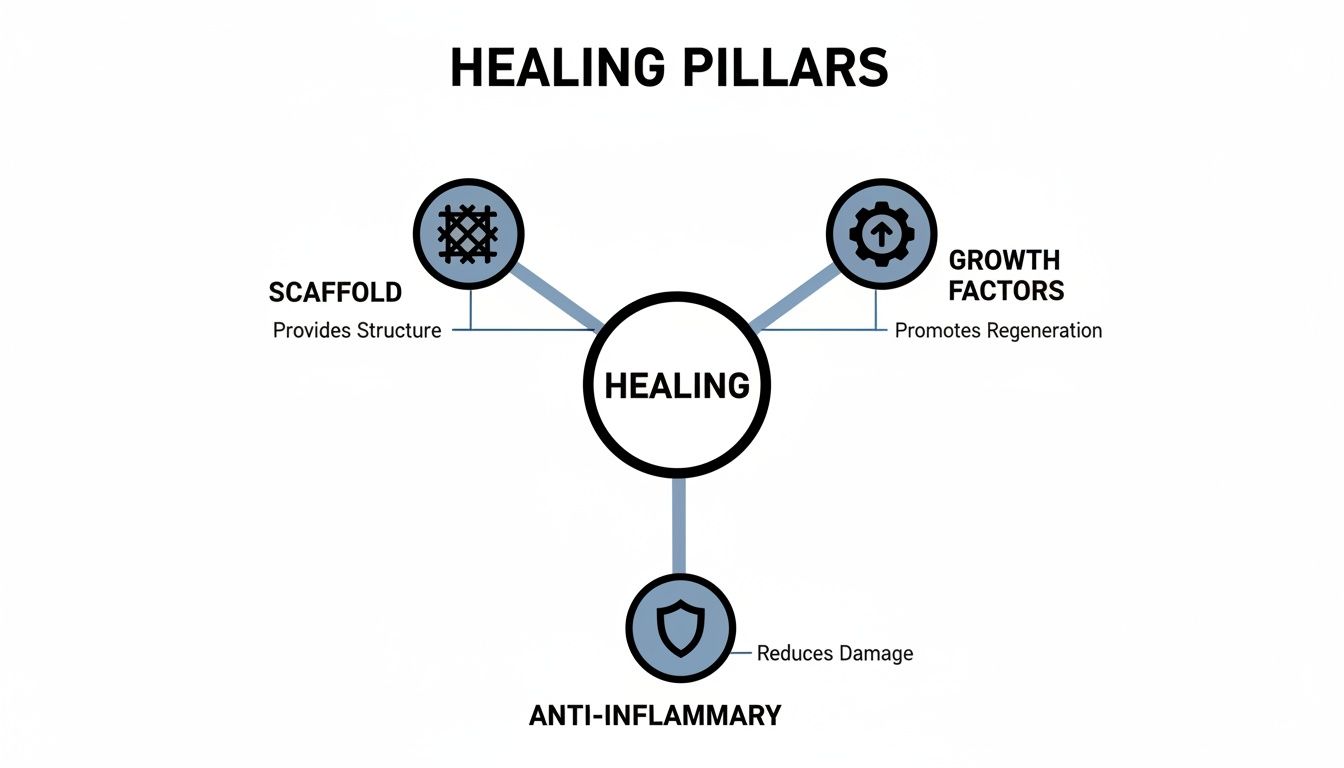
The power of these allografts really comes down to three core pillars working together.
This diagram breaks down the three pillars that make these grafts so effective in practice.
As you can see, the scaffold gives new cells a structure to build on, growth factors provide the instructions for repair, and the anti-inflammatory properties create the right environment for healing to finally begin. Let's look at how this plays out with a few common, challenging wound types.
Addressing Diabetic Foot Ulcers
Diabetic Foot Ulcers (DFUs) are notoriously tough. They're often caught in a perfect storm of poor circulation, nerve damage (neuropathy), and a state of constant, low-grade inflammation. This inflammatory cycle keeps the wound stuck, preventing it from ever moving into the rebuilding phase. This is where amniotic membrane wound healing can be a game-changer.
When we apply an amniotic graft, we're directly fighting that runaway inflammation. The membrane’s potent anti-inflammatory agents help calm the wound bed down, finally breaking the cycle of damage. This gives the growth factors in the graft a chance to get to work, signaling the local cells to start rebuilding healthy tissue.
Patient Story Example: We treated a 68-year-old man with type 2 diabetes who had a non-healing ulcer on the bottom of his foot for over eight months. Despite standard care like offloading and debridement, it just wouldn't close. After just two applications of an amniotic membrane allograft, you could see the inflammation calm down. Healthy granulation tissue started to fill in, and within six weeks, the ulcer was completely gone—preventing a potential amputation.
Managing Venous Leg Ulcers
Venous Leg Ulcers (VLUs) are a different beast altogether. These wounds are caused by failing veins that let blood and fluid pool in the lower legs. This creates a high-pressure, soggy environment that literally drowns the wound in inflammatory fluid, making it almost impossible for cells to do their job.
Here, the amniotic membrane pulls double duty. First, it acts as a biological barrier, helping manage all that excess fluid (exudate) draining from the wound. Second, its anti-inflammatory properties reduce the cellular stress from the constant fluid buildup, which helps restore balance to the wound bed. This gives the body's own repair mechanisms a chance to get a foothold. The scaffold of the membrane also provides a much-needed foundation for new tissue to grow across what are often large, irregularly shaped ulcers.
Improving Post-Surgical Wound Outcomes
After an operation, the goal is always the same: heal quickly with minimal scarring. But some surgical wounds, especially in areas with a lot of tension or in patients with other health problems, can really struggle to close. This can lead to serious complications like an infection or the wound reopening (dehiscence).
Placing an amniotic membrane over a complex surgical incision helps guide a more organized healing process. The graft acts as a protective shield against bacteria while delivering growth factors to promote faster, healthier tissue growth. Its anti-scarring properties are a huge plus, as they help regulate how collagen is laid down. The result is a more flexible, functional, and better-looking scar, which is especially important for joints and other areas where movement is key.
The clinical proof for these applications is solid and continues to grow. Data shows that dehydrated amniotic membrane allografts typically integrate into the wound bed within one to two weeks. By the third week, we often see a noticeable reduction in the wound's size. This rapid integration helps cut down on infection rates and speeds up healing timelines for all kinds of wounds. To get a better sense of the data, you can explore more research on amniotic membrane efficacy and its successful clinical outcomes.
The Patient Journey with Amniotic Membrane Grafts
When you’re dealing with a wound that just won't heal, understanding the "what" and "how" of an advanced therapy is one thing. But knowing what to expect as a patient is just as crucial.
The good news is that receiving an amniotic membrane allograft is often surprisingly simple. It’s designed to be a minimally invasive, in-office procedure that feels more like a collaborative step forward between you and your clinical team than a major medical event.
The entire process begins with a careful evaluation. A wound care specialist will take a close look at your wound—its size, depth, and history—as well as your overall health to see if amniotic membrane wound healing is the right path for you.
Identifying the Right Candidates
So, who is the ideal candidate for this therapy? We’re typically looking for patients with chronic wounds that have hit a wall with standard treatments. These are wounds that are clean and prepped for healing but have simply stalled out.
We often see great success with patients who have:
Diabetic Foot Ulcers that aren't closing despite proper offloading and regular care.
Venous Leg Ulcers where compression therapy alone isn't getting the job done.
Complex Post-Surgical Wounds that are struggling to heal or are at high risk for significant scarring.
Of course, this treatment isn't for everyone. A key contraindication is an active, untreated infection. We also need to ensure there’s adequate blood flow to the area. A clean, well-prepared wound bed is absolutely essential for the graft to work its magic.
What to Expect During Application
Once we've determined you're a good candidate, the application itself is quick and painless. It's done right in the clinic, usually in just a few minutes, with no need for anesthesia or stitches.
Here's how it typically goes:
Wound Preparation: First, the clinician will gently clean the wound, clearing away any non-viable tissue. This ensures the graft makes direct contact with a healthy surface ready to heal.
Graft Placement: The dehydrated amniotic membrane is then carefully laid over the entire wound. We position the stromal side—the side packed with healing components—directly against the wound bed.
Securing the Graft: The graft is secured with simple sterile strips. No stitches required.
Dressing: Finally, a moist, non-adherent dressing is placed over the graft, followed by a secondary dressing to keep everything clean and protected.
The entire procedure is designed for patient comfort. The amniotic membrane itself acts like a soothing, biological bandage that immediately begins to calm inflammation and reduce pain at the wound site.
The dehydrated amniotic membrane gets to work right away, typically incorporating into the wound bed within 1-2 weeks. It’s not uncommon to see visible signs of improvement in as little as 2-3 weeks. In fact, many US wound centers report up to 50% faster closure for diabetic ulcers using this approach.
Follow-Up Care and Signs of Progress
After the graft is placed, consistent follow-up is key. You'll have regular appointments to monitor your progress and for dressing changes.
During these visits, we’ll be looking for all the right signs: less inflammation, reduced drainage, and the appearance of that healthy, pink granulation tissue that tells us new skin is forming. We can even use advanced imaging to track changes in bacterial load and tissue health. You can learn more in our guide to using a point-of-care wound imaging device.
It's vital to remember that the graft is just one powerful tool in a much larger strategy. To get the best results, we have to pair it with other essential wound care practices—like proper offloading for foot ulcers or consistent compression for venous ulcers. Good nutrition is also critical to fuel the healing from within. This complete, integrated approach is what gives you the very best chance for a full and lasting recovery.
Navigating Reimbursement and Documentation Requirements
Great clinical work is only half the battle when it comes to advanced therapies like amniotic membrane allografts. The other half is mastering the paperwork. Securing reimbursement is absolutely vital to making these treatments accessible for the patients who stand to benefit the most. The entire process comes down to one thing: clear, thorough, and convincing documentation of medical necessity.
Without a strong, evidence-backed story in the patient's chart, even the most clinically sound decision can get shot down by payers. I always tell my team to think of their documentation as building a legal case. Every note, every measurement, and every photo is a piece of evidence proving why this advanced graft wasn't just another option—it was the necessary next step to prevent a far worse outcome.
Proving Medical Necessity
Payers need to see a logical progression that led you to choose an amniotic membrane graft. This means your documentation has to clearly show that you already tried standard, conventional wound care and that it failed to move the needle over a reasonable amount of time, which is typically at least 30 days.
Your notes need to paint a vivid picture of a wound that has stalled out or is getting worse, despite your team providing consistent, appropriate care. This documented history of failed therapies is the foundation of your claim. It shows you took a thoughtful, tiered approach and justifies escalating to a more specialized biologic therapy.
Reimbursement isn't just about plugging in the right billing codes. It's about storytelling. Your documentation has to tell the compelling and accurate story of a chronic wound that simply wouldn't respond to standard care, making the use of an amniotic membrane allograft a clear medical necessity.
The Essential Documentation Checklist
Meticulous and consistent documentation is your single best defense against claim denials. Getting this right is non-negotiable for both patient care and navigating the complex reimbursement landscape. For busy clinicians, tools like healthcare documentation automation can be a huge help in getting this done efficiently.
To build a robust and undeniable case for coverage, make sure every patient chart contains these key elements:
Detailed Wound Assessment: Document the wound’s specific characteristics at every single visit. This means precise measurements (length, width, and depth), the type and amount of exudate, and a description of the surrounding tissue.
Photographic Evidence: A picture truly is worth a thousand words to a claims reviewer. Take clear, dated photographs at regular intervals to create a visual timeline of the wound’s failure to progress with standard care.
History of Failed Therapies: Create a simple, clear timeline of every treatment you used before applying the amniotic membrane. List the specific therapies (e.g., sharp debridement, various dressing types, offloading methods) and how long you tried each one.
Underlying Comorbidities: Connect the dots between the wound and the patient's overall health. Document conditions like diabetes, peripheral artery disease, or venous insufficiency that are making the wound so difficult to heal.
Specific Billing Codes: This is a big one. You have to use the correct Healthcare Common Procedure Coding System (HCPCS) "Q-codes" that match the exact amniotic membrane product you used. Accuracy here is critical to avoid simple, frustrating administrative denials.
By diligently including these components in every chart, you create an unassailable record that backs up your clinical judgment and dramatically increases the likelihood of getting the claim paid.
Integrating Amniotic Membranes into Advanced Wound Care
Amniotic membrane allografts are a powerful tool in our arsenal, but it's a mistake to think of them as a standalone "magic bullet" for every non-healing wound. Their real power is unlocked when they're intelligently woven into a modern, comprehensive wound care strategy.
Think of it like a master craftsman bringing in a specialized tool at the perfect moment to overcome a stubborn obstacle in a larger project. The art and science of advanced wound care are all about knowing precisely when to deploy these grafts. They're most effective not at the very beginning of treatment, but at a critical inflection point—after the wound has been properly cleaned and prepped, but has hit a frustrating plateau.
This strategic timing is everything. Applying a graft to a wound that's still full of unhealthy tissue or has an uncontrolled bacterial load is like trying to plant a prize-winning rose in a bed of weeds. It just won’t take.
The Right Tool at the Right Time
A skilled wound care team always starts by establishing a clean, healthy foundation in the wound bed. This foundational work involves meticulous debridement, getting any infection under control, and making sure there's adequate blood flow to the area.
Only when that foundation is solid, but the wound has visibly stalled, does the amniotic membrane enter the picture. At this specific stage, the graft acts as a potent catalyst. It provides the biological jumpstart needed to nudge the wound out of its chronic, inflammatory state and back into an active healing phase. The prepared wound bed is now perfectly primed to receive the growth factors and scaffold the graft delivers.
This patient-focused, evidence-based approach ensures that advanced tools are used to solve specific problems, moving us far beyond a one-size-fits-all mentality. It's all about pinpointing and addressing the unique barriers preventing each individual wound from closing. This is a core principle behind the advanced treatment options at Specialty Wound Care, where every therapy is one piece of a larger, coordinated plan.
An amniotic membrane graft is rarely the first step in wound care, but it's often the critical one that bridges the gap between a clean wound and a fully closed one. Its success is a direct result of a well-executed, holistic treatment strategy.
Achieving Durable Closure and Better Quality of Life
By integrating amniotic membranes into a broader care pathway, we can achieve outcomes that are both faster and more durable. The goal isn't just to close the wound, but to rebuild strong, functional tissue that's far less likely to break down again in the future.
This integrated model involves several key components working in synergy:
Initial Wound Bed Preparation: Thorough cleaning, debridement, and infection management create the ideal environment.
Strategic Graft Application: Applying the amniotic membrane only once the wound is clean but has stopped progressing.
Supportive Therapies: Continuing essential care, like offloading for foot ulcers or compression for venous leg ulcers.
Nutritional Support: Making sure the patient has the protein and nutrients required to fuel tissue regeneration.
When all these elements come together, the result is so much more than just a healed wound. It’s a restored quality of life for patients who were previously stuck in a demoralizing cycle of pain and frustration. This intelligent, multi-faceted approach is the future of effective wound management.
Common Questions About Amniotic Membrane Healing
When you're dealing with a wound that just won't heal, exploring advanced options like amniotic membrane allografts is a smart move. But it's natural to have questions. Here are some straightforward answers to what patients most often ask us.
Is the Application Painful?
This is usually the first thing people want to know, and the answer is reassuring. Applying an amniotic membrane graft is a gentle, in-office procedure. We simply clean the wound, lay the thin, flexible graft over the surface, and secure it. Most patients tell us they feel little to nothing during the process.
In fact, the opposite is often true—many people feel less pain after the graft is in place. The membrane is packed with powerful anti-inflammatory agents that get to work right away, calming the wound site and often providing a welcome sense of relief.
How Safe Are Amniotic Membrane Grafts?
Patient safety is always our number one priority. The amniotic tissue comes from healthy, consenting mothers who donate it after a scheduled Cesarean section. Every donor goes through a comprehensive screening process, similar to what's required for blood donation, to ensure they are free of any communicable diseases.
From there, the tissue is processed in a sterile lab following strict standards set by the American Association of Tissue Banks (AATB) and the FDA. This meticulous process guarantees that every allograft is sterile and safe for clinical use, minimizing any risk of infection or rejection.
How Many Treatments Will I Need?
This really depends on your specific wound—its size, its history, and how it responds to the first treatment. For a lot of chronic wounds, a single application is all it takes to provide that biological "jumpstart" needed to get the healing process back on track and moving toward full closure.
However, for bigger or more stubborn wounds that have been around for a long time, a second or third application might be recommended. Your specialist will keep a close eye on your progress. If healing starts to plateau after a few weeks, another graft can help maintain that forward momentum. The goal is always the same: to get you healed completely and durably with the fewest steps possible.
Preventing Pressure Ulcers: Essential Strategies for Nursing Home Care
Pressure ulcers remain a persistent challenge in nursing home care, often leading to serious complications. You know preventing these wounds demands more than routine checks—it requires targeted strategies backed by advanced wound care. In this post, you’ll learn practical steps to reduce pressure ulcer risk and how Specialty Wound Care’s cutting-edge solutions support your efforts in wound management. For more information, visit this link.
Key Strategies for Ulcer Prevention
Preventing pressure ulcers requires a proactive approach. These key strategies will help you create a safer environment for your patients.
Regular Patient Assessment
Regular assessments are the backbone of effective care. By checking each patient thoroughly, you can catch early signs of ulcers. Pressure ulcer prevention starts with understanding risk factors. Use tools like the Braden Scale to evaluate each patient’s risk level. Frequent skin checks, ideally daily, can help in spotting redness or irritation early. This simple routine can drastically reduce ulcer occurrence.
For more information on pressure ulcer risk factors, consider reviewing resources such as the NCBI guide.
Repositioning and Mobility Support
Movement is your ally in ulcer prevention. When patients stay in one position too long, pressure builds up, leading to ulcers. Encourage repositioning every two hours to alleviate pressure. Along with repositioning, consider using support surfaces like specialized mattresses or cushions to further reduce risk. These surfaces help distribute weight evenly, which can protect vulnerable areas of the body.
Discover more tips for preventing bedsores in nursing homes here.
Skin Care and Nutrition
Healthy skin resists ulcers. Moisturize regularly to prevent dryness, and inspect for signs of damage. Nutrition also plays a key role. A balanced diet, rich in protein, vitamins, and minerals, supports skin health. Hydration is equally important to maintain skin elasticity. Educate patients and families on the importance of nutrition in ulcer prevention, making it a collaborative effort.
For more insights on skin care and nutrition in ulcer prevention, check out American Nurse’s article.
Advanced Wound Care Solutions
To enhance your wound care approach, exploring advanced solutions can make a significant difference. Specialty Wound Care offers cutting-edge products that support healing.
Benefits of Triple-Layer Allografts
Triple-layer allografts can be a game-changer. These allografts provide essential support for wound healing. They create a scaffold for new tissue growth, promoting faster recovery. By integrating these into your care plan, you ensure that patients receive top-notch treatment. This innovation not only improves outcomes but also instills confidence in your care.
MolecuLight DX Technology
MolecuLight DX Technology offers precision in wound management. This tool helps identify bacteria in wounds, guiding effective treatment. With real-time imaging, you can make informed decisions about care. This technology reduces guesswork and enhances healing, making it an invaluable asset in your toolkit.
Partnering with Specialty Wound Care
Collaboration with experts can elevate your practice. Specialty Wound Care offers comprehensive services to support your efforts.
Comprehensive Wound Management Services
From assessment to treatment, Specialty Wound Care provides complete support. Their team of experts works alongside you, ensuring best practices in wound management. By integrating their services, you enhance your facility’s capabilities, benefiting both patients and staff.
Contacting Specialty Wound Care for Support
Ready to improve your wound care approach? Reach out to Specialty Wound Care for tailored support. Their expertise and innovative solutions can transform your practice, making a positive impact on patient care.
For additional strategies, visit the AHRQ guide on pressure ulcer prevention.
The Power of Collaboration: Enhancing Wound Healing Outcomes
Too many wound care cases stall when providers work alone. Your patients deserve better than fragmented treatment plans that slow healing. Collaborative healthcare brings specialists together, combining expertise and advanced wound care tools to speed recovery and improve results. In this post, you’ll see how healthcare partnerships create more effective wound healing solutions for even the toughest cases. Learn more about why collaboration in healthcare matters.
Benefits of Healthcare Partnerships
Working together in healthcare can speed up healing and improve patient care. By joining forces, healthcare providers can share expertise and technologies to tackle even the toughest wound cases.
Enhancing Wound Healing Solutions
When healthcare professionals collaborate, they can create powerful wound healing strategies. Imagine having a team of experts looking at a single wound. Each brings their knowledge, ensuring nothing is missed. This team approach helps in developing personalized treatment plans. For instance, one specialist might focus on nutrition while another handles advanced dressing. Together, they make sure the wound heals faster. See how shared expertise improves outcomes.
Collaborative Healthcare for Better Outcomes
Most people think wounds heal at the same rate, but that’s not true. Collaborating with other professionals can lead to quicker recovery times. By working as a team, providers can address all aspects of wound care. This includes everything from the initial diagnosis to the final stages of healing. Such comprehensive care leads to fewer complications and happier patients. Discover how collaboration shapes success stories in healthcare here.
Advanced Wound Care Techniques
As we dive deeper, it’s clear that advanced techniques are key to effective wound management. These methods, paired with collaboration, offer hope for challenging cases.
Innovative Wound Treatments Explained
In the world of wound care, new treatments are emerging. These include specialized dressings and therapies that speed healing. For example, the Triple-Layer Allograft uses innovative technology to aid recovery. It’s like giving your wound a high-tech bandage that promotes healing. This method offers a glimpse into the future of wound treatment. Another example is MolecuLight DX, which helps doctors see wounds better. It’s like having a magnifying glass to spot problems early. Explore the cutting-edge treatments available.
Technology in Wound Management
Technology plays a vital role in modern wound care. Tools like MolecuLight DX allow precise evaluation of wounds, guiding treatment decisions. This device can spot bacteria, helping doctors know when to clean or change a dressing. Such technological advances mean wounds heal faster and patients experience less pain. The longer you wait to adopt these tools, the more patients might suffer. Learn about integrating technology into wound care.
Building Effective Healthcare Partnerships
Building strong partnerships in healthcare can transform wound care. By engaging providers, the quality of care improves, benefiting everyone involved.
Engaging Providers in Collaboration
Most people think working alone is more efficient. But when providers team up, they share valuable knowledge and resources. This collaboration leads to innovative solutions and better patient outcomes. Engaging with other professionals allows for continuous learning and improvement. Providers can attend workshops and collaborative meetings to share experiences. Read more about engaging providers effectively.
Opportunities for Improved Patient Care
The key insight is that collaboration opens doors to better care. When healthcare providers work together, they can tackle complex cases with ease. Partnerships ensure all aspects of care are covered, from diagnosis to treatment. This means fewer complications and faster healing times for patients. Developing these partnerships takes effort but offers significant rewards. Remember, the sooner you start collaborating, the quicker you’ll see results. Explore opportunities for enhanced patient care.
Specialty Wound Care’s dedication to collaboration and innovation ensures that patients receive the best possible treatment. Embrace these partnerships for better outcomes and faster healing.